

To wash your clothes in a planet-friendly way, choose water- and energy-efficient washers with eco cycles and always fill loads completely. Use cold water to save energy, and air-dry your clothes whenever possible to cut down on dryer energy use. Opt for eco-friendly detergents and use them carefully to minimize chemicals. By adopting these habits, you’ll reduce your environmental impact—keep going to discover even more simple tips for greener laundry habits.
Key Takeaways
- Use ENERGY STAR-rated, water-efficient front-loading washing machines and wash full loads to save water and energy.
- Opt for cold water cycles with modern detergents to reduce energy consumption and protect fabric quality.
- Air-dry clothes on racks or outdoor lines to significantly cut household energy use and carbon footprint.
- Choose eco-friendly, biodegradable detergents in small, pre-measured amounts to minimize water pollution and chemical impact.
- Re-wear clothes when possible and reduce unnecessary washings to conserve water, energy, and extend clothing lifespan.
Choosing Water-Efficient Washing Machines and Settings

Choosing water-efficient washing machines begins with understanding their features and how to select the right settings. Look for models labeled ENERGY STAR, which use about 40% less water than standard washers. Front-loading machines typically use as little as 13 gallons per load and can handle larger laundry loads, saving water overall. Always wash full loads to maximize efficiency and reduce total water use. Use the machine’s eco or water-saving cycle if available; these are designed to use less water without sacrificing cleaning power. Avoid overloading, which can decrease effectiveness and lead to re-washing. Adjust water level settings based on load size, and consider selecting lower spin speeds when appropriate. Making these choices helps you conserve water while maintaining effective laundry routines. Additionally, understanding industry trends can help you choose more sustainable appliances and optimize their performance. Staying informed about innovations like smart appliance technology can further enhance water conservation efforts, especially as industry developments focus on sustainable design. Exploring water recycling systems can also contribute to reducing overall water consumption in your laundry process.
Washing in Cold Water: Benefits and Best Practices
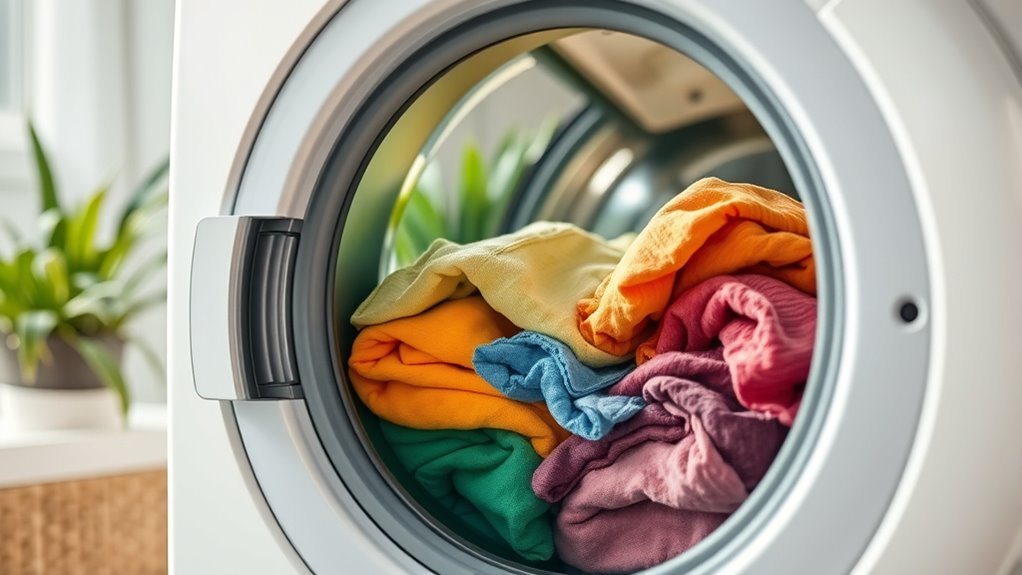
Washing in cold water offers significant environmental and practical benefits that can easily fit into your laundry routine. It reduces energy consumption, helping cut your carbon footprint, and is gentler on fabrics, extending your clothes’ life. Plus, modern detergents are designed to work effectively in cold temperatures, making it a smart choice for clean, sustainable laundry. Incorporating lifestyle habits like cold water washing can lead to long-term benefits for both your wardrobe and the planet.
Washing in cold water saves energy, protects fabrics, and is eco-friendly with modern detergents.
Here are three ways cold water can make a difference:
- Save up to 80% of energy used in washing, lowering your utility bills and environmental impact.
- Preserve your clothes’ color and fabric quality, preventing fading and wear.
- Reduce greenhouse gas emissions, contributing to a healthier planet for future generations.
- Using cold water can also help maintain the nutritional integrity of juices, ensuring they stay fresh and flavorful for longer.
- Investing in energy-efficient appliances can further optimize your laundry routine and reduce overall power consumption.
Switching to cold water is an easy step toward a greener, more efficient laundry routine.
Reducing Dryer Use and Exploring Alternative Drying Methods
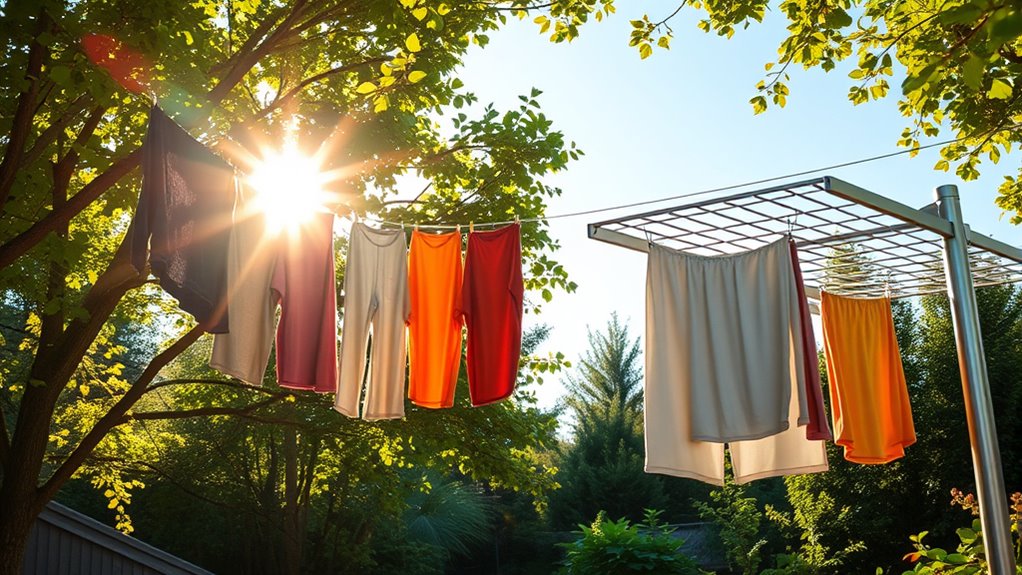
Did you know that reducing your dryer use can substantially cut your household’s carbon footprint? Machine drying consumes a significant portion of laundry energy—about 75% of its total impact. By air-drying your clothes, you can lower your environmental impact by up to 67%. Hang clothes on a drying rack or clothesline outdoors or indoors, depending on the weather and space. Using outdoor air-drying not only saves energy but also extends your garments’ lifespan by reducing wear and tear. For faster drying, spin clothes thoroughly in the washer to remove excess water. If you must use a dryer, choose an ENERGY STAR-certified model, which uses 20% less energy and saves money over time. Incorporating these methods helps you reduce energy consumption and supports a healthier planet. Additionally, embracing automation technologies in your laundry routine can optimize drying efficiency and further reduce energy use. Being aware of regional resources can also help you access the best options for sustainable laundry practices in your area.
Selecting Eco-Friendly Detergents and Proper Usage Tips

Opting for eco-friendly detergents can substantially reduce your laundry’s environmental impact, especially since traditional formulas often contain hazardous chemicals and emit volatile organic compounds. Choosing plant-based or biodegradable options helps protect water quality and aquatic life. To maximize benefits, keep these tips in mind:
Choosing eco-friendly detergents reduces chemical pollution and safeguards aquatic life.
- Use pre-measured or concentrated detergents to avoid waste and overuse, saving resources and reducing chemical runoff.
- Wash full loads whenever possible to minimize water and detergent consumption per garment.
- Select fragrance-free or naturally scented detergents to avoid skin irritation and reduce exposure to harmful chemicals.
Adjusting Laundry Habits for a Greener Lifestyle

Changing your laundry habits can substantially reduce your environmental impact and save money. Start by washing full loads to maximize efficiency and reduce water and energy use. Washing clothes less frequently, like skipping unnecessary cycles or wearing garments multiple times, cuts emissions and extends fabric life. Opt for colder water settings, which are just as effective and use markedly less energy. Air-drying clothes instead of using the dryer can cut your household’s carbon footprint by two-thirds and save on energy costs. Additionally, consider reducing the frequency of washing delicate or lightly soiled items. Being aware of tuning options for your appliances can also help you select models that are more energy-efficient. Choosing an appropriate spray tip can enhance the effectiveness of your cleaning routines and reduce waste. These simple adjustments not only lower your environmental impact but also help preserve your clothes longer, saving you money while contributing to a healthier planet. Incorporating vertical storage solutions into your laundry area can help keep supplies organized and accessible, making it easier to implement these eco-friendly habits. Regularly inspecting your washing machine for buildup and residue can improve performance and reduce energy consumption. Exploring energy-efficient washing machine settings can further optimize water and power consumption.
Frequently Asked Questions
How Often Should I Wash Each Clothing Item to Save Water?
You should wash each clothing item only when it’s visibly dirty or has an odor. For items like jeans, washing after 10 wears is enough, while underwear or activewear need frequent cleaning. Skipping unnecessary washes saves water and energy, prolongs garment life, and reduces environmental impact. Remember, airing out clothes between wears can refresh them, so you don’t have to wash every time, helping you conserve resources effectively.
Can Laundry Additives Improve Eco-Friendliness and Cleaning Efficiency?
Laundry additives can boost eco-friendliness and cleaning efficiency if you choose the right ones. Use eco-friendly detergents with plant-based ingredients, which reduce hazardous chemicals and are often similarly priced to conventional brands. Additives like enzyme-based boosters can improve stain removal without excess detergent. Avoid scented products and dryer sheets, as they emit harmful VOCs. Pre-measured, concentrated formulas minimize waste, helping you clean effectively while reducing your environmental impact.
What Are the Best Ways to Prevent Fabric Damage During Washing?
To prevent fabric damage during washing, always check labels for care instructions and use gentle cycles for delicate items. Turn clothes inside out to reduce friction and fading. Avoid overloading your machine, which can cause excessive stretching or tearing. Use the right water temperature and detergent for each fabric type, and skip harsh chemicals. Air-dry delicate fabrics instead of machine drying to preserve their integrity and extend their lifespan.
Are There Specific Laundry Cycles Optimized for Environmental Impact?
Yes, you should select eco-friendly laundry cycles on your machine. These cycles use cold water, lower temperatures, and shorter wash times, reducing energy and water use. They’re designed to clean effectively while minimizing environmental impact. Always check your machine’s settings for an eco or environmentally friendly cycle option, and use cold water whenever possible to save energy and cut down on your carbon footprint.
How Can I Properly Care for Delicate Fabrics in a Low-Impact Way?
Caring for delicate fabrics is like tending to a fragile garden—you need gentle hands and careful attention. Use cold water and a delicate cycle on your washer to minimize stress. Avoid harsh detergents, opting for eco-friendly options, and skip the spin cycle when possible. Air-dry your delicate items instead of using a dryer, reducing energy use and preserving their quality. This approach keeps your fabrics beautiful and the planet healthier.
Conclusion
So, congratulations on becoming a laundry eco-warrior! Now, you can confidently toss your clothes into the washer, knowing you’re saving the planet one cold rinse at a time. Who knew that minimal effort could make such a big difference? Just remember, with great power (and eco-friendly habits), comes great responsibility—so maybe skip that extra rinse cycle or the dryer, and bask in your guilt-free, planet-loving laundry routine. Cheers to a greener wardrobe!