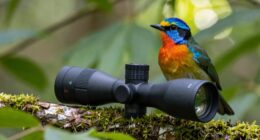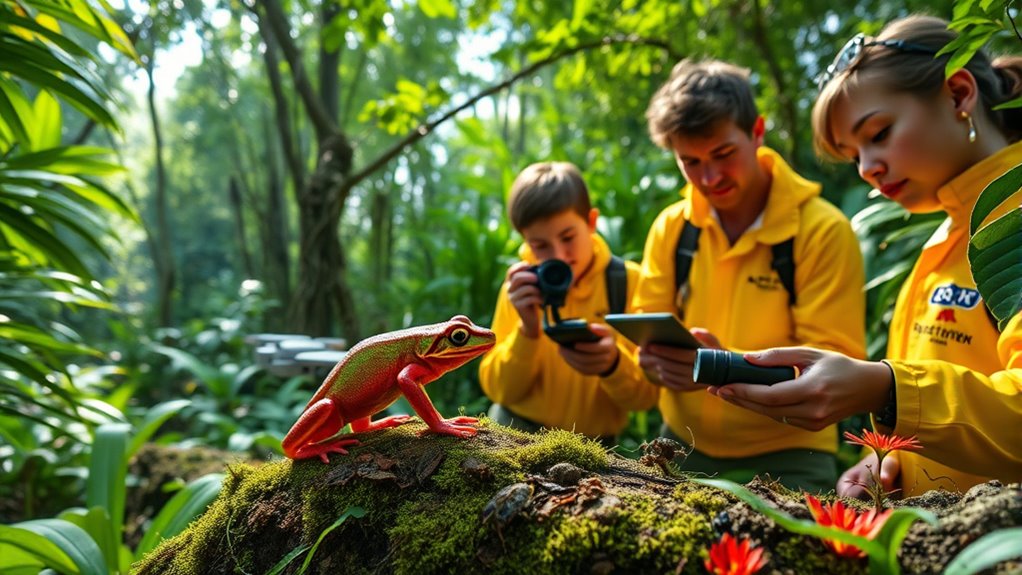
Scientists discover new species by exploring remote habitats like rainforests or deep-sea areas, carefully collecting specimens using specialized tools. They examine physical traits such as size, color, and body structures, then use genetic testing to confirm differences from known species. By comparing their findings with existing data, experts validate whether they’ve found something new. Once confirmed, they assign names, publish their results, and share the significance for biodiversity and conservation—continuing this fascinating journey of discovery.
Key Takeaways
- Researchers explore diverse habitats, collecting specimens with specialized tools while documenting ecological and behavioral details.
- Morphological examination and comparison with known species distinguish potential new species.
- Genetic sequencing confirms species differences and reveals evolutionary relationships.
- Validation involves detailed descriptions, peer review, and referencing museum specimens and scientific literature.
- Newly identified species are officially named, published, and contribute to biodiversity conservation efforts.

YINGYM 6-Hook Bird Feeding Station Kit, Wild Bird Feeder Stand Pole, Multi-Feeder Kit Stand with 4 Feeders, Bird Bath and Mesh Tray, 94 Inch
High quality: bird feeder pole up to 94 inch height, from heavy-duty metal material, The strong material makes...
As an affiliate, we earn on qualifying purchases.
Planning and Scouting Remote Habitats
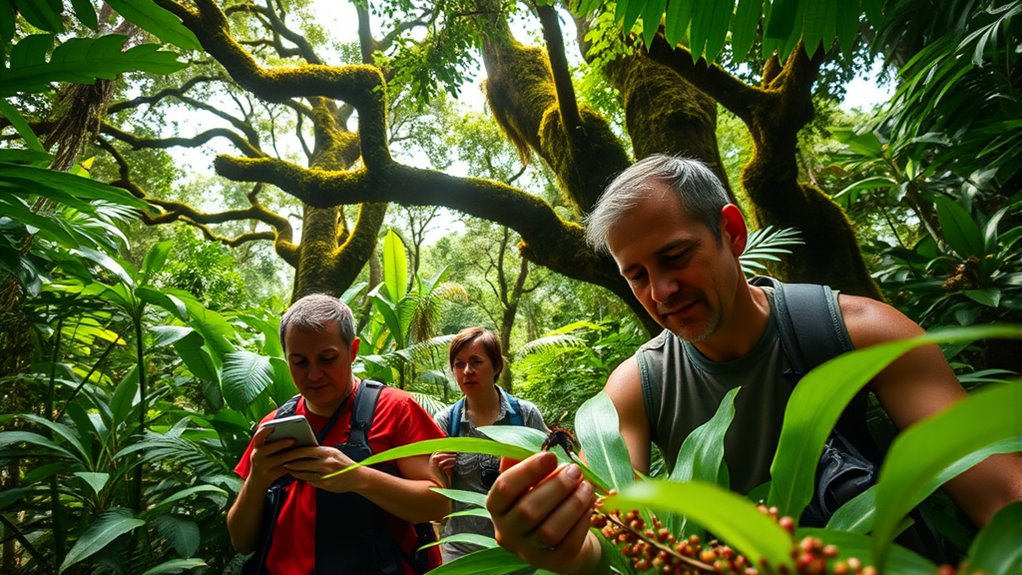
Planning and scouting remote habitats is a critical first step in discovering new species, as it helps you identify promising locations for exploration. You begin by researching areas with high biodiversity potential, such as tropical rainforests or deep-sea ecosystems. Using tools like Google Earth, you can pinpoint inaccessible or underexplored regions that might harbor undiscovered species. It’s essential to review existing scientific literature and local knowledge to understand habitat types and ecological conditions. Planning also involves logistical considerations, like permits, safety, and travel arrangements. Conducting preliminary surveys and biodiversity assessments can further enhance your understanding of the habitat’s potential for new species. Incorporating species distribution models can help predict where undiscovered species might exist based on environmental variables. Gathering ecological data during these surveys can provide valuable insights into habitat features and species interactions, improving your chances of success. Additionally, staying informed about recent advancements in detection technologies can significantly increase the likelihood of discovering elusive species. Necessary cookies and other data collection methods can also support your research by providing insights into visitor interactions and site performance.

SparkJump Modern Birdhouse Woodworking Kit, Complete DIY Birdhouse for Kids & Adults, Build Your Own BirdhouseKit for Creative Woodworking Crafts
Build Memories Together: Create unforgettable family moments with our modern birdhouse kit. Enjoy quality time with your loved...
As an affiliate, we earn on qualifying purchases.
Collecting and Preserving Specimens
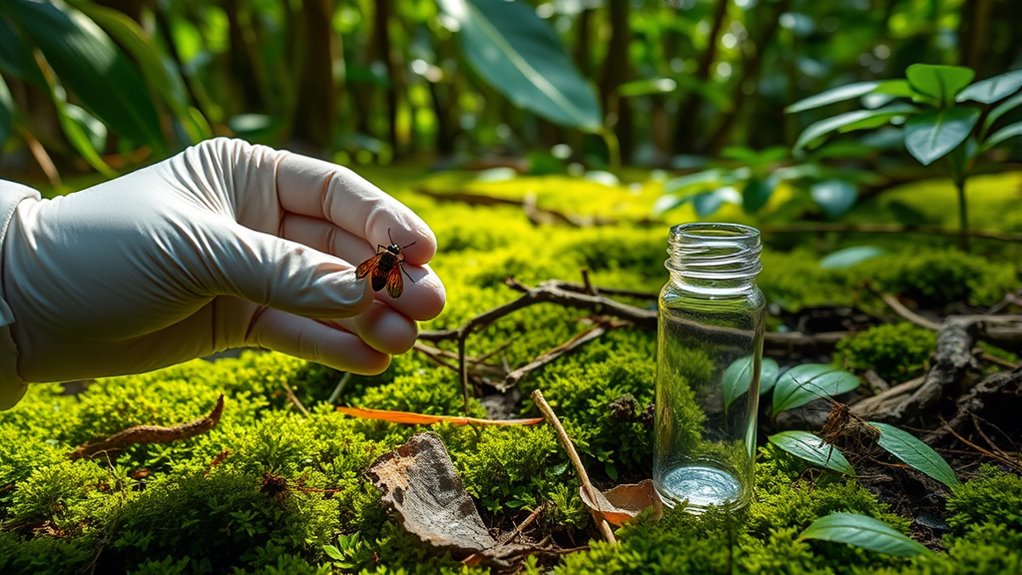
Once you’ve identified promising habitats during your scouting, the next step is to collect and conserve specimens effectively. Carefully handle each sample to avoid damage, using appropriate tools like forceps, vials, and nets. For animals, euthanasia with humane methods ensures proper preservation; for plants, press and dry them promptly. Label each specimen with detailed collection data, including location, date, and habitat notes. Preserve specimens in alcohol, formalin, or by drying, depending on their type, to prevent decay. Store samples in climate-controlled conditions to maintain integrity. Proper preservation is critical for accurate future analysis and comparison. Additionally, understanding the shedding patterns of animals can help in planning optimal collection times, ensuring high-quality specimens. This meticulous process ensures your specimens remain valuable references for morphological and genetic studies, ultimately aiding in the formal description of the new species. Recognizing the importance of biodiversity helps in prioritizing conservation and research efforts for newly discovered species.

2pc DIY Birdhouse Kit, Cedar Wood Bird House Kits Bulk for Adults, Art Craft Outdoor Birdhouse, Solid Wood Weather Proof Material Painting Kit, Chain for Tree Hanging
Build and paint 2 classic 6" Tall bird houses using the parts In this kit!
As an affiliate, we earn on qualifying purchases.
Examining Physical Traits for Initial Identification
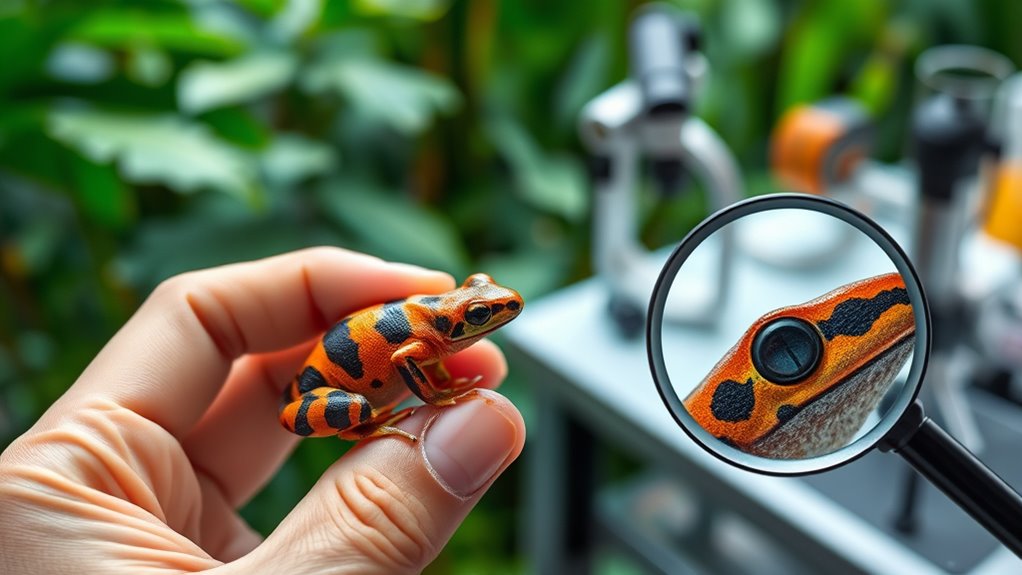
When examining physical traits, focus on key features like size, coloration, and body structure to distinguish potential new species. You compare these traits to known species, looking for subtle differences that can serve as diagnostic markers. Recognize that some traits may be very similar, requiring sharp observational skills to identify subtle but important distinctions. Additionally, understanding species identification techniques can help in recognizing patterns and variations within species, aiding in accurate identification. Developing a keen eye for morphological variation can further improve the accuracy of identifying new species. Employing vacuums for pet hair can be useful in collecting samples or cleaning habitats to observe physical traits more clearly. Incorporating unique physical traits into your analysis allows for a more comprehensive comparison with existing species, enhancing the likelihood of discovering truly novel organisms.
Key Morphological Features
Key morphological features serve as the foundation for the initial identification of potential new species by highlighting distinctive physical traits. You look closely at details like size, color patterns, body shape, and reproductive structures. These traits help you spot differences from known species, guiding further analysis. Sometimes, subtle features such as scale texture or limb structure are critical. To make this clearer, here’s a simple comparison:
| Trait | Example |
|---|---|
| Size | Larger or smaller than relatives |
| Coloration | Unique markings or hues |
| Body Shape | Elongated, flattened, or rounded |
| Reproductive Organs | Distinctive structure or placement |
| Surface Texture | Smooth, ridged, or spiny |
Focusing on these features enables you to identify candidates for new species accurately, especially when combined with morphological variation observed across different populations. Recognizing physical trait differences is essential for differentiating species in the early stages of discovery. Additionally, understanding conservation status can influence prioritization during the discovery process. It is also important to consider genetic analysis as a complementary method to morphological assessment, which can provide more definitive evidence of a new species. Identifying distinctive features can also help determine if the organism is a variation within a known species or a truly new one.
Comparing Known Species
How do researchers determine if a specimen belongs to a known species or represents a new one? You compare its physical traits to existing descriptions and specimens. Visual examination focuses on distinctive features, but sometimes differences are subtle. To help you visualize, consider these key aspects:
- Size and shape variations that stand out from similar species
- Color patterns and markings unique to certain groups
- Structures like reproductive organs or specialized appendages
- Texture and surface features, such as scales or ridges
- Overall proportions and symmetry
- Genetic analysis can further confirm whether a specimen is a new species or not. Additionally, researchers often analyze morphological variation to detect subtle differences that may not be immediately apparent. Recognizing these physical traits is crucial for accurate species identification. Understanding species-specific characteristics helps differentiate closely related organisms effectively. Incorporating molecular techniques can also provide definitive evidence when physical traits are ambiguous.
Subtle Diagnostic Traits
Examining subtle diagnostic traits is essential for distinguishing closely related or cryptic species during initial identification. You focus on fine details that may seem insignificant but are critical for accurate classification. Look closely at size differences, color patterns, and structural features like the shape of reproductive organs or limb segments. Tiny variations in scale texture, gland placement, or wing venation can reveal species boundaries that aren’t obvious at first glance. You often need expert knowledge and careful comparison with known species descriptions, as these traits can overlap among similar species. Documenting these subtle differences helps build a solid foundation for further analysis. Recognizing and accurately recording these minute traits ensures you don’t mistake a new species for a familiar one, enabling precise identification from the start. Paying attention to diagnostic traits is crucial for effective species discovery and classification. Additionally, understanding the causes and contributing factors behind morphological differences can provide deeper insights into species evolution and adaptation. Recognizing the importance of morphological variation can help clarify evolutionary relationships among species.

Nestingood Premium Wooden Bird House Kit – DIY Bluebird Nesting Box with 1.5 Inch Entrance, Outdoor Birdhouse Kits for Adults and Kids, Nature Craft for Garden, Backyard or Patio Projects
BEGINNER-FRIENDLY & FUN – Whether you’re an expert builder or first-timer, this bird house kit is easy and...
As an affiliate, we earn on qualifying purchases.
Utilizing Genetic Tools for Confirmation
Genetic tools are essential for confirming new species with precision. DNA barcoding quickly matches specimens to known groups, while phylogenetic analysis reveals their evolutionary relationships. Evaluating genetic diversity helps determine whether populations are distinct enough to warrant separate species status.
DNA Barcoding Precision
DNA barcoding has revolutionized the way scientists confirm the identity of new species by providing a rapid and reliable genetic fingerprint. With this technique, you can analyze a small DNA segment to match unknown samples against extensive databases, ensuring accurate identification. The high precision allows you to distinguish even cryptic species that look similar but are genetically distinct. Imagine visualizing:
- A tiny tissue sample being processed in a lab
- Automated machines sequencing DNA strands swiftly
- Databases comparing your sample’s barcode with thousands of entries
- Genetic differences revealing hidden species diversity
- Clear, digital charts confirming species uniqueness
This method minimizes misidentification and accelerates discovery, making it a essential tool in modern taxonomy. By leveraging DNA barcoding, you gain confidence that your newly discovered species is accurately classified and scientifically validated.
Phylogenetic Analysis Insights
Phylogenetic analysis plays a crucial role in confirming the evolutionary relationships of newly discovered species by integrating genetic data into the taxonomic process. You analyze DNA sequences from your specimens and compare them with existing data to determine their place in the tree of life. This approach reveals how closely related your species is to known relatives and helps distinguish it from similar species. You construct phylogenetic trees using computational algorithms that visualize these relationships, providing a clear picture of divergence and common ancestry. This genetic insight confirms whether your specimen represents a new species or falls within an existing one. By combining molecular data with morphological observations, you strengthen your taxonomic conclusions, ensuring your discovery is scientifically valid and accurately placed within the broader evolutionary framework.
Genetic Diversity Assessment
To accurately confirm the distinctiveness of a potential new species, researchers now rely heavily on evaluating genetic diversity using advanced molecular tools. You’ll analyze DNA sequences to pinpoint unique genetic markers that differentiate closely related species. This process involves:
- Extracting DNA from collected specimens in the lab with precision.
- Using PCR to amplify target genetic regions for comparison.
- Comparing sequences against extensive databases to identify matches or novel patterns.
- Applying bioinformatics software to construct phylogenetic trees, revealing evolutionary relationships.
- Detecting cryptic species by uncovering subtle genetic differences invisible to morphological analysis.
This genetic assessment provides definitive evidence, often confirming whether specimens represent a new species or variation within an existing one. It enhances accuracy, reduces misclassification, and accelerates the discovery process.
Analyzing Data and Comparing With Known Species
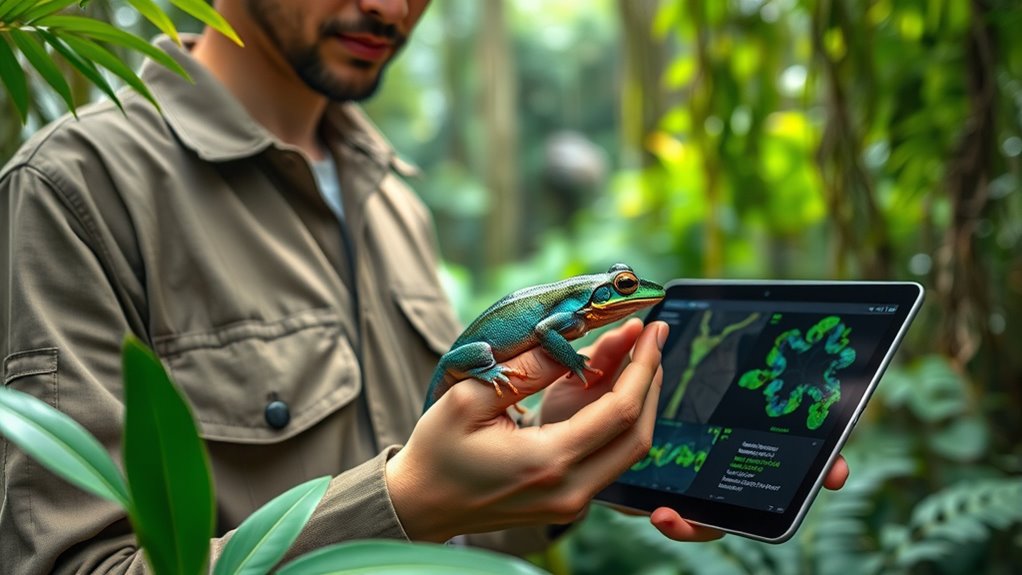
Analyzing data and comparing specimens with known species is a critical step in confirming whether a specimen represents a new species. You’ll start by meticulously examining morphological traits, such as size, coloration, and reproductive structures, against existing descriptions and museum collections. Molecular data, like DNA sequences, are then compared to databases to identify genetic differences or similarities. Phylogenetic analyses help determine evolutionary relationships and confirm if your specimen forms a distinct lineage. Sometimes, biochemical markers or hormonal profiles provide additional evidence when physical traits are ambiguous. This integrative approach combines multiple data sources, allowing you to build a robust case for the specimen’s novelty. Only after thorough comparison and analysis can you confidently move toward formal description and recognition as a new species.
Confirming New Species Through Scientific Validation

Confirming a new species requires rigorous scientific validation to guarantee its uniqueness beyond initial discovery. You’ll compare your specimens with existing data, scrutinizing morphological features and genetic information. To build a solid case, you’ll:
- Cross-reference specimens with museum collections and published descriptions
- Perform molecular analyses like DNA barcoding and phylogenetics
- Examine ecological data to verify distinct habitat or behaviors
- Use biochemical markers or hormonal profiles when morphology is ambiguous
- Consult experts to review findings and ensure accuracy
This process combines multiple lines of evidence, ensuring your discovery is scientifically sound. Once the data confirms the species’ novelty, you’ll prepare detailed documentation, supporting its recognition in the scientific community and safeguarding its place in biodiversity records.
Assigning Names and Classifying the Discoveries
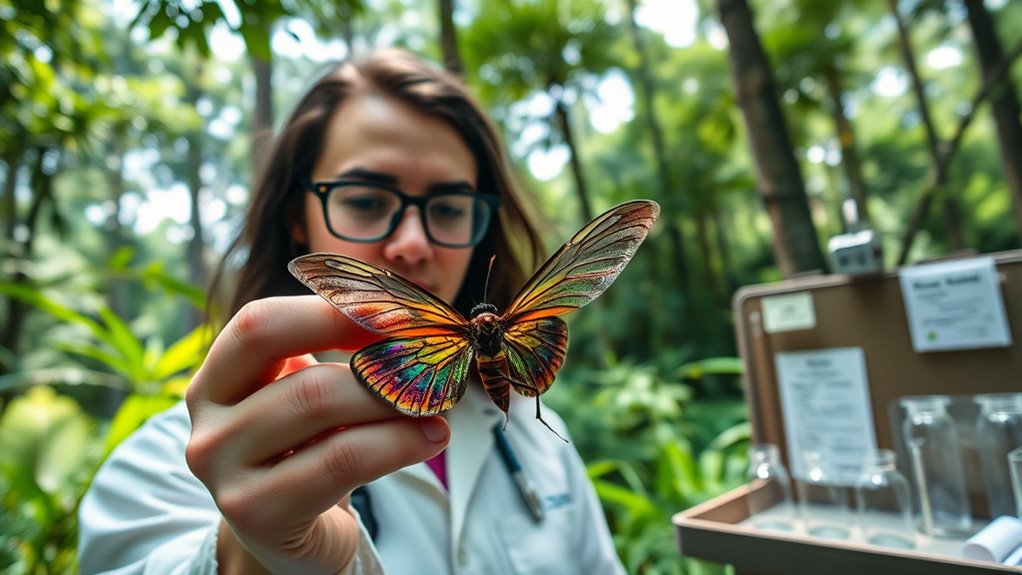
Once you’ve gathered sufficient evidence that your specimen represents a new species, the next step involves assigning an appropriate name and establishing its classification. You’ll follow international codes, like ICZN or ICN, to guarantee the name is valid and universally accepted. First, you’ll describe the species in detail, highlighting diagnostic traits, habitat, and differences from close relatives. The name often reflects the species’ distinctive features, location, or honors a person. You’ll designate a holotype specimen as the official reference. After choosing a name, you submit your description to scientific journals for peer review. Proper classification helps communicate findings clearly and supports future research, conservation, and understanding of biodiversity. This systematic process ensures your discovery is integrated into the global taxonomy.
Documenting and Publishing the Findings
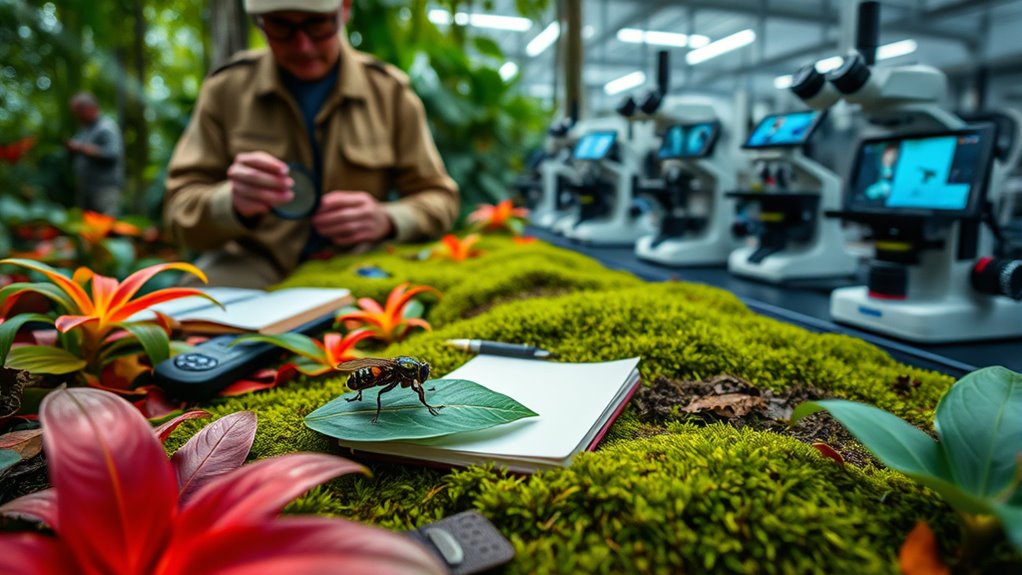
To effectively share your discovery with the scientific community, you must carefully document your findings and prepare a thorough publication. You’ll compile detailed descriptions, high-quality photographs, and precise measurements. Your report should include:
- Clear illustrations highlighting distinctive features
- Complete habitat and ecological data
- DNA sequences and molecular analysis results
- Comparisons with similar species for context
- References to previous research and relevant literature
This documentation creates a vivid picture of your discovery, allowing others to verify and build upon your work. You’ll submit your manuscript to peer-reviewed journals, where experts scrutinize your data. Once approved, your findings become part of the scientific record, ensuring your discovery contributes to our understanding of biodiversity.
Understanding the Impact on Conservation and Biodiversity

Discovering new species profoundly influences conservation efforts and the broader understanding of biodiversity. When you identify a previously unknown species, you highlight its habitat’s importance, often prompting protective measures. Recognizing cryptic or endemic species helps prioritize areas for conservation, especially when these species face threats from habitat loss or climate change. Accurate species identification prevents misallocation of resources and guarantees that conservation strategies target the right populations. It also refines global biodiversity estimates, revealing the true richness of life on Earth. Your discoveries can influence policy decisions, support habitat preservation, and guide ecological management. Overall, understanding new species enhances our ability to protect vulnerable ecosystems, ensuring that biodiversity is maintained for future generations and that conservation efforts are more precise and effective.
Frequently Asked Questions
How Do Scientists Choose Which Habitats to Explore First?
You choose habitats based on their biodiversity potential and accessibility. Using tools like Google Earth, you scout remote or understudied regions, especially biodiversity hotspots like tropical rainforests or ocean trenches. You focus on areas with little prior research, increasing your chances of discovering new species. You also consider ecological importance and conservation needs, prioritizing habitats that may harbor unique or endangered species, making your exploration impactful.
What Equipment Is Essential for Specimen Collection in Remote Areas?
You need a dependable, durable device for collecting specimens, including a sharp scalpel for precise cutting and forceps for careful handling. A sturdy net helps catch elusive creatures, while vials and jars securely store samples. A field notebook records detailed data, and a camera captures vital visual clues. Don’t forget a reliable flashlight for dark habitats and a portable GPS to pinpoint precise positions, ensuring efficient, effective expedition efforts.
How Do Morphological Features Vary Within a Single Species?
You’ll notice that morphological features within a single species can vary due to factors like age, sex, environment, or geographic location. For example, males and females may have different size or coloration, and individuals at different life stages can look distinct. Environmental influences can also cause slight variations in traits like coloration or patterning. These variations are natural, but experts carefully analyze them to distinguish between within-species differences and entirely new species.
Can DNA Sequencing Detect Hybrid or Mixed-Species Individuals?
Did you know that DNA sequencing can detect hybrid or mixed-species individuals with over 90% accuracy? When you analyze their genetic material, you’ll find distinct markers from each parent species, revealing hybridization events. By comparing these sequences to reference databases, you can identify whether an individual is a pure species or a mix. This helps scientists understand evolution, gene flow, and biodiversity dynamics better than ever before.
How Is Taxonomy Updated When New Evidence Challenges Existing Classifications?
When new evidence challenges existing classifications, you update taxonomy through rigorous analysis. You compare morphological data and genetic results, often using molecular phylogenetics, to determine if the current classification holds or needs revision. If evidence shows discrepancies, you revise species boundaries, reclassify species, or establish new ones. You then publish your findings in peer-reviewed journals, following international naming codes, ensuring the scientific community adopts the updated taxonomy.
Conclusion
Imagine you’re an explorer venturing into uncharted waters, discovering a hidden island filled with secrets. Every new species you find is a precious treasure, revealing nature’s mysteries and reminding us of our responsibility to protect this fragile world. Your discovery sparks hope and wonder, like lighting a candle in the dark. By understanding and sharing these wonders, you become a guardian of life’s incredible tapestry—preserving the beauty and diversity that make our planet truly extraordinary.