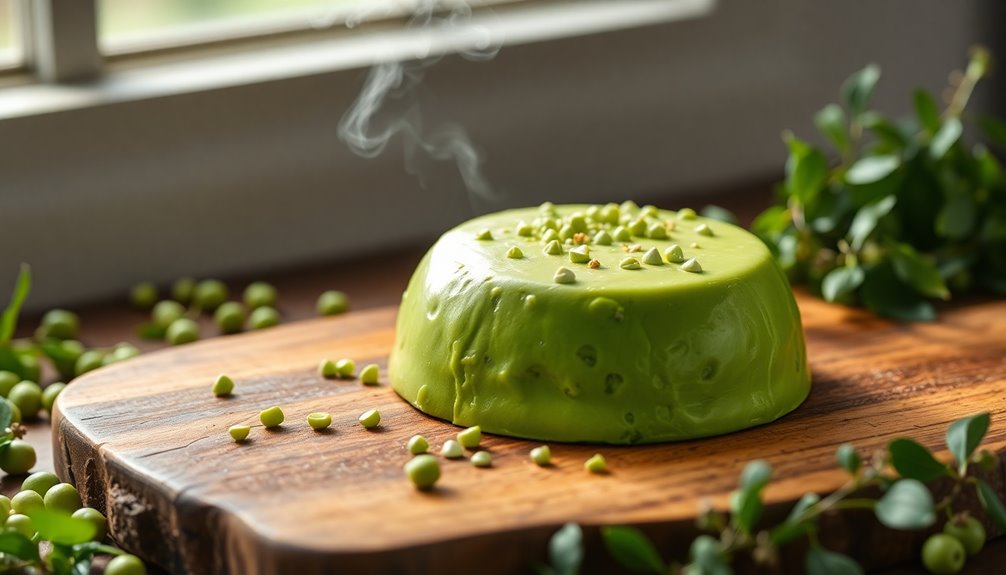

Cooking cheese from peas is a fantastic plant-based option that retains the taste and texture you love. By combining milk proteins with pea proteins, this hybrid cheese offers a rich flavor profile that's both nutritious and environmentally friendly. The fermentation process enhances its signature qualities, making it a high-protein alternative to traditional cheese. Plus, you can explore more about its benefits and how it's made, opening up a whole new world of culinary possibilities.
Key Takeaways
- The hybrid cheese combines milk proteins with pea proteins, preserving the traditional cheese's taste and texture.
- Fermentation processes used in cheese-making enhance the flavor profile while maintaining signature characteristics.
- Steaming green peas before processing boosts color and flavor, contributing to the overall taste experience.
- Incorporating ingredients like coconut oil and probiotics further enriches the texture, resembling that of dairy cheese.
- The unique flavor developed through fermentation allows for culinary exploration while retaining cheese-like qualities.
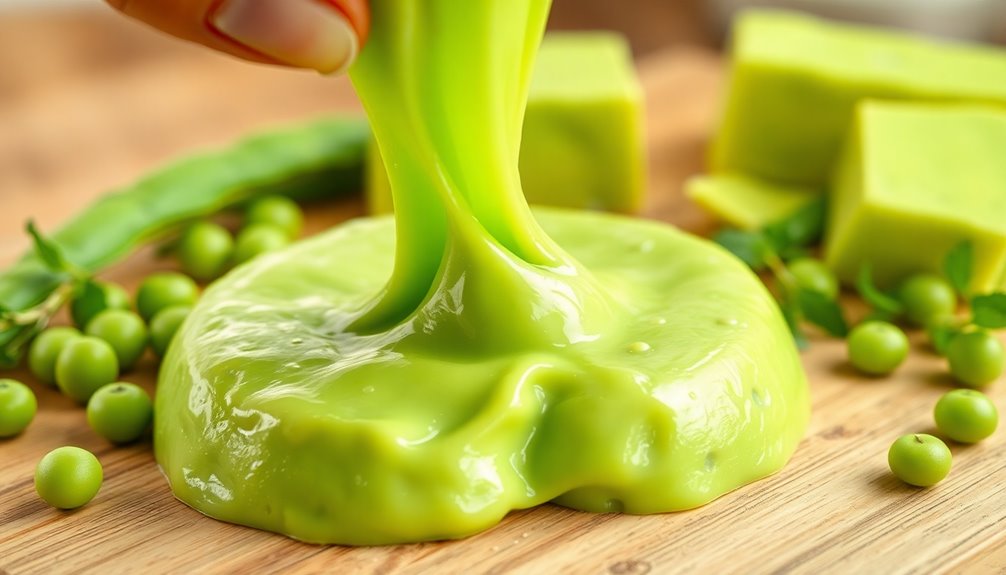
If you're looking for a delicious and sustainable alternative to traditional cheese, cooking cheese from peas might just be your new favorite culinary adventure. Researchers at the University of Copenhagen are pioneering a hybrid cheese that combines milk proteins with pea proteins. This innovative approach allows you to enjoy a cheese that retains the taste and texture you love while being more environmentally friendly.
You'll be pleased to know that it's possible to replace at least 25% of milk proteins with pea protein without compromising on the flavor or texture. This not only reduces the carbon footprint associated with dairy cheese production but also offers nutritional benefits. Think about it: you're getting the protein quality of dairy along with the dietary fibers from plant sources. How great is that?
When making pea cheese, the process starts with steaming green peas, which helps to enhance their color and flavor. After that, you'd pulse the steamed peas in a food processor before adding delicious ingredients like coconut oil, probiotics, and cultures such as Penicillium Candidum. This fermentation process is similar to traditional cheese-making and gives the cheese its unique profile. Additionally, using a Ninja 3-in-1 Food Processor can streamline the blending process, making it easier to achieve the perfect consistency.
Pea cheese is nutrient-rich, packing in iron and essential vitamins while being a sustainable protein source. Plus, if you or someone you know has nut allergies, this high-protein alternative is a safe bet. The combination of these elements means you're not just indulging in a tasty treat; you're also making a healthier choice.
As you explore this new frontier in cheese-making, you'll find that while further refinement of flavors is still needed, the potential for a delicious, environmentally friendly cheese is undeniable.
Japanese Chef Knife 8", Hand Forged 67-Layer Damascus VG10 Core Kitchen Knife for Home & Professional Chefs, Razor Sharp Chef's Knives with Leather Sheath and Premium Gift Box, Ideal Cooking Gift
- Traditional Craftsmanship: Hand-forged Japanese VG10 Damascus steel
- 67-Layer Construction: Exceptional toughness and corrosion resistance
- Ergonomic Handle Design: Comfortable and fatigue-free grip
As an affiliate, we earn on qualifying purchases.
Frequently Asked Questions
Can I Freeze Cooking Cheese Made From Peas?
Yes, you can freeze cooking cheese made from peas, but be aware that it might alter its texture. Ice crystals can form, leading to crumbliness upon thawing.
To minimize issues, store it in airtight containers and ensure there's no moisture before freezing.
While it's best to use frozen cheese within three months, melting or crumbling it after thawing can help mask any textural changes, making it suitable for various dishes.
What Dishes Pair Well With Pea-Based Cheese?
When you're looking to elevate your meals, pea-based cheese is a delightful addition.
It pairs beautifully with gluten-free pasta for a creamy vegan dish. Picture a warm naan topped with this cheese, or a vegan pizza bubbling with flavor.
You can't go wrong with stuffed bell peppers, either; they're a nutritious choice filled with rice and veggies.
Don't forget baked potatoes, topped generously for a satisfying plant-based treat!
How Long Does Homemade Pea Cheese Last in the Fridge?
Homemade pea cheese generally lasts about 7 to 14 days in the fridge, depending on whether it's a soft or hard variety.
To maximize freshness, store it in an airtight container at temperatures below 40°F (4°C).
Keep an eye out for spoilage signs like mold or off smells.
If you want to extend its shelf life, consider freezing it, but remember that this might alter the texture.
Enjoy your delicious creation!
Is Cooking Cheese From Peas Suitable for Vegans?
Isn't it great when you find a cheese alternative that fits your lifestyle?
Cooking cheese from peas is definitely suitable for vegans. It's made entirely from plant-based ingredients, avoiding dairy and common allergens like nuts and soy.
Plus, it offers high protein content and can replicate the textures and flavors you love in traditional cheeses.
With its environmental benefits, you can enjoy your meals while making a positive impact on the planet!
Can I Use Frozen Peas to Make Cooking Cheese?
Yes, you can use frozen peas to make cooking cheese! Just remember to thaw them first to avoid excess moisture that can affect the texture.
While frozen peas may be a bit softer than fresh ones, they still offer a creamy texture and good flavor.
Properly processing and managing moisture levels will help you achieve a satisfying result.
Conclusion
Incorporating pea-based cheese into your meals not only offers a creamy, delicious alternative but also supports sustainability. Did you know that producing plant-based cheese can use up to 90% less water than traditional dairy cheese? By choosing this innovative option, you're not just savoring a unique taste; you're also making a positive impact on the environment. So go ahead, experiment with cooking cheese from peas and enjoy a guilt-free indulgence that's kind to both your palate and the planet!