To quickly create a wildlife-friendly balcony, start by selecting native plants and arranging them in layers—ground cover, mid-height, and tall structures—near balcony edges. Add natural shelters like logs, rocks, or birdhouses, and include diverse plant types to attract pollinators and provide food for birds. Avoid chemicals and introduce beneficial insects for pest control. Keep up with simple maintenance like watering and pruning. If you want to discover more tips, keep exploring this guide.
Key Takeaways
- Select native plants and create layered arrangements for shelter, nectar, and food sources for insects and birds.
- Incorporate natural elements like logs, rocks, and birdhouses to enhance habitat diversity and support wildlife.
- Use container gardening with varied heights and plant types to attract pollinators and provide shelter.
- Avoid chemicals; introduce beneficial insects and companion plants for natural pest control.
- Regularly maintain by watering, pruning, and cleaning to promote a healthy, resilient ecosystem.
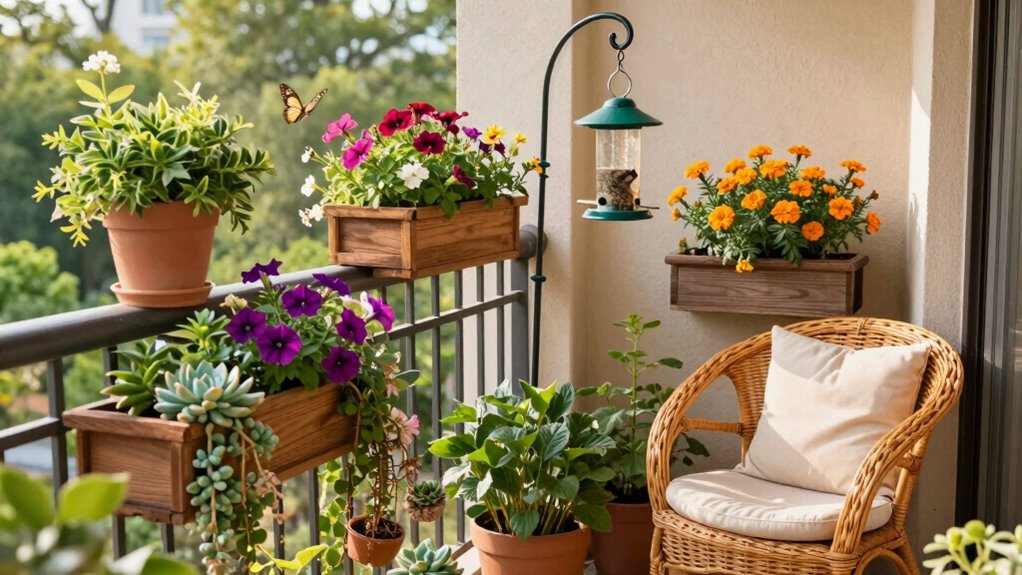
Creating a wildlife-friendly balcony is a rewarding way to support local ecosystems right outside your door. With a little planning and some simple steps, you can transform your small outdoor space into a haven for birds, bees, butterflies, and other beneficial creatures. The key is to focus on smart garden design that attracts wildlife while also making your balcony easy to maintain. Start by selecting a variety of plants—native species work best because they provide familiar food sources for local insects and birds. Incorporate tall grasses, flowering perennials, and shrubs that offer shelter and nectar. Use containers of different sizes and heights to create depth and visual interest, which will make your space inviting for a diverse range of wildlife.
Transform your balcony into a wildlife haven with native plants, varied containers, and natural shelter.
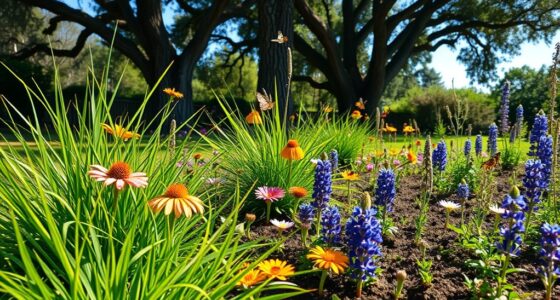
When planning your garden design, think about creating multiple layers—ground cover, mid-height plants, and taller structures—so animals can find food, shelter, and nesting spots. A mix of flowering plants will attract pollinators like bees and butterflies, while berry-producing shrubs can provide food for birds. Position your plants near the edges of your balcony, and leave some areas less manicured to allow insects and small animals to thrive without disturbance. Incorporating natural elements like small rocks, logs, or birdhouses can further support local wildlife. Additionally, understanding the importance of habitat diversity can help you design a more resilient and inviting environment for various species. Creating a balanced ecosystem also encourages beneficial insect populations to naturally control pests, reducing the need for intervention. Including ecosystem services in your planning can greatly enhance the sustainability of your balcony habitat.
Another essential aspect of building a wildlife-friendly balcony is pest control. Instead of relying on chemical pesticides, focus on natural methods that protect your plants and the creatures visiting your space. Healthy, diverse plantings tend to resist pests better, so avoid monocultures. Introduce beneficial insects like ladybugs or predatory beetles that naturally keep pest populations in check. You can also plant companion plants that repel pests, such as marigolds or garlic. Regularly inspect your plants and remove pests by hand when possible. If you need to treat a serious infestation, opt for organic solutions like neem oil, which are less harmful to the insects and animals you’re trying to attract. Incorporating pest management techniques can further support a healthy and thriving habitat for wildlife.
Finally, dedicate some time to maintenance over the weekend. Water your plants early in the morning or late in the afternoon to keep them healthy and resilient. Clean up debris and prune as needed to promote growth and prevent pest habitats. After a weekend of thoughtful planting, strategic placement, and natural pest control, you’ll have created a vibrant, wildlife-friendly balcony that supports local ecosystems and brings nature right into your daily life. Not only will you enjoy the beauty and activity of your mini sanctuary, but you’ll also be contributing to the health of the environment beyond your doorstep. Remember that sustainable gardening practices can further enhance the longevity and ecological benefits of your balcony habitat.

A Northern Gardener's Guide to Native Plants and Pollinators
As an affiliate, we earn on qualifying purchases.
As an affiliate, we earn on qualifying purchases.
Frequently Asked Questions
What Plants Attract the Most Wildlife?
You attract the most wildlife by choosing native plants and bird-friendly shrubs. Native plants provide essential food and shelter, drawing in pollinators, birds, and butterflies. Incorporate shrubs like elderberry or lilac that offer berries and nesting sites. These choices create a vibrant, inviting environment on your balcony, encouraging wildlife visits. By selecting these plants, you’ll foster a thriving, eco-friendly space that supports local biodiversity.
How Do I Protect Birds From Balcony Predators?
To protect birds from balcony predators, you should install bird deterrents like reflective objects or motion-activated lights to scare off potential threats. Use predator-proof feeders with enclosed designs to keep predators at bay while allowing birds to feed safely. Additionally, place feeders and birdhouses in sheltered spots or higher up to make access difficult for predators, ensuring your feathered visitors stay safe and comfortable on your balcony.
Can I Install a Water Feature Safely?
Yes, you can install a water feature safely on your balcony. Focus on water feature safety by choosing a lightweight, stable basin that won’t tip easily. Follow installation tips like securing the basin firmly, using a waterproof sealant, and keeping electrical components away from water. Regularly check for leaks and stability to prevent accidents. With careful planning, your balcony can become a peaceful, wildlife-friendly oasis.
What Materials Are Best for Eco-Friendly Balcony Decor?
Did you know that using native plants increases local pollinator visits by up to 80%? For eco-friendly balcony decor, opt for sustainable materials like reclaimed wood, bamboo, and biodegradable planters. Native plant selection guarantees your balcony supports local ecosystems, while sustainable decoration minimizes environmental impact. These materials are durable, eco-conscious, and visually appealing, making your balcony a thriving, green haven that benefits wildlife and the planet alike.
How Do I Maintain Wildlife Habitats Year-Round?
To maintain wildlife habitats year-round, you should plant native plants that adapt to seasonal changes, providing food and shelter throughout the year. Regularly check and clean nesting sites, and add water sources like shallow dishes or birdbaths. Keep your balcony free of pesticides and chemicals, and consider adding evergreen plants for winter shelter. By staying attentive to seasonal shifts, you create a welcoming environment for local wildlife all year long.

4-Piece Outdoor Bird House Set, Bird Houses for Outside with Metal Guards, Safety Locks, Flight Slots, & Ventilation, Bluebird Houses with 1-1/2" Entrance for Bluebirds, Wrens, Finches-Black
4 Pack bird houses for outside : Our 4-piece outdoor birdhouse set is meticulously made using high-quality wood,…
As an affiliate, we earn on qualifying purchases.
As an affiliate, we earn on qualifying purchases.
Conclusion
With just a weekend, your balcony can transform into a bustling oasis for wildlife, turning your space into a vibrant heartbeat of nature amidst the city. Think of it as planting a tiny forest in a pot—each added element a note in a lively symphony. By embracing simple, eco-friendly steps, you’ll create a welcoming refuge that invites birds, bees, and butterflies to thrive. Your balcony isn’t just a space; it’s a doorway to nature’s wonderland, waiting to be explored.

Land Guard 4-Pack Fabric Grow Bags 5 Gallon, Thickened Nonwoven Garden Pots, Growing Bags with Handles, Black
Sturdy Fabric Material: Our Non-Woven fabric grow bags are crafted using high-strength weaving technology, which allows the planting…
As an affiliate, we earn on qualifying purchases.
As an affiliate, we earn on qualifying purchases.

Mighty Mint Gallon (128 oz) Insect and Pest Repellent Peppermint Oil – Natural Spray for Spiders, Ants, and More
PET-FRIENDLY & FAMILY-SAFE FORMULA – Mighty Mint is a top pick for pet parents looking for a natural,…
As an affiliate, we earn on qualifying purchases.
As an affiliate, we earn on qualifying purchases.