
You can help make schoolyards wilder and more alive by replacing traditional lawns with native wildflowers and natural play spaces. These projects attract pollinators and create outdoor classrooms that teach students about ecosystems and biodiversity. Teachers play a key role by involving students in planting, caring for habitats, and encouraging environmental respect. If you keep exploring, you’ll discover more ways to transform outdoor spaces into thriving, educational environments that inspire lifelong love for nature.
Key Takeaways
- Teachers promote wildflower planting projects to transform lawns into native habitats supporting pollinators.
- They incorporate natural playground elements to foster imaginative, sustainable play environments.
- Educators utilize outdoor spaces for hands-on ecosystem lessons, enhancing environmental awareness.
- Teachers involve students in designing and maintaining wildflower areas, encouraging responsibility and curiosity.
- These initiatives turn schoolyards into dynamic, educational spaces that nurture ecological understanding and stewardship.
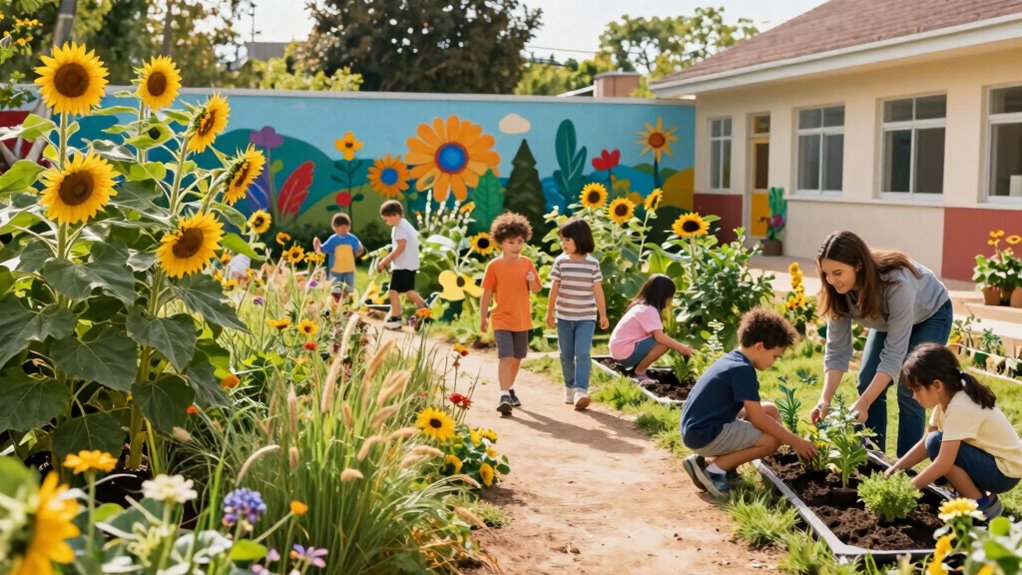
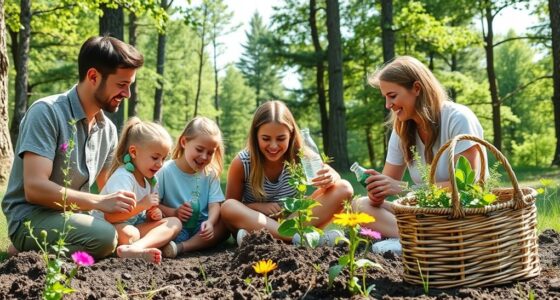
Teachers are transforming schoolyards into vibrant, engaging spaces where students can explore, play, and learn beyond the classroom. One way they’re doing this is by introducing wildflower planting projects. Instead of manicured lawns, you see teachers encouraging students to seed native wildflowers, which attract pollinators like bees and butterflies. This not only beautifies the space but also turns the yard into a living classroom about ecosystems and environmental stewardship. When students participate in planting and caring for wildflowers, they develop a deeper appreciation for nature and learn about biodiversity firsthand. These wildflower patches become dynamic features that change with the seasons, offering ongoing opportunities for observation and discovery. Incorporating native plants can also support local biodiversity, making the schoolyard a crucial habitat for wildlife.
Teachers transform schoolyards with wildflower projects, fostering nature appreciation and seasonal discovery.
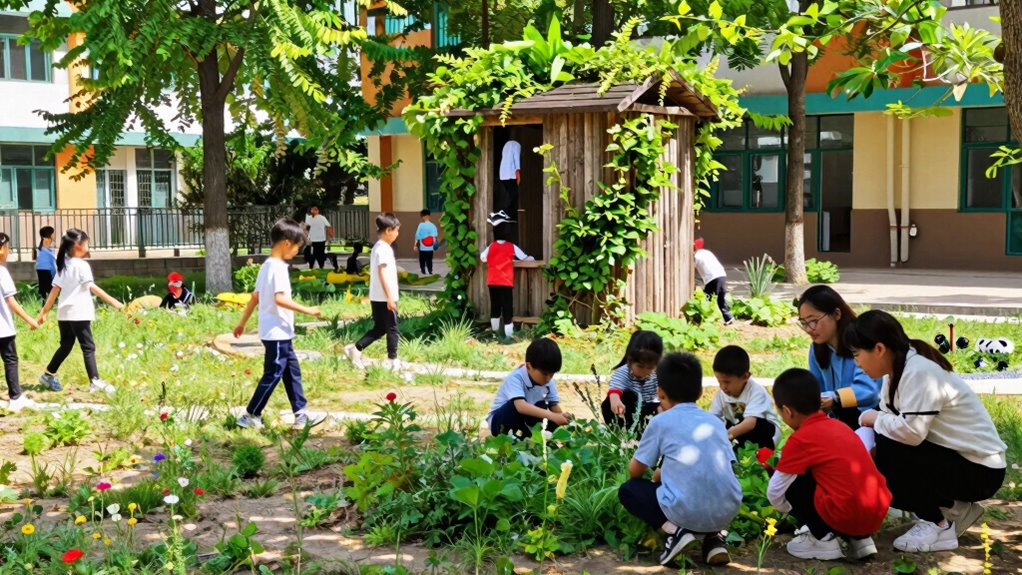
Alongside wildflower planting, teachers are creating natural playgrounds that replace traditional plastic structures with more organic elements. These natural playgrounds incorporate logs, boulders, sand, and water features, allowing kids to climb, build, and experiment in a setting that mimics the outdoors. Such environments promote imaginative play and physical activity while encouraging children to develop motor skills and problem-solving abilities. When you see students navigating a mound of dirt or balancing on a fallen tree, it’s evident they’re gaining confidence and resilience. Natural playgrounds also foster social interaction as children collaborate, negotiate, and share ideas while exploring these less structured, more organic spaces. Additionally, incorporating sustainable design principles can enhance the environmental benefits of these spaces.
Implementing wildflower planting and natural playgrounds isn’t just about making the yard look more appealing; it’s about transforming the way students connect with their environment. You become part of a movement that values sustainability, creativity, and experiential learning. By planting wildflowers, you’re cultivating an ecosystem right on school grounds, demonstrating that even small efforts can have a big impact on local biodiversity. Meanwhile, natural playgrounds challenge the idea that play must be confined to manufactured equipment, showing that nature itself offers endless opportunities for fun and discovery. When kids engage with these spaces, they learn to respect and care for the environment, building habits that can last a lifetime.
As a teacher or administrator, your role is crucial in designing and maintaining these spaces. You facilitate student involvement, nurture curiosity, and encourage responsibility for the environment. Over time, these wild, lively schoolyards become more than just outdoor spaces—they evolve into integral parts of the educational experience, fostering a generation that values nature, sustainability, and creative play.

California Wildflower Mixture – Bulk 1 Ounce Packet – Over 7,000 Native Seeds – Open Pollinated and Non GMO
PREMIUM CALIFORNIA WILDFLOWER MIXTURE. Elevate your garden with Sweet Yards California Wildflower Mixture, a bulk 1-ounce packet bursting…
As an affiliate, we earn on qualifying purchases.
As an affiliate, we earn on qualifying purchases.
Frequently Asked Questions
How Do Teachers Fund These Schoolyard Projects?
You fund these schoolyard projects through various funding sources, including grants, community donations, and fundraising events. You actively seek out grant applications from local, state, and national organizations dedicated to education and outdoor spaces. By applying for these grants and rallying community support, you secure the necessary funds. Your proactive approach guarantees that your schoolyard transforms into a lively, engaging environment for students to learn and play.
Are There Safety Concerns With Wild, Natural Schoolyards?
Yes, there are safety concerns with wild, natural schoolyards. You might worry about injuries or hazards, but these spaces also foster wildlife habitats and promote community engagement. When properly designed, they balance safety with natural exploration. Regular supervision and clear rules help manage risks, allowing children to safely connect with nature. Ultimately, the benefits of outdoor learning and ecological awareness outweigh potential dangers, enriching your students’ educational experience.
How Do Students Respond to the New Outdoor Environments?
You’ll notice students respond positively to the new outdoor environments, engaging more with nature and embracing outdoor creativity. They become curious explorers, enthusiastic to discover plants, insects, and natural features. Their enthusiasm for outdoor activities grows as they develop a deeper connection to nature. This heightened nature engagement boosts their confidence, collaboration, and problem-solving skills. Overall, students thrive in these wilder, more alive schoolyards, fostering a love for the outdoors.
What Training Do Teachers Need for Outdoor Teaching?
Imagine you’re a modern-day teacher, but you need to channel your inner Leonardo da Vinci. To teach outdoors effectively, you need training in outdoor curriculum design and environmental literacy. Your expertise should include safety protocols, engaging activities, and adapting lessons to nature’s rhythms. This preparation helps you create immersive experiences that inspire students, fostering curiosity and respect for the environment while ensuring a safe, enriching learning environment outside the traditional classroom walls.
How Do Wild Schoolyards Impact Academic Performance?
Wild schoolyards boost academic performance by increasing learning engagement and connecting students with wild habitats. When you incorporate natural elements into your lessons, students become more curious and motivated, leading to better focus and understanding. Outdoor environments stimulate creativity and critical thinking, making learning more memorable. As a result, students develop stronger skills and greater enthusiasm for education, all while fostering a deeper appreciation for nature.

Super Playground Fun Kit – 10 Piece Set – PE and Recess Equipment for Elementary School Kids
Ready set play
As an affiliate, we earn on qualifying purchases.
As an affiliate, we earn on qualifying purchases.
Conclusion
By embracing these innovative ideas, you can transform schoolyards into vibrant, engaging spaces that spark students’ creativity and connection to nature. You might worry it’s too much work or costly, but even simple additions like gardens or outdoor seating can make a big difference. Imagine students enthusiastically exploring, playing, and learning outside—your efforts creating a lively, inspiring environment. With small steps, you can make schoolyards a place where students genuinely thrive and discover joy in learning.

JOYIN Big Bubble Wands Set Bulk for Kids Summer Outdoor Toy Game Activity Party Favors, 18 Pcs Giant Bubble Maker with Tray, 12" Large, 6 Pcs Solution Suitable for All Age People
SUPER VALUE PACK. Our big bubble wands for kids Summer Bubble Wands Set includes 18 pieces of bubble…
As an affiliate, we earn on qualifying purchases.
As an affiliate, we earn on qualifying purchases.

The Ultimate Kids Gardening Set – The Perfect Toddler Gardening Set with Durable and Safe Tools for Endless Outdoor Fun – Great for Easter Gifting to Spark Joy & Creativity in Your Little Gardener
All-in-One Gardening Adventure: ZICOTOs’ kids gardening set has it all! Gloves, a sturdy tote bag, a 22oz kids…
As an affiliate, we earn on qualifying purchases.
As an affiliate, we earn on qualifying purchases.