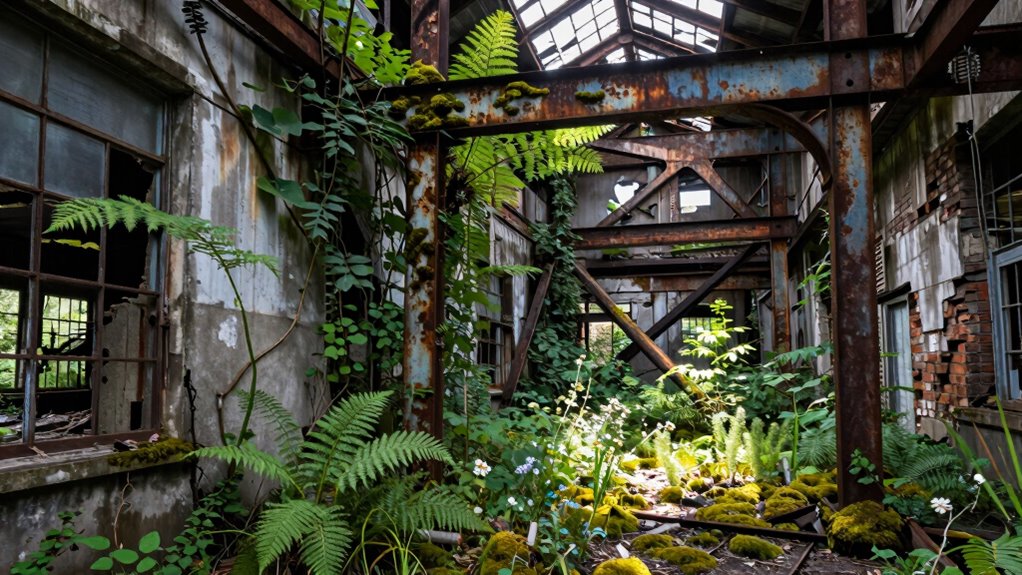

Abandoned places develop surprisingly resilient ecosystems, with plants, insects, birds, and mammals thriving amid natural succession. These areas serve as essential refuges for species losing habitats elsewhere, creating unique biodiversity hotspots. While some invasive species pose challenges, careful management can restore ecological balance. Understanding these complex dynamics shows how nature reclaims and stabilizes disturbed areas over time. Keep exploring, and you’ll uncover even more fascinating insights into how these abandoned sites become vibrant, self-sustaining ecosystems.
Key Takeaways
- Abandoned sites undergo natural succession, creating diverse habitats for various plants and animals.
- They often serve as critical refuges for species losing habitat elsewhere.
- Ecosystems in abandoned places can be surprisingly resilient and rich in biodiversity.
- Managing these areas involves balancing ecological growth with invasive species control.
- Recognizing their ecological value informs conservation efforts and sustainable restoration strategies.

When humans leave abandoned places behind, nature quickly begins to reclaim the space, creating unique ecosystems that thrive in these neglected environments. These areas transform into pockets of biodiversity, often hosting plants, animals, and fungi that adapt to the altered conditions. These emergent ecosystems can be surprisingly resilient, sometimes rivaling more traditional habitats in diversity and stability. However, understanding and managing these ecosystems present significant challenges. Restoration efforts in abandoned sites aren’t straightforward; they require careful planning to balance the natural rebirth with human interests. Restoration a site can mean removing invasive species that threaten native flora or stabilizing structures to prevent environmental degradation. Each effort involves navigating complex ecological dynamics, making restoration a delicate task that demands expertise and patience.
Despite these challenges, conservation efforts are increasingly recognizing the ecological value of abandoned places. These sites often serve as refuges for species that have lost habitat elsewhere, acting as critical sanctuaries in a rapidly changing world. Many conservation initiatives focus on protecting these emergent ecosystems, encouraging their natural development rather than trying to revert them to previous states. This approach can sometimes conflict with human safety or land use plans, which complicates conservation strategies. Balancing ecological preservation with local needs becomes a key concern, especially when abandoned sites are near urban areas or farmland.
You’ll notice that abandoned places often develop their own natural succession over time. Plants like trees, shrubs, and grasses colonize the area, providing shelter for birds, insects, and small mammals. Over time, these ecosystems can become surprisingly resilient, sometimes rivaling more traditional habitats in diversity and stability. Yet, this natural process isn’t without its issues. Invasive species may gain a foothold, outcompeting native plants and disrupting the delicate balance. Managing these invasives becomes part of the broader restoration challenge, requiring ongoing effort and monitoring. Additionally, natural filtration systems can help maintain water quality in some abandoned pools or water bodies, supporting biodiversity. Recognizing the importance of ecosystem services in these environments can guide effective conservation strategies. Furthermore, understanding the role of ecological succession can help predict the future development of these ecosystems and inform management decisions. In some cases, the presence of soil health plays a critical role in the recovery and stability of these ecosystems.
Conservation efforts are evolving to better understand these dynamic environments. Instead of imposing rigid interventions, many organizations now prioritize minimal disturbance, allowing nature to take its course while providing support when necessary. This approach respects the natural resilience of abandoned ecosystems and reduces human impact. Still, it’s important to recognize that some intervention is often needed—whether to control invasive species, prevent erosion, or protect endangered species that have found sanctuary in these abandoned landscapes. Recognizing that restoration techniques vary based on specific site conditions can improve the success of conservation projects. Ultimately, the surprising ecology of abandoned places underscores their importance, but also highlights the complex, ongoing challenges faced in conserving and restoring these unique environments.

Invasive Plants: Guide to Identification and the Impacts and Control of Common North American Species
As an affiliate, we earn on qualifying purchases.
As an affiliate, we earn on qualifying purchases.
Frequently Asked Questions
How Do Animals Discover Abandoned Sites?
You might wonder how animals discover abandoned sites. They rely on their keen senses and natural curiosity, often detecting changes caused by human impact. As ecological succession begins in these areas, new habitats form, attracting animals seeking food and shelter. Your presence and activity influence these discoveries, but over time, nature reclaims spaces, making abandoned sites appealing to wildlife as ecosystems evolve and flourish in these quiet, untouched corners.
Do Plants Thrive Better in Abandoned Areas?
Yes, plants tend to thrive better in abandoned areas because of plant succession and soil regeneration. When human activity stops, native plants gradually take over, leading to diverse plant communities. The soil recovers as organic material accumulates and nutrients are replenished naturally. You’ll see pioneer species first, followed by more complex plants, which creates a thriving ecosystem. This natural process allows plants to flourish in these once-disturbed sites.
Are Abandoned Places Safe for Wildlife?
Abandoned places can be surprisingly safe for wildlife, especially as urban decay creates new habitats. You might worry about hazards like toxic materials, but many sites naturally undergo habitat restoration over time, reducing dangers. While some risks remain, these areas often support diverse species, making them important for conservation. So, if you’re exploring, remember to be cautious, but appreciate how these spaces can become essential refuges for wildlife.
What Role Do Fungi Play in These Ecosystems?
Fungi play a vital role in abandoned ecosystems through fungal succession and mycelium networks. You’ll notice these networks spread extensively, breaking down decaying organic matter and recycling nutrients. As succession progresses, different fungi colonize, fostering soil health and supporting plant growth. You can observe how mycelium connects various organisms, facilitating communication and nutrient transfer, which sustains the ecosystem’s balance and promotes biodiversity in these forgotten places.
How Long Does It Take for Ecosystems to Fully Develop?
Ecosystems typically take decades to fully develop through urban succession and ecological succession processes. You might see initial pioneer species within a few years, but it can take 50 to 100 years for complex, mature ecosystems to establish. During this time, plants, fungi, and animals adapt and change, gradually transforming abandoned areas into vibrant habitats. Patience is key, as nature steadily reclaims spaces, creating rich, resilient environments over time.
Conclusion
As you explore abandoned places, remember they’re like silent gardens, teeming with life waiting to reclaim what was once theirs. I once watched a lone fox wandering through an empty factory, a quiet reminder that nature’s resilience is unstoppable. These forgotten sites aren’t dead—they’re reborn, showcasing an astonishing ecological dance. Embrace the hidden stories they hold; they teach us that even in abandonment, life finds a way to thrive, resilient and unstoppable.