Neighbors are transforming sidewalk tree beds into mini habitats that support urban wildlife and improve neighborhood greenery. By planting native flowers, shrubs, and small trees, you invite pollinators like bees and butterflies while creating safe passages for birds and insects. These efforts help reduce heat, clean the air, and turn small green spaces into educational spots for the community. If you keep exploring, you’ll discover simple ways to make your neighborhood more vibrant and sustainable.
Key Takeaways
- Neighbors are transforming sidewalk tree beds into native plant habitats to support local pollinators and urban wildlife.
- These mini habitats improve neighborhood aesthetics and create peaceful green spaces amid urban environments.
- Community-led planting efforts foster neighborhood pride, environmental stewardship, and collaborative engagement.
- Native plantings in sidewalk beds enhance biodiversity, attract bees and butterflies, and provide ecological corridors.
- Such habitat conversions contribute to urban cooling, air quality, and overall neighborhood resilience.
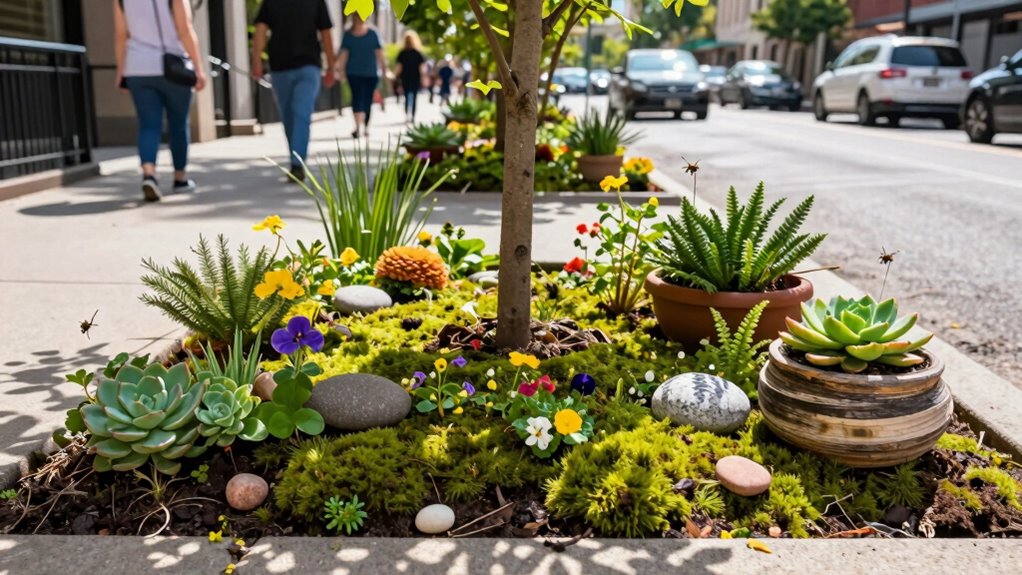
As more neighbors recognize the value of local ecosystems, many are transforming their sidewalk tree beds into vibrant mini habitats. This movement isn’t just about beautifying the neighborhood — it’s about supporting urban wildlife and fostering community engagement. When you turn a simple strip of land into a thriving habitat, you create a space where birds, bees, butterflies, and other small creatures can find food, shelter, and safe passage through the city. It’s a small but impactful way to reconnect with nature amidst the concrete.
By planting native flowers, shrubs, and even small trees, you invite urban wildlife to visit and flourish. These plants attract pollinators like bees and butterflies, which are essential for healthy ecosystems but are increasingly threatened by habitat loss. As you add native species, you help sustain local populations of insects and birds that rely on these plants for survival. Your sidewalk bed becomes more than just an aesthetic feature; it turns into a critical corridor for urban wildlife, supporting biodiversity right outside your door. Additionally, incorporating native plants ensures easier maintenance and better adaptability to local conditions. Recognizing the importance of biodiversity can inspire further efforts to protect and restore local habitats. Creating these mini habitats also helps combat urban heat, making neighborhoods cooler and more comfortable during the warmer months. Implementing pollinator-friendly plants can further enhance this effect by providing essential resources for bees and butterflies.
Community engagement plays a key role in this transformation. When neighbors collaborate on creating mini habitats, it sparks a sense of shared purpose and collective responsibility. You might organize planting days, share seeds, or exchange tips on native species. As more people get involved, the neighborhood begins to see itself as a steward of the local environment. This sense of ownership encourages ongoing maintenance, ensuring these habitats remain healthy and thriving over time.
Transforming sidewalk tree beds also creates opportunities for education and connection. Children and adults alike can learn about native plants, pollination, and the importance of conserving urban wildlife. These small green spaces become outdoor classrooms that foster environmental awareness and responsibility. Plus, as residents work together, they build stronger bonds, making the neighborhood more cohesive and engaged.
The benefits extend beyond ecology and community spirit. With more greenery and lively habitats, your neighborhood becomes more inviting and resilient. It can even improve air quality, reduce heat, and provide a peaceful retreat amid urban hustle. When you take part in turning sidewalk beds into mini habitats, you’re helping shape a more sustainable, vibrant neighborhood. It’s a simple act that sparks a ripple effect — inspiring others to see their surroundings as opportunities for positive change and fostering a community that values both its people and its environment.

Wildflower Seeds Bulk Mix – 10,000+ Perennial & Annual Seeds – Texas, California & Florida Native Wildflower Seeds for Hummingbirds, Butterflies, & Cut Flowers – Cosmos, Throw and Grow
- Wildflower Seed Mix: 25 diverse wildflower varieties
- High-Yield Packet: 10,000+ pure seeds included
- Attract Pollinators: Nectar-rich blooms for wildlife
As an affiliate, we earn on qualifying purchases.
As an affiliate, we earn on qualifying purchases.
Frequently Asked Questions
How Do Residents Ensure Their Mini Habitats Stay Environmentally Sustainable?
You guarantee your mini habitats stay sustainable by choosing native species, which thrive naturally and require less water and maintenance. Practice water conservation by watering only when needed and using mulch to retain moisture. Avoid invasive plants that can disrupt local ecosystems. Regularly check for pests without chemicals and promote biodiversity by planting a variety of native flowers and shrubs, creating a healthy, balanced environment that supports local wildlife.
Are There City Regulations Regarding Modifications to Sidewalk Tree Beds?
Think of city regulations as guardians of urban harmony. You need to check with local authorities before modifying sidewalk tree beds, as municipal policies often set rules for safety and sustainability. These policies symbolize a balance between community growth and nature preservation. Ignoring them risks fines or removal. So, stay informed through your city’s urban planning department, and guarantee your mini habitat aligns with regulations—protecting both your project and the neighborhood’s well-being.
What Types of Plants Are Most Suitable for Small Urban Habitats?
You should choose native plants and drought-resistant species for small urban habitats, as they thrive with minimal water and adapt well to city conditions. Opt for low-growing ground covers, ornamental grasses, or small shrubs that don’t block sidewalks. These plants help sustain local ecosystems, require less maintenance, and stay resilient during dry spells. Selecting the right plants guarantees your mini habitat flourishes while complying with city guidelines.
How Do Neighbors Coordinate to Maintain Shared Sidewalk Tree Beds?
Ever wondered how neighbors coordinate to maintain shared sidewalk tree beds? You can foster community volunteerism by organizing regular clean-up days and planting events. Effective neighborhood communication is key—use group chats, flyers, or meetings to assign roles and share updates. By working together and staying connected, you guarantee the tree beds thrive and become a beautiful, shared space that everyone can enjoy. Isn’t that a neighborhood worth investing in?
What Impact Do These Habitats Have on Local Wildlife Diversity?
You create valuable wildlife corridors and support pollinators by turning sidewalk tree beds into mini habitats. These habitats attract insects, birds, and small mammals, increasing local wildlife diversity. Your efforts provide food, shelter, and breeding sites, helping ecosystems thrive. As a result, your neighborhood becomes a vibrant, interconnected space where various species can flourish, enriching the urban environment and fostering ecological balance.
Conclusion
By transforming sidewalk tree beds into mini habitats, you’re showing that small actions can make a big difference. Your efforts not only boost local biodiversity but also inspire others to follow suit. Keep in mind, a little goes a long way, and sometimes, the smallest changes can turn a neighborhood into a living, breathing sanctuary. So, don’t hesitate—roll up your sleeves and let your passion for nature shine through. After all, every little bit helps!