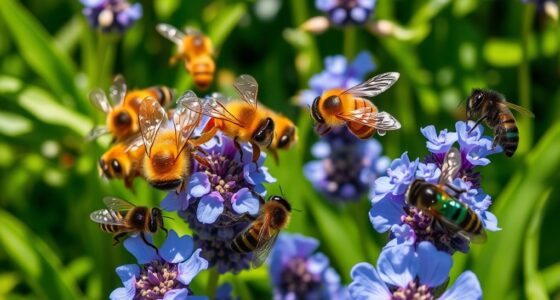
Honeybees may be small, but their impact on our world is enormous. They pollinate countless plants, support food production, and produce honey we enjoy. Yet, these vital insects face many challenges that threaten their survival and, ultimately, our own well-being. Understanding how honeybees keep our environment vibrant and productive can reveal ways we might help protect them. What actions can we take to ensure their buzzing continues for generations to come?

Prime made for students and young adults
- Fast, free delivery for dorm and study essentials
- Prime Video and Amazon Music included
- Member-only deals
The Daily Life and Habitats of Honeybees
Honeybees live in organized colonies that can be found in a variety of habitats, from sheltered tree hollows to man-made hives. Inside, you’ll find a strict hierarchy: a queen, workers, and drones.
Workers are busy gathering nectar, caring for the young, and maintaining the hive. They communicate through intricate dances and pheromones, sharing vital information quickly. Your day revolves around their tasks, which are seasonal and weather-dependent.
During warm months, they’re constantly flying out, collecting resources, and defending their home from intruders. The hive itself is a buzzing hub of activity, with hexagonal cells made of beeswax that store honey and pollen, and serve as nurseries.
Honeybees adapt their routines to environmental changes, ensuring their colony’s survival year-round.
As an affiliate, we earn on qualifying purchases.
Pollination: Nature’s Busy Helper
Although they’re best known for producing honey, honeybees play a crucial role in pollination, helping plants reproduce and ensuring healthy ecosystems. When you see a honeybee visit a flower, it’s not just collecting nectar; it’s transferring pollen from one bloom to another. This process fertilizes plants, allowing seeds and fruits to develop. Without bees, many crops like apples, almonds, and berries would struggle to grow or even disappear. A variety of pollination methods, including honeybees, support the diversity of plant life critical for a balanced environment. As you observe bees buzzing from flower to flower, remember they’re vital helpers in maintaining biodiversity and food supplies. Their diligent work supports the growth of plants that provide oxygen, shelter, and nourishment for countless creatures, including humans. In this way, honeybees keep our environment balanced and thriving.
The Production and Importance of Honey
Have you ever wondered how honey is made and why it’s so valuable? Honey starts when bees collect nectar from flowers using their proboscis. They store it in their honey stomach, where enzymes break down complex sugars into simpler ones.
Back at the hive, bees pass the nectar to house bees, who chew and further process it. Once the nectar is transformed, they store it in honeycomb cells and fan it with their wings to evaporate excess moisture.
When the honey reaches the right consistency, bees cap the cells with beeswax. Honey provides bees with energy and sustenance, especially during winter.
For us, honey’s importance lies in its role as a natural sweetener, medicinal properties, and its contribution to the health of the entire ecosystem.
Challenges Facing Honeybees Today
Today, honeybees face numerous threats that jeopardize their survival and the vital pollination services they provide. Pesticides are a major danger, weakening bee immune systems and causing disorientation. Habitat loss from urbanization and agriculture reduces their foraging options and nesting sites. The decline in bee populations highlights the importance of supporting Remote Hackathons and other collaborative efforts to develop innovative solutions for bee conservation. Disease and parasites, like Varroa mites, spread quickly and weaken colonies. Climate change alters flowering times, making it harder for bees to find food when they need it most. Monoculture farming limits diversity, reducing the nutrients bees get from varied plants. Additionally, stress from transportation and large-scale hive management impacts their health. These challenges threaten not only bee populations but also the crops and ecosystems that rely on their pollination. Addressing these issues is critical for maintaining healthy bees and a balanced environment.
How We Can Support Honeybee Survival
How can we effectively support honeybee survival and ensure their vital role in ecosystems? First, plant more diverse, bee-friendly flowers in your garden or community spaces. Avoid pesticides, especially neonicotinoids, which harm bees’ health. Support local beekeepers by buying their honey and products, encouraging sustainable practices. Educate others about the importance of bees and the threats they face. Advocate for stronger regulations to protect natural habitats and reduce pesticide use. Reduce your carbon footprint, as climate change impacts bee populations. Participate in or donate to conservation programs focused on bee health. Additionally, staying informed about Forsale 100 and other related topics can help you make better choices for bee conservation. By taking these steps, you help create a safer environment for honeybees, ensuring they continue to pollinate crops and wild plants that sustain ecosystems and our food supply.
Conclusion
By understanding how honeybees work and the vital roles they play, you can make a difference. Support local beekeepers, plant bee-friendly flowers, and avoid pesticides. Every small action helps protect these incredible insects, ensuring they continue to pollinate, produce honey, and keep our world vibrant and buzzing. Together, we can ensure honeybees thrive, benefiting the environment, agriculture, and future generations. Your efforts truly matter in keeping our world sweet and buzzing.
Fall Picks
fall essentials
As an affiliate, we earn on qualifying purchases.