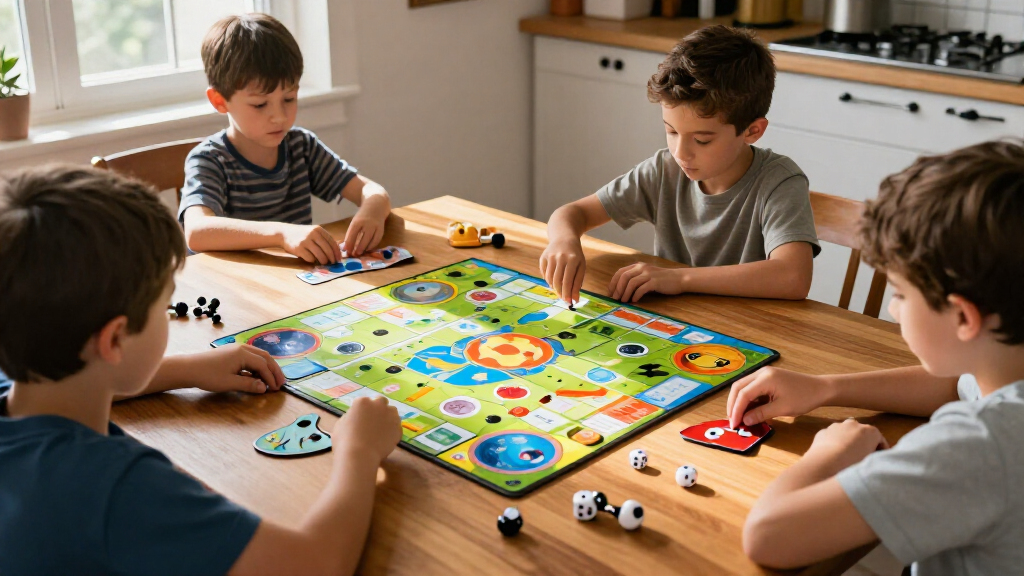
Educational science board games can make biology, chemistry, earth science, and general science easier to explore through play. My best overall pick is Cytosis, which turns cell biology into a strategic game; Ecosystem stands out for habitat-building, while Periodic offers a hands-on route into the elements. The main tradeoff is between games that teach a focused subject through mechanics and lighter options built around trivia, humor, or quick family play. Age, reading comfort, and appetite for strategy matter as much as the science topic. Read on for the full breakdown and help matching a game to your group.

Prime made for students and young adults
- Fast, free delivery for dorm and study essentials
- Prime Video and Amazon Music included
- Member-only deals
Key Takeaways
- Cytosis and Peptide stand apart for players who want biology concepts tied closely to strategic decisions, while lighter games lean more on questions, matching, or theme.
- Ecosystem makes habitat relationships its central play idea, giving ecology-focused families a different choice from the lineup’s chemistry and cell biology games.
- Periodic and Ion both center on chemistry, but buyers should choose based on whether their group is more interested in exploring elements or building compounds.
- Science Trivia Challenge and Rock Bingo favor accessible question-and-recognition play, which can suit mixed ages better than rules-heavy strategy games.
- Organ Attack uses humor and anatomy, while Planet brings a 3D strategy format; their appeal depends on theme and table presence as much as lesson depth.
| Ecosystem – A Family Card Game about Building Habitats |  | Best for Ecology Learning | Age range: 12 years and up | Players: 2–6 | Play time: 15–20 minutes | VIEW LATEST PRICE | See Our Full Breakdown |
| Genius Games Peptide: A Protein Building Game | Educational Strategy Card Game for Kids and Adults |  | Best for Protein Synthesis | Age range: 10+ | Players: 2–5 | Play time: 30–45 minutes | VIEW LATEST PRICE | See Our Full Breakdown |
| Cytosis: A Cell Biology Board Game |  | Best for Detailed Cell Biology | Age range: 10 years and up | Players: 2, 3, 4 or 10+ | Estimated playing time: 90 minutes | VIEW LATEST PRICE | See Our Full Breakdown |
| The Awkward Yeti Organ Attack Card Game – Funny Anatomy Game, Medical Gift |  | Best for Lighthearted Anatomy | Age range: 8+ | Players: 2–6 | Included components: Cards | VIEW LATEST PRICE | See Our Full Breakdown |
| MindWare Science Trivia Challenge Game – Educational & Fun for Families & Kids Ages 7 & Up | 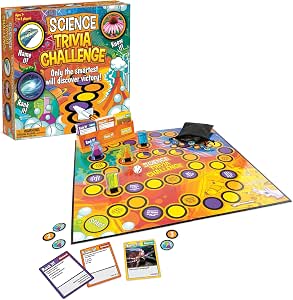 | Best for Broad Science Quizzes | Players: 4 | Container type: Box | Language: English | VIEW LATEST PRICE | See Our Full Breakdown |
| Blue Orange Games Planet Board Game |  | Best for Environmental Systems Thinking | Brand: Blue Orange | Players: 2–4 | Age range: 8 years and up | VIEW LATEST PRICE | See Our Full Breakdown |
| Periodic: A Game of the Elements |  | Best for Periodic Table Learning | Brand: Genius Games | Players: 2–6 | Age range: 10 years and up | VIEW LATEST PRICE | See Our Full Breakdown |
| Genius Games Ion: A Compound Building Game (2nd Edition) |  | Best for Learning Ionic Bonding | Model name: Ion: A Compound Building Game (2nd Edition) | Manufacturer: Genius Games | Item type: Card Game | VIEW LATEST PRICE | See Our Full Breakdown |
| National Geographic Rock Bingo and Gemstone Trivia Game for Kids |  | Best for Young Geology Beginners | Brand: Blue Marble | Age range: 6 years and up | Educational objective: Learning about rocks, minerals, and gemstones | VIEW LATEST PRICE | See Our Full Breakdown |
| educational science board game | Age range | Players | Included components |
|---|---|---|---|
| Ecosystem | 12 years and up | 2–6 | Game |
| Genius Games Peptide: A Protei | 10+ | 2–5 | Peptide card game |
| Cytosis: A Cell Biology Board | 10 years and up | 2, 3, 4 or 10+ | Cytosis: A Cell Biology Game |
| The Awkward Yeti Organ Attack | 8+ | 2–6 | Cards |
| MindWare Science Trivia Challe | — | 4 | — |
| Blue Orange Games Planet Board | 8 years and up | 2–4 | 4 planet cores, 50 magnetic continent tiles, 45 animal cards, 5 habitat objective cards, first player token, illustrated rules |
| Periodic: A Game of the Elemen | 10 years and up | 2–6 | — |
| Genius Games Ion: A Compound B | 8 years and up | — | Science Behind Booklet |
| National Geographic Rock Bingo | 6 years and up | — | Bag, cards, game board, gemstones, instructions, rock specimens |
More Details on Our Top Picks
Ecosystem – A Family Card Game about Building Habitats
Ecosystem is my pick for families who want science learning centered on the relationships between living things, rather than a quiz of isolated facts. Players select animals and habitats to build an ecosystem, turning ideas like biodiversity and balance into choices with consequences. Its 15–20-minute playtime makes it easier to fit into a short family session than Cytosis, which is listed at about 90 minutes. The tradeoff is depth: this is a more approachable ecology introduction, not a detailed simulation for players seeking advanced biological content. Its 12+ age guidance also makes it a less natural fit for younger children than Organ Attack, which starts at age 8. I’d choose it for a compact, strategic ecology lesson, but not for a long or highly technical science game.
Pros:- Connects animal and habitat choices to ecology and biodiversity.
- Short 15–20-minute playtime suits brief family game sessions.
- Strategic card choices invite players to weigh how parts of an ecosystem fit together.
Cons:- The ecology treatment may feel too simple for advanced learners.
- Its short playtime may not satisfy groups looking for a longer strategic game.
Best for: Families with players aged 12 and up who want a short, strategy-focused introduction to habitats and biodiversity.
Not ideal for: Families with younger children, or science enthusiasts seeking detailed ecological simulation and longer gameplay.
- Age range:12 years and up
- Players:2–6
- Play time:15–20 minutes
- Material:Cardboard
- Included components:Game
- Format:Card game
Our verdict“Choose Ecosystem for a short, accessible ecology game for ages 12 and up; pick Cytosis instead for a longer, more detailed biology session.”
Genius Games Peptide: A Protein Building Game | Educational Strategy Card Game for Kids and Adults
Peptide earns its place for players who want a focused introduction to protein synthesis, amino acids, and cell organelles through strategic card play. The subject is narrower and more advanced than the habitat-building decisions in Ecosystem, making Peptide a better match for biology study than for a broad, casual science sampler. Its 30–45-minute session gives the concepts more room than a quick trivia round, while its 2–5 player count fits a family or small classroom group rather than a large gathering. The listed starting age of 10 reflects that the science and strategy may ask more of younger players. Compared with Cytosis, Peptide is the more compact card-game choice, though the supplied details don’t list a fact booklet or the same breadth of cell simulation. I’d favor it for guided biology learning, not for very young children.
Pros:- Centers play on protein synthesis, amino acids, and cell organelles.
- Combines biology concepts with strategic card decisions.
- A 30–45-minute session allows more time with the subject than a short trivia game.
- Designed for both children and adults, supporting mixed-age play.
Cons:- Its biology focus and complexity may not suit children under 10.
- The 2–5 player limit makes it a poor fit for large groups.
- The supplied product details do not list a science booklet or other reference material.
Best for: Families or small classroom groups with players aged 10 and up who want to learn protein synthesis through strategic play.
Not ideal for: Groups with children under 10, large classes, or players who prefer broad science topics over focused cell biology.
- Age range:10+
- Players:2–5
- Play time:30–45 minutes
- Format:Strategy card game
- Included components:Peptide card game
- Manufacturer:Genius Games
- Model year:2014
Our verdict“Choose Peptide when your group wants a focused, strategic protein-synthesis lesson and can play in a small group.”
Cytosis: A Cell Biology Board Game
Cytosis is my choice for players who want cell biology to drive the whole game, not just appear as a handful of questions or card effects. Its worker-placement system has players build enzymes, hormones, and organelles, linking strategic decisions to the parts and processes of a human cell. The included fact booklet reviewed by PhDs adds a reference point that the supplied details for Peptide don’t list. That depth comes with a real time commitment: an estimated 90 minutes is much longer than Peptide’s 30–45 minutes or Ecosystem’s 15–20. The age guidance starts at 10, but younger players may find the combination of strategy and science demanding. I’d choose Cytosis for a deliberate classroom or family session, and skip it when a quick, lightweight game is the priority.
Pros:- Connects worker-placement decisions to enzymes, hormones, and organelles.
- Includes a fact booklet reviewed by PhDs.
- Offers a more detailed cell-biology experience than the shorter Peptide card game.
Cons:- The estimated 90-minute playtime is a substantial commitment.
- The blend of strategy and biology may be complex for younger players.
- Its stated player range does not make it a practical choice for very large groups.
Best for: Science-minded families and educators who want an extended, strategy-based lesson on human cell biology for players aged 10 and up.
Not ideal for: Groups seeking a quick game, younger children who may find worker placement and cell concepts demanding, or very large groups.
- Age range:10 years and up
- Players:2, 3, 4 or 10+
- Estimated playing time:90 minutes
- Genre:Educational, Family
- Included components:Cytosis: A Cell Biology Game
- Mechanic:Worker placement
- Set name:Cytosis
- Manufacturer:FLAHC
Our verdict“Choose Cytosis for a long, detailed cell-biology game with a science reference booklet, rather than a quick biology card session.”
The Awkward Yeti Organ Attack Card Game – Funny Anatomy Game, Medical Gift
Organ Attack makes human anatomy the theme of a lively card game: players use medical afflictions to attack and immunity cards to defend. That playful framing gives it a different learning route from Cytosis, whose worker placement is built around cell processes and includes a PhD-reviewed fact booklet. Organ Attack is better suited to a casual group that wants anatomy in the mix without committing to Cytosis’s estimated 90-minute session. Its age guidance starts at 8, below Ecosystem’s 12+, though players may enjoy the jokes and card effects more if they already recognize some anatomy terms. The tradeoff is that the supplied details don’t describe a structured reference guide, so it may prompt interest more readily than provide a deep lesson. I’d choose it for playful group learning, not formal biology instruction.
Pros:- Uses anatomy and medical afflictions as the basis for interactive card play.
- Age guidance starts at 8, younger than Ecosystem’s listed starting age.
- The card format supports casual group play without Cytosis’s stated 90-minute session.
- Includes cards for attacks and immunity defenses.
Cons:- Players may need some prior anatomy knowledge to get the most from the theme.
- The supplied information does not describe a fact booklet or structured teaching guide.
- The 2–6 player limit does not suit larger groups.
Best for: Families with children aged 8 and up who want an anatomy-themed card game for light, social play.
Not ideal for: Teachers seeking a structured anatomy curriculum or groups who want a detailed science reference alongside gameplay.
- Age range:8+
- Players:2–6
- Included components:Cards
- Material:Paper
- Item dimensions:8 × 6 inches
- Model name:TAY-GM-P
- Expansion names:Malady Madness, Free Radical, Teams
- Package quantity:1
Our verdict“Choose Organ Attack for playful anatomy-themed family game nights, but look to Cytosis for a more detailed, reference-supported biology lesson.”
MindWare Science Trivia Challenge Game – Educational & Fun for Families & Kids Ages 7 & Up
MindWare Science Trivia Challenge is the broad-topic option in this group: players answer science questions across challenge cards with varying difficulty and earn observation tokens. That format makes it easier to sample different kinds of science than Peptide, which focuses on protein synthesis, or Organ Attack, which centers on anatomy. Its age guidance starts at 7, making it the youngest listed fit among these picks, but mixed difficulty cuts both ways: a question can feel too easy for one player and too hard for another. The product data lists four players, so I would not choose it for a larger class without checking whether that group size works for the intended session. It also requires manual setup and game management. I’d pick it for flexible science question practice, not for a strategic subject simulation like Cytosis.
Pros:- Covers science through question-based challenges rather than one narrow topic.
- Varying challenge levels can accommodate a range of ages and knowledge.
- The supplied description supports both individual and group play.
- Observation skills are listed as an educational objective.
Cons:- Different challenge levels may still leave some players with questions that feel too easy or too difficult.
- Manual setup and game management add work during play.
- The listed player count of four may limit larger family or classroom use.
Best for: Families with children aged 7 and up who want a broad science question game with multiple challenge levels.
Not ideal for: Groups seeking a strategic science simulation, players who dislike trivia, or gatherings larger than the listed four-player count.
- Players:4
- Container type:Box
- Language:English
- Educational objectives:Observation skills, social skills
- Style:Trivia
- Genre:Educational, Trivia
- Operation mode:Manual
- Size:Medium
Our verdict“Choose MindWare for broad, age-flexible science trivia, but pick Cytosis or Peptide when you want science concepts woven into strategic play.”
Blue Orange Games Planet Board Game
Planet makes ecology spatial. Players arrange magnetic continent tiles on three-dimensional planet cores, then work toward habitat objectives and attract animals. That tangible map-building gives environmental relationships a visible form, making it a strong choice for families who want science ideas woven into strategy rather than delivered as trivia. Compared with Ecosystem, which focuses on assembling habitats through cards, Planet makes the landscape itself the main puzzle. The tradeoff is a more involved setup and rules explanation, so it is less suited to very young players seeking a quick start. Its 2–4 player limit also makes it a weaker fit for a large classroom group than Periodic. I’d choose it for family play where visual, hands-on world-building matters more than a direct lesson in scientific vocabulary.
Pros:- Three-dimensional magnetic planet cores make habitat building tactile and easy to see.
- Habitat objectives and animal cards connect choices about terrain with ecosystem themes.
- Strategy can engage adults alongside school-age children.
- Magnetic continent tiles support repeated rearranging during play.
Cons:- The rules and objective system may take time to explain to younger players.
- Only accommodates two to four players, limiting its use with larger groups.
- Its environmental theme is less focused on formal science terminology than chemistry games such as Periodic.
Best for: Families with children around age 8 and up who enjoy spatial strategy and want environmental themes built into play.
Not ideal for: Teachers or families needing a quick game for a large group; the rules need an introduction and play is limited to four people.
- Brand:Blue Orange
- Players:2–4
- Age range:8 years and up
- Genre:Family, Strategy
- Edition:Standard Edition
- Included components:4 planet cores, 50 magnetic continent tiles, 45 animal cards, 5 habitat objective cards, first player token, illustrated rules
- Model number:7700
Our verdict“Choose Planet for family-friendly ecological strategy with a hands-on map-building puzzle, but skip it if you need a fast, large-group classroom game.”
Periodic: A Game of the Elements
Periodic puts chemistry at the center of the decision-making: players use strategic movement across a periodic-table board while engaging with elements and chemical trends. That makes it the clearest pick here for older children or families who want game time to reinforce classroom chemistry, rather than simply provide a science-themed setting. Compared with Ion: A Compound Building Game, Periodic offers a broader focus on the table and its patterns, while Ion narrows the lesson to ionic bonding and compounds. That breadth brings a higher learning curve; players unfamiliar with chemistry may find the mechanics harder to enjoy at first. Its 2–6 player range gives it more group flexibility than Planet, but it still suits players ready to think strategically rather than beginners looking for a light introduction.
Pros:- Makes the periodic table and chemical trends part of strategic play.
- Supports groups of two to six players.
- A focused fit for classroom reinforcement or family play with chemistry-minded players.
Cons:- The concepts and strategy may be too demanding for younger children.
- Players without chemistry familiarity may not get as much from the subject matter.
- Its specialized chemistry focus is less accessible than the broader geology activities in Rock Bingo.
Best for: Families, chemistry students, and teachers seeking a strategy game that explores the periodic table and chemical trends with players aged 10 and up.
Not ideal for: Children under 10 or groups wanting a casual, low-explanation game; the chemistry focus can be hard to appreciate without some background.
- Brand:Genius Games
- Players:2–6
- Age range:10 years and up
- Genre:Strategy
- Edition:Standard Edition
- UPC:653341735102
- Model number:GOT1008
Our verdict“Pick Periodic when players are ready for strategic chemistry centered on the periodic table; choose a more introductory science game for younger or casual groups.”
Genius Games Ion: A Compound Building Game (2nd Edition)
Ion gives chemistry a narrower, more hands-on target: drafting cards to form compounds while learning about ionic charges and bonding. That specific focus makes it a useful classroom companion or study-game option for players who need to practice how ions combine, rather than survey chemistry broadly as they do in Periodic. The second edition also includes an optional radioactive decay mode, giving experienced players another layer to explore. The tradeoff is that the subject and rules can feel demanding for younger children, despite the listed age range beginning at eight. It is also a card game rather than a spatial board-building experience like Planet, so buyers seeking a large shared game board should look elsewhere. I’d favor Ion when targeted chemistry practice matters more than broad science variety.
Pros:- Card drafting ties play directly to ionic charges and compound building.
- The included Science Behind booklet supports learning beyond the turn-by-turn mechanics.
- Optional radioactive decay rules add a more advanced mode.
- Compact card-game format offers a different style from board-focused Planet and Periodic.
Cons:- Rules and chemistry concepts may be challenging for younger players.
- The focused ionic-bonding topic offers less breadth than Periodic’s periodic-table approach.
- The full experience depends on having other players available.
Best for: Chemistry teachers, high school students, and families who want a focused activity about ionic charges and compound formation.
Not ideal for: Buyers seeking a simple first science game for young children or a broad, board-centered group experience; the chemistry rules require attention and multiple players.
- Model name:Ion: A Compound Building Game (2nd Edition)
- Manufacturer:Genius Games
- Item type:Card Game
- Age range:8 years and up
- Edition:2nd Edition
- Included components:Science Behind Booklet
- Model year:2022
Our verdict“Choose Ion for focused practice with ionic bonding and compound formation, especially with a teacher or chemistry-minded group to guide play.”
National Geographic Rock Bingo and Gemstone Trivia Game for Kids
Rock Bingo is the most approachable geology entry in this group, combining bingo, mineral memory, gemstone trivia, and card games with a collection of rock and mineral specimens. The specimens give children something concrete to examine, while the mix of activities lets families change the format without switching to another product. Compared with the chemistry demands of Periodic or Ion, this set offers a gentler, object-based introduction to science for children from age six. Its tradeoff is that it leans on recognition and trivia more than strategic science decisions, so older students wanting deeper systems or chemistry practice may outgrow it. The many pieces also call for storage space and adult oversight with younger children. I’d choose it for a first geology-themed game, not for a strategy-focused game night.
Pros:- Includes more than 150 rock, mineral, and gemstone specimens for hands-on exploration.
- Bingo, memory, trivia, and card activities offer several ways to play.
- Age-six guidance makes it accessible to younger children than Periodic or Ion.
- Combines game materials with physical specimens to support visual learning.
Cons:- The activities offer less strategic depth than Planet or Periodic.
- The many pieces can take more room to store and organize.
- Younger children may need adult supervision while handling the specimens and components.
Best for: Families introducing children aged six and up to rocks, minerals, and gemstones through short, varied activities.
Not ideal for: Older students seeking sustained strategic play or a deeper chemistry lesson; this set emphasizes specimen recognition, bingo, and trivia.
- Brand:Blue Marble
- Age range:6 years and up
- Educational objective:Learning about rocks, minerals, and gemstones
- Included components:Bag, cards, game board, gemstones, instructions, rock specimens
- Item highlight:150+ rocks and minerals, Rock Bingo, Mineral Memory, Gemstone Trivia, and card games
- Size:7.28 x 2.17 x 10.04 inches
- Model number:NGRKBINGO
- UPC:816448029387
Our verdict“Choose Rock Bingo for a younger child’s hands-on introduction to geology, but look to Planet or the chemistry games for deeper strategy and subject work.”
How We Picked
I compared the nine games by how directly their play connects to science learning, how approachable the rules and concepts appear for their intended audiences, and what kind of interaction they offer. I also looked at subject coverage, replay potential, and whether a game could work for a family night, a classroom, or a more focused learning session. A science theme alone did not earn a high position: the strongest fits make scientific ideas relevant to players’ choices rather than leaving learning to the box art or trivia prompts.
The ranking favors educational connection and repeatable play, then weighs accessibility and audience fit. That puts Cytosis first for combining a defined science subject with strategic play, while Ecosystem and Periodic offer strong alternatives for ecology and chemistry interests. Trivia, bingo, humor, and visually distinctive formats remain useful picks, but they rank lower for buyers seeking sustained subject-based strategy. Because the games cover different sciences and play styles, the best choice depends on the learners at the table, not on one universal definition of educational value.
Factors to Consider When Choosing Educational Science Board Games
Before choosing, match the game’s learning approach to how your group likes to play. A science game can teach through decisions, repeated exposure to terms, questions, or a memorable theme—and those approaches do not suit every learner equally. These factors can help you pick a game that gets played rather than one that feels like extra homework.
Choose the Learning Style, Not Just the Science Topic
Two games about the same subject can teach in very different ways. Strategy games ask players to connect ideas with decisions; trivia and bingo rely more on recall, recognition, or answering prompts. Think about whether your group enjoys making plans or prefers short turns and clear questions. A child who finds quizzes stressful may respond better to building or collecting mechanics, while a confident reader may enjoy a terminology-rich game. Avoid treating a familiar theme as proof that a game will teach well: the rules should give players a reason to use the science ideas. If you want a game to reinforce school content, check whether its learning approach matches how that learner practices best.
Balance Age Guidance With Reading and Rules
Age labels are useful starting points, but they cannot capture differences in reading fluency, attention span, or comfort with abstract ideas. A game aimed at older children may still work for a younger player with adult support, while a nominally family-friendly title may frustrate a child who dislikes reading cards. Before buying, look for rule complexity, turn length, and the amount of new vocabulary players meet at once. For mixed-age groups, consider whether younger players can contribute meaningfully without an adult translating every turn. A common mistake is choosing solely by youngest-player age and ignoring the patience of the whole table. Select a game whose challenge feels shared rather than one that leaves one player doing all the explaining.
Decide How Much Strategy Your Group Wants
Strategic games can prompt players to revisit concepts because choices have consequences, but they usually ask for more time and attention than quick question-based formats. That extra planning is worthwhile when the group enjoys competition and replaying a system to improve. For a casual family gathering or a short classroom activity, simpler turns may keep more people involved. Ask how long your group usually stays engaged before choosing a game with several linked decisions. Do not assume a more complex game is automatically more educational; complexity only helps when players understand the choices. A shorter game played willingly can offer more learning opportunities than a demanding one that rarely reaches the table.
Check Whether the Game Supports Your Learning Goal
Broad science interest and targeted practice call for different purchases. If a learner is curious about a specific area such as cells, protein-building, elements, compounds, habitats, anatomy, planets, or rocks, a focused theme can make the game easier to connect to that interest. If you want general family entertainment with a science flavor, a trivia or recognition format may cover a wider range of prompts without teaching one subject in depth. Decide whether the goal is introducing a topic, practicing vocabulary, or starting conversations. A common misstep is expecting a single game to substitute for a full lesson or textbook. Treat play as a way to spark and reinforce curiosity, then use discussion or other materials when you need more detail.
Match the Format to the Setting
A game that works well at a home table may not suit a classroom, travel bag, or large family gathering. Consider how many people need to play, how much table space the components require, and whether the group can manage setup and cleanup without help. Three-dimensional pieces or a broad board can add visual appeal, but they may be less convenient in tight spaces. Card-based formats can be easier to bring along, though small text or frequent card handling may create different barriers. For classrooms, think about whether learners can take turns efficiently and whether the game works for small groups. Choose based on the actual place and player count, not just the most eye-catching format.
Pay for Replay Value Only When It Fits
A game with varied strategies or repeated decision-making may stay engaging longer for players who enjoy mastering a system. That does not make it a better fit for someone who wants a one-evening introduction or a quick activity between other plans. Consider whether your group returns to games for fresh challenges or prefers novelty and variety across the shelf. Also check whether adults will need to explain concepts repeatedly; a game that depends on constant guidance can be a poor fit for independent play. Do not equate component count or a striking presentation with stronger learning. Choose a more involved format when its depth matches your group’s habits, not simply because it appears to offer more.
Frequently Asked Questions
Which game is the best starting point for a child who is new to science games?
Start by matching the format to the child’s confidence with reading, rules, and competition rather than choosing the broadest science title. Science Trivia Challenge and Rock Bingo use question or recognition-based play, which may feel more familiar than a strategy game. A child who enjoys planning and building may prefer Ecosystem or a focused biology game instead. Check the age guidance and be ready to play together if new terms or rules need explanation. The best first game is one the child is likely to ask to play again.
Are chemistry-focused games like Periodic and Ion interchangeable?
No. Both draw on chemistry, but they focus on different ideas and should not be treated as duplicate purchases. Periodic centers its theme on the elements, while Ion focuses on building compounds. If your learner is just getting acquainted with the periodic table, an elements-centered game may be a more direct match; if combining substances is the goal, look at Ion. Check the level of terminology and rules for the players, since familiarity with the topic can change how approachable either feels.
Can these games help with school learning, or are they mainly for entertainment?
They can support learning, but they are best treated as supplements rather than replacements for lessons or reference materials. Games such as Cytosis and Peptide tie biology themes to play, while trivia and bingo formats can encourage recall and conversation. The amount of learning depends on whether players notice and discuss the concepts, not just on the science theme. After a game, asking a child to explain a choice or a new term can connect play with what they are studying. For a specific curriculum goal, check the topic coverage before choosing.
Which type of game works best for a family with a wide age range?
Look for a format that lets younger players participate without requiring the oldest player to simplify every turn. Trivia and bingo-style play can be easier to adapt across ages, especially when adults can offer hints or help read prompts. Strategy games may be a better fit when everyone enjoys thinking through choices and younger players can handle the rules. A large age gap can also make topic familiarity uneven, so pick a theme that interests the whole group. If possible, play a short practice round before expecting everyone to compete on equal footing.
Should I choose a science game based on a child’s current favorite subject?
A current interest is a useful starting point because it can make a child more willing to engage with unfamiliar terms and rules. Choose the matching topic if the game’s play style also suits the child: a biology fan who dislikes long strategy turns may prefer a lighter anatomy format over a more involved cell game. Interest can also provide an opening to explore a subject the child has not studied yet, especially when the game makes the connection clear. Avoid selecting only by theme, since a mismatch in complexity can outweigh the subject appeal. The strongest choice pairs curiosity with a format the child enjoys.
Conclusion
For a science-focused game with strategic choices, I recommend Cytosis as the best overall; it gives cell biology a clear role in play. Ecosystem is my best value-style pick for families drawn to habitats and ecological relationships, while Periodic is the strongest focused choice for players curious about elements. For beginners or mixed-age groups, start with Science Trivia Challenge or Rock Bingo if accessible prompts and recognition matter more than deeper strategy. Choose Peptide or Ion when the goal is a more specific biology or chemistry theme, and look to Planet or Organ Attack for groups motivated by visual play or humor. My final advice is to prioritize the subject and play style your group will return to; educational value matters most when the game actually gets played.
Halloween Picks
halloween
As an affiliate, we earn on qualifying purchases.