

Educational skeleton model kits vary from compact jointed skeletons to broader anatomy sets with organs, hearts, brains, or teaching materials. My best overall pick is the EVOTECH SCIENTIFIC Human Body, Skeleton, and Heart Anatomy Model Set for its mix of skeletal and organ learning, while the National Geographic 32-piece set stands out for a structured, hands-on parts experience and the NLShan 17.7-inch model suits buyers who want a straightforward movable skeleton. The main tradeoff is breadth versus focus: more components can support wider lessons, but a simpler model may be easier to assemble, store, and use repeatedly. Scale, age suitability, and how securely parts attach also shape the choice. Read on for a ranked comparison and guidance for matching a kit to your learner and teaching space.

Prime made for students and young adults
- Fast, free delivery for dorm and study essentials
- Prime Video and Amazon Music included
- Member-only deals
Key Takeaways
- The EVOTECH body, skeleton, and heart set leads for broad anatomy coverage: it joins skeletal study with heart and body-model learning, unlike the compact skeleton-only picks.
- The National Geographic 32-piece set is the standout for component-based learning: its many pieces create a more hands-on parts experience, though buyers should plan for keeping components organized.
- Compact models fill a different need from full-size teaching displays: NLShan and Breesky’s 17.7-inch models are easier to place and store, while the life-size Breesky with a rolling stand is aimed at visible group instruction.
- Interactive formats change how learners engage: magnetic, removable-part, and glow-in-the-dark designs offer distinct ways to explore anatomy, but each prioritizes engagement differently from a conventional skeleton model.
- More included anatomy does not automatically mean a better fit: buyers should match the kit’s parts, scale, and presentation style to the lesson rather than choosing by piece count alone.
| EVOTECH SCIENTIFIC Human Body, Skeleton, and Heart Anatomy Model Set |  | Best Portable Multi-System Set | Brand: EVOTECH SCIENTIFIC | Set contents: Human body, skeleton, and heart models | Skeleton height: 17.7 inches | VIEW LATEST PRICE | See Our Full Breakdown |
| EVOTECH SCIENTIFIC Human Anatomy Model Set: Body, Skeleton, Heart, and Half-Size Skull with Brain |  | Best for Multi-System Anatomy Study | Brand: EVOTECH SCIENTIFIC | Included models: Human body, skeleton, heart, and half-size skull with brain | Skeleton height: 17.7 inches | VIEW LATEST PRICE | See Our Full Breakdown |
| National Geographic Human Body Anatomy Model, 32-Piece Set |  | Best for Younger Beginners | Brand: Blue Marble | Age range: 8 years and up | Piece count: 32 | VIEW LATEST PRICE | See Our Full Breakdown |
| NLShan 17.7-Inch Human Skeleton Anatomy Model with Movable Joints and Display Stand | 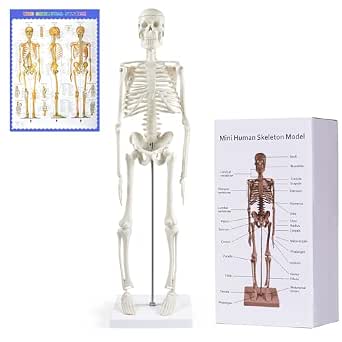 | Best for Joint Demonstrations | Height: 17.7 inches | Material: PVC | Movable joints: Shoulders, elbows, wrists, knees, and ankles | VIEW LATEST PRICE | See Our Full Breakdown |
| Learning Resources Anatomy Models Bundle Set |  | Best for Classroom Rotation | Brand: Learning Resources | Model number: LER3338 | Included models: Heart, brain, body, and skeleton | VIEW LATEST PRICE | See Our Full Breakdown |
| Science Can Interactive Human Body Model for Kids |  | Best for Guided Learning | Brand: Science Can | Model number: 160022 | Height: 11 inches | VIEW LATEST PRICE | See Our Full Breakdown |
| MyBODY Magnetic Human Anatomy Model for Kids and Teens |  | Best for Learning Body Systems | Brand: HMmagnets | Recommended age: 5–18 years | Layers: 7 | VIEW LATEST PRICE | See Our Full Breakdown |
| Breesky Life-Size Human Skeleton Anatomy Model with Nervous System, Rolling Stand, and 3 Posters |  | Best for Classroom Demonstrations | Height: 70.8 inches | Bones: 206 articulated bones | Material: Polyvinyl chloride (PVC) | VIEW LATEST PRICE | See Our Full Breakdown |
| KlayBear Human Body and Skeleton Model for Kids, 8 Removable Parts |  | Best Compact Starter Model | Brand: KlayBear | Model: TXMR-027 | Torso height: 9.6 inches | VIEW LATEST PRICE | See Our Full Breakdown |
| GobiDex Glow-in-the-Dark Human Anatomy Model Kit, 40 Pieces |  | Best for Visual, Repeated Assembly | Brand: GobiDex | Set name: Glow-in-the-Dark Anatomy Model Kit | Piece count: 40 | VIEW LATEST PRICE | See Our Full Breakdown |
| Human Anatomy Model Set with Removable Organs |  | Best Compact Organ-Systems Pick | Brand: Nwsrayu | Materials: Plastic and TPE | Listed size: 1 x 5 x 11 inches | VIEW LATEST PRICE | See Our Full Breakdown |
| Human Anatomy Model Set: Skeleton, Torso, and Heart |  | Best Multi-Model Teaching Set | Manufacturer: NEW HORIZON | Model number: sk1 | Set contents: Skeleton, torso with removable organs, and heart model | VIEW LATEST PRICE | See Our Full Breakdown |
| Breesky 17.7-Inch Human Skeleton Anatomy Model with Movable Arms and Legs |  | Best for Basic Skeleton Demonstrations | Height: 17.7 inches | Base dimensions: 4.75 x 4.75 inches | Product dimensions: 11.54 x 6.18 x 0.2 inches | VIEW LATEST PRICE | See Our Full Breakdown |
| educational skeleton model kit | Brand |
|---|---|
| EVOTECH SCIENTIFIC Human Body | EVOTECH SCIENTIFIC |
| EVOTECH SCIENTIFIC Human Anato | EVOTECH SCIENTIFIC |
| National Geographic Human Body | Blue Marble |
| NLShan 17.7-Inch Human Skeleto | — |
| Learning Resources Anatomy Mod | Learning Resources |
| Science Can Interactive Human | Science Can |
| MyBODY Magnetic Human Anatomy | HMmagnets |
| Breesky Life-Size Human Skelet | — |
| KlayBear Human Body and Skelet | KlayBear |
| GobiDex Glow-in-the-Dark Human | GobiDex |
| Human Anatomy Model Set with R | Nwsrayu |
| Human Anatomy Model Set: Skele | — |
| Breesky 17.7-Inch Human Skelet | — |
More Details on Our Top Picks
EVOTECH SCIENTIFIC Human Body, Skeleton, and Heart Anatomy Model Set
I rank this set ahead of a stand-alone skeleton when the lesson needs to connect bones with the body and circulatory system. It pairs a 17.7-inch skeleton with an 11-inch torso and an 8-inch heart, giving learners several physical references without requiring separate purchases. The carrying case and illustrated guides make it easier to move between a home study space and a classroom. Compared with the four-model EVOTECH set, this version skips the skull-and-brain model, so it offers less coverage of the nervous system but keeps the kit simpler. Its main tradeoff is scale: these are compact teaching models, not large pieces for demonstrations to a whole class. I’d choose it for guided, close-up study rather than detailed group instruction.
Pros:- Combines skeleton, body, and heart models for cross-system lessons
- Includes illustrated learning materials for guided study
- Carrying case supports storage and transport
- Hand-painted models have sturdy display bases
Cons:- The 17.7-inch skeleton and smaller companion models limit visibility from across a room
- Does not include the skull-and-brain model found in the four-piece EVOTECH set
Best for: Homeschool families or small-group instructors who want a portable skeleton kit that also introduces body structure and the heart.
Not ideal for: Teachers who need a large skeleton for whole-class demonstrations or learners focused on skull and brain anatomy.
- Brand:EVOTECH SCIENTIFIC
- Set contents:Human body, skeleton, and heart models
- Skeleton height:17.7 inches
- Torso height:11 inches
- Heart height:8 inches including base
- Weight:2.32 kg
- Recommended age:14 years and up
- Included materials:Carrying case, anatomy brochure, skeleton chart, and heart model manual
Our verdict“Choose this portable set for small-group anatomy lessons spanning the skeleton, body, and heart; skip it if you need classroom-scale bones or skull study.”
EVOTECH SCIENTIFIC Human Anatomy Model Set: Body, Skeleton, Heart, and Half-Size Skull with Brain
This is the broader study choice in the EVOTECH pair: alongside the 17.7-inch skeleton, it adds a body, heart, and half-size skull with brain. That extra model gives learners a physical route into skeletal, cardiovascular, and nervous system topics, while the included manuals and chart support structured lessons. Compared with the three-model EVOTECH set, the skull-and-brain piece adds useful scope, but its roughly 3.5-inch size calls for close handling rather than a group demonstration. The compact format and carrying case suit a dedicated learner who moves the kit between study areas. A tradeoff is that the set’s bases may use different materials, so the pieces may not feel fully uniform as a display collection.
Pros:- Four models cover several major body systems
- Skull-and-brain model extends study beyond the three-model EVOTECH set
- Includes system-specific study materials and an anatomy brochure
- Carrying case makes the collection easier to store and transport
Cons:- Compact models, including the roughly 3.5-inch skull, require close-up study
- Different base materials may make the pieces feel less consistent as a display set
Best for: Teen learners, tutors, and homeschool educators who want one portable kit for studying bones, the heart, the body, and basic skull-and-brain anatomy.
Not ideal for: Classroom instructors needing large demonstration models or buyers who want a full-size skull with clearly visible fine detail.
- Brand:EVOTECH SCIENTIFIC
- Included models:Human body, skeleton, heart, and half-size skull with brain
- Skeleton height:17.7 inches
- Torso height:11 inches
- Heart height:About 8 inches including base
- Skull size:About 3.5 inches
- Material and finish:Plastic; hand-painted
- Recommended age:14 years and up
- Included materials:Carrying case, anatomy brochure, skeleton chart, heart manual, and skull manual
Our verdict“Pick this over the three-piece EVOTECH set when skull-and-brain study matters, but not when you need large, highly visible models.”
National Geographic Human Body Anatomy Model, 32-Piece Set
For younger learners, this kit makes the skeleton part of a wider hands-on body activity instead of presenting it as a stand-alone study model. Its 18 glow-in-the-dark bones sit alongside removable organs and arm muscles, giving children a chance to explore how body parts fit together. That play-oriented approach is a better match for ages 8 and up than the EVOTECH sets, which are recommended for ages 14 and older. The tradeoff is skeletal depth: with a 9-inch body shell and bones integrated into a 32-piece kit, it does not offer the articulated joints or focused bone study of the NLShan skeleton. I’d choose it as an accessible first anatomy activity, not as a substitute for a dedicated skeleton model or advanced lessons.
Pros:- Combines bones, organs, and arm muscles in one activity
- Glow-in-the-dark bones add an engaging visual feature
- Identification chart and learning guide support basic study
- Lightweight, compact format suits home use
Cons:- The 9-inch body shell and integrated bones offer less skeletal detail than the NLShan model
- Designed as a broad introductory anatomy activity rather than a dedicated skeleton kit
Best for: Families and elementary educators introducing children aged 8 and up to basic bones, organs, and muscles through hands-on assembly.
Not ideal for: Older students who need a detailed, poseable skeleton for studying joints or preparing advanced anatomy lessons.
- Brand:Blue Marble
- Age range:8 years and up
- Piece count:32
- Included parts:9 squishy organs, 18 glow-in-the-dark bones, arm muscles, body shell, and display stand
- Body shell height:9 inches
- Item dimensions:4.33 x 2.24 x 9.25 inches
- Item weight:6.56 ounces
- Material:Polypropylene
- Included learning tools:Forceps, identification chart, and learning guide
Our verdict“Choose this for a younger beginner who will benefit from exploring bones alongside organs, but select NLShan for focused joint and skeleton study.”
NLShan 17.7-Inch Human Skeleton Anatomy Model with Movable Joints and Display Stand
This pick puts skeletal movement ahead of broad body-system coverage. Its movable shoulders, elbows, wrists, knees, and ankles let learners examine how joints relate to the bones, while the removable skull and opening jaw add a closer look at head structure. Compared with the National Geographic 32-piece set, NLShan is a more focused skeleton model, not a kit built around organs and introductory play. Its 17.7-inch height keeps it manageable on a desk, but also limits visibility and fine-detail demonstrations. The included poster helps with reference, though the product data does not describe an assembly activity or removable full skeleton. I’d pick it for learners who want a poseable display model for joint study, not for those seeking a large classroom skeleton.
Pros:- Multiple movable joints make skeletal movement easier to demonstrate
- Removable skull and opening jaw support head-anatomy study
- Display base and metal support bar help hold the model upright
- Study poster provides a reference alongside the model
Cons:- At 17.7 inches, the model may be too small for demonstrations to a larger group
- Focused on the skeleton, without the organ and body-system breadth of the EVOTECH sets
Best for: Older students, homeschool instructors, and anatomy hobbyists who want a compact skeleton for demonstrating joint movement and skull features.
Not ideal for: Teachers who need a life-size model for group instruction or beginners looking for a multi-system kit with organs and guided assembly.
- Height:17.7 inches
- Material:PVC
- Movable joints:Shoulders, elbows, wrists, knees, and ankles
- Skull:Removable with spring-connected opening jaw
- Base dimensions:4.75 x 4.75 inches
- Item weight:1.08 pounds
- Model number:X-4
- Included accessories:Display base, metal support bar, and study poster
Our verdict“Choose NLShan for a desk-sized, poseable skeleton that highlights joints; choose a broader kit if lessons need organs or multiple body systems.”
Learning Resources Anatomy Models Bundle Set
For a classroom or homeschool rotation, this bundle offers a useful range: learners can move between heart, brain, body, and skeleton models rather than spending every session on bones alone. The models assemble and disassemble, so students can handle components as part of a lesson, while stands and an illustrated guide support display and reference. Compared with the single-focus NLShan skeleton, this set gives instructors more options for linking bones to other anatomy topics; it is less suited to detailed joint demonstrations because no movable joints or skeleton dimensions are specified. The recommended age starts at 8, but the listed small parts warrant adult oversight with younger children. I’d choose it when shared learning and breadth matter more than a large or highly articulated skeleton.
Pros:- Four models support lessons across bones, brain, heart, and body anatomy
- Assembly and disassembly invite active handling
- Display stands keep models upright between activities
- Illustrated guide supports classroom and homeschool use
Cons:- No skeleton dimensions or movable-joint details are provided for judging demonstration scale
- Small parts may not suit younger children without supervision
Best for: Elementary classrooms and homeschool groups that need several hands-on anatomy stations, including a skeleton, for learners aged 8 and up.
Not ideal for: Buyers seeking a large, poseable skeleton for close study of joints or unsupervised activities with younger children.
- Brand:Learning Resources
- Model number:LER3338
- Included models:Heart, brain, body, and skeleton
- Material:Plastic
- Included accessories:Display stands and illustrated educational guide
- Recommended age:8 years and up
- Educational focus:STEM and human anatomy
- Model activity:Models assemble and disassemble
Our verdict“Choose this bundle for shared, multi-topic anatomy activities, but select NLShan if your main goal is demonstrating skeletal joints.”
Science Can Interactive Human Body Model for Kids
The 11-inch Science Can model is the strongest choice here for children who benefit from prompts rather than assembling anatomy on their own. Its explanation and quiz modes turn removable body parts into a guided lesson, while the illustrated book and knowledge cards give families options beyond the electronic features. Compared with the KlayBear model, which focuses on a smaller set of removable organs, this kit offers more parts and built-in ways to check understanding. That comes with a tradeoff: it needs three AA batteries, not included, and its compact scale is less suited to detailed classroom demonstrations than the full-size Breesky skeleton. I’d choose it for interactive home study, but not for buyers seeking a large, primarily skeletal teaching model.
Pros:- Explanation and quiz modes add guided practice
- More than 15 removable parts support hands-on exploration
- Includes an illustrated anatomy book and four double-sided knowledge cards
- Compact size suits a desk or home learning area
Cons:- Requires three AA batteries, which are not included
- At 11 inches, it offers less visual scale than the Breesky life-size skeleton
- Its broad body-model approach may be less useful for buyers focused specifically on skeletal structure
Best for: Parents of children ages 6–12 who want guided anatomy explanations, quiz practice, and hands-on removable parts in one compact kit.
Not ideal for: Teachers needing a life-size skeleton for group demonstrations, or families who prefer a battery-free model.
- Brand:Science Can
- Model number:160022
- Height:11 inches
- Material:Plastic
- Removable parts:More than 15
- Learning modes:Explanation and quiz
- Included learning materials:26-page illustrated anatomy book and four double-sided knowledge cards
- Battery requirement:Three AA batteries, not included
- Recommended age:6–12 years
Our verdict“Choose this for a child who learns well from guided prompts and quizzes, rather than for life-size skeleton study.”
MyBODY Magnetic Human Anatomy Model for Kids and Teens
The MyBODY magnetic model takes a layered approach: learners build out from a skeleton base through seven body-system layers, making it a stronger fit for connecting skeletal structure to the rest of the body than a standalone skeleton kit. Its four interchangeable body options, information sheets, reusable labels, and QR-linked facts give it more variety for home or classroom activities than the simpler KlayBear torso. The tradeoff is that this is a magnetic body puzzle, not a life-size articulated skeleton like the Breesky; its 14-inch format won’t show full-scale proportions or movable joints. Small pieces may also need supervision for younger children, and the supplied details don’t clarify whether QR content requires internet access. I’d rank it for broad system-by-system learning, not for buyers whose main goal is examining bones in depth.
Pros:- Seven layers show how major body systems relate to the skeleton
- Four interchangeable body options add variety to lessons
- Reusable labels and seven information sheets support structured activities
- Magnetic assembly makes the model easy to build and rearrange
Cons:- Small puzzle pieces may require adult supervision for younger children
- Does not provide the life-size scale or movable joints of the Breesky skeleton
- QR code internet requirements are not specified
Best for: Families and teachers seeking a reusable, layered anatomy activity for children and teens, especially when lessons should connect bones with other body systems.
Not ideal for: Buyers seeking a freestanding articulated skeleton, or caregivers who want to avoid small pieces and QR-linked content.
- Brand:HMmagnets
- Recommended age:5–18 years
- Layers:7
- Base dimensions:13.2 × 7.2 inches
- Product dimensions:14 × 9 × 2 inches
- Materials:Rubber magnets and EVA
- Interchangeable body options:4 (two boys and two girls)
- Included learning materials:Instructions, sticker sheet, and seven information sheets
Our verdict“Pick MyBODY for layered lessons across multiple body systems, but choose an articulated skeleton if bone movement and full-scale anatomy are the priority.”
Breesky Life-Size Human Skeleton Anatomy Model with Nervous System, Rolling Stand, and 3 Posters
For teaching skeletal proportions and joint movement at a visible scale, the 70.8-inch Breesky is the clear outlier in this group. Its 206 articulated bones, detachable head, and movable joints make it more directly suited to skeleton study than the Science Can or KlayBear torso models, which are smaller and focused on removable body parts. A five-wheel rolling stand helps reposition it between lessons, while three posters add reference material without requiring another display. The size is also its main limitation: at 22 pounds, it needs dedicated floor space and may be awkward to lift or store. I’d choose it for a classroom or study area where students can view the model from a distance; it is excessive for a child’s small desk or a portable home kit.
Pros:- Life-size scale makes skeletal proportions easier to teach
- 206 articulated bones and movable joints support hands-on study
- Five-wheel stand allows the model to be moved around a room
- Three included posters provide additional visual reference
Cons:- Large footprint requires dedicated floor space
- At 22 pounds, it can be difficult to lift or store
- Less suited to children who need a compact, build-it-yourself anatomy activity
Best for: Teachers, tutors, and home educators with floor space who need a life-size skeleton for group instruction and hands-on joint study.
Not ideal for: Families with limited storage, small work areas, or a need for a lightweight kit children can carry and assemble.
- Height:70.8 inches
- Bones:206 articulated bones
- Material:Polyvinyl chloride (PVC)
- Stand:Five-wheel rolling stand
- Included components:Skeleton model and three posters
- Weight:22 pounds
- Color:Bone white
- Articulation:Movable joints and detachable head
Our verdict“Choose the Breesky for a permanent classroom or study display where life-size skeletal detail matters more than compact storage.”
KlayBear Human Body and Skeleton Model for Kids, 8 Removable Parts
The KlayBear 9.6-inch torso makes sense as a small first anatomy model: children can remove eight components and see how the skeleton sits alongside familiar organs, without needing the space or setup of a full-size display. Compared with the Science Can model, it has fewer removable parts and no built-in quiz or explanation modes, but it also avoids the stated battery requirement. The Breesky offers far more skeletal scale and articulation; KlayBear instead prioritizes a compact, straightforward format for basic exploration at home or in a classroom. Its small size limits visible detail, and assembly may frustrate some children, so adult help could be useful. I’d choose it for an introductory lesson on torso anatomy, not for learners who need detailed bone study or a more guided teaching system.
Pros:- Eight removable parts give children a direct way to explore the torso
- Includes a skeleton model alongside removable organs
- Small footprint suits desks and classroom stations
- Stand and instructions are included
Cons:- The 9.6-inch height limits visible anatomical detail
- Assembly may be challenging for some children
- Offers fewer interactive learning supports than the Science Can model
Best for: Caregivers and early-grade educators looking for a compact, hands-on introduction to torso organs and the skeleton for children ages 6 and up.
Not ideal for: Older students seeking detailed skeletal anatomy, or children who need quiz prompts and guided explanations to work independently.
- Brand:KlayBear
- Model:TXMR-027
- Torso height:9.6 inches
- Removable parts:8
- Included organs:Lungs (two parts), heart, liver, stomach, transverse colon, and small intestine
- Age range:6 years and up
- Included components:Model, stand, and instructions
- Educational objective:STEM learning
Our verdict“Choose KlayBear as a compact first anatomy kit for basic torso exploration, not as a detailed skeleton teaching model.”
GobiDex Glow-in-the-Dark Human Anatomy Model Kit, 40 Pieces
The GobiDex 40-piece kit is a good match for children who learn by taking a model apart and rebuilding it, with bones, muscles, and organs represented in a 12.6-inch freestanding form. Its glow-in-the-dark bones give the skeletal element a visual hook that the MyBODY magnetic layers and KlayBear torso don’t offer, while the illustrated manual provides a basic learning companion. Unlike the life-size Breesky, this kit is compact enough for a table and designed for repeated assembly. The tradeoff is that the supplied information does not spell out how much anatomical detail each piece provides, so buyers seeking precise bone study may prefer Breesky’s articulated 206-bone display. Its recommended age starts at eight, making it a less suitable pick for younger children.
Pros:- Forty pieces represent bones, muscles, and organs
- Glow-in-the-dark bones add a distinctive visual feature
- Illustrated manual supports anatomy learning
- Parts can be assembled and disassembled for repeated use
Cons:- Recommended age begins at eight, so it may not suit younger learners
- Does not match the life-size scale or articulated bone detail of the Breesky
- Product details provide limited information about the anatomical specificity of individual pieces
Best for: Children ages 8–16 who enjoy building and rebuilding models and want a compact anatomy activity with a visible skeletal feature.
Not ideal for: Younger children, or students who need a life-size, highly articulated skeleton for detailed bone instruction.
- Brand:GobiDex
- Set name:Glow-in-the-Dark Anatomy Model Kit
- Piece count:40
- Height:12.6 inches
- Dimensions:12.6 × 5.71 × 3.15 inches
- Material:Plastic
- Recommended age:8–16 years
- Included components:Human body models, science manuals, and pallets
- Assembly:Designed for repeated assembly and disassembly
Our verdict“Pick GobiDex for a repeat-build activity with glow-in-the-dark bones, but choose Breesky for detailed, life-size skeletal study.”
Human Anatomy Model Set with Removable Organs
This tabletop set prioritizes organ interaction over skeletal detail: learners can remove the heart, lungs, liver, stomach, intestines, brain, and kidneys to connect structures with several body systems. That makes it a better fit for lessons about how organs relate than the Breesky 17.7-Inch Human Skeleton Anatomy Model with Movable Arms and Legs, which focuses on a small articulated skeleton. Its compact format is easier to carry and place on a desk, though the listed size of 1 x 5 x 11 inches gives less room for viewing fine anatomical features than a larger display. The non-toxic plastic and TPE construction and smooth edges suit supervised, hands-on demonstrations. Choose it for compact organ-focused study; skip it if your priority is a detailed, full-size skeleton.
Pros:- Removable organs give learners hands-on access to internal structures
- Includes organs from several body systems, supporting broader lessons
- Compact tabletop format is easy to move and store
- Plastic and TPE construction is described as non-toxic with smooth edges
Cons:- Small listed dimensions limit visibility of anatomical details
- Skeleton movement and joint articulation are not specified
- Adult age range may make it a less direct choice as a child-focused kit
Best for: Teachers, tutors, and families seeking a portable tabletop model for supervised lessons on organs and multiple body systems
Not ideal for: Buyers who want a large, detailed skeleton or a model centered on movable joints rather than removable organs
- Brand:Nwsrayu
- Materials:Plastic and TPE
- Listed size:1 x 5 x 11 inches
- Included components:Anatomy model with skeleton and removable organs
- Removable organs:Heart, lungs, liver, stomach, intestines, brain, and kidneys
- Number of items:1
- Age range:Adult
Our verdict“Choose this compact set for organ-centered lessons and demonstrations, not for close study of a large articulated skeleton.”
Human Anatomy Model Set: Skeleton, Torso, and Heart
This set earns its place through three separate teaching models: a 17.7-inch skeleton, an 11-inch torso with removable organs, and an approximately 8-inch heart model with a base. The distinct pieces let an instructor shift from the whole skeleton to organ placement and then to a closer heart lesson, a broader teaching setup than the single compact model in the Human Anatomy Model Set with Removable Organs. Included guides and charts add useful reference material for lessons or patient education. The tradeoff is a heavier, more involved set at 5.5 pounds, with small removable parts that call for careful handling. Its stated age restriction also makes it a poor choice for children. Pick it when teaching range matters more than portability or simplicity.
Pros:- Combines a skeleton, organ-removable torso, and separate heart model
- Three model formats support lessons at different levels of anatomical detail
- Includes a body-systems brochure, skeleton chart, and heart manual
- Suitable for hands-on study, teaching, and patient education
Cons:- Small removable organ pieces require careful handling around children
- The stated age restriction excludes children under 18
- At 5.5 pounds, it is less convenient to move than compact single-model options
Best for: Adult learners, anatomy instructors, and patient educators who want separate models and printed guides for lessons across body systems
Not ideal for: Families shopping for young children or buyers who need a lightweight, single-piece desktop model
- Manufacturer:NEW HORIZON
- Model number:sk1
- Set contents:Skeleton, torso with removable organs, and heart model
- Skeleton height:17.7 inches
- Torso height:11 inches
- Heart model height:About 8 inches including base
- Package dimensions:12.36 x 8.94 x 7.64 inches
- Item weight:5.5 pounds
- Included materials:Human body and systems brochure, skeleton chart, and heart model manual
Our verdict“Choose this set for adult instruction that benefits from separate skeleton, torso, and heart models plus printed guides.”
Breesky 17.7-Inch Human Skeleton Anatomy Model with Movable Arms and Legs
The Breesky is a skeleton-first desktop model for explaining broad bone structure and basic movement. Its movable arms and legs, moving jaw, and removable skull cap give learners a few useful points of interaction without adding a torso full of organs. Compared with the Human Anatomy Model Set with Removable Organs, this is the clearer choice for demonstrating articulation and skull structure; the other set covers more body systems. At 17.7 inches tall with a 4.75-inch-square base, it stays manageable on a desk, but that compact scale limits fine detail and makes it less suited to group viewing than larger teaching displays. It offers a straightforward entry point for basic anatomy, not the depth of a more extensive classroom kit.
Pros:- Movable arms and legs make basic articulation easier to demonstrate
- Removable skull cap and moving jaw add useful skull-focused interaction
- 17.7-inch height suits a desk or small study area
- Lightweight 1.1-pound build is easy to reposition
Cons:- Basic anatomical detail limits advanced study
- Does not include organs or other body-system models
- Small scale is less suitable for demonstrations to a large group
Best for: Students, home educators, and instructors who need a compact model to demonstrate basic skeletal structure and movement
Not ideal for: Buyers seeking removable organs, detailed anatomical features, or a large model visible across a classroom
- Height:17.7 inches
- Base dimensions:4.75 x 4.75 inches
- Product dimensions:11.54 x 6.18 x 0.2 inches
- Weight:1.1 pounds
- Movable parts:Arms, legs, and jaw
- Removable part:Skull cap
- Model number:X-1
- Manufacturer:Fivtyily
Our verdict“Choose the Breesky for a compact, interactive introduction to bones and movement, and look elsewhere for organ studies or advanced detail.”

How We Picked
I ranked these educational skeleton model kits by how directly they support anatomy learning, how easy their format is to use, and whether their scale and included parts suit the intended setting. I compared skeletal detail and movement, removable or interactive components, added anatomy such as organs or the heart, and teaching aids such as posters or display stands. I also weighed practical differences that affect repeated use: storage demands, the likelihood of loose pieces, visibility for group teaching, and how focused or broad the learning experience is.
The order favors options with a useful balance of clear learning scope, hands-on usability, and practical fit, rather than simply the most pieces or largest display. Broader anatomy sets rank well for learners who need more than bones, while simpler or compact models earn a place for affordability-minded buyers, younger learners, and space-limited homes. Specialized interactive and display options rank according to the needs they serve; their extra features are not a universal advantage. Product details supplied for this roundup do not establish durability or age limits, so I avoid treating those as proven strengths.
Factors to Consider When Choosing Educational Skeleton Model Kits
Choose a kit around the lesson you want it to support, not just its headline size or parts count. These factors help separate a useful teaching aid from a model that is hard to store, too complex for the learner, or mismatched to the way anatomy will be taught.
Match the Model to the Learning Goal
Decide whether the priority is bone names and joint movement, or a broader introduction to organs and body systems. A skeleton-focused kit keeps attention on structure and articulation; a torso or heart set can support lessons that connect bones with other anatomy. A common mistake is buying a broad set when the learner mainly needs to identify the skeleton, leaving extra components unused. The reverse problem occurs when a skeleton-only model is expected to explain internal organs. If lessons will change over time, a set with several anatomy types may offer more flexibility, but only when learners have a clear way to explore each part.
Choose a Scale That Fits the Room and Lesson
A life-size model can be easier for a group to see and discuss, while a roughly 17.7-inch skeleton is more manageable on a desk or shelf. Scale affects more than storage: it changes how clearly small features can be pointed out and whether learners can handle the model comfortably. Before buying, measure the intended display area and think about where the kit will be stored between lessons. A large model with a rolling stand may suit a classroom but be awkward in a shared bedroom. Small models save space, though they may be less visible during group instruction.
Weigh Interactivity Against Simplicity
Movable joints, magnetic pieces, and removable anatomy can turn observation into active learning. They also add steps: parts need to be taken off, matched to the right location, and put away after use. For younger learners or short lessons, a simple jointed skeleton may be easier to revisit than a kit with many components. Magnetic formats can make assembly feel approachable, while loose pieces may be useful for quizzes and sorting activities. Think about whether the learner will benefit from manipulating parts or whether clear, steady display is the main goal.
Look Beyond Piece Count
A high number of components does not tell you how well a kit teaches anatomy. Check what those pieces represent, how they relate to the skeleton, and whether the learner can identify where each belongs. A smaller set with a focused lesson can be more useful than a larger set whose parts lack a clear purpose for your needs. Posters and accompanying materials can help connect the model to names and concepts, but they do not replace readable labeling or guided explanation. Compare the learning task each component supports rather than treating quantity as a quality measure.
Plan for Storage and Repeated Use
Removable organs, skull parts, and other small components need a reliable storage routine. If pieces are likely to get separated, the model may become less useful over time, especially in classrooms or homes with multiple children. Consider whether the kit will stay assembled, be taken apart for activities, or travel between locations. A compact skeleton may be simpler to put away, while a display model can stay ready for reference if there is a dedicated spot. The right choice depends on how often the model will be handled, not just where it looks good on day one.
Set Expectations for Age and Lesson Depth
Educational value depends on the learner’s ability to use the model, not only on the number of anatomical details. Younger children may respond well to visual or magnetic interaction, while older students may benefit more from accurate structure and links to broader body systems. Check the seller’s age guidance and assembly details before choosing, since the product names alone do not establish suitability. Adults teaching at home should also decide whether they want a demonstration aid or a model learners can manipulate independently. Paying for extra anatomy makes sense when it supports the next stage of learning; otherwise, a focused kit can be easier to use well.
Frequently Asked Questions
Should I choose a skeleton-only kit or one with organs and a heart?
Choose a skeleton-focused model when the main goal is bone identification, joint movement, or a compact reference for anatomy lessons. A set with organs or a heart makes more sense when you want to connect the skeleton to other body structures in the same activity. Broader sets can support varied lessons, but extra parts may take more time to organize and explain. If the learner is just starting, a clear focus may help prevent the model from feeling like a collection of unrelated pieces. Match the scope to the lesson plan rather than assuming a larger anatomy set is automatically more educational.
Is a compact skeleton model suitable for classroom teaching?
A compact model can work well for small groups, desk demonstrations, or individual study, especially when storage space is limited. Its smaller scale may make details harder to see from across a room, so it is less suited to whole-class instruction without close viewing. A life-size model with a stand is easier to point to during a group lesson, but it needs more floor and storage space. Consider how many learners will view the model at once and where it will be placed during teaching. For mixed use, a compact model can complement diagrams or projected visuals.
Are removable-part kits a good choice for younger learners?
They can be engaging when children learn by matching, sorting, and handling parts, but the number and size of loose components matter. A simpler magnetic or limited-piece design may be easier to manage than a kit with many separate anatomy pieces. Check the manufacturer’s age guidance and supervise use when needed; the product name alone does not confirm suitability. Also plan a storage method so parts do not disappear between sessions. For a child who prefers direct visual learning, a model that stays assembled may be a better fit.
Does a life-size model teach anatomy better than a small one?
Not by itself. A life-size model can make group demonstrations and spatial relationships easier to see, while a smaller model is more convenient for hands-on work at a desk. Learning depends on whether the model’s features match the lesson and whether learners can identify the parts clearly. A large display may be underused if it has no dedicated space, and a compact model can be effective when learners examine it closely. Choose based on viewing distance, handling, and storage rather than size alone.
When is it worth choosing a kit with posters or extra teaching materials?
Extra materials can help when the model will be used for guided lessons, vocabulary practice, or reference beyond a single demonstration. Posters may make anatomy easier to discuss with a group, while a model with focused components can support hands-on activities. They add less value if the learner will not use them or if the materials do not match the topics being taught. Review what is included and ask whether each item serves a specific lesson. If you already have teaching charts or digital resources, a more focused model may be the better choice.
Conclusion
For a single flexible teaching set, I recommend the EVOTECH SCIENTIFIC Human Body, Skeleton, and Heart Anatomy Model Set as best overall because it combines skeletal learning with additional anatomy. The National Geographic 32-piece set is my best value-style pick for hands-on parts learning, while the EVOTECH set with a half-size skull and brain is the best premium-style choice for buyers seeking a broader collection of anatomy models. For beginners, I’d start with a simpler option such as the NLShan 17.7-inch movable skeleton rather than a kit with many components. Choose the Breesky life-size model with rolling stand and posters for visible classroom display, or the MyBODY magnetic model when interactive assembly is the main need. If storage or a child-friendly presentation is the priority, compare the compact and interactive kits before paying for a larger display.