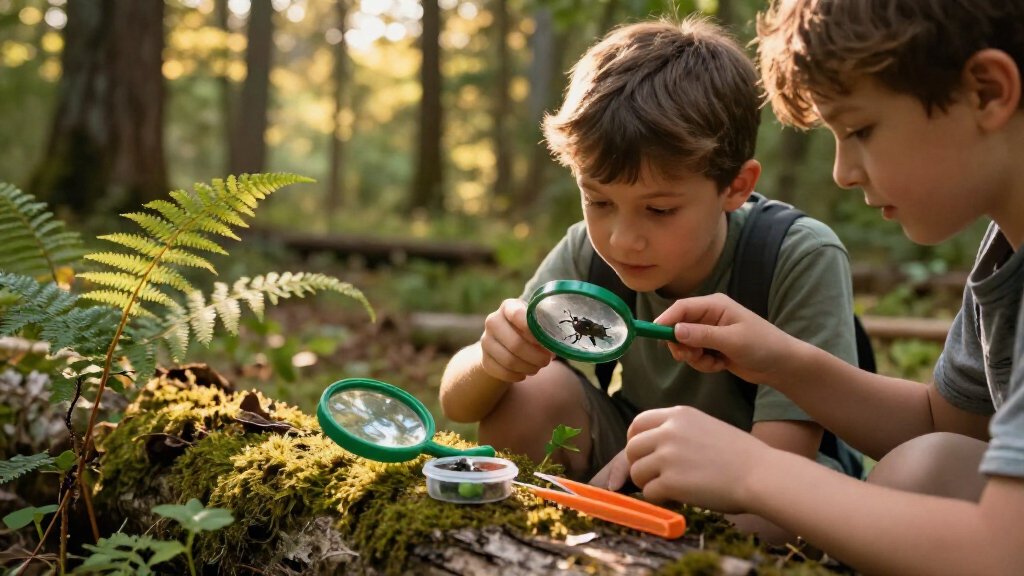
For most families, the National Geographic Bug Catcher Kit and Outdoor Insect Habitat is the best overall choice because it centers the outing on observing insects in a habitat rather than only catching them. The INNOCHEER Safari Vest kit stands out for children who want a more complete explorer role-play set, while the National Geographic Build Your Own Bird Feeder Craft Kit suits kids more interested in backyard wildlife than collecting bugs. The main tradeoff is between a focused tool kit that is easy to carry and a larger set with more gear but more pieces to manage. Age, adult supervision, and whether a child prefers insects, birds, or imaginative play should guide the decision. Read on for the full breakdown of what separates these 15 nature exploration kits for kids.

Prime made for students and young adults
- Fast, free delivery for dorm and study essentials
- Prime Video and Amazon Music included
- Member-only deals
Key Takeaways
The National Geographic bug habitat is the strongest all-around direction for families who want catching to lead into observation; a habitat-focused kit can support longer, more careful nature sessions than a tool-only set.
Explorer kits are not interchangeable: vest-and-hat bundles such as the INNOCHEER and GINMIC options emphasize imaginative field play, while the Vorth kit pairs bug catching with a microscope for closer inspection.
Simple kits may suit younger or first-time explorers better than sets with many small accessories; the KOALA DIARY set is marked for ages 3+, but adults should still check the pieces and supervise use.
Portability and quantity pull in different directions: ROBUD includes a portable bag, while Biubee offers two sets, which may help with shared outings but can mean more equipment to keep track of.
Bird-focused exploration is a distinct alternative, not a lesser bug kit: the National Geographic bird-feeder craft shifts the activity toward building and watching backyard visitors rather than catching insects.
| National Geographic Bug Catcher Kit and Outdoor Insect Habitat for Kids |  | Best Overall for Close-Up Observation | Brand: Blue Marble | Age range: 4 years and up | Habitat view: 360 degrees | VIEW LATEST PRICE | See Our Full Breakdown |
| ROBUD Bug Catcher Kit for Kids with Portable Bag |  | Best for Carry-Along Field Trips | Brand: ROBUD | Recommended age: 36 months–10 years | Material: Plastic | VIEW LATEST PRICE | See Our Full Breakdown |
| KOALA DIARY Bug Catcher Kit for Kids, STEM Outdoor Exploration Set, Ages 3+ |  | Best for Learning-Oriented Beginners | Brand: KOALA DIARY | Age range: 3 years and up | Included components: Insect collection box, insect clip, tweezers, magnifying glass, whistle with compass, 2 lanyards, 8 learning cards | VIEW LATEST PRICE | See Our Full Breakdown |
| HAIMST Bug Catching Kit for Kids, 17-Piece Outdoor Explorer Set |  | Best for Pretend Play and Real-World Practice | Brand: HAIMST | Recommended age: 36 months–8 years | Piece count: 17 | VIEW LATEST PRICE | See Our Full Breakdown |
| INNOCHEER Kids Explorer and Bug Catcher Kit with Safari Vest, Hat, Tools, and Bugs Book |  | Best Wearable Explorer Set | Brand: INNOCHEER | Age range: 3–12 years | Piece count: 11 | VIEW LATEST PRICE | See Our Full Breakdown |
| Kids Explorer and Bug Catching Kit with Safari Vest and Hat, 27 Pieces |  | Best for Dress-Up and Exploration | Brand: SMILESSKIDDO | Age range: 3 years and up | Pieces: 27 | VIEW LATEST PRICE | See Our Full Breakdown |
| Vorth Bug Catcher for Kids with Microscope, Emerald Green |  | Best for Digital Insect Observation | Brand: Vorth | Model: B312A | Recommended age: 3–12 years | VIEW LATEST PRICE | See Our Full Breakdown |
| GINMIC Kids Explorer and Bug Catching Kit with Binoculars, Safari Vest, and Hat |  | Best for Outdoor Variety | Brand: GINMIC | Pieces: 16 | Recommended age: 3–12 years | VIEW LATEST PRICE | See Our Full Breakdown |
| INNOCHEER Kids Explorer and Bug Catcher Kit, Purple |  | Best for Guided Bug Learning | Brand: INNOCHEER | Age range: 3–12 years | Color: Purple | VIEW LATEST PRICE | See Our Full Breakdown |
| National Geographic Build Your Own Bird Feeder Craft Kit for Kids |  | Best for a Focused Bird-Watching Project | Brand: Blue Marble | Age range: 6 years and up | Materials: Wood, acrylic paint | VIEW LATEST PRICE | See Our Full Breakdown |
| ESSENSON Kids Explorer Kit with Binoculars |  | Best All-Purpose Explorer Kit | Brand: ESSENSON | Age range: 3 years and up | Included items: Binoculars, magnifying glass, hand-crank flashlight, whistle, compass, hiking backpack | VIEW LATEST PRICE | See Our Full Breakdown |
| Kids’ Bug Catcher with 6× Magnifier |  | Best for Close-Up Bug Viewing | Brand: LEUOA | Age range: 3 years and up | Magnification: 6× | VIEW LATEST PRICE | See Our Full Breakdown |
| ibwaae Wooden Bug Catcher Kit for Kids |  | Best for Guided Insect Learning | Brand: ibwaae | Number of items: 10 | Age range: 4 years and up | VIEW LATEST PRICE | See Our Full Breakdown |
| Adventure Kidz Outdoor Exploration Kit for Children, Orange |  | Best for Bird Walks and Nature Hikes | Brand: Kidz@Play | Manufacturer: Ozlife | Model: AD1001O | VIEW LATEST PRICE | See Our Full Breakdown |
| Biubee Bug Catching Kit for Kids, 2 Sets |  | Best for Siblings or Shared Play | Brand: Biubee | Sets: 2 | Items: 8 | VIEW LATEST PRICE | See Our Full Breakdown |
| nature exploration kits for kid | Brand | Age range |
|---|---|---|
| National Geographic Bug Catche | Blue Marble | 4 years and up |
| ROBUD Bug Catcher Kit for Kids | ROBUD | — |
| KOALA DIARY Bug Catcher Kit fo | KOALA DIARY | 3 years and up |
| HAIMST Bug Catching Kit for Ki | HAIMST | — |
| INNOCHEER Kids Explorer and Bu | INNOCHEER | 3–12 years |
| Kids Explorer and Bug Catching | SMILESSKIDDO | 3 years and up |
| Vorth Bug Catcher for Kids wit | Vorth | — |
| GINMIC Kids Explorer and Bug C | GINMIC | — |
| INNOCHEER Kids Explorer and Bu | INNOCHEER | 3–12 years |
| National Geographic Build Your | Blue Marble | 6 years and up |
| ESSENSON Kids Explorer Kit wit | ESSENSON | 3 years and up |
| Kids’ Bug Catcher with 6× Magn | LEUOA | 3 years and up |
| ibwaae Wooden Bug Catcher Kit | ibwaae | 4 years and up |
| Adventure Kidz Outdoor Explora | Kidz@Play | — |
| Biubee Bug Catching Kit for Ki | Biubee | — |
More Details on Our Top Picks
National Geographic Bug Catcher Kit and Outdoor Insect Habitat for Kids
I’d choose this kit when the main goal is to observe insects clearly rather than simply collect the most accessories. Its 360-degree habitat and two magnifying viewers, including a telescoping, movable viewer, give children more ways to look without repeatedly handling the container. The net, tweezers, and scissor-style catcher add practical ways to collect a specimen, while the latching lid and removable base support contained observation. Compared with the HAIMST 17-Piece set, this pick focuses on viewing real insects instead of adding artificial bugs for pretend play. The tradeoff is a narrower activity mix: it has no learning cards, compass, or carrying bag. Intended for ages four and up, it may also call for adult help with younger children and careful insect handling.
Pros:- Two magnifying viewers offer different angles for examining insects.
- The 360-degree habitat view makes it easier for more than one child to observe.
- Includes a net, tweezers, and scissor-style catcher for collection.
- Requires no batteries.
Cons:- Has fewer broader exploration accessories than kits with backpacks, cards, or compasses.
- Designed for ages four and up, and younger children may need supervision.
Best for: Families with children aged four and up who want a habitat that makes insect viewing the central activity.
Not ideal for: Buyers seeking a broad pretend-play set, learning cards, or a portable storage bag; this kit focuses on catching and observing.
- Brand:Blue Marble
- Age range:4 years and up
- Habitat view:360 degrees
- Magnifying viewers:2, including one that telescopes and moves
- Included tools:Scissor-style bug catcher, net, tweezers
- Habitat features:Latching lid and removable base
- Batteries:Not required
- Model number:NGBUGHAB
Our verdict“Choose this National Geographic kit if clear, shared insect observation matters more than a large accessory assortment.”
ROBUD Bug Catcher Kit for Kids with Portable Bag
The portable bag gives this ROBUD set a practical advantage for families who want to take several tools on a walk, to a park, or into the backyard. It combines a magnifying glass, extendable net, tweezers, grabber, cage, container, and cards, so children can switch between spotting, catching, and observing. Compared with the National Geographic Bug Catcher Kit, it offers a broader assortment and easier gear transport, but it lacks that model’s specified 360-degree habitat and paired magnifying viewers. The listed age range, 36 months to 10 years, is wide, though the data does not explain how the tools fit different ages. I’d also treat the listed dimensions of 1 x 1 x 1 inches as unreliable; buyers should not use them to judge storage or fit.
Pros:- Portable bag helps keep the assortment together on outings.
- Includes a magnifying glass, extendable net, tweezers, and grabber.
- Cage, container, and cards support more than one kind of exploration activity.
- No batteries are required.
Cons:- Listed dimensions of 1 x 1 x 1 inches may be inaccurate, making storage planning difficult.
- The product details do not specify a multi-angle habitat or magnification level.
- The broad age range does not clarify which tools suit younger children.
Best for: Families who want a varied set of insect tools packed together for park visits, nature walks, and outdoor play.
Not ideal for: Buyers who need dependable listed dimensions or a clearly specified viewing habitat with multiple magnifiers.
- Brand:ROBUD
- Recommended age:36 months–10 years
- Material:Plastic
- Included components:Magnifying glass, extendable net, tweezers, grabber, cage, container, cards, portable bag
- Item weight:0.92 kg
- Listed dimensions:1 x 1 x 1 inches; accuracy may be uncertain
- Batteries:Not required
- Model number:RB-3-WRP07
Our verdict“Pick ROBUD for a carry-along assortment of tools, but not if precise size information or a specialized viewing habitat is a priority.”
KOALA DIARY Bug Catcher Kit for Kids, STEM Outdoor Exploration Set, Ages 3+
For a young beginner, I’d favor the KOALA DIARY set when simple observation and prompts for curiosity matter more than a large collection of gear. The eight learning cards give families a starting point for talking about what they find, while the air-holed insect box, magnifying glass, tweezers, and insect clip cover basic collecting and viewing. A whistle with compass and two lanyards add outdoor-play elements beyond bug catching. Compared with the ROBUD kit, this set is less centered on packing a broad tool assortment into a portable bag, but its cards and stated age range of three and up make its learning role clearer. The contents are more modest than the INNOCHEER explorer set, which adds a vest, hat, binoculars, and backpack. It still requires adult guidance for gentle handling and prompt release.
Pros:- Eight learning cards can help guide conversations about outdoor discoveries.
- Air holes are specified for the insect collection box.
- Includes a magnifying glass, tweezers, and insect clip for basic observation.
- Compass whistle and lanyards add outdoor-play accessories.
Cons:- Does not include the vest, hat, or backpack found in the INNOCHEER explorer set.
- The product details do not specify multiple magnifiers or a 360-degree viewing habitat.
- Children need guidance to handle small insects carefully and release them after observation.
Best for: Caregivers of children aged three and up who want a starter insect kit with simple learning prompts.
Not ideal for: Families wanting a wearable explorer outfit, dedicated carrying backpack, or a more elaborate habitat-viewing setup.
- Brand:KOALA DIARY
- Age range:3 years and up
- Included components:Insect collection box, insect clip, tweezers, magnifying glass, whistle with compass, 2 lanyards, 8 learning cards
- Learning cards:8
- Habitat feature:Insect box with air holes
- Unit count:1 set
- Model number:FDE89306
Our verdict“Choose KOALA DIARY for a straightforward first kit with learning cards, rather than a costume-led or highly equipped explorer set.”
HAIMST Bug Catching Kit for Kids, 17-Piece Outdoor Explorer Set
HAIMST is the clearest choice here for children who want outdoor bug-catching tools alongside imaginative play. Its 17-piece set pairs a viewer with magnifier, hand magnifying glass, net, capsule scissors, and tweezers with 12 artificial insects. Those pretend specimens let children practice spotting and collecting without needing to find live bugs, though they are not substitutes for observing real insects. Compared with the National Geographic kit, HAIMST offers more play pieces but not the same specified 360-degree habitat or two magnifying viewers. Its stated age range of three to eight and smooth-edged design are aimed at younger users, but the plastic construction and unspecified individual tool dimensions limit what buyers can judge about scale and feel. I’d pick it for mixed indoor-outdoor play, not for a focused live-insect study kit.
Pros:- Seventeen pieces combine catching tools with pretend-play components.
- Twelve artificial insects allow practice without collecting live specimens.
- Includes both a bug viewer with magnifier and a hand magnifying glass.
- Manual operation means no batteries are required.
Cons:- Artificial insects cannot provide the experience of observing live specimens.
- Individual tool dimensions are not specified, so scale is hard to judge.
- Plastic construction offers less information about durability than a more detailed materials description would.
Best for: Families with children aged three to eight who want pretend specimens for practice alongside basic outdoor catching tools.
Not ideal for: Children whose main goal is studying live insects in a purpose-built habitat; the included bugs are artificial.
- Brand:HAIMST
- Recommended age:36 months–8 years
- Piece count:17
- Included components:Insect collection box, magnifying glass, butterfly net, capsule scissors, tweezers, 12 artificial insects
- Material:Plastic
- Dimensions:8.6 x 4.1 x 5.3 inches
- Weight:0.27 kg
- Operation mode:Manual
Our verdict“Choose HAIMST for younger children who want pretend bug play and basic collecting tools, not for close study of live insects.”
INNOCHEER Kids Explorer and Bug Catcher Kit with Safari Vest, Hat, Tools, and Bugs Book
INNOCHEER is the most outfit-led option in this group: the vest, hat, and backpack turn a backyard search into a fuller explorer role, while the illustrated bugs book gives children something to consult alongside the tools. Binoculars, a telescopic butterfly net, bug viewer, magnifying glass, tweezers, and compass whistle make it broader than the KOALA DIARY kit, which puts more emphasis on learning cards and a compact insect-collection setup. Compared with ROBUD, INNOCHEER offers wearable gear and binoculars rather than a portable bag built around a tool assortment. That breadth comes with a practical tradeoff: the fit may not work for every child across the stated ages three to twelve, and the product details provide no performance or durability information for the individual tools. I’d choose it for role-play and variety, not for the most specified habitat.
Pros:- Vest, hat, and backpack make outdoor play feel like a complete explorer activity.
- Illustrated backyard bugs book adds a reference element.
- Binoculars and telescopic butterfly net broaden the activities beyond close-up bug viewing.
- Includes a bug viewer, magnifying glass, tweezers, and compass whistle.
Cons:- Vest and hat fit may not suit every child across the three-to-twelve age range.
- No durability or performance details are provided for the individual tools.
- The wearable accessories take the emphasis away from a specialized, clearly specified insect habitat.
Best for: Children who enjoy dressing up as explorers and families who want wearable gear, a bugs book, and several observation tools together.
Not ideal for: Buyers prioritizing a precisely described insect habitat, known tool performance, or a guaranteed fit across a wide age range.
- Brand:INNOCHEER
- Age range:3–12 years
- Piece count:11
- Included items:Vest, hat, binoculars, bugs book, telescopic butterfly net, magnifying glass, whistle with compass, bug collector with magnifier, tweezers, mountaineering buckle, backpack
- Binocular size:5×30 mm
- Color:Camouflage Pink/Green
Our verdict“Pick INNOCHEER when wearable explorer play and a varied accessory set matter more than detailed habitat specifications.”
Kids Explorer and Bug Catching Kit with Safari Vest and Hat, 27 Pieces
The 27-piece count gives this set a dress-up-first feel: kids get a vest, hat, and backpack alongside a magnifying glass, telescope, flashlight, and insect-catching tools. That mix can keep play going indoors as well as outside, which sets it apart from the National Geographic Build Your Own Bird Feeder Craft Kit, a more focused, sit-down project. Its broad assortment suits young children who enjoy switching between pretend safari play and looking closely at nature. The tradeoff is that the listed tools are plastic, and the product details give little information about their durability. Compared with the GINMIC Explorer Kit, this one offers more pieces, but GINMIC specifically lists binocular magnification and a butterfly net. I’d choose this set for variety and costume play, not for clearly specified optical features.
Pros:- Combines a vest, hat, and backpack with exploration tools
- 27 pieces provide a wide variety of pretend-play options
- Designed for both indoor and outdoor use
- Includes a gentle-grip tweezer, according to the product description
Cons:- Plastic construction may not suit buyers seeking more durable or natural materials
- The product details do not specify magnification or the performance of the tools
- The large assortment may be more useful for imaginative play than focused observation
Best for: Families with children age 3 and up who want a costume-and-tools set that can move between backyard exploration and indoor pretend play.
Not ideal for: Buyers prioritizing stated binocular specifications, detailed durability information, or a nature activity centered on a specific project.
- Brand:SMILESSKIDDO
- Age range:3 years and up
- Pieces:27
- Material:Plastic
- Color:Khaki
- Dimensions:12 x 12 x 4 inches
- Usage:Indoor and outdoor
- Model number:89260
Our verdict“Choose this for a young child who wants safari dress-up and a broad assortment of nature-play tools in one set.”
Vorth Bug Catcher for Kids with Microscope, Emerald Green
The built-in screen and up to 500x magnification make this the most technology-focused choice in this group. Children can view an insect, capture photos or videos, and revisit what they saw instead of relying only on a quick look through a magnifier. That makes it a different kind of exploration kit from the GINMIC Explorer Kit, which emphasizes binoculars, a butterfly net, and outdoor pretend play. Vorth also includes observation containers and hand tools, so the digital viewer is not the only way to explore. The compromises are practical: built-in storage holds about 200 photos, but transferring files requires compatible software, and an SD card is sold separately. I’d favor this for kids drawn to screens and recording observations; for a simpler, gear-led outing, GINMIC is less dependent on electronics.
Pros:- 2.4-inch screen supports direct insect viewing
- Captures photos and videos, with built-in capacity for about 200 photos
- USB-C rechargeable design includes a 1000 mAh battery
- Includes tweezers, magnifiers, an insect clip, and two observation containers
Cons:- SD card is not included
- Built-in files cannot be transferred directly to other devices
- Computer viewing requires downloading compatible software
Best for: Families with children ages 3–12 who want to examine insects on a screen and save photos or videos for later discussion.
Not ideal for: Buyers seeking a screen-free field kit, straightforward file sharing, or an all-in-one storage setup that includes an SD card.
- Brand:Vorth
- Model:B312A
- Recommended age:3–12 years
- Screen size:2.4 inches
- Magnification:Up to 500x
- Battery capacity:1000 mAh
- Charging:USB-C rechargeable
- Storage:Built-in storage for about 200 photos; SD card not included
- Connectivity:USB-C; compatible with Windows and Mac
Our verdict“Pick Vorth if digital viewing and recording matter more than a traditional kit built around outdoor tools and dress-up.”
GINMIC Kids Explorer and Bug Catching Kit with Binoculars, Safari Vest, and Hat
GINMIC earns its place as an outdoor-ready all-rounder: the set pairs 5×30 binoculars with a butterfly net, bug catcher, magnifying glass, insect viewer, and a vest-and-hat costume. That combination gives children more ways to search, collect, and observe than the National Geographic Bird Feeder Craft Kit, which centers on building and watching birds from one spot. Six realistic insects add an indoor play option when the weather or a real bug hunt does not cooperate. A drawstring bag helps keep the assortment together, though the 16-piece count is smaller than the 27-piece SMILESSKIDDO kit. The main uncertainty is construction: the product details do not describe accessory materials or durability. I’d choose GINMIC for the specified binoculars and net, while families seeking more pieces and dress-up variety may prefer SMILESSKIDDO.
Pros:- Combines 5×30 binoculars with a butterfly net and bug-catching tools
- Includes six realistic insects for play away from outdoor trips
- Vest, hat, and drawstring bag support dress-up and carrying the kit
- Flexible rubber eyepieces are specified for the binoculars
Cons:- The product details do not specify materials or durability for each accessory
- A 16-piece assortment offers fewer listed items than the 27-piece SMILESSKIDDO set
- Designed for children, so it may not suit older users
Best for: Families who want one child-sized set for backyard bug hunts, simple viewing through binoculars, and safari pretend play.
Not ideal for: Buyers who need detailed material or durability information, or who want a digital microscope and photo-recording features.
- Brand:GINMIC
- Pieces:16
- Recommended age:3–12 years
- Binocular magnification:5×30
- Included insects:6 realistic insects
- Included accessories:Vest, hat, binoculars, butterfly net, bug catcher, magnifying glass, compass whistle, tweezers, bug container and viewer, drawstring bag
Our verdict“Choose GINMIC for a balanced outdoor kit with specified binoculars, a butterfly net, and dress-up gear.”
INNOCHEER Kids Explorer and Bug Catcher Kit, Purple
The standout here is not just the assortment but the bug book, which gives kids an activity and information to pair with the tools. Add the four-pocket vest, adjustable-string hat, backpack, butterfly net, and several ways to handle or view insects, and this set is well suited to children who benefit from a prompt for what to look for. Compared with the GINMIC Explorer Kit, INNOCHEER lists a book and a 7-in-1 multi-tool, while GINMIC gives a specific 5×30 binocular specification and includes six realistic insects. The INNOCHEER binoculars are listed at 5×, but their other performance details are limited. Durability information is also absent, so I would not choose it for rough, frequent use based on the listing alone. Its advantage is a more guided, activity-oriented approach to a bug hunt.
Pros:- Bug book adds information and activities to the exploration tools
- Four vest pockets provide places for small items during play
- Adjustable neck string is specified for the safari hat
- Includes a backpack, butterfly net, binoculars, magnifying tools, and bug-handling accessories
Cons:- The listing does not provide detailed durability information
- Binoculars are specified at 5× without additional performance details
- The wide accessory mix may be less appealing to children who want a single focused activity
Best for: Families with children ages 3–12 who want a bug book, pocketed vest, and several tools to give backyard exploration more structure.
Not ideal for: Buyers who need detailed durability guidance, specifically described binocular performance, or a digital microscope for recording observations.
- Brand:INNOCHEER
- Age range:3–12 years
- Color:Purple
- Binocular magnification:5×
- Vest pockets:4
- Dimensions:7.8 × 7.8 × 3.5 inches
- Included items:Safari vest, safari hat, binoculars, bug book, butterfly net, magnifying glass, 7-in-1 multi-tool, bug collector, tweezers, bug tongs, backpack
Our verdict“Choose this kit for a young explorer who benefits from a bug book and multiple ways to carry and use field tools.”
National Geographic Build Your Own Bird Feeder Craft Kit for Kids
This kit turns nature exploration into a build-and-observe activity: children assemble and paint a wooden feeder, then use the journal and educational poster to support bird watching. It stands apart from the INNOCHEER Explorer Kit, which is made for roaming and handling a range of bug-catching tools. Choose this one when the goal is a lasting backyard observation point rather than a portable safari set. The wood panels, six paint colors, and brush give the project a creative step, but assembly requires a Phillips screwdriver that is not included, so an adult may need to help prepare the work. It is also aimed at ages 6 and up, older than the age range listed for several exploration kits here. The narrower focus is its strength, though it offers less variety for active bug hunts.
Pros:- Combines feeder assembly and painting with follow-up bird watching
- Includes six paint colors and a brush for personalizing the feeder
- Journal and educational poster add observation and learning materials
- Wood panels offer a distinct alternative to plastic-heavy exploration assortments
Cons:- Requires a Phillips screwdriver that is not included
- Focused on bird watching rather than a variety of bug-hunting activities
- Recommended age begins at 6, making it less suited to younger children
Best for: Families with children age 6 and up who want a guided bird-watching project that combines simple assembly, painting, and observation.
Not ideal for: Families seeking a portable kit for collecting and viewing insects, or those without a Phillips screwdriver available for assembly.
- Brand:Blue Marble
- Age range:6 years and up
- Materials:Wood, acrylic paint
- Included components:Pre-cut wooden panels, six paint colors, brush, bird-watching journal, educational poster
- Required tool:Phillips screwdriver, not included
- Dimensions:7.32 x 2.04 x 10.04 inches
- Weight:11.36 ounces
- Model number:RTBIRDFEEDER
Our verdict“Choose this for a school-age child who would enjoy building a bird feeder and returning to observe visiting birds.”
ESSENSON Kids Explorer Kit with Binoculars
The ESSENSON suits families who want a mixed-tool nature kit rather than a set focused only on insects. Binoculars, a magnifying glass, compass, whistle, and hand-crank flashlight give kids several ways to explore on a walk or in the backyard, while the backpack keeps the pieces together. Its 4x binoculars and 30 mm objective lenses support casual bird and landscape viewing, though the stated 6.2-degree field of view is fairly narrow. Compared with the Adventure Kidz Outdoor Exploration Kit, it offers lower binocular magnification; both provide a similar spread of general outdoor tools. The light 14.08-ounce weight helps on outings, but the plastic construction and lack of water resistance call for dry-weather use and gentle handling.
Pros:- Combines viewing, navigation, signaling, and lighting tools in one kit
- Backpack makes the set easier for a child to carry and keep together
- Hand-crank flashlight avoids the need for separate batteries
- Lightweight 14.08-ounce listed item weight suits outings
Cons:- Not water resistant, so rain or damp ground can limit use
- 4x binocular magnification is modest for distant animals
- Plastic enclosure may need careful handling
Best for: Families seeking one lightweight kit for walks, camping, and backyard exploration, especially children who want more than bug-catching tools.
Not ideal for: Families planning wet-weather outings or children who need binoculars with stronger magnification for distant wildlife.
- Brand:ESSENSON
- Age range:3 years and up
- Included items:Binoculars, magnifying glass, hand-crank flashlight, whistle, compass, hiking backpack
- Binocular magnification:4x
- Objective lens diameter:30 mm
- Field of view:6.2 degrees
- Water resistance:Not water resistant
- Item weight:14.08 ounces
Our verdict“Choose the ESSENSON for a lightweight, varied starter set for dry-weather outings; pick a bug-focused kit instead if insect observation is the main goal.”
Kids’ Bug Catcher with 6× Magnifier
This LEUOA catcher is the most focused option here: it prioritizes close-up insect observation over the broader outdoor activities covered by the ESSENSON explorer kit. Its two 6× magnifying lenses let a child inspect a small creature through the catcher, and the one-handed slide button may make opening it easier while the other hand is occupied. With no batteries and a lightweight design, it works for quick backyard finds or indoor observation. The tradeoff is scope: unlike the ibwaae Wooden Bug Catcher Kit, it does not come with a net, tweezers, compass, or learning guides. It is a simple, portable tool rather than a complete exploration set, and the product details do not give dimensions, making its size harder to judge before buying.
Pros:- Two 6× lenses support detailed insect viewing
- One-handed slide-button operation can simplify handling
- Lightweight design suits indoor and outdoor use
- Manual operation requires no batteries
Cons:- Includes only the bug catcher, with no net or other exploration tools
- Dimensions are not specified, so fit and storage needs are unclear
- Young children may need supervision when handling insects
Best for: Caregivers looking for a simple, lightweight catcher for preschoolers who want to inspect bugs up close without managing several separate tools.
Not ideal for: Families wanting a full outdoor activity kit with capture tools, identification materials, or equipment for group exploration.
- Brand:LEUOA
- Age range:3 years and up
- Magnification:6×
- Included components:Bug catcher
- Material:Acrylic and plastic
- Operation:Manual
- Batteries:Not required
- Model:T2GR
Our verdict“Pick this catcher for straightforward close-up bug viewing, but choose the ibwaae kit if guides and multiple collection tools matter more.”
ibwaae Wooden Bug Catcher Kit for Kids
The ibwaae stands out for turning bug-catching into a more structured learning activity. Its 10 pieces include an observation box, magnifying glass, butterfly net, tweezers, compass, identification charts, and life-cycle guides, so children can move from finding an insect to asking what it is and how it develops. The box’s breathable air holes support short catch-and-release observations, while an organizer ring helps keep the pieces together. Compared with the single-purpose LEUOA Kids’ Bug Catcher, this set offers much more to do, but also asks families to manage more components. Its wood construction and rounded edges add a different feel from the mostly plastic Biubee two-set kit. The listed age begins at 4, and the missing dimensions and unspecified materials for every component leave some buying details unresolved.
Pros:- Identification charts and life-cycle guides add learning beyond collecting
- Breathable observation box supports catch-and-release viewing
- Organizer ring helps keep the kit’s pieces together
- Wood construction with child-safe rounded edges
Cons:- Recommended age starts at 4 years, limiting suitability for younger children
- Dimensions are not provided, making storage and carrying fit uncertain
- The material of every included component is not specified
Best for: Families with children aged 4 and up who want insect tools plus identification and life-cycle materials for guided backyard learning.
Not ideal for: Buyers seeking a clearly dimensioned, very lightweight set for younger preschoolers or a simple one-piece catcher.
- Brand:ibwaae
- Number of items:10
- Age range:4 years and up
- Material:Wood
- Weight:0.82 kg
- Size:Compact; dimensions not specified
- Included features:Observation box, magnifying glass, butterfly net, tweezers, compass, identification charts, life-cycle guides
- Observation box:Breathable air holes; designed for catch-and-release
Our verdict“Choose the ibwaae set for guided insect learning and multiple tools, but opt for the LEUOA catcher if you want a simpler, lighter activity.”
Adventure Kidz Outdoor Exploration Kit for Children, Orange
For children more interested in trails and birds than collecting insects, Adventure Kidz brings together the essentials for a general outdoor outing: binoculars, compass, magnifying glass, whistle, backpack, and a hand-cranked LED flashlight. Its 5x binocular magnification is a modest step above the ESSENSON’s 4x, which can help with casual viewing without making this a long-range observation tool. The crank-powered light also avoids batteries, a practical advantage when the kit goes out for walks or camping. Compared with the ibwaae Wooden Bug Catcher Kit, this set is less suited to insect study but more useful across different outdoor activities. Its tool mix is broad, yet the product details give no water-resistance rating, and the binocular magnification remains limited for distant wildlife.
Pros:- Backpack carries several tools for a range of outdoor activities
- Hand-cranked LED flashlight does not need separate batteries
- 5x binocular magnification exceeds the ESSENSON kit’s 4x
- Includes a compass, whistle, and magnifying glass alongside binoculars
Cons:- 5x binocular magnification remains limited for distant wildlife
- No water-resistance rating is provided
- Not suitable for children under 3
Best for: Families who want a child-sized kit for nature walks, casual bird watching, and camping, with tools packed in one backpack.
Not ideal for: Children whose main interest is catching and studying insects, or families seeking high-magnification binoculars or a stated water-resistance rating.
- Brand:Kidz@Play
- Manufacturer:Ozlife
- Model:AD1001O
- Recommended age:36 months–9 years
- Binocular magnification:5x
- Magnifying glass magnification:3x
- Flashlight:Hand-cranked LED
- Included components:Binoculars, whistle, magnifying glass, compass, flashlight, backpack
Our verdict“Choose Adventure Kidz for a versatile walking and bird-watching set, while insect-focused families will get more relevant tools from the ibwaae kit.”
Biubee Bug Catching Kit for Kids, 2 Sets
Biubee’s strongest distinction is the inclusion of two complete bug-catching sets, making it a practical pick for siblings or a child who wants a spare kit for a friend. Each set pairs a strap-equipped insect box with a butterfly net, scissor-style clip, and tweezers; the box’s built-in magnifier and ventilation holes support brief observation without removing the creature from the container. The boxes measure about 6.1 × 3.35 × 3.74 inches, giving buyers a clearer sense of their size than the LEUOA catcher listing provides. Compared with the ibwaae Wooden Bug Catcher Kit, Biubee favors duplicated gear over identification charts and life-cycle learning materials. Its mostly plastic construction keeps the set straightforward, but the tools are aimed at small creatures, not broader wildlife viewing.
Pros:- Two sets support shared play without taking turns with one kit
- Each insect box has a built-in magnifying glass and ventilation holes
- Each set includes a net, clip, tweezers, and strap-equipped box
- Approximate box dimensions and strap length are specified
Cons:- Made primarily of plastic
- Designed for small creatures rather than larger wildlife
- Does not include the identification charts and life-cycle guides found in the ibwaae kit
Best for: Families with siblings or playdates who want two children to catch and observe small insects at the same time.
Not ideal for: Buyers seeking one more educationally detailed kit with identification guides, or tools for observing animals larger than small insects.
- Brand:Biubee
- Sets:2
- Items:8
- Recommended age:3 years and up
- Insect box dimensions:Approximately 6.1 × 3.35 × 3.74 inches
- Adjustable strap length:Up to approximately 31.5 inches
- Material:Plastic
- Included items per set:Insect box, butterfly net, scissor-style insect clip, tweezers
Our verdict“Choose Biubee when two children need their own insect-catching tools; choose ibwaae instead if learning guides matter more than having a second set.”

How We Picked
I compared these 15 kits by how well their contents support real outdoor observation, how easy the gear appears to carry and use, and how clearly each set serves a particular kind of child or outing. I gave weight to useful activity differences—such as an insect habitat, magnification, binoculars, a carry bag, a field vest, or a bird-feeder project—rather than treating a higher piece count as an automatic advantage. Age guidance, the likely need for adult help, and the practical burden of storing and tracking small parts also informed the comparison.
The order favors kits with a clear nature-exploration purpose and a useful balance of tools over bundles that lean mainly on extra accessories or dress-up appeal. Specialist picks rank well for the right buyer even when they are not the most versatile choice: a microscope may appeal to close-up observers, and a bird-feeder craft is better for backyard wildlife than bug catching. Since the product names alone do not establish durability or every included component, I avoid claims about unlisted materials or performance; buyers should check the current listing for exact contents and age instructions.
Factors to Consider When Choosing Nature Exploration Kits For Kids
A nature kit works best when its tools fit the way a child actually explores. Before choosing, I would match the activity to the child’s interests, then check whether the set is manageable to carry, safe to use with supervision, and likely to get repeated use after the first outing.
Choose the Activity Before the Accessories
Start with what the child wants to do: catch and observe insects, spot birds, or act out a field expedition. A kit with a habitat supports observation after capture, while a microscope points toward close-up study; binoculars and a feeder craft suit wildlife watching. A common mistake is choosing the set with the most items before checking whether those tools fit the child’s interests. Accessories that never leave the box add clutter rather than value. If interests are not yet clear, a simpler kit centered on one activity can be a better first purchase than a large mixed bundle.
Match Complexity to Age and Adult Help
Age labels are a starting point, not a substitute for checking the actual pieces and instructions. Young children may need help handling small tools, keeping track of parts, and treating living creatures gently; adult supervision remains useful even when a kit is labeled for a child’s age. More accessories can create more opportunities, but also more steps and more chances for items to get misplaced. For a first kit, look for a clear, repeatable activity rather than assuming a larger set will hold attention longer. If a child is still learning to use outdoor tools, keep the outing short and work alongside them.
Think About Carrying and Storing the Kit
Consider where the kit will go: a nearby garden, a park reached on foot, or a family trip with other gear. A portable bag or wearable vest can make tools easier to access, but a vest-and-hat bundle may take up more storage space than a compact set. Check whether the child can carry the kit comfortably and whether small pieces have a practical place to return after use. The common mistake is judging portability by the bag alone while overlooking how many loose accessories need to fit inside it. A kit that is easy to pack away is more likely to be ready for spontaneous outdoor time.
Decide Whether Close-Up Viewing Matters
Magnifiers and microscopes can turn a quick find into a longer observation, but they do not replace a child’s interest in looking carefully. Before paying more attention to magnification, ask whether the child enjoys examining details or prefers walking, spotting, and collecting discoveries. A simple magnifier is often enough for an introductory outing, while a microscope-centered set makes more sense for a child who wants to inspect small features. Any viewing tool needs sensible handling, especially around delicate insects. Encourage observation without keeping wildlife longer than necessary, and return creatures to where they were found.
Compare a Larger Set With a More Focused One
Piece count can make a bundle seem like a better choice, but it says little about whether each item will be used. A second set can be handy when siblings or friends explore together; otherwise, duplicate tools may add bulk without improving the outing. Role-play gear can help a child get excited, while a focused habitat or feeder project may support a more specific learning activity. Consider who will join the child and how often the kit is likely to come along. Paying for more equipment makes sense when it supports a real use, not simply because the package lists more pieces.
Match the Kit to the Place You Explore
A backyard, a wooded trail, and a city park offer different kinds of discoveries. Bird-watching tools and a feeder craft suit places where children can observe wildlife from a respectful distance, while bug-catching tools are most useful where insects are easy to find and release safely. Think about local rules and the impact of disturbing plants or animals before taking a kit outdoors. A product designed around collecting may need more adult guidance than one focused on watching. Planning the activity around the setting helps avoid buying gear that rarely gets used.
Frequently Asked Questions
Which type of kit makes the best first nature set for a child?
For a first set, I would prioritize a clear activity and a manageable number of tools over a large accessory count. A bug-catching kit can be a good starting point if the child is interested in insects and an adult can guide careful observation and release. A child who prefers birds or backyard watching may get more from a feeder craft than from bug tools. Check the age guidance and the size of any small parts before buying. The best starting point is the activity the child is most likely to repeat.
Are bug-catching kits suitable for a three-year-old?
Some kits are labeled for ages 3+, including the KOALA DIARY option in this roundup, but that label does not mean a young child should use every piece alone. An adult should check for small parts, explain how to handle tools, and supervise any contact with insects. At this age, the outing may work best as shared observation rather than independent catching. Keep the activity gentle and return insects promptly to the place they were found. If the kit’s components seem too complicated, choose a simpler activity and add tools later.
Should I choose a kit with a microscope or one with binoculars?
Choose based on what the child wants to observe, not on which tool sounds more advanced. A microscope is better suited to close-up inspection, while binoculars help with spotting animals or birds at a distance. Neither tool makes a kit a better all-purpose choice if the child has little interest in that activity. Think about the places you visit and whether the child can use the tool comfortably with adult help. For varied outings, a basic observation tool may be more useful than a specialized feature that rarely gets used.
Is a kit with more pieces a better choice for siblings?
Not always: a large bundle can still leave siblings sharing the one tool they both want. The Biubee listing is described as two sets, which may be more practical for children who want their own equipment, while a single kit with a bag may be easier for one child to carry. Compare the actual contents and look for duplicated tools rather than relying on the piece count. Also think about whether an adult can help keep both sets organized. If the children have different interests, two matching kits may be less useful than choosing activities that suit each child.
When is a bird-feeder craft kit a better choice than a bug-catching set?
A bird-feeder craft makes more sense when a child is drawn to building, watching from a distance, or seeing wildlife return over time. It avoids the capture-and-release part of bug exploration and can suit a backyard or other place where a feeder can be placed responsibly. A bug-catching kit is more hands-on during an outing, but it calls for close adult guidance and gentle handling. Consider whether the child wants an activity to complete once or tools to carry on walks. Check the feeder’s assembly and placement instructions before deciding if it fits your space.
Conclusion
For the best overall, I would start with the National Geographic Bug Catcher Kit and Outdoor Insect Habitat because its habitat gives insect discovery a clear observation focus. For best value in practical use, the ROBUD kit’s portable bag is a useful fit for families who want gear that travels easily; check the current contents before comparing bundles. For a premium-feeling, more complete explorer experience, the INNOCHEER Safari Vest option suits children who enjoy role-play alongside outdoor discovery. For beginners, choose a simple activity that matches the child’s interest and age rather than the set with the most pieces; the KOALA DIARY set is explicitly marked ages 3+, with adult supervision still recommended. For specific needs, pick Vorth for microscope-led close-up viewing, Biubee when two sets may help siblings share, or the National Geographic bird-feeder craft for backyard bird watching. The right choice is the one your child will carry, use thoughtfully, and return to on another outdoor day.