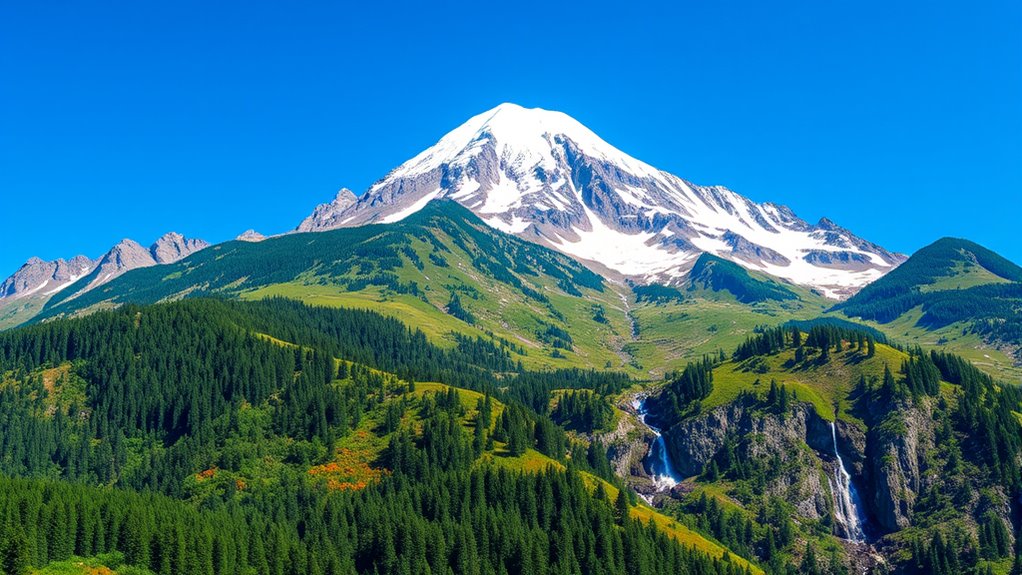

Mountain ecosystems feature diverse life zones that change from lush lowland forests to icy tundra at the summit. As you ascend, climate and soil conditions shift, creating distinct habitats like deciduous and coniferous forests, subalpine zones, and alpine meadows. These progressions support unique plant and animal communities adapted to each environment. The terrain and climate also shape biodiversity, with some species highly specialized and vulnerable to climate change—discover how these remarkable zones connect from base to peak.
Key Takeaways
- Mountain ecosystems are characterized by distinct life zones, from lush lowland forests to alpine tundra at the summit.
- Climate conditions such as temperature and precipitation drive vegetation transitions along elevation gradients.
- Vegetation belts shift upslope with decreasing temperature, creating specialized zones like the base forests and snow-covered peaks.
- Rugged terrain and microclimates promote high endemism and ecological diversity within mountain life zones.
- Climate change threatens these zones through habitat loss, snowpack reduction, and upward shifts of vegetation boundaries.

Mountains and Plains: The Ecology of Wyoming Landscapes
As an affiliate, we earn on qualifying purchases.
As an affiliate, we earn on qualifying purchases.
Understanding Life Zones and Their Classifications
Have you ever wondered how ecologists categorize different regions based on their plant and animal communities? They use the concept of life zones, which are areas with similar climate conditions that support specific ecosystems. C. Hart Merriam developed an early system classifying zones like the Lower Sonoran desert and Arctic-Alpine tundra, mainly for western North America. Modern systems, like Holdridge’s, rely on climate data—precipitation, temperature, and evapotranspiration—to define broad zones, associations, and successional stages. These classifications combine multiple ecological factors to create detailed maps of vegetation types worldwide. Understanding Relationships – Personality Test and how climate shapes plant and animal communities can help ecologists organize diverse regions into meaningful categories based on their shared environmental characteristics. Recognizing the influence of climate classification systems is essential for accurately mapping and understanding the distribution of life zones across different landscapes. Additionally, advancements in vetted ID times have improved the accuracy of ecological classifications, aiding in conservation efforts. Incorporating climate data analysis techniques further enhances the precision of these classifications, leading to better ecological insights.
Furthermore, the development of modern ecological mapping techniques has allowed for more precise delineation of these zones, improving our ability to predict ecological responses to climate change.
How Elevation Shapes Mountain Vegetation Patterns

As you ascend a mountain, you’ll notice the temperature drops about 5-6 °C per 1000 meters, triggering clear vegetation changes. These shifts lead to distinct zones, like from forests at lower elevations to alpine meadows near the summit. Understanding this pattern helps explain how elevation directly influences mountain vegetation. Additionally, different zones are characterized by specific types of vegetation patterns, which adapt to the varying environmental conditions at each elevation. These adaptations are often driven by environmental gradients, which include factors like temperature, moisture, and soil type. Regular assessments of these zones can reveal how climate factors influence ecosystem diversity across different mountain regions. Such studies are crucial for biodiversity conservation efforts, particularly in the face of global climate change. Recognizing the importance of species distribution helps in predicting and mitigating the impacts of environmental shifts on mountain ecosystems.
Elevation and Temperature Drop
Elevation plays a pivotal role in shaping mountain vegetation patterns by causing significant temperature drops as you ascend. Each 1,000 meters gained, temperatures typically decrease by about 5-6°C, drastically altering the climate. This cooling limits the types of plants that can survive at higher altitudes. For example, dense forests give way to open woodlands, then to alpine meadows, and eventually to tundra. The lower temperatures shorten the growing season and increase environmental stresses like frost and wind. As you move upward, these conditions become harsher, restricting tree growth and favoring hardy, specialized plants. The temperature decline directly influences where different life zones occur, dictating the distribution and diversity of mountain vegetation from base to summit. Incorporating cybersecurity measures into research data management can help protect sensitive ecological data collected from these environments. Recognizing how climate change impacts these temperature patterns is vital for predicting future shifts in mountain ecosystems. Additionally, understanding these patterns is essential for conservation efforts, ensuring the protection of unique alpine habitats amid changing global conditions. Moreover, ongoing climate shifts can lead to the upward migration of plant species, transforming existing ecosystems over time.
Vegetation Transitions Along Altitude
Rising through mountain landscapes, vegetation shifts occur in distinct bands that reflect changing environmental conditions. As you ascend, temperature drops and moisture patterns shift, shaping different plant communities. At the base, you find lush forests like deciduous and coniferous trees, thriving in warmer, wetter conditions. Moving higher, these forests give way to subalpine zones with stunted trees, such as krummholz, adapted to harsher winds and colder temperatures. Above the treeline, alpine meadows and tundra dominate, where only grasses, lichens, and mosses survive. Each *changeover* represents a response to decreasing temperatures, increasing wind exposure, and soil changes. These bands form a natural mosaic, demonstrating how elevation creates a gradient of environmental factors that drive vegetation patterns and biodiversity across mountain slopes. The presence of specialized filtration technology in some ecosystems illustrates how specific adaptations help plants and animals survive in these extreme conditions. Additionally, microclimates can vary significantly over short distances, creating unique ecological niches that support diverse forms of life. Furthermore, the diverse soil types across these zones influence plant distribution and health, contributing to the overall complexity of mountain ecosystems. Understanding species adaptation is crucial for conserving these fragile environments amid climate change.
Key Mountain Life Zones and Their Characteristic Flora
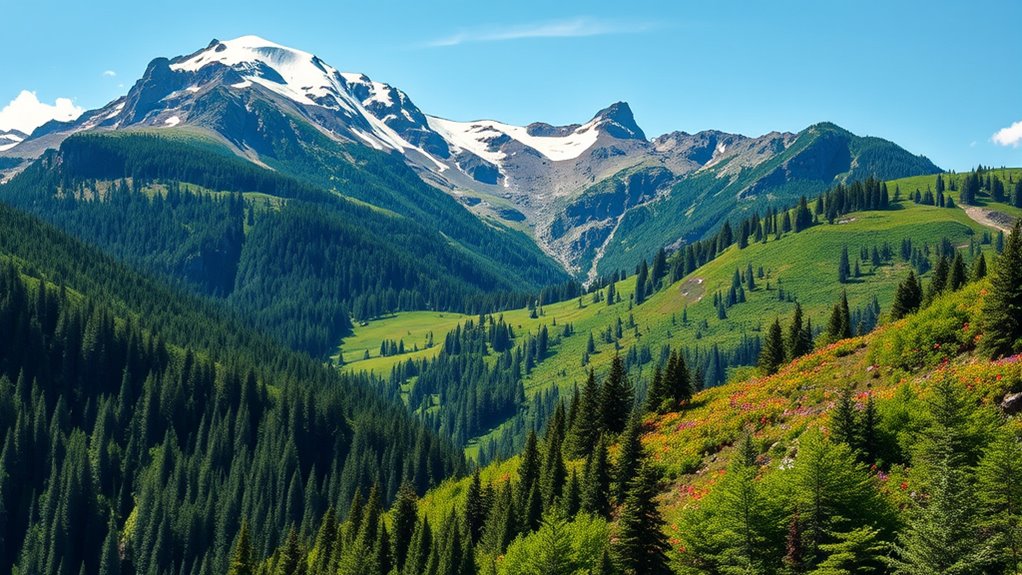
Mountain life zones serve as natural boundaries that host distinct plant communities adapted to specific climatic conditions. As you ascend, you’ll notice vegetation changing rapidly, from desert scrub in the Lower Sonoran zone to dense coniferous forests in the Canadian zone. The desert zone features creosote bush and Joshua trees, thriving in extreme heat and low moisture. Moving higher, the Upper Sonoran supports sagebrush, scrub oak, and pinyon pines, adapted to semi-arid conditions. In the progression zone, ponderosa pine dominates open woodlands. The Canadian zone is characterized by Douglas fir and quaking aspen, thriving in cooler, moist environments. At higher elevations, you encounter the Hudsonian zone with spruces and bristlecone pines, and finally, the Arctic-alpine zone hosts lichens, grasses, and low-growing tundra plants, where trees cannot survive. Sensory experiences in these zones can vary greatly, and observing plant adaptations helps us understand their survival strategies. Additionally, studying these zones reveals how adaptations enable plants to survive in extreme environments.
Biodiversity and Conservation Challenges in Mountain Ecosystems
You need to recognize that climate change is causing rapid shifts in mountain climate zones, pushing species upslope and threatening those adapted to specific elevations. As isolation increases due to rugged terrain, many endemic species face heightened risks of extinction. Addressing these challenges requires understanding how climate and physical barriers shape biodiversity and conservation efforts. Implementing climate adaptation strategies such as heated mattress pads can contribute to improved comfort and well-being for researchers working in remote mountain environments. Recognizing the importance of Cultural Intelligence in conservation initiatives can enhance collaboration among diverse stakeholders and foster innovative solutions to these complex challenges.
Climate Change Impacts
Climate change poses a significant threat to mountain ecosystems by altering temperature and precipitation patterns that define their distinct life zones. As warming occurs, species adapted to cold climates find their habitats shrinking or shifting upslope. You’ll see these impacts include:
- Upslope migration of plant and animal species seeking suitable conditions.
- Reduced snowpack and glacial retreat, affecting water availability.
- Increased frequency of extreme weather events, like storms and droughts.
- Threats to high-altitude endemics that have limited ranges and cannot adapt quickly.
- The disruption of ecosystem stability further complicates conservation efforts and increases the risk of species extinction.
These changes disrupt ecosystem dynamics, threaten biodiversity, and challenge conservation efforts. The rapid shift in climate zones leaves many species vulnerable, especially those confined to specific elevational bands, risking extinction if they cannot adapt or migrate in time.
Endemism and Isolation
Why do many mountain regions harbor such unique and isolated species? The rugged terrain creates natural barriers that limit gene flow, leading to high endemism. As populations become trapped in isolated niches, they adapt to specific microhabitats, resulting in distinct species found nowhere else. Elevational gradients and steep slopes prevent regular migration, intensifying this isolation. Climatic differences between zones further shape species distributions, favoring specialized organisms. Over time, these factors promote evolutionary divergence, generating rich biodiversity with many endemic species. This isolation makes mountain ecosystems especially vulnerable to disturbances like climate change and habitat loss. Protecting these unique species requires understanding their fragile habitats and addressing the threats that threaten their survival in these remote, specialized environments.
Climate Drivers and Their Role in Defining Life Zones
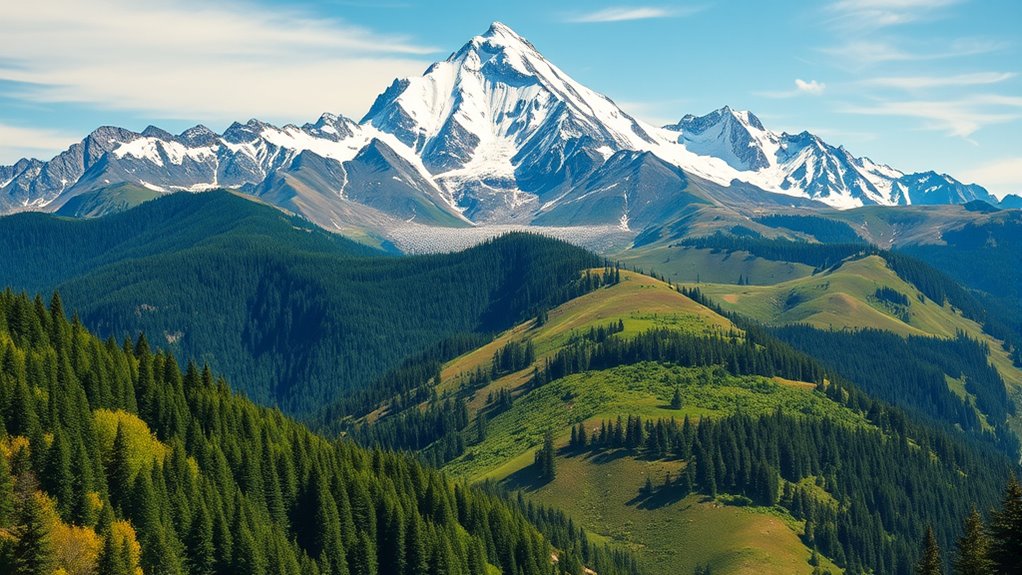
Climatic drivers such as temperature, precipitation, and moisture availability play a crucial role in shaping the boundaries of life zones across mountain ecosystems. These factors determine which plants and animals can survive at various elevations. Temperature drops about 5-6°C per 1000 meters, causing vegetation belts to shift upslope. Precipitation patterns influence soil moisture and plant growth, creating distinct zones. Moisture availability varies with seasonality and topography, affecting species distribution. Snowpack dynamics protect or expose plants during winter, impacting survival. Key points include:
- Temperature decline with altitude limits tree growth above certain levels
- Precipitation influences the type of vegetation, from deserts to forests
- Snowpack affects plant and animal survival in high elevations
- Moisture availability defines distinct life zones along elevation gradients
Distribution Patterns of Mountain Life Zones in the United States

The distribution of mountain life zones across the United States reflects a complex interplay of elevation, climate, and geography. You’ll find lowland zones covering about 74%, mostly in deserts and plains, with warmer, moist forests dominating the basal belt. As you ascend, montane zones expand to 18%, featuring coniferous forests like Douglas fir. Subalpine zones, at 8%, host stunted trees and alpine meadows. The alpine zone, less than 1%, is characterized by tundra, while the nival zone is minimal. The table below summarizes these patterns:
| Zone | Elevation Range | Vegetation Type |
|---|---|---|
| Basal | Lowlands, near sea level | Desert, temperate forest |
| Montane | 1000–2500 m | Coniferous forests |
| Alpine | Above 3000 m | Tundra, grasses |
The Impact of Climate Change on Mountain Ecosystem Dynamics
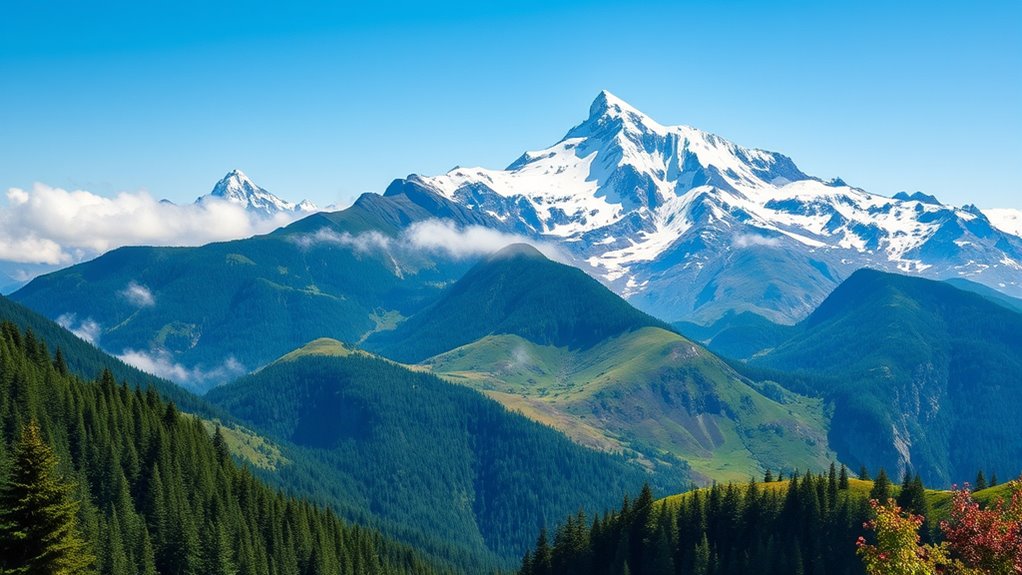
Climate change is rapidly transforming mountain ecosystems by shifting temperature and precipitation patterns, which directly affect the distribution of vegetation zones and species. As temperatures rise, alpine and subalpine species move upslope, risking habitat loss. Precipitation changes alter soil moisture and water availability, impacting plant growth and animal behavior. You’ll notice:
- Tree lines retreating higher, shrinking forest zones.
- Alpine species facing habitat compression or extinction.
- Microhabitats changing, affecting endemic and specialized species.
- Increased vulnerability of cold-adapted species to warming trends.
These shifts disrupt established ecological interactions, reduce biodiversity, and threaten ecosystem stability. Mountaintop species and ecosystems become more isolated, leading to declines in endemic populations. The delicate balance of mountain life zones faces ongoing challenges as climate change accelerates.
Frequently Asked Questions
How Do Soil Types Influence Mountain Ecosystem Diversity?
Soil types directly influence mountain ecosystem diversity by shaping plant growth and nutrient availability. You’ll find that different soils, like rocky, sandy, or clay, support specific plant communities adapted to those conditions. These variations create microhabitats, fostering unique species and interactions. You’ll notice that soil fertility, drainage, and pH determine which plants thrive, ultimately affecting animal distributions and overall biodiversity across mountain zones.
What Role Do Microclimates Play in Species Distribution?
Microclimates dramatically shape where species thrive, acting like hidden kingdoms within mountains. You might think they’re tiny, but they hold world-changing power, creating pockets of warmth or shelter amid harsh conditions. These subtle climate variations determine plant and animal survival, forcing species to adapt or perish. Without microclimates, mountain biodiversity would collapse into a monotonous, barren landscape—showing just how crucial these small climate niches are for life’s diversity.
How Do Mountain Life Zones Vary Globally Beyond the US?
You’ll find that mountain life zones vary greatly worldwide, shaped by local climate, altitude, and geography. In tropical regions, you might see lush montane forests and cloud forests, rich in species, while temperate mountains host diverse coniferous and deciduous forests. Arctic and alpine zones dominate cold regions, with tundra and ice-covered peaks. These differences result from variations in temperature, precipitation, and seasonal patterns across different continents and climate zones.
What Adaptive Strategies Do Summit Species Use Against Harsh Climates?
You’ll notice summit species adapt by developing small, tough bodies to conserve heat and moisture, like compact growth forms and reduced leaf size. They often grow close to the ground to avoid wind stress and frost damage. Many produce antifreeze proteins to prevent cellular ice formation, and some enter dormancy during extreme cold. These strategies help them survive the intense cold, strong winds, and limited nutrients typical of harsh high-altitude environments.
How Do Human Activities Impact Mountain Ecosystem Health?
You should know that over 80% of mountain ecosystems face threats from human activities like deforestation, mining, and tourism. These actions damage delicate habitats, reduce biodiversity, and disrupt natural water cycles. Your actions can accelerate climate change, pushing species to extinction. Protecting mountain health requires sustainable practices, conservation efforts, and respecting these ecosystems’ fragile balance to guarantee their resilience for future generations.
Conclusion
As you explore mountain ecosystems, you’ll notice how life zones subtly shift with elevation, revealing nature’s intricate balance. It’s almost as if these zones mirror a hidden story of adaptation and resilience, quietly reminding us that change is constant. By understanding these patterns, you realize that safeguarding these vibrant habitats isn’t just about conservation—it’s about protecting the delicate threads that weave life’s remarkable tapestry, which, like the mountains themselves, stand resilient through time’s unpredictable flow.