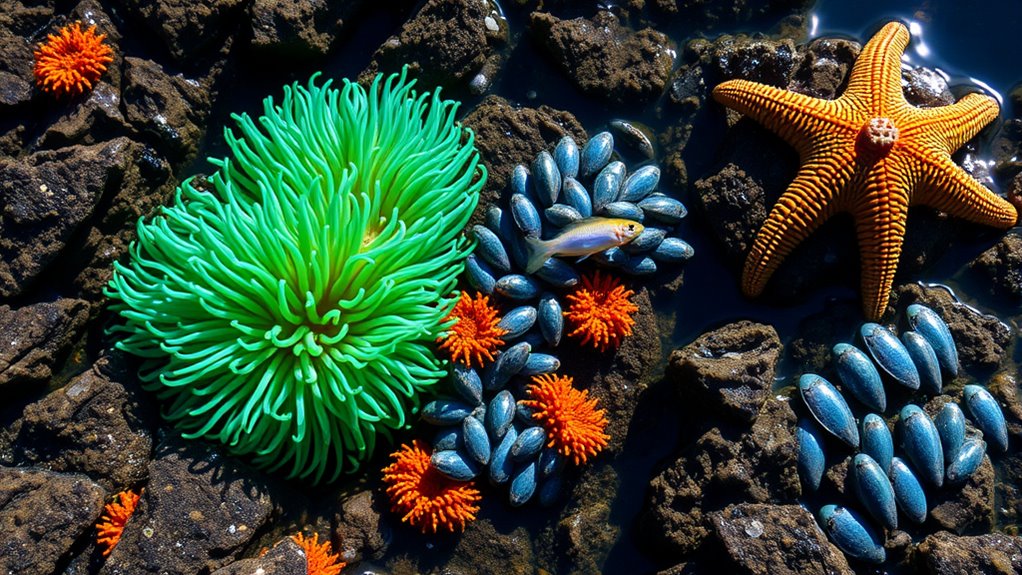

Tide pools are vibrant hubs of biodiversity, with distinct zones supporting unique communities of plants and animals adapted to changing conditions. From hardy barnacles and limpets at the splash zone to colorful anemones and sea stars below, each species plays a crucial role in maintaining ecological balance. Microorganisms and primary producers like algae form the foundation of these ecosystems, revealing the health of coastal environments. Explore further to uncover how these dynamic pools reflect the resilience of nature.
Key Takeaways
- Tide pools host diverse communities organized into zones based on tidal exposure, supporting specialized organisms like barnacles, mussels, and sea stars.
- Environmental conditions such as wave energy, habitat size, and tidal elevation influence species diversity and community structure.
- Primary producers like algae form the foundation of the food web, supporting herbivores and maintaining ecosystem stability.
- Invertebrates adapt through specialized behaviors and physical features, enabling survival amid fluctuating tide pool conditions.
- Microorganisms crucially recycle nutrients and organic matter, serving as indicators of ecosystem health and resilience.

FHOZGECY 2 Pack Beachcombing Kit with Sifters for Beach Vacation Essentials
- All-in-One Kit: Includes essential beach exploration tools
- Premium Stainless Steel: Durable, rust-resistant mesh shovels
- Space-Saving Design: Collapsible buckets for easy storage
As an affiliate, we earn on qualifying purchases.
As an affiliate, we earn on qualifying purchases.
The Dynamic Zones of Tide Pools
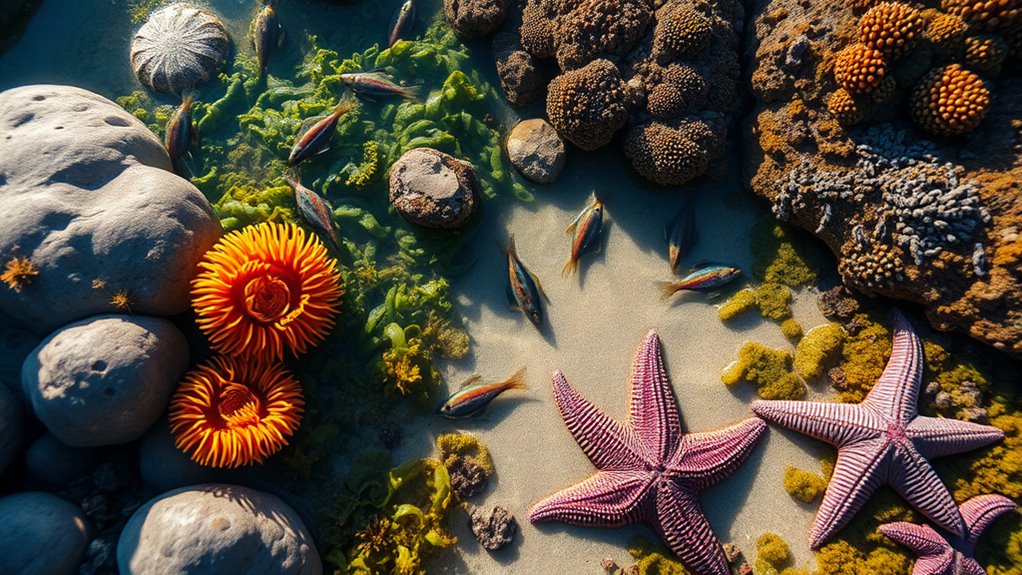
Tide pools are organized into distinct zones that reflect the varying environmental conditions caused by tidal fluctuations. As you observe, the splash zone, at the top, faces the most exposure to air, waves, and sun, hosting hardy organisms like barnacles and limpets. Moving downward, the upper intertidal zone still experiences some air exposure but less frequently, supporting species like small snails and mussels. The middle intertidal zone endures regular immersion and exposure, housing a diverse community including sea anemones, crabs, and fish. Additionally, the adaptations of these organisms enable them to survive the fluctuating conditions of each zone. These specialized adaptations often involve physiological and behavioral strategies that help organisms manage environmental stresses, such as desiccation and temperature fluctuations. These adaptations are often linked to their biological features, which have evolved to optimize survival in their specific habitats. Moreover, the presence of specialized features like tough shells and moisture-retaining tissues exemplifies how organisms adapt to their environments. Finally, the low intertidal zone stays submerged most of the time, supporting larger animals like sea stars and sea urchins. Each zone’s unique conditions shape the types of species that thrive, creating a layered, dynamic ecosystem. Understanding the specific environmental challenges in each zone helps explain the specialized adaptations of the organisms that inhabit them.
Key Species and Their Ecological Roles
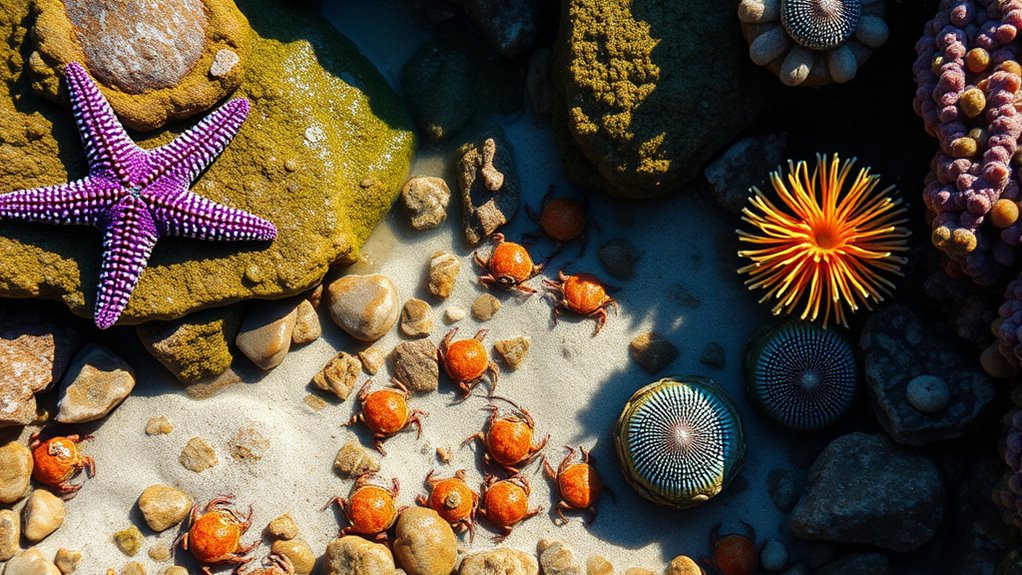
You’ll find that certain species, like sea urchins and sea stars, play vital roles as predators and ecosystem engineers, shaping community structure in tide pools. Herbivores such as snails help control algae growth, maintaining balance within the habitat. These key organisms also serve as indicators of environmental health, revealing changes in the broader coastal ecosystem.
Dominant Predators and Herbivores
Have you ever wondered which species hold the balance of power in tide pools? It’s the predators and herbivores that shape community structure. Sea urchins dominate low tide pools, grazing on algae and controlling its growth, which influences other species’ survival. Sea stars, as top predators, prey on mollusks and crustaceans, preventing their populations from overwhelming the ecosystem. Herbivorous snails and limpets keep algal cover in check, allowing space for other invertebrates. These key species regulate resource availability, maintaining ecological balance. Their interactions determine biodiversity levels and community composition. By controlling prey and algae, predators and herbivores directly influence habitat complexity and stability, shaping the vibrant, dynamic environment that tide pools are known for. Additionally, species interactions such as mutualism and competition further refine the community structure, highlighting the importance of ecological balance and ensuring a resilient ecosystem. Understanding these ecological roles helps us appreciate the delicate balance that sustains life in tide pools. The presence of keystone species amplifies these effects, demonstrating how crucial predator-prey relationships are to ecosystem health. Recognizing the impact of biodiversity reveals the interconnectedness of these species and their environment.
Ecosystem Engineers and Indicators
Certain species in tide pools actively shape their environments, influencing community structure and overall ecosystem health. These key species act as ecosystem engineers and indicators. For example, sea urchins graze on algae, controlling plant overgrowth and maintaining balance. Aggregating anemones and mussels create habitats that shelter smaller organisms and modify local conditions. Their presence and condition reveal the ecosystem’s overall health. By monitoring these species, you can assess shifts in tide pool dynamics, revealing impacts of environmental change or pollution. These species are crucial for understanding and conserving tide pool biodiversity. Additionally, vetted species provide reliable indicators for long-term ecological monitoring.
Adaptations for Survival in the Intertidal World

How do tide pool inhabitants survive the challenging and fluctuating conditions of the intertidal zone? You’ll find they have remarkable adaptations. Many cling tightly to rocks to resist wave surge, like periwinkles and barnacles, preventing being washed away. Others, such as sea anemones and mussels, can close tightly to retain moisture during low tide, avoiding desiccation. Some species, like crabs and isopods, develop tough exoskeletons for protection against physical stress and predators. Cnidarians often have complex life cycles, switching between polyp and medusa stages to maximize survival. Hermaphroditism in flatworms boosts reproductive success when mates are scarce. These adaptations help organisms endure exposure to air, salinity shifts, wave action, and temperature fluctuations, ensuring their survival in this dynamic environment. Recognizing the importance of passive voice detection can also assist writers in creating clearer, more engaging descriptions of these adaptations.
The Impact of Tidal Elevation on Biodiversity

Tidal elevation plays a crucial role in shaping the biodiversity of tide pools by creating distinct environmental conditions along the intertidal zone. As you move from the splash zone to the low intertidal, conditions change dramatically—exposure duration, salinity, and wave action vary, influencing which species can thrive. High elevation pools experience less immersion, favoring hardy, air-adapted invertebrates like barnacles and limpets. Intermediate zones support a mix of species that tolerate both immersion and exposure, such as mussels and sea anemones, leading to peak biodiversity. This stratification ensures that each zone hosts specialized communities, directly impacting overall biodiversity in tide pools. Additionally, variations in color accuracy help scientists and observers better identify and study these diverse species in their natural habitats. Furthermore, the presence of natural barriers like dune systems can influence the distribution of species within these zones by protecting certain areas from wave erosion. The species diversity within tide pools is also affected by seasonal changes, which can alter the abundance and types of organisms present. Recognizing the importance of habitat diversity is essential for understanding how these environmental gradients foster rich ecosystem complexity. In addition, environmental gradients created by tidal elevation serve as natural laboratories for studying ecological adaptation and resilience.
Keystone and Indicator Species in Tide Pools

Keystone and indicator species play essential roles in maintaining the health and stability of tide pool ecosystems. Keystone species, like sea urchins, control algal growth and influence community structure. Indicator species, such as the California mussel or black turban snail, reflect environmental conditions and ecosystem health. Their presence or absence signals changes in water quality, pollution, or habitat stability. Their ecological significance can be better understood through species interactions, which are vital for ecosystem resilience. These species help you gauge ecosystem resilience and identify areas needing conservation. Use the table below to recognize key species and their ecological roles. Additionally, understanding the retail hours of nearby stores can enhance your visit to tide pools by ensuring you have enough time for exploration.
The Role of Algae and Primary Producers

Algae and other primary producers play a vital role in tide pools by performing photosynthesis, which creates oxygen and food that support many inhabitants. You’ll notice that these organisms form the foundation of the food web, feeding herbivores like snails and sea urchins. Without them, the entire ecosystem would struggle to sustain the diverse species that thrive there. Incorporating natural materials like rocks and seaweed can enhance the ecological balance of tide pools. Additionally, photosynthetic activity by these organisms helps regulate oxygen levels, benefiting all tide pool inhabitants. Their presence also contributes to maintaining biodiversity, ensuring a resilient and thriving ecosystem. Recognizing the impact of AI in environmental monitoring underscores the importance of protecting these delicate habitats. Understanding ecosystem dynamics can further aid in conservation efforts to preserve tide pool health.
Photosynthesis and Oxygen Production
Primary producers like seaweeds and algae play a crucial role in tide pools by converting sunlight into energy through photosynthesis. As you observe these organisms, you’ll notice they produce oxygen, which sustains many tide pool inhabitants. Algae, such as green, brown, and red varieties, form dense mats and free-floating forms that maximize light absorption, even in shallow waters. This oxygen release benefits animals like crabs, snails, and sea stars, supporting their respiration. Additionally, the organic compounds produced by photosynthesis serve as the foundation of the food web, providing energy for herbivores and detritivores. During daylight, algae and seaweeds actively engage in photosynthesis, transforming solar energy into essential oxygen and organic matter, making them indispensable for maintaining the delicate balance of tide pool ecosystems. Understanding photosynthesis highlights how vital these primary producers are in supporting the entire tide pool community.
Food Source for Inhabitants
You’ll find that the dense mats of seaweeds and algae serve as essential food sources for many tide pool inhabitants. These primary producers convert sunlight into energy through photosynthesis, fueling the entire ecosystem. Herbivores like snails, sea urchins, and limpets feed directly on algae, controlling their growth and maintaining balance. Algae also provide shelter and breeding grounds for tiny invertebrates, supporting the food web’s foundation. Carnivores, such as sea stars and anemones, prey on herbivorous species that consume algae. Microorganisms break down organic matter, returning nutrients to algae and other primary producers. Overall, algae and seaweeds are crucial for sustaining life in tide pools, supporting herbivores, carnivores, and microorganisms that form a complex, interconnected community.
Invertebrate Diversity and Their Niches
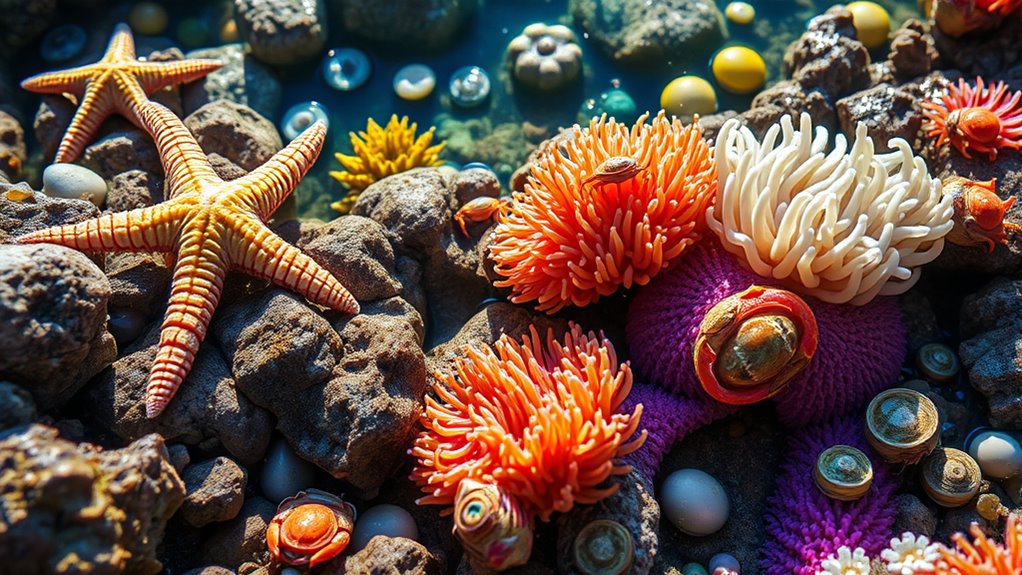
Invertebrates in tide pools occupy a variety of ecological niches that contribute to the overall health and stability of these dynamic environments. You’ll find snails and limpets grazing on algae, controlling growth and preventing overgrowth. Crabs and barnacles cling tightly to rocks, resisting waves and tide changes, while sea stars and anemones act as predators, regulating populations of smaller animals. Mussels and barnacles form dense colonies, creating habitats for other species. Sea urchins, often dominant in low zones, shape community structure by grazing on algae. These organisms have adaptations like tough exoskeletons, strong holdfasts, or flexible life cycles to survive fluctuating conditions. Their interactions sustain biodiversity, maintain balance, and ensure the resilience of tide pool ecosystems.
The Significance of Microorganisms in Ecosystem Function

Microorganisms play a crucial role in maintaining the health and stability of tide pool ecosystems by driving essential processes such as nutrient cycling and organic matter decomposition. They break down dead organic material, releasing nutrients like nitrogen and phosphorus, which support primary producers like algae and seaweeds. These tiny organisms also facilitate the recycling of carbon, ensuring energy flow within the food web. Microbes act as the foundation for many higher trophic levels, providing food for small invertebrates and juvenile fish. Their metabolic activities influence water quality, oxygen levels, and overall ecosystem resilience. Without microorganisms, nutrient imbalances would occur, leading to decreased biodiversity and ecosystem collapse. Essentially, these microscopic players sustain the delicate balance that allows tide pools to thrive and sustain diverse life forms.
Habitat Complexity and Zonation Patterns

Habitat complexity in tide pools arises from their stratified zonation, creating distinct microhabitats that support diverse communities. You’ll notice different zones, each with unique environmental conditions and inhabitants. The splash zone faces air exposure and wave splash, hosting hardy invertebrates like barnacles and limpets. Moving to the upper intertidal, organisms such as snails and seaweeds tolerate periodic drying and wave action. The middle zone sees species that endure full immersion and exposure cycles, including mussels, anemones, crabs, and fishes. In the low intertidal, larger species like sea urchins and sea stars dominate, thriving in more stable conditions. These layers influence species distribution, adaptive traits, and interactions, creating a complex mosaic of habitats crucial for maintaining tide pool biodiversity.
How Tide Pools Reflect Coastal Environmental Health

You can tell a lot about coastal health by observing tide pools, especially through indicator species that signal environmental changes. When biodiversity levels fluctuate or habitat quality declines, it often points to broader ecological issues. Monitoring these aspects helps you understand the overall condition of the shoreline ecosystem.
Indicator Species Presence
How do tide pools serve as natural indicators of coastal environmental health? You can observe specific species whose presence or absence signals ecosystem changes. These indicator species thrive only under certain conditions, so shifts reveal environmental stress or pollution.
- Sea urchins, for example, indicate balanced predator-prey relationships; their decline suggests overfishing or habitat loss.
- California mussels act as biofilters; their health reflects water quality and pollution levels.
- Black turban snails are resilient and widespread, but their sudden disappearance hints at salinity or temperature shifts.
- Bryozoans, often overlooked, show changes in nutrient levels and water clarity through their growth patterns.
Monitoring these species helps you understand whether the coastal environment remains healthy or faces challenges.
Biodiversity Levels Fluctuate
Biodiversity levels in tide pools often fluctuate in response to environmental changes, making them valuable indicators of coastal health. During low tide, pools may lose species due to exposure, while storms or pollution can cause sudden declines or shifts in community composition. When conditions improve, new species may colonize, increasing diversity. Temperature, salinity, and wave action also influence species presence, favoring some organisms while excluding others. Larger pools tend to host more species because they offer stable conditions and more habitat variety. Conversely, high-energy zones with frequent disturbance have fewer species, dominated by hardy, adaptable organisms. These fluctuations reflect the dynamic interplay between environmental factors and biological communities, providing insights into the overall resilience and health of coastal ecosystems.
Habitat Quality Significance
Tide pools serve as vital indicators of coastal environmental health because their condition reflects the overall status of nearby ecosystems. When tide pools are healthy, they support diverse species and show balanced predator-prey relationships. Conversely, pollution, sedimentation, or climate change can cause declines in biodiversity and disrupt ecological functions. You can gauge ecosystem stability by observing key signs:
- Presence of keystone species like sea urchins and sea stars
- Abundance of algae and invertebrates
- Water clarity and salinity levels
- Diversity and health of filter feeders and primary producers
Healthy tide pools indicate clean, well-balanced coastlines, while degraded pools warn of environmental stress. Monitoring these habitats helps you understand broader coastal conditions and promotes conservation efforts that protect marine biodiversity.
Frequently Asked Questions
How Do Tide Pool Communities Adapt to Changing Salinity Levels?
You’ll see tide pool inhabitants adapt to fluctuating salinity by developing specialized features. Many organisms, like snails and barnacles, cling tightly to rocks to resist waves and salt changes. Some, such as certain anemones and algae, tolerate wide salinity ranges by controlling their internal fluids. Others, like sea urchins, adjust their behavior or move to more stable zones, ensuring survival amid the dynamic and often unpredictable marine environment.
What Role Do Less Conspicuous Species Play in Tide Pool Ecosystems?
You might overlook the quiet players, but they’re the backbone of tide pool stability. Less conspicuous species like bryozoans, flatworms, and microorganisms act as habitat engineers, nutrient recyclers, and biofouling controllers. They keep the ecosystem running smoothly, often serving as indicators of environmental health. These under-the-radar organisms demonstrate that sometimes, the smallest players have the biggest impact, proving that appearances can be deceiving in the intricate web of tide pool life.
How Do Tide Pools Influence Local Marine Biodiversity Beyond Their Boundaries?
Tide pools boost adjacent marine biodiversity by serving as vital habitats and nurseries, supporting a wide array of species. They create microenvironments that foster species interactions, promote genetic exchange, and sustain populations beyond their immediate boundaries. You’ll find that these pools help maintain ecosystem stability, influence local food webs, and enhance regional biodiversity, making coastal environments more resilient and diverse overall.
In What Ways Do Human Activities Impact Tide Pool Biodiversity and Health?
You can impact tide pool biodiversity and health through pollution, trampling, and collecting organisms. Pollution introduces toxins that harm sensitive species, while human foot traffic damages delicate habitats and destroys organisms. Collecting sea creatures disrupts ecosystem balance, and coastal development alters natural flow and sedimentation. These activities threaten species diversity, weaken ecosystem resilience, and can lead to the loss of keystone species, ultimately degrading the entire tide pool community.
How Do Tide Pools Serve as Indicators of Broader Climate Change Effects?
You can see tide pools as climate change indicators because shifts in species diversity, distribution, and abundance reveal environmental changes. Warmer temperatures, ocean acidification, and altered salinity affect organisms’ survival and reproductive cycles. When species like sea urchins or algae decline or move, it signals broader climate impacts. Monitoring these changes helps you understand the health of coastal ecosystems and the progress of climate change effects over time.
Conclusion
As you explore tide pools, you’re witnessing a microcosm teeming with life, each species playing its part like pieces of a delicate puzzle. These vibrant habitats reveal the true colors of coastal health and resilience. By understanding their complex dance, you realize you’re holding the key to preserving this rich tapestry. Remember, the tide’s ebb and flow remind us that nature’s balance is a finely tuned instrument—once lost, it’s hard to get back in tune.