TL;DR

Prime made for students and young adults
- Fast, free delivery for dorm and study essentials
- Prime Video and Amazon Music included
- Member-only deals
NASA’s Astronomy Picture of the Day for Nov. 3, 2026, features a photograph of Comet C/2025 R3 (PanSTARRS) and a colorful meteor streak captured in France. NASA says the meteor probably did not come from the comet; three notable meteor showers are due to peak during November.
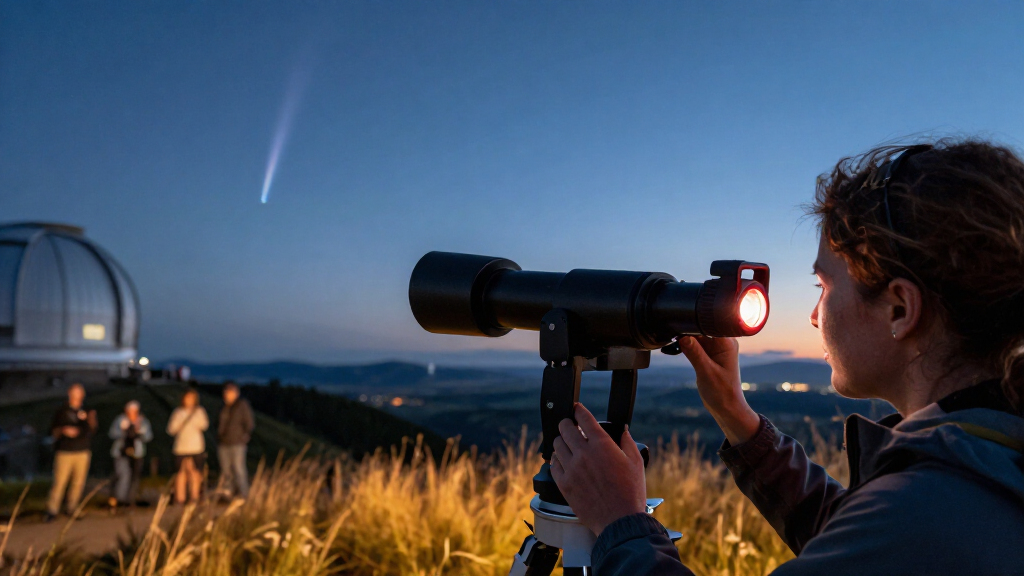
NASA’s Astronomy Picture of the Day for November 3, 2026, features a photograph showing Comet C/2025 R3 (PanSTARRS) and a colorful meteor streak in the same view, while cautioning that the meteor probably did not originate from the comet. The image, taken from Hautacam, France, offers a timely look at the distinction between a comet in the background and a meteor crossing Earth’s atmosphere, as several meteor showers approach their November peaks.
The photograph was captured in April, when C/2025 R3 appeared with a blue ion tail and a dust tail. NASA’s accompanying explanation says the comet is far behind the streaking meteor; their apparent alignment in the image does not establish a physical connection. The image is credited to photographer Eddy Metais.
NASA says the meteor probably did not come from this comet. Although many meteors originate in cometary debris, the agency notes that thousands of comets have visited the inner Solar System in recent times, making it difficult to match an individual meteor to a particular comet. The colorful streak may indicate a complicated composition, the explanation says, but it does not identify the material or establish the meteor’s origin.
The APOD entry also points to three notable meteor showers reaching their peaks this month. The Southern Taurids are expected to reach their peak over the next few days, followed about a week later by the Northern Taurids. The Leonids, described by NASA as November’s best-known shower, are expected to peak in about two weeks. NASA associates the Taurids with Comet 2P/Encke and the Leonids with Comet 55P/Tempel-Tuttle.
The Meteor Showers Ahead
The image arrives as skywatchers have several chances to observe meteor activity during November. NASA’s timing gives readers a useful guide to the Southern Taurids, Northern Taurids and Leonids, while the explanation clarifies that seeing a comet and meteor together does not mean one produced the other. That distinction matters because a meteor’s apparent path across a photograph is not, on its own, evidence of its source.
The entry also illustrates the different scales and roles of the objects shown. The comet is a distant object with visible tails, while the meteor is a streak caused when material enters Earth’s atmosphere. NASA describes typical meteor-producing debris as sand-sized rocky material. The photograph connects an astronomical image with a near-Earth atmospheric event, but the agency does not claim that the two visible objects are related.
Popular right now

Dreame G10 Pro Wet and Dry Vacuum Mop

LG 85-Inch QNED84B Mini LED 4K Smart TV (2026)

Shark HydroVac MessMaster Corded Wet Dry Vacuum and Mop (WD161)
As an affiliate, we earn on qualifying purchases.
How the Image Fits November
NASA’s Astronomy Picture of the Day presents a different image or photograph each day alongside an explanation written by a professional astronomer. The November 3 entry combines the April photograph from Hautacam with a short account of cometary debris and the meteor showers expected later in the month. Its image credit names Eddy Metais; the listing identifies Robert Nemiroff, Jerry Bonnell, Cecilia Chirenti and Keighley Rockcliffe as authors and editors.
The shower names in the entry refer to separate meteor displays with different comet associations. NASA links both Taurid showers to 2P/Encke, and the Leonids to 55P/Tempel-Tuttle. Those associations provide context for why some meteors are tied to comets, but they do not identify the source of the particular meteor photographed beside PanSTARRS.
What the Photograph Cannot Show
The source of the pictured meteor is not identified. NASA says it probably did not come from C/2025 R3, but the entry does not give a definitive alternative source or describe an analysis that could determine its parent object. The streak’s colors may suggest a complex composition, yet the explanation does not say which materials are present or how that conclusion was reached.
The APOD entry gives approximate timing for the meteor showers—over the next few days, about a week later and in about two weeks—but does not provide exact peak times, viewing directions or visibility forecasts for particular locations. Those details are not established by the image and its accompanying explanation.
November’s Upcoming Shower Peaks
According to the APOD entry, the Southern Taurids are expected to peak over the next few days, with the Northern Taurids following about a week later. The Leonids are expected to reach their peak in about two weeks. These are the timings supplied in the November 3 entry; it does not include more precise local observing information.
NASA’s APOD also points readers to the next daily image, described as “a hidden gem.” The comet-and-meteor photograph remains a visual prompt rather than evidence of a meteor’s parent comet: the agency’s explanation says the source of the foreground streak has not been established.
Key Questions
Did the meteor come from Comet PanSTARRS?
Probably not, according to NASA’s explanation. It says the comet is far behind the meteor in the photograph and that matching individual meteors to comets can be difficult.
Where and when was the photograph taken?
The image was captured in April from Hautacam, France, and credited to Eddy Metais. NASA published it as its Astronomy Picture of the Day on November 3, 2026.
Which meteor showers are expected to peak in November?
The entry names the Southern Taurids, Northern Taurids and Leonids. It places the Southern Taurids’ peak in the next few days, the Northern Taurids about a week later, and the Leonids in about two weeks.
Which comets are associated with those showers?
NASA associates both Taurid showers with Comet 2P/Encke and the Leonids with Comet 55P/Tempel-Tuttle. Those associations do not identify the source of the meteor in the photograph.
Source: science.nasa.gov