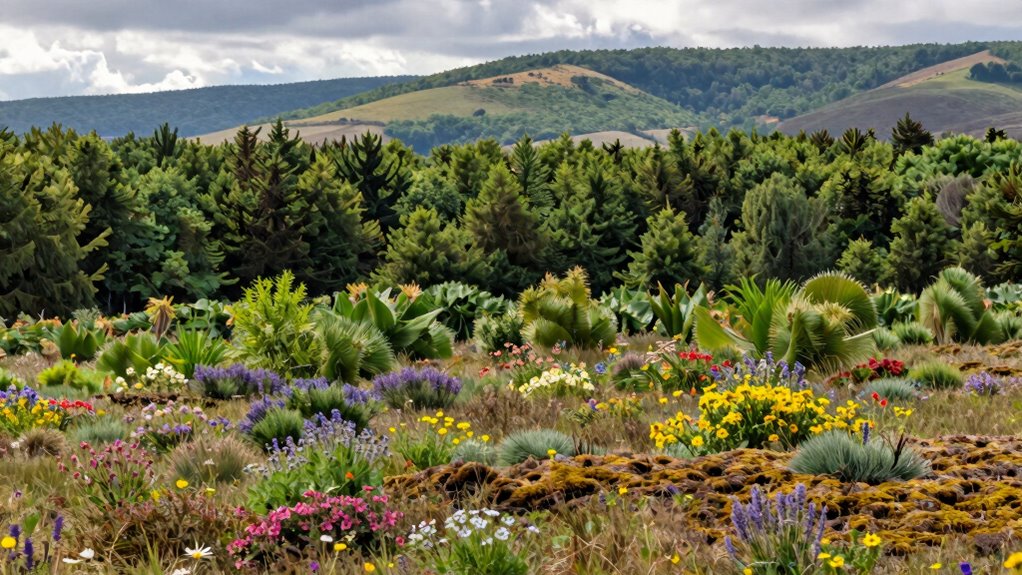

Beta diversity measures how much species composition varies between different habitats or communities. It helps you understand how similar or distinct ecosystems are by focusing on species turnover—the replacement of some species by others across spaces. Ecologists care because this variation reveals ecological differences, supports biodiversity conservation, and shows how communities respond to environmental changes. If you want to know more about how beta diversity shapes our ecosystems and their resilience, keep exploring this important topic.

Prime made for students and young adults
- Fast, free delivery for dorm and study essentials
- Prime Video and Amazon Music included
- Member-only deals
Key Takeaways
- Beta diversity measures differences in species composition between communities or habitats.
- It indicates how similar or distinct ecosystems are across landscapes.
- High beta diversity reflects unique species turnover between habitats.
- Ecologists use it to understand biodiversity patterns and ecological processes.
- Protecting areas with high beta diversity helps conserve rare and endemic species.

Have you ever wondered how different ecosystems or habitats compare regarding their species composition? If you’re exploring biodiversity, understanding beta diversity can give you a clearer picture of how similar or distinct these environments are. Beta diversity measures the variation in species between different communities or habitats, revealing the extent of community variation across landscapes. It’s a way to grasp how species composition changes from one place to another, and that change is driven by species turnover—the replacement of some species by others as you move across different habitats. High species turnover indicates that each community hosts unique species, while low turnover suggests that communities share many species.
Beta diversity reveals how species composition varies across habitats, highlighting ecological differences and community uniqueness.
When ecologists talk about beta diversity, they’re often referring to this variation in community composition. It’s a crucial concept because it helps you understand the spatial patterns of biodiversity. For example, in a forest, some areas might have many species in common, leading to low community variation, whereas other regions might be home to entirely different sets of species, resulting in high community variation and high species turnover. These differences can be influenced by factors like climate, soil type, elevation, or human impact, which shape how communities form and change.
Ecologists care about beta diversity because it plays a vital role in conservation and ecosystem management. By analyzing community variation, you can identify areas with unique species assemblages that deserve protection. For instance, a habitat with high beta diversity may contain many rare or endemic species that aren’t found elsewhere. Protecting such areas helps maintain overall biodiversity and ensures that the full spectrum of species is preserved. Additionally, beta diversity informs you about the processes driving community assembly, such as dispersal, environmental filtering, or competition. These insights can help you understand how ecosystems respond to disturbances or climate change.
Moreover, measuring beta diversity allows you to compare regions at different scales, from local plots to entire biomes. It helps reveal patterns of species replacement and the factors influencing those patterns. For example, if species turnover is high between two sites, it suggests that these habitats are ecologically distinct, possibly due to different environmental conditions or geographic barriers. Conversely, low community variation indicates similar habitats or ongoing connectivity.
In essence, beta diversity offers a window into the dynamics of ecological communities. It helps you see how species are distributed and replaced across landscapes, highlighting the importance of preserving diverse habitats to maintain overall ecosystem health and resilience. By understanding community variation and species turnover, you gain deeper insights into the complex fabric of life that makes up our planet’s ecosystems.
As an affiliate, we earn on qualifying purchases.
Frequently Asked Questions
How Is Beta Diversity Different From Alpha and Gamma Diversity?
You see that beta diversity measures species turnover between different habitats or areas, highlighting how diverse communities change across landscapes. Unlike alpha diversity, which looks at species richness within a single site, and gamma diversity, which sums overall diversity, beta diversity emphasizes habitat heterogeneity. This helps ecologists understand how species composition varies, revealing the importance of habitat differences and guiding conservation efforts to maintain biodiversity across regions.
What Factors Influence Beta Diversity Across Ecosystems?
You influence beta diversity through factors like species turnover and habitat heterogeneity. Higher species turnover, where different species replace each other across sites, increases beta diversity. Likewise, diverse habitats create more varied environments, supporting different species and raising beta diversity. Human activities, climate, and geographic barriers also impact these factors, shaping how ecosystems differ from each other. Understanding these influences helps you grasp how ecosystems maintain biodiversity and resilience.
How Do Ecologists Measure Beta Diversity in the Field?
You measure beta diversity in the field by evaluating species turnover across different habitats or sites. Typically, you collect data on species presence and absence, then calculate indices like the Jaccard or Bray-Curtis dissimilarity. Notably, studies show that habitats with high heterogeneity often have a 50% greater species turnover, emphasizing how ecological variation influences beta diversity. This method helps ecologists understand how species composition varies across landscapes.
Why Is Beta Diversity Important for Conservation Efforts?
Beta diversity is vital for conservation because it reveals differences in species distribution across habitats, helping you identify areas with unique species assemblages. By understanding genetic variation among populations, you can prioritize regions that maintain overall biodiversity. This insight guides your efforts to protect diverse ecosystems, ensuring the preservation of both species and their genetic diversity, which is fundamental for resilience and adaptability in changing environments.
Can Beta Diversity Help Predict Ecosystem Resilience?
Yes, beta diversity can help predict ecosystem resilience by highlighting species turnover across habitats. High beta diversity indicates greater habitat heterogeneity, which often means the ecosystem can better withstand disturbances due to diverse species roles. When species turnover is balanced, ecosystems tend to recover faster after disruptions. By analyzing beta diversity, you can identify areas with strong resilience potential, guiding conservation efforts to maintain or enhance ecosystem stability.
Conclusion
So, next time you marvel at a lush forest or a vibrant coral reef, remember — beta diversity’s the reason those places aren’t all the same. It’s the secret sauce that keeps ecosystems interesting, unpredictable, and worth protecting. Without it, we’re just staring at a boring, uniform backdrop. So, appreciate the chaos, celebrate the differences, and thank beta diversity for reminding us that nature’s true beauty lies in its variety. Keep it diverse, keep it lively!
Fall Picks
fall essentials
As an affiliate, we earn on qualifying purchases.