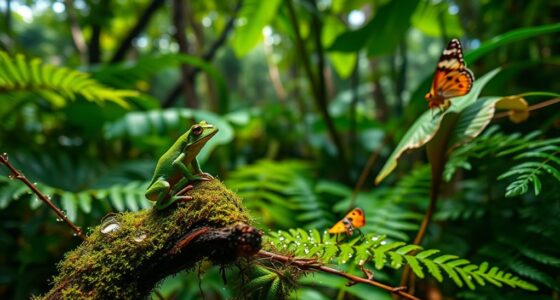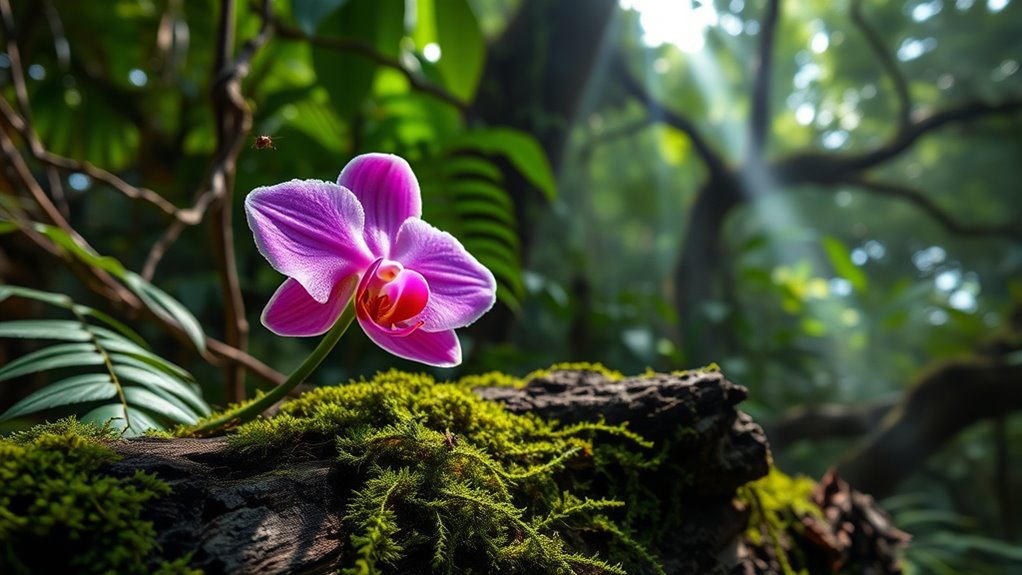

Endemic species exist only in specific locations because geographic isolation and unique habitats create conditions that shape their evolution and prevent interbreeding with other populations. Physical barriers like mountains or islands limit gene flow, leading to specialized adaptations over time. These isolated environments foster unique plants and animals found nowhere else. If you want to understand how these factors drive evolution and why they’re essential for biodiversity, keep exploring further.
Key Takeaways
- Endemic species evolve in isolated habitats, leading to unique adaptations not found elsewhere.
- Geographic barriers prevent gene flow, promoting independent evolution and high endemism.
- Specialized environments like islands and mountains foster species that are endemic to those regions.
- Limited ranges and habitat specialization make endemics highly vulnerable to environmental changes.
- Their unique existence provides insights into evolutionary processes and regional biodiversity.
What Are Endemic Species and How Are They Defined?

Have you ever wondered what makes certain species unique to a specific place? Endemic species are those found only in that particular location and nowhere else in the world. They’re a subset of native species that evolved in that area, not introduced from elsewhere. Endemism refers to this exclusive presence, often seen in islands, mountain ranges, or isolated habitats. These species can be plants, animals, fungi, or other organisms, and their limited distribution makes them especially interesting to ecologists and biologists. Because they’re confined to specific regions, endemic species often develop specialized adaptations, including geographic isolation, which drives their unique evolution. This uniqueness highlights the importance of protecting their habitats, as their survival depends entirely on their native environment. The study of endemism can also provide insights into how species adapt to isolated habitats and the effects of geographic barriers on evolution. Endemism emphasizes the incredible diversity of life found in just one small geographic area. Recognizing biogeographic regions helps scientists understand patterns of species distribution and the factors that influence endemism.
The Role of Geographic Isolation in Endemism

You can see how geographic isolation acts as a barrier to gene flow, preventing species from mixing with others. This separation encourages populations to evolve independently, leading to divergence over time. As a result, isolated areas often give rise to unique endemic species that are found nowhere else. Moreover, these biodiversity hotspots are crucial areas for conservation efforts due to their high levels of endemism and ecological significance. Protecting these areas can help maintain genetic diversity, which is vital for the resilience of ecosystems. Proper stove decor and maintenance in these areas can also support sustainable interactions with local ecosystems.
Barriers to Gene Flow
What role does geographic isolation play in creating barriers to gene flow, and how does this process drive endemism? When populations become separated by physical barriers like mountains, oceans, or deserts, gene flow slows or stops. This isolation prevents genetic exchange, leading each group to evolve independently. Over time, these differences accumulate, creating distinct species confined to their specific regions. Imagine:
- A mountain range blocking a plant’s seed dispersal, isolating populations.
- An island cutting off animals from mainland relatives.
- A deep lake preventing fish from migrating across.
- A canyon separating bird populations, limiting interbreeding.
These barriers reinforce reproductive isolation, enabling unique adaptations. Additionally, geographic features such as valleys or climatic conditions can further influence this process by shaping environmental pressures. The physical separation often results in genetic divergence, which intensifies as populations adapt to their local environments. As gene flow diminishes, populations diverge further, fostering endemism by producing species that exist only within their isolated habitats. Moreover, climatic variation can intensify these effects by creating diverse ecological niches that promote local specialization. Such environmental factors can also lead to speciation events, further increasing regional biodiversity. In some cases, long-term isolation can cause populations to diverge so significantly that they become entirely separate species, highlighting the profound impact of geographic barriers on evolution.
Evolutionary Divergence Factors
Geographic isolation directly influences evolutionary divergence by limiting gene flow between populations. When populations are separated by physical barriers like mountains, islands, or lakes, they evolve independently. This isolation encourages unique adaptations, leading to speciation and endemism. To understand this better, consider the factors below:
| Factor | Effect | Example |
|---|---|---|
| Physical Barriers | Prevent gene flow, promote divergence | Mountain ranges |
| Habitat Specialization | Adaptation to unique environments | Island ecosystems |
| Climate Stability | Preserves isolated lineages | Madagascar |
| Reproductive Isolation | Limits interbreeding, enhances divergence | Mountain valleys |
| Long-term Isolation | Amplifies genetic differences | Australian fauna |
Additionally, vetted and well-designed ecological niches can reinforce isolation by creating environments where only certain species can thrive, further promoting endemism. Understanding how geographic factors contribute to such isolation helps explain the diversity of endemic species worldwide.
Unique Habitats That Foster Endemic Biodiversity

Unique habitats play a crucial role in fostering endemic biodiversity by creating isolated environments where species can evolve independently. These habitats act as natural barriers, limiting gene flow and encouraging unique adaptations. Imagine a remote island with lush rainforests, a mountain range with distinct ecological zones, a high-altitude lake, or a desert valley with specialized flora and fauna. These environments often feature:
- Isolated islands surrounded by vast oceans
- Mountainous terrains with sharp elevation changes
- Enclosed lakes with stable, unique conditions
- Arid deserts with specialized plant and animal life
Such habitats provide the perfect conditions for species to develop specialized traits, survive in limited ranges, and remain largely secluded from outsiders. Their isolation drives the formation of truly endemic species, making these habitats critical for biodiversity. Additionally, AI-powered data analytics can help scientists monitor these fragile ecosystems and better understand the processes that foster endemic species. Recognizing the importance of habitat diversity is essential for conservation efforts aimed at protecting these unique environments. Furthermore, environmental isolation often results in the development of highly specialized adaptations that are not found elsewhere, emphasizing the need for targeted conservation strategies.
Examples of Endemic Plants and Animals Around the World
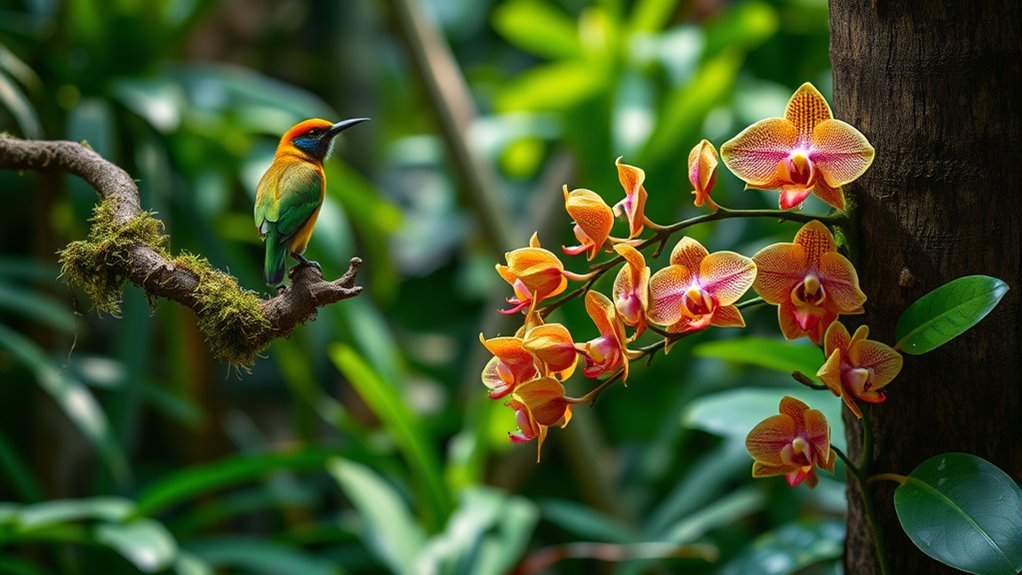
Around the world, many plants and animals are found only in specific regions, showcasing the fascinating diversity of endemism. For example, in Hawaii, you’ll find the rare Hawaiian honeycreeper and the unique ohia tree, both endemic to the islands. Madagascar hosts the lemurs, which are found nowhere else, and the stunning Madagascar periwinkle. In Australia, the kangaroo and platypus are endemic, adapted to their unique environment. The Galápagos Islands are home to the giant Galápagos tortoise and the blue-footed booby, both exclusive to those islands. In South Africa’s Cape Floristic Region, you’ll discover diverse endemic plants like proteas and ericas. These examples highlight how isolated habitats foster special species that you won’t see anywhere else, emphasizing their importance for global biodiversity. Proper conservation efforts are vital to protect these endemic species, especially as habitat loss continues to threaten their survival. Protecting endemic habitats is crucial for maintaining this unique biodiversity.
Why Endemic Species Are Often Vulnerable or Endangered

Endemic species are often vulnerable or endangered because their limited ranges make them highly susceptible to threats that can wipe out their entire populations. When a threat targets their small habitat, it leaves no alternative areas for survival. Consider these dangers:
Endemic species face extinction risks due to their limited ranges and habitat vulnerabilities.
- Habitat destruction from deforestation or urbanization that shrinks their living space
- Invasive species that outcompete or prey on native endemics
- Climate change altering their delicate habitats beyond survival
- Natural disasters affecting isolated regions, like volcanic eruptions or storms
Because they depend on specific environments, even minor changes can have catastrophic effects. Their inability to relocate or adapt quickly makes them especially fragile. Protecting these species requires focused efforts to preserve their limited habitats and mitigate threats. Resources and Tools can be essential in developing effective conservation strategies, including remote monitoring technology that helps track habitat changes remotely. Understanding the importance of habitat specificity can further enhance conservation efforts by emphasizing the need to maintain the exact conditions these species require. Additionally, leveraging AI in Business can aid in modeling and predicting habitat changes to better inform conservation priorities.
The Importance of Endemism in Conservation Efforts

Endemism plays a vital role in conservation because these species contribute uniquely to global biodiversity. By focusing on endemic species, you can prioritize efforts that protect vulnerable and irreplaceable parts of ecosystems. Preserving these species not only saves individual organisms but also maintains the health and resilience of entire habitats.
Biodiversity Preservation Significance
Because they are found only in specific locations, endemic species play a crucial role in maintaining global biodiversity. They add unique genetic traits, support specialized ecosystems, and contribute to ecological balance. Without endemic species, entire habitats could lose their distinctiveness and resilience. Imagine:
- Unique plants that stabilize fragile island soils, preventing erosion
- Endemic animals that fill key predator or prey roles within isolated ecosystems
- Specialized fungi supporting native plant growth, fostering ecosystem health
- Rare species serving as indicators of habitat quality and environmental change
Protecting these species preserves the intricate web of life, ensures ecosystem stability, and maintains the natural heritage of vulnerable regions. Their loss would diminish Earth’s biological richness and weaken the resilience of global biodiversity.
Prioritizing Vulnerable Species
Since many species found only in specific regions face heightened risks of extinction, prioritizing vulnerable endemic species is essential for effective conservation. These species often have limited ranges, making them more susceptible to habitat loss, invasive species, and climate change. Protecting them preserves unique genetic traits and ecological functions that can’t be found elsewhere. By focusing on vulnerable endemics, you help prevent irreversible biodiversity loss and maintain ecosystem stability. Prioritization involves identifying species at greatest risk and allocating resources for habitat protection, legal safeguards, and restoration efforts. This targeted approach ensures that conservation actions are efficient and impactful. Ultimately, safeguarding vulnerable endemic species helps preserve the planet’s biological heritage and supports resilience in fragile ecosystems.
Different Types and Classifications of Endemic Species

Endemic species can be classified into different types based on their evolutionary history and habitat, providing insight into how they’ve developed and persisted in specific regions. Paleoendemics are ancient species, like the ginkgo tree, now limited to small areas. Neoendemics are recently evolved, such as Darwin’s finches, which haven’t dispersed far. You might also encounter island endemics, like the Galápagos tortoise, thriving only on isolated islands. Mountain endemics, such as certain alpine plants, are confined to high-altitude regions, while lake endemics, like some fish, are restricted to a single body of water. These classifications reveal how geographic isolation, habitat specificity, and evolutionary history shape species’ survival and distribution, emphasizing their uniqueness and vulnerability.
How Endemism Reveals the History of Evolution and Earth’s Biodiversity

Endemism serves as a window into the evolutionary processes that shape Earth’s biodiversity. By studying endemic species, you can trace how geographic isolation, climate stability, and habitat specialization create unique evolutionary paths. These species reveal past events like continental drift, volcanic activity, or glacial cycles that separated populations and prompted speciation. For instance, island endemics like Darwin’s finches show how new species evolve rapidly in isolated environments. Endemism also highlights how Earth’s changing landscapes influence biodiversity, preserving ancient lineages or fostering recent innovations. By examining where endemic species occur and their relationships, you gain insights into Earth’s history, natural selection, and the dynamic forces that generate and maintain life’s diversity across time and space.
Frequently Asked Questions
How Do Endemic Species Impact Local Ecosystems and Biodiversity?
You impact local ecosystems and biodiversity by supporting endemic species, which often fill unique ecological roles. These species contribute to habitat stability, nutrient cycling, and food webs. Their presence boosts biodiversity, making ecosystems more resilient. Protecting endemic species helps preserve the ecological balance and genetic diversity of the region. When you conserve their habitats, you guarantee these exclusive species continue to thrive, maintaining the health and uniqueness of the local environment.
Can Endemic Species Become Invasive if Introduced Elsewhere?
Yes, endemic species can become invasive if introduced elsewhere. You might be surprised how these specialized species, when moved beyond their native range, can quickly dominate new environments. Their unique adaptations allow them to outcompete local species, disrupt delicate ecosystems, and cause ecological chaos. So, while they’re cherished in their original habitat, introducing them elsewhere risks releasing unforeseen, often destructive, invasions that threaten the very balance of local biodiversity.
What Role Does Climate Change Play in Endemism and Species Extinction?
Climate change accelerates species extinction by disrupting habitats, especially for endemics with limited ranges. You might see these species struggle to adapt to new conditions or find suitable environments, increasing their risk of extinction. It can also cause habitat loss or alteration, shrinking their living areas. As a result, climate change threatens their survival, making conservation efforts even more urgent to prevent losing unique species forever.
Are There Successful Long-Term Conservation Programs for Endemic Species?
Yes, there are successful long-term conservation programs for endemic species. You can support protected areas, national parks, and wildlife reserves that focus on preserving these unique species. Conservation organizations also work on breeding programs, habitat restoration, and legal protections. Your involvement through donations or advocacy helps guarantee these programs continue. By raising awareness and supporting policies, you contribute to safeguarding endemic species for future generations.
How Does Human Activity Influence the Emergence of Endemic Species?
Human activity influences the emergence of endemic species by altering habitats, creating isolated environments, and driving speciation. When you deforest, build, or change landscapes, you can fragment ecosystems, forcing species to adapt locally. In some cases, humans unintentionally promote endemism by introducing barriers or new conditions that limit gene flow. While some endemic species evolve due to natural factors, human actions often accelerate their development or threaten their survival.
Conclusion
Endemic species hold the secrets of Earth’s unique evolutionary stories, but they’re more fragile than you might think. As habitats change and threats grow, you wonder: will these one-of-a-kind plants and animals survive to tell their tales? Their future depends on your awareness and action. The question remains—what will it take to protect these irreplaceable treasures before they vanish forever, leaving behind only memories of a world that once was?