
Field microscopes let you uncover hidden biodiversity in everyday samples like leaves and pond water. You’ll observe intricate details that reveal tiny life forms, sparking curiosity and questions about the natural world. This hands-on experience transforms your understanding of ecosystems and encourages teamwork as you share discoveries with classmates. As you make observations, you’ll connect with the environment in a deeper way. Keep exploring, and you might discover even more fascinating insights about nature.
Key Takeaways
- Field microscopes enable students to observe intricate details in samples, revealing hidden biodiversity often overlooked by the naked eye.
- Hands-on exploration fosters curiosity, encouraging students to ask questions and discover diverse life forms in their surroundings.
- Microscopic analysis enhances understanding of the relationships between organisms and their environments, bridging macro and micro worlds.
- Collaborative learning encourages students to share findings, enriching their understanding through discussion and teamwork.
- Engaging with microscopy ignites a passion for science and nature, inspiring lifelong curiosity about biodiversity.

Field microscopes can transform the way you explore the natural world, allowing students to observe intricate details in everything from leaves to pond water. With these powerful tools, you can engage in microscopic exploration, revealing the hidden biodiversity that often goes unnoticed. Imagine walking through a park or garden and stopping to collect a few samples. You might pick a leaf, a piece of soil, or a drop of water from a puddle. When you look at these samples through a field microscope, what once seemed ordinary becomes extraordinary.
Hands-on learning is at the core of using field microscopes. Instead of just reading about ecosystems and organisms in textbooks, you’ll engage directly with nature. You’ll experience the thrill of discovery as you uncover the tiny life forms that inhabit each sample. The experience fosters curiosity and encourages you to ask questions. What types of microorganisms are in that drop of pond water? How do the patterns on leaves help plants survive? These inquiries can lead to deeper understanding and appreciation for the environment.
As you peer through the lens of a field microscope, you’ll notice the diversity of life forms. From tiny algae to intricate insect structures, each observation opens up a world of possibilities. This kind of microscopic exploration helps you develop critical thinking skills, as you hypothesize about the relationships between different organisms and their environments. You’ll begin to see connections between the macro and micro worlds, bridging the gap between what you learn in class and what you experience in the field. Recognizing microorganisms in samples enhances your understanding of ecosystems and biodiversity.
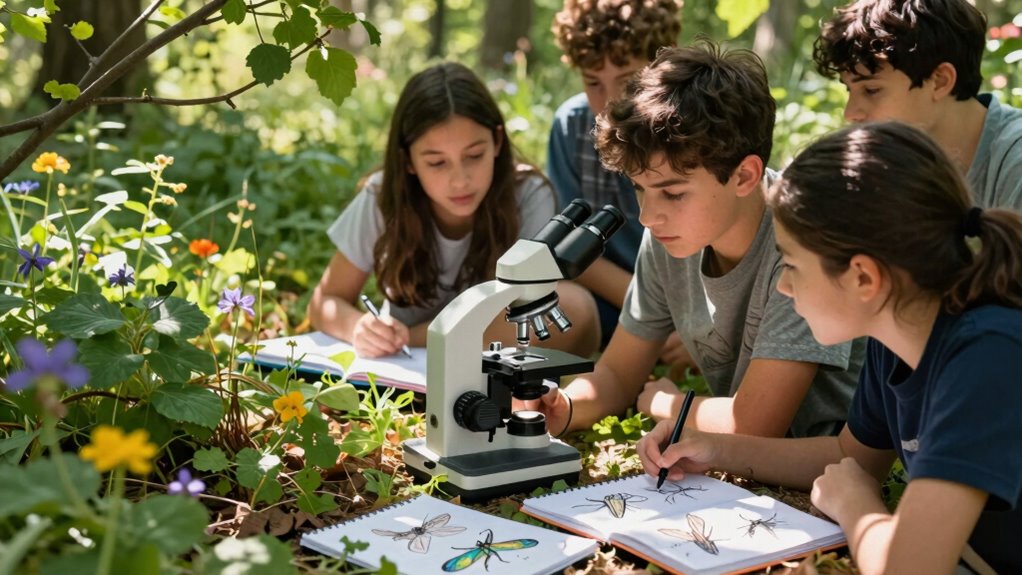
Moreover, field microscopes facilitate collaborative learning. Whether you’re working with classmates or teachers, sharing observations and findings enriches the learning experience. You can discuss your discoveries, compare notes, and even challenge each other’s ideas. This teamwork not only enhances your understanding but also builds communication skills that are invaluable in any field of study.
Incorporating field microscopes into your studies means embracing a hands-on approach that makes science come alive. It’s about transforming theoretical knowledge into practical understanding. You’ll leave the classroom behind and step into the vibrant world of biodiversity, all through the lens of a microscope. This experience can ignite a passion for science, nature, and exploration that lasts a lifetime. So, grab a field microscope, and start your journey into the hidden wonders of the natural world, where observing microscopic biodiversity can deepen your appreciation for the environment and inspire lifelong curiosity.

PalliPartners Compound Microscope for Adults & Students – 100X-2000X High-Power Biological Microscope for Students, School Lab & Home Education, with Slides Set & Phone Adapter (White)
- High-Power Magnification: 100X to 2000X for detailed observation
- Complete Kit Included: Slides and smartphone adapter included
- Versatile for All Ages: Suitable for kids, teens, and adults
As an affiliate, we earn on qualifying purchases.
As an affiliate, we earn on qualifying purchases.
Frequently Asked Questions
What Types of Organisms Can Field Microscopes Reveal?
Field microscopes can reveal a fascinating array of microscopic organisms, like bacteria, algae, protozoa, and fungi. During biodiversity exploration, you’ll discover various life forms thriving in diverse habitats, from ponds to soil samples. These tiny organisms play essential roles in ecosystems, and observing them can deepen your understanding of life’s complexity. You’ll be amazed at how much diversity exists right under your nose, waiting to be explored through your microscope!
How Do Field Microscopes Compare to Classroom Microscopes?
Field microscopes let you explore nature up close, like discovering tiny pond life on a school trip. Unlike classroom microscopes, which often limit you to prepared slides, field microscopes offer advantages such as portability and the ability to study organisms in their natural environment. You can capture live specimens, gaining insights you wouldn’t get from static samples. Classroom microscopes have limitations in versatility, but field microscopes open up a world of discovery for students.
Can Field Microscopes Be Used in Different Environments?
Absolutely, you can use field microscopes in a variety of environments. Whether you’re exploring urban ecosystems or examining aquatic habitats, they’re versatile tools. You can analyze soil samples from forest floors, investigate organisms in desert environments, or discover micro-life in coastal regions. Their portability and ease of use allow you to uncover hidden details in any setting, making learning about biodiversity engaging and hands-on. Get ready to explore!
What Age Groups Benefit Most From Using Field Microscopes?
Elementary students, high schoolers, and college learners all benefit from using field microscopes. For younger students, it sparks curiosity and engages them in hands-on learning, while high schoolers immerse themselves in more complex scientific inquiry. College learners can utilize these tools for advanced outdoor education, enhancing their understanding of biodiversity. Each age group gains valuable insights through practical experiences, making the study of nature more interactive and impactful. You’ll see the difference firsthand!
Are There Specific Techniques for Using Field Microscopes Effectively?
To use field microscopes effectively, you’ll want to master focusing techniques and sample preparation. Start by selecting small, clean samples to observe. Use a drop of water to keep them hydrated and enhance visibility. Adjust the focus slowly to avoid losing clarity. Experiment with different light sources to find the best illumination. Remember, patience is key—take your time to guarantee you’re capturing the most detail from your samples. Happy exploring!
Conclusion
In just one square meter of soil, scientists have found up to 8 million microorganisms! Field microscopes let you explore this hidden world, sparking curiosity and wonder about biodiversity. By using these tools, you’re not just observing nature; you’re connecting with it on a deeper level. Imagine seeing the tiny life forms that play vital roles in our ecosystems. Embracing this adventure not only enhances your learning but also deepens your appreciation for the planet we share.