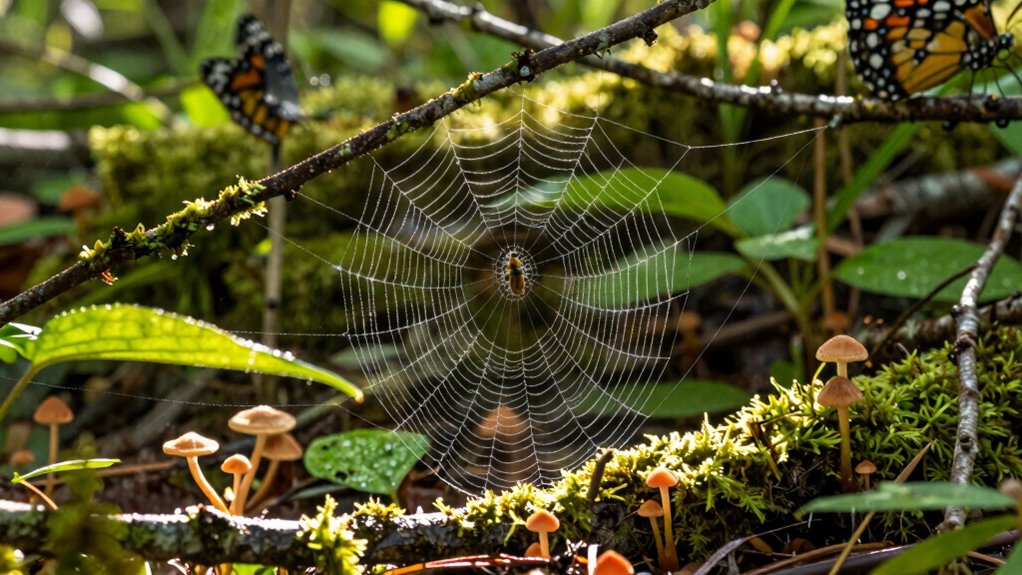

Understanding the difference between food chains and food webs helps you see how ecosystems stay stable. Food chains are simple and show one pathway of energy from plants to predators. Food webs are more complex, connecting many food chains and providing multiple energy routes. This complexity makes ecosystems more resilient, as they can adapt to changes. If you keep exploring, you’ll discover how these relationships keep nature balanced and thriving.
Key Takeaways
- Food chains are simple, linear sequences showing energy transfer, while food webs are complex networks of multiple interconnected chains.
- Food webs depict diverse predator-prey relationships, enhancing ecosystem resilience and stability.
- Loss of species impacts food chains more severely than food webs, which have redundancy and alternative energy pathways.
- Understanding food webs highlights ecosystem complexity, biodiversity, and the importance of interconnected species.
- Food chains focus on direct dependencies, whereas food webs illustrate multiple energy transfer routes supporting ecological health.
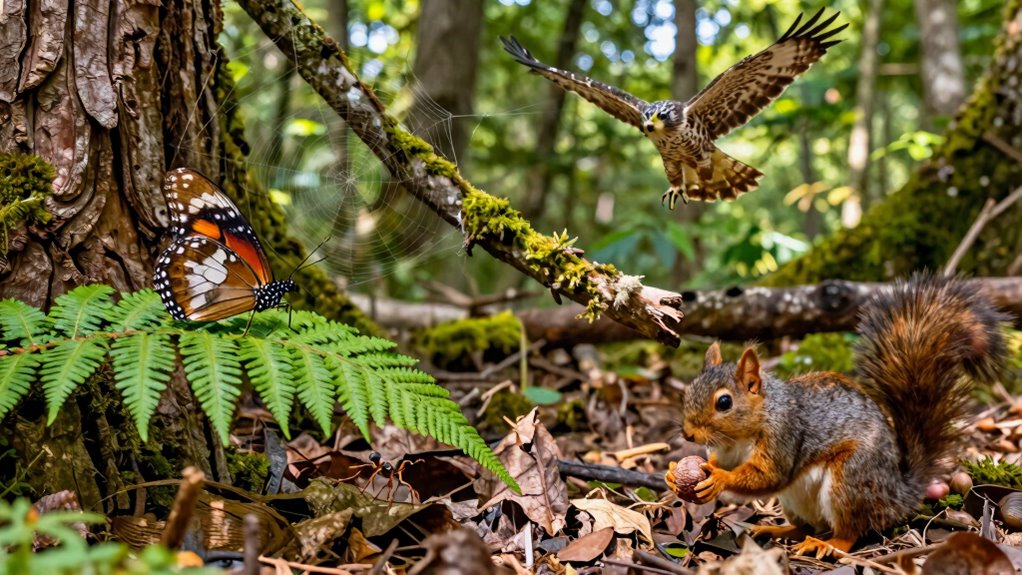
Understanding the differences between food chains and food webs is vital to grasp how ecosystems function. Both concepts describe how energy moves through the environment, but they do so in different ways. A food chain is a simple, linear sequence that shows who eats whom, illustrating the flow of energy transfer from one organism to another. For example, a plant captures sunlight and converts it to energy through photosynthesis. A herbivore then eats the plant, gaining energy, and a predator might hunt the herbivore, continuing the energy transfer. This straightforward chain helps you see predator-prey relationships clearly, highlighting the direct dependencies between species.
Food chains show simple, direct energy flow between predators and prey in ecosystems.
However, ecosystems are much more complex than a single chain can depict. That’s where food webs come in. Instead of a single line, a food web connects multiple food chains, illustrating a network of feeding relationships within an environment. You can think of it as a web that captures the multitude of connections among plants, herbivores, predators, and decomposers. This interconnectedness shows how energy flows more dynamically, with organisms often participating in multiple predator-prey relationships. For instance, a bird might eat insects, berries, and small fish, depending on what’s available. This diversity in diet makes the web more resilient, as energy transfer can reroute if one species declines. Additionally, biodiversity within a food web helps stabilize the ecosystem by providing multiple pathways for energy flow. This diversity also supports ecosystem resilience, making ecosystems more adaptable to changes and disturbances.
Understanding these distinctions helps you appreciate the stability of ecosystems. In a food web, if a predator preys on several species, the impact of losing one prey is less severe because the predator can switch to other food sources. Conversely, in a simple food chain, the loss of one organism can break the entire chain, disrupting energy transfer through the system. This redundancy built into food webs guarantees energy continues to flow smoothly, supporting ecosystem health. Additionally, the balance of predator-prey relationships is crucial for maintaining ecological stability. Recognizing the interconnectedness of species within a web further emphasizes how vital these relationships are for ecosystem resilience.
Moreover, predator-prey relationships are at the core of these systems. Predators regulate prey populations, preventing overgrazing or overpopulation that could damage the ecosystem. Prey species have evolved various defensive strategies to avoid predation, which adds another layer of complexity to these interactions. Recognizing these dynamics in food webs reveals how energy transfer is balanced and maintained. You see that ecosystems are resilient because of this complex interplay, with multiple predators and prey linked through a web of interactions. It’s this intricate network that sustains life, illustrating that understanding food webs is vital for comprehending ecological stability and the flow of energy in nature.

Pasimy 11 Pcs Science Biology Posters Classroom Ecosystems Teaching Poster Ecosystems Biological Food Chain Bulletin Board for Classroom Decoration Teacher Middle High School Educational Library Home
Package Includes: you'll get 11 pieces of ecosystems teaching posters for classroom middle high school measuring 13.8 inches…
As an affiliate, we earn on qualifying purchases.
As an affiliate, we earn on qualifying purchases.
Frequently Asked Questions
How Do Food Chains Impact Ecosystem Stability?
Food chains impact ecosystem stability by showing how energy transfer occurs across trophic levels. When each level functions properly, it maintains a balance that supports diverse species. If one species is removed or declines, it can disrupt energy flow, causing instability. You can see that healthy food chains promote resilience, ensuring that energy moves smoothly through the ecosystem, which keeps everything balanced and thriving.
Can Food Webs Change Over Time?
Yes, food webs can change over time, like a river constantly flowing. You see, species interactions evolve through ecological succession, causing shifts in which organisms rely on each other for food. Changes in environment, new species arriving, or extinctions can reshape a food web’s structure. You’re witnessing nature’s dynamic dance, where each step influences the next, creating a constantly evolving network of life.
What Are Examples of Complex Food Webs?
You’ll find examples of complex food webs in forests, oceans, and grasslands. These webs illustrate predator-prey dynamics across multiple trophic levels, with various organisms interacting at different points. For instance, in a forest, insects feed on plants, birds prey on insects, and larger predators hunt birds, creating a network of connections. These intricate relationships help maintain ecological balance, showing how energy flows through diverse trophic levels.
How Do Human Activities Affect Food Chains?
Human activities impact food chains primarily through pollution impact and habitat disruption. When you pollute environments with chemicals or waste, you harm or kill essential species, breaking links in the food chain. Habitat disruption, caused by deforestation or urban development, displaces animals and plants, making it harder for them to find food. These actions can lead to cascading effects, destabilizing entire ecosystems and threatening biodiversity.
Are Food Webs More Accurate Than Food Chains?
Yes, food webs are more accurate than food chains because they show the complex interactions among many species, highlighting species diversity. They illustrate multiple energy transfer pathways, unlike food chains that follow a straight line. This complexity reflects real ecosystems better, helping you understand how energy moves through various species and how different organisms interact, making food webs a more all-encompassing way to study ecological relationships.

Barn Owl Pellets Classroom 1 Pack (Medium) – Dissection Kit for Ecology & STEM – Includes Forceps, Picks & Teacher Guide – Hands-On Science Activity
HANDS ON SCIENCE FOR BIOLOGY LEARNING Real barn owl pellets support practical biology exploration, allowing students to work…
As an affiliate, we earn on qualifying purchases.
As an affiliate, we earn on qualifying purchases.
Conclusion
Understanding food chains and webs helps you see the delicate balance of nature’s grand dance. By appreciating how all creatures are softly woven together, you realize that every link, no matter how small, plays a gentle role in keeping ecosystems thriving. When you respect this intricate harmony, you become a mindful observer of life’s quiet, ongoing story. It’s a lovely reminder that working together quietly sustains the world we cherish.

4M: Green Science – Weather Science – DIY Mini Observatory Kit, Static Electricity, Lightning-Cloud Formation, Build A Water Cycle Model, STEAM Kid 5+
STATIC ELECTRICITY & LIGHTNING FORMATION: Discover the power of static electricity by making hair stand on end and…
As an affiliate, we earn on qualifying purchases.
As an affiliate, we earn on qualifying purchases.
Tree of Life: The Incredible Biodiversity of Life on Earth (CitizenKid, 2)
As an affiliate, we earn on qualifying purchases.
As an affiliate, we earn on qualifying purchases.