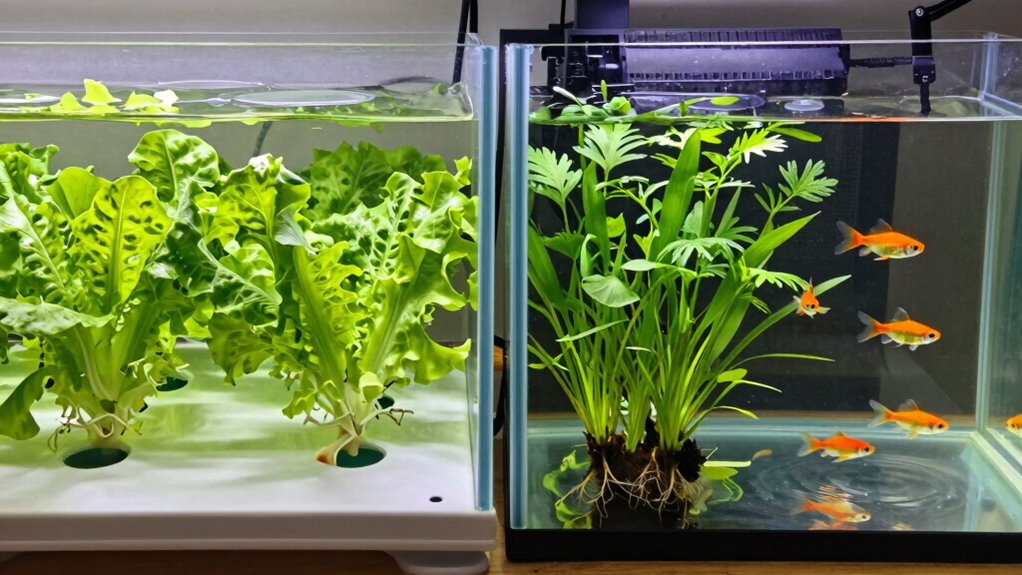

When deciding between hydroponics and aquaponics, consider your space and gardening goals. Hydroponics is versatile and works well in small areas, making it easy to set up vertical gardens. On the other hand, aquaponics combines fish and plants, but requires more room for tanks and systems. If you’re looking for efficiency, hydroponics might be your best bet. However, if you want a sustainable approach, aquaponics could be the way to go. Discover more about these systems ahead!
Key Takeaways
- Hydroponics is space-efficient, ideal for smaller areas with versatile setups like vertical gardens.
- Aquaponics requires more space for fish tanks and planting, making it less suitable for limited spaces.
- Consider your gardening goals: hydroponics offers straightforward efficiency, while aquaponics promotes biodiversity.
- Both systems require careful maintenance; hydroponics focuses on nutrient delivery, while aquaponics balances fish and plant needs.
- Evaluate your available space and resources to determine which system aligns with your gardening aspirations.
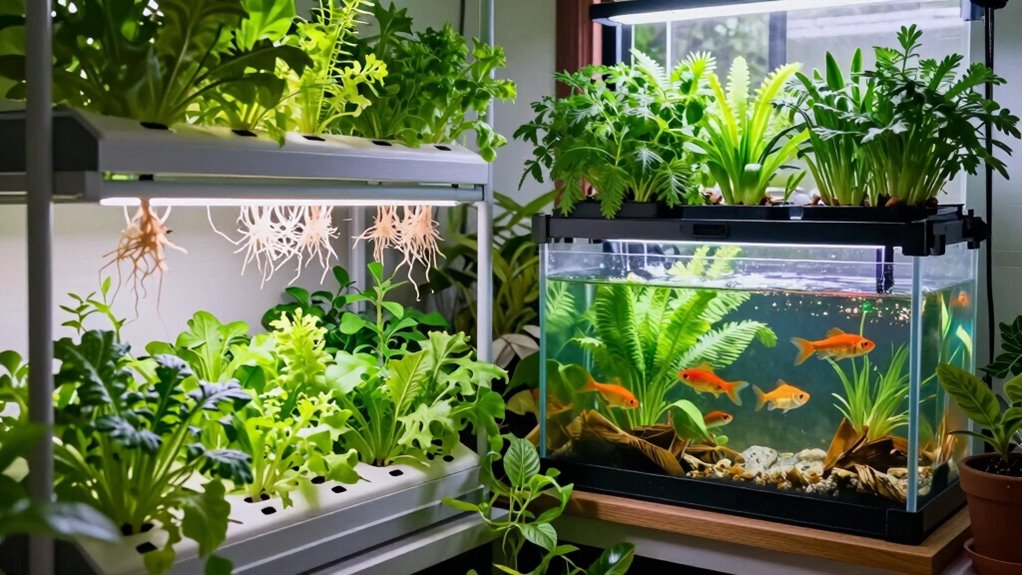
When you immerse yourself in the world of sustainable gardening, you might wonder whether hydroponics or aquaponics is the better choice for your needs. Both systems offer unique advantages, but understanding their differences can help you make an informed decision. Hydroponics relies solely on nutrient-rich water solutions to support plant growth, while aquaponics combines hydroponics with aquaculture, using fish waste to provide nutrients.
In hydroponics, the nutrient delivery system is essential for plant health. You mix specific fertilizers into water, ensuring plants receive all necessary elements directly through their roots. This method allows for rapid growth and high yields, making it an attractive option for many growers. However, the success of hydroponics heavily depends on precise measurements and regular monitoring. You have to keep an eye on pH levels, nutrient concentration, and water quality. If any of these factors go awry, your plants could suffer.
The nutrient delivery system in hydroponics is crucial, requiring precise measurements for optimal plant health and growth.
On the other hand, aquaponics simplifies the nutrient delivery process by creating a symbiotic relationship between fish and plants. Fish produce waste that contains ammonia, which beneficial bacteria convert into nitrates, an essential nutrient for your plants. This natural cycle reduces the need for added fertilizers, making it an eco-friendly choice. However, while aquaponics can be less labor-intensive regarding nutrient management, it requires careful balancing of fish health and plant needs. You’ll need to monitor both water quality for the fish and nutrient levels for the plants, making system maintenance a bit more complex.
Additionally, because aquaponics incorporates aquatic life, maintaining a balanced ecosystem is crucial for the system’s success, adding another layer of complexity. This interconnectedness can also help you learn more about aquatic ecosystems and ecological relationships. Furthermore, the integration of recycled materials in system components can enhance sustainability and reduce environmental impact. When it comes to space, hydroponics can often be more versatile. You can set up various systems, from vertical gardens to deep water culture, fitting them into smaller areas. Aquaponics systems usually require more space because you need tanks for the fish, along with planting areas. If you’re short on room, hydroponics might be the way to go.
Ultimately, your choice depends on your gardening goals, available space, and willingness to engage in system maintenance. If you’re looking for a straightforward and efficient approach, hydroponics might suit you best. However, if you’re interested in a holistic, sustainable system that supports biodiversity, aquaponics could be the ideal fit. Each method has its own charm, so take your time to explore both options before making a decision.

Ahopegarden Indoor Garden Hydroponics Growing System: 10 Pods Plant Germination Kit Herb Vegetable Growth Lamp Countertop with LED Grow Light – Hydrophonic Planter Grower Harvest Lettuce
High planting efficiency: Start an indoor herb garden with the Ahopegarden hydroponic growing system, which includes a water…
As an affiliate, we earn on qualifying purchases.
As an affiliate, we earn on qualifying purchases.
Frequently Asked Questions
What Is the Initial Setup Cost for Hydroponics Versus Aquaponics?
The initial equipment costs for hydroponics typically range from a few hundred to several thousand dollars, depending on the system you choose. In aquaponics, you’re looking at similar startup costs, but you’ll also need fish tanks and pumps, which can increase expenses. However, both systems can lead to long-term savings on water and fertilizer. Weighing these factors helps you decide which setup fits your budget and goals best.
How Much Space Do I Need for Each System?
You’ll need around 20 square feet for a small hydroponic setup, like a vertical garden that can thrive in tight spaces. In contrast, aquaponics requires more room due to the fish tank and grow bed, often needing 50 square feet or more. The spacing requirements for each system vary, but both are adaptable. If you’re short on space, consider a compact hydroponic unit; it’s perfect for apartments or smaller homes.
Can I Use Both Systems Together?
Yes, you can use both systems together! This setup allows you to enjoy the combined benefits of hydroponics and aquaponics. By integrating them, you’ll enhance system compatibility, creating an efficient ecosystem. For instance, you can use fish waste to nourish your plants while the plants help filter the water for the fish. This synergy maximizes your space and resources, giving you a thriving garden with fewer inputs and better yields.
What Plants Grow Best in Hydroponics or Aquaponics?
When it comes to growing plants, you’ll want to hit the ground running with the right varieties. In hydroponics, leafy greens like lettuce and spinach thrive, while herbs such as basil and mint grow exceptionally well. Aquaponics, on the other hand, is perfect for faster-growing plants like kale and Swiss chard. Both systems can boost growth rates considerably, allowing you to enjoy a bountiful harvest in no time!
How Do I Maintain Water Quality in Each System?
To maintain water quality in your system, regularly perform water testing to check pH, nutrient levels, and contaminants. Aim for a balanced nutrient solution, adjusting as needed to keep plants healthy. In hydroponics, monitor nutrient concentration closely, while in aquaponics, guarantee fish waste contributes to the nutrient balance. Change the water periodically to prevent buildup of harmful substances. Keeping these factors in check will help your plants thrive!

Beginner's Guide to Aquaponics: Step-by-Step Systems for Plants and Fish
As an affiliate, we earn on qualifying purchases.
As an affiliate, we earn on qualifying purchases.
Conclusion
In the end, choosing between hydroponics and aquaponics is like picking between two vibrant paint colors for your canvas. Hydroponics gives you a sleek, modern look, while aquaponics adds a dynamic, living ecosystem. Just like an artist finds joy in the strokes of their brush, you’ll discover fulfillment in nurturing your plants—whether it’s the precise control of hydroponics or the flourishing life of aquaponics. So, pick the system that resonates with your space and passion!

VECELO 5 Tier Vertical Garden Planter, Self Watering Stackable Planters with Wheels for Strawberries, Herbs, Flowers, Vegetables, White
Space-Saving : This strawberry planter maximizes your gardening space by stacking 5 layers to grow more plants in…
As an affiliate, we earn on qualifying purchases.
As an affiliate, we earn on qualifying purchases.

Liquid Plant Food for use in AeroGarden, IDOO and Hydroponic Growing Systems, Liquid Fertilizer 8 oz (250mL)
Made for AeroGarden Systems – Formulated to support plant growth in AeroGarden and similar units.
As an affiliate, we earn on qualifying purchases.
As an affiliate, we earn on qualifying purchases.