When you’re working on your garden, understanding soil pH, salinity, and moisture is essential for healthy plant growth. Use pH test kits or electronic pH meters to find out how acidic or alkaline your soil is. Test salinity with EC meters to guarantee proper water uptake. For moisture levels, consider moisture meters or simple texture assessments. These tools help you make informed decisions about your gardening practices. Discovering their specific applications can further enhance your success.
Key Takeaways
- Soil pH affects nutrient availability; use pH test kits or electronic meters for accurate measurement.
- Salinity testing with electrical conductivity (EC) meters helps prevent issues with water uptake in plants.
- Monitor moisture levels using moisture meters and implement strategies like mulching for better retention.
- Regular testing of pH, salinity, and moisture reveals soil health, guiding tailored gardening practices.
- Data-driven decisions based on soil condition enhance plant health and promote sustainable gardening.
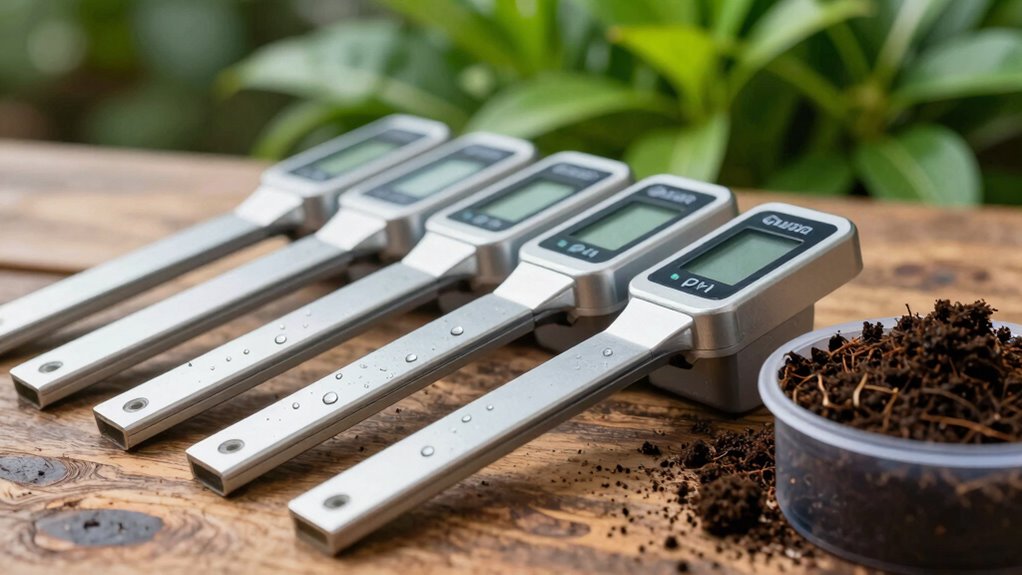
Understanding soil pH, salinity, and moisture is vital for healthy plant growth. You need to grasp how these factors influence your garden or farm to guarantee your plants thrive. Soil pH directly affects nutrient availability, so using effective pH measurement techniques is imperative. You can use pH test kits, which often come with color charts, or more advanced electronic pH meters. These methods allow you to quickly assess whether your soil is acidic, neutral, or alkaline, guiding your fertilization and lime application decisions.
Salinity is another important aspect of soil health. High salinity can hinder plant growth by affecting water uptake. To determine salinity levels, you can use salinity testing methods like electrical conductivity (EC) meters. These devices measure how well your soil conducts electricity, which correlates with salt concentration. Regular testing can help you manage salinity issues before they become detrimental to your plants.
Moisture levels are equally important. Without adequate water, even nutrient-rich soil can’t support strong plant growth. To keep your soil moisture levels stable, you can implement moisture retention strategies, such as mulching or using organic matter. Mulch helps reduce evaporation, while compost improves soil structure, allowing it to hold moisture better. Regular monitoring of soil moisture can be done with simple tools like moisture meters or even by feeling the soil’s texture. Knowing when to water based on soil moisture indicators prevents overwatering and under-watering, both of which can harm your plants.
Soil health indicators are the key to understanding your garden’s specific needs. Testing for pH, salinity, and moisture will provide an all-encompassing view of your soil’s condition. These indicators can reveal deficiencies or excesses that might not be immediately apparent. For instance, if your plants appear stunted, it may not just be a lack of nutrients; it could also be due to poor pH or high salinity.
Incorporating these tools into your gardening routine will empower you to make informed decisions. You’ll be able to adjust your practices based on reliable data rather than guesswork. By focusing on pH, salinity, and moisture, you’ll not only enhance your plants’ health but also foster a more productive and sustainable growing environment. With the right tools and knowledge, you can cultivate thriving plants that flourish in your care.

Rapitest Soil Test Kit for Gardens, Vegetables, Flowers and Lawns. USA designed and assembled soil tester completely, quickly and accurately measures/analyzes soil pH acidity and garden nutrients.
- Quick at-home soil testing: Measures pH, Nitrogen, Phosphorous, Potash
- Easy-to-use capsule system: Innovative and inexpensive design
- 20 tests included: 5 tests each for pH, N, P, K
As an affiliate, we earn on qualifying purchases.
As an affiliate, we earn on qualifying purchases.
Frequently Asked Questions
How Do pH Levels Affect Plant Nutrient Availability?
pH levels directly impact your plants’ nutrient absorption. If the pH is too high or too low, certain nutrients become unavailable, making it harder for your plants to thrive. Balancing the pH helps guarantee that essential nutrients, like nitrogen and phosphorus, are accessible. Regularly testing and adjusting soil pH can prevent deficiencies and promote healthy growth, so you’ll want to keep an eye on those levels for vibrant, productive plants.
Can Salinity Impact Soil Microbial Activity?
Yes, salinity can greatly impact soil microbial activity. As salinity levels rise, you may notice a decrease in microbial diversity, especially when salinity thresholds are exceeded. High salt concentrations can stress or kill sensitive microbes, leading to altered nutrient cycling and ecosystem functions. To maintain a healthy soil ecosystem, it’s essential to monitor salinity levels and manage them appropriately to support a diverse and active microbial community.
What Are the Symptoms of High Soil Salinity?
High soil salinity shows symptoms like stunted plant growth, leaf burn, and reduced germination rates. You might notice plants wilting or yellowing, as excess salts hinder their ability to absorb water and nutrients. Roots can become damaged, leading to poor overall health. As salinity effects escalate, you’ll see a decline in crop yields and biodiversity. Monitoring your soil’s salinity is essential to maintain a healthy growing environment for your plants.
How Often Should Moisture Be Monitored in Gardens?
You should monitor moisture in your garden at least once a week. For instance, if you’ve got a vegetable patch with heavy clay soil, it might retain moisture longer than sandy soil, affecting drainage. Checking weekly helps you catch issues like overwatering or dry spells, ensuring plants thrive. Adjust your watering schedule based on moisture retention, and keep an eye out for signs of stress in your plants to maintain ideal health.
What Tools Are Best for Home Soil Testing?
For home soil testing, soil test kits are essential; they provide quick results for nutrient levels. pH meters help you check acidity or alkalinity easily. If you’re monitoring moisture, moisture sensors are a must—they give real-time data on soil hydration. For salinity levels, salinity gauges will guarantee your plants aren’t suffering from salt stress. Using these tools will help you maintain a healthy garden and optimize your soil conditions effectively.
Conclusion
In conclusion, mastering soil pH, salinity, and moisture tools can transform your gardening game. With a bit of practice, you’ll navigate nutrient nuances and moisture mysteries effortlessly. Embrace these essential elements to guarantee your plants flourish, fostering vibrant growth and bountiful blooms. As you dig deeper into your soil’s secrets, you’ll discover a world of wonders waiting to thrive. So, grab your gadgets and get growing—your garden’s glory is just a measurement away!