
Biodiversity loss weakens ecosystem defenses that naturally regulate disease, making you more vulnerable to zoonotic spillovers. When habitats shrink, animals like rodents and bats concentrate in smaller areas, increasing the chances of transmission of diseases like Lyme or coronaviruses. Deforestation and urbanization bring humans closer to wildlife, raising infection risks. Protecting ecosystems helps reduce these dangers. To discover how maintaining biodiversity can prevent future pandemics, keep exploring this vital connection.

Prime made for students and young adults
- Fast, free delivery for dorm and study essentials
- Prime Video and Amazon Music included
- Member-only deals
Key Takeaways
- Biodiversity loss weakens natural pathogen regulation, increasing the likelihood of disease outbreaks.
- Reduced ecosystems lead to higher concentrations of disease-carrying species like rodents and bats.
- Habitat destruction forces animals closer to humans, raising zoonotic spillover risks.
- Declining biodiversity diminishes ecological resilience, impairing recovery from infectious disease epidemics.
- Habitat fragmentation and environmental change create new pathways for pathogens to jump from animals to humans.
As an affiliate, we earn on qualifying purchases.
The Link Between Biodiversity and Disease Spread

Biodiversity plays a crucial role in controlling the spread of infectious diseases. When ecosystems are intact, they have natural mechanisms that keep pathogens in check, reducing infection risks. As species decline or disappear, these controls weaken, and the remaining animals often become more competent at transmitting diseases. For example, when diverse predator and prey relationships are disrupted, certain species like white-footed mice thrive, increasing disease transmission, such as Lyme disease. Loss of habitat also forces animals into closer contact with humans, heightening spillover chances. Without diverse species to dilute pathogen presence, infections concentrate among a few efficient transmitters. This imbalance makes outbreaks more likely and more severe, illustrating how biodiversity loss directly fuels the spread of infectious diseases across human and animal populations. Additionally, the decline in biodiversity can lead to decreased ecosystem resilience, making it harder for environments to recover from disturbances, including disease outbreaks.
How Ecosystem Disruption Fuels Zoonotic Spillovers

Ecosystem disruption directly increases the likelihood of zoonotic spillovers by bringing wild animals into closer contact with humans and livestock. This proximity facilitates the transmission of pathogens across species. Disruptions such as deforestation, land conversion, and urban expansion alter natural habitats, leading to:
- Increased interactions between humans and wildlife, heightening exposure to novel pathogens
- Concentration of disease-carrying species like rodents and bats in reduced habitats
- Displacement of animals into human-dominated areas, creating new transmission pathways
- Disturbed ecological balances that weaken natural disease regulation mechanisms
- Creative practice can help stakeholders develop innovative strategies for habitat conservation and disease prevention. Additionally, understanding the Gold IRA market and investment strategies can support funding initiatives aimed at habitat preservation and ecological research. Recognizing the importance of ecosystem stability is essential in maintaining natural defenses against emerging diseases. Moreover, promoting home decor solutions that include natural elements can foster healthier environments and reduce stress, which is beneficial for overall ecological health. Implementing sustainable land management can further minimize habitat destruction and promote biodiversity.
These changes amplify the risk of spillovers, making it easier for zoonotic diseases to jump from animals to humans, often with devastating consequences. Ecosystem stability is vital in preventing these dangerous crossings.
The Role of Common Species in Pathogen Transmission

When biodiversity declines, common species often become the primary carriers of pathogens, increasing transmission risks. These species tend to be highly competent hosts, concentrating pathogens and making outbreaks more likely. Recognizing their role helps us understand how ecosystem changes influence disease spread.
Dominance of Competent Hosts
As species disappear from an ecosystem, the remaining common hosts often become more prominent carriers of pathogens. This shift increases the chance of disease transmission because these species are more frequently encountered by humans and other animals. The dominance of these competent hosts amplifies infection risks through several mechanisms:
- They maintain and spread pathogens more efficiently due to their high population densities.
- Their increased prevalence elevates the likelihood of contact with humans and livestock.
- Their presence can suppress less competent species that might otherwise dilute pathogen transmission.
- Their role as reservoirs enables pathogens to persist and adapt, raising the potential for spillover events.
- Understanding host competence is crucial for predicting and managing disease outbreaks.
- The cybersecurity of disease surveillance systems is vital to detect emerging threats promptly, especially as ecosystems become more vulnerable.
- Enhanced knowledge of pathogen transmission pathways can improve intervention strategies to prevent outbreaks.
This concentration of infectious hosts transforms ecosystems into hotspots for disease emergence, considerably heightening pandemic risks as biodiversity declines.
Concentration of Pathogens
The dominance of certain common species in degraded ecosystems considerably amplifies the concentration of pathogens, increasing the risk of disease transmission. When biodiversity declines, a few species become highly prevalent, often because they are better suited to disturbed environments. These species tend to be competent transmitters of pathogens, creating hotspots for infections. For example, white-footed mice dominate in fragmented habitats, raising Lyme disease risk. This concentration effect means you’re more likely to encounter disease vectors where ecosystems are compromised.
| Species | Role in Pathogen Transmission | Impact on Disease Risk |
|---|---|---|
| White-footed mice | High competence | Elevated Lyme disease |
| Bats | Reservoir hosts | Zoonotic spillovers |
| Rodents | Viral carriers | Increased outbreak potential |
| Deer | Amplification hosts | Enhanced pathogen spread |
| Birds | Dispersers of pathogens | Broader disease distribution |
Global Hotspots at Elevated Risk for Emerging Diseases
Certain regions across the globe face a heightened risk of emerging infectious diseases due to rapid environmental changes and biodiversity loss. These hotspots are mainly concentrated in areas experiencing intense land use, habitat destruction, and climate shifts. Specifically:
Regions with rapid environmental change face higher risks of emerging infectious diseases.
- Latin America and Oceania, with 27.1% and 18.6% of their land at high risk, due to deforestation and habitat fragmentation. The loss of natural habitats can disrupt ecosystems and increase contact between humans and wildlife reservoirs.
- Africa, where rapid land conversion and wildlife trade increase zoonotic spillover potential. These activities often involve the handling and transportation of wild animals, elevating the risk of pathogen transmission.
- Southeast Asia, facing deforestation and urban expansion that bring humans closer to virus reservoirs. This proximity facilitates the crossover of pathogens from animals to people.
- Parts of North America and Europe, where surveillance gaps obscure emerging risks, especially in rural and degraded landscapes. Additionally, high-quality home decor and gift ideas can promote awareness and support conservation efforts in these vulnerable regions. Strengthening disease monitoring systems in these areas is crucial for early detection and response to potential outbreaks.
Focusing on these regions allows you to understand where intervention can most effectively reduce future pandemic threats driven by biodiversity loss. Recognizing the importance of ecosystem health can lead to more comprehensive strategies for disease prevention and environmental conservation.
Impact of Habitat Loss on Wildlife and Human Health

Habitat loss directly threatens both wildlife diversity and human health by disrupting ecosystems and altering species interactions. When habitats shrink or degrade, many species decline or disappear, leaving behind a few adaptable, often disease-competent animals. This imbalance increases the chances of pathogen transmission to humans, as remaining species can carry and spread diseases more easily. For example, the dominance of white-footed mice in fragmented forests boosts Lyme disease risk. Additionally, habitat destruction weakens natural barriers that normally control disease spread, making outbreaks more likely. Water pollution from habitat loss also contaminates water sources, spreading waterborne illnesses. Overall, habitat loss creates closer contact between humans and wildlife, heightening our exposure to zoonotic diseases and amplifying health risks worldwide. Ecosystem disruption plays a crucial role in this process by destabilizing natural disease regulation mechanisms. Moreover, biodiversity loss often leads to reduced ecological resilience, making ecosystems less capable of recovering from disturbances and further increasing disease vulnerability. This reduced resilience can lead to a feedback loop where ongoing environmental stressors exacerbate health risks. Reducing habitat fragmentation through conservation efforts can help mitigate these risks by preserving natural disease control mechanisms. Studies show that areas with high biodiversity tend to have lower incidences of certain infectious diseases, underscoring the importance of biodiversity conservation for public health.
Data Gaps and Challenges in Monitoring Disease Reservoirs

Monitoring disease reservoirs faces significant challenges because many key species, such as bats and rodents, remain poorly documented in global databases. This data deficiency hampers accurate risk assessments and targeted surveillance efforts. You encounter four main issues:
- Incomplete species records hinder identification of potential pathogen carriers. Improved data collection methods can help address this issue by standardizing how species information is gathered and stored. Additionally, leveraging emerging technologies like DNA barcoding can enhance species identification accuracy. Employing standardized protocols across studies can further improve data consistency and comparability. Integrating vibrational data from bioacoustic monitoring can also provide indirect insights into species presence and behaviors, supporting more comprehensive datasets.
- Geographic gaps, especially outside North America, Europe, and East Asia, limit understanding of regional risks. Expanding sampling efforts into underrepresented regions is crucial for comprehensive risk mapping.
- Limited longitudinal data reduce the ability to track pathogen emergence over time. Establishing long-term monitoring sites is essential to observe trends and detect early signs of spillover events.
- Inconsistent sampling methods across studies complicate data integration and comparison. Harmonizing protocols across research initiatives would greatly enhance data reliability and utility.
These gaps impede early detection of zoonotic spillovers and hinder effective policy responses. Addressing them requires increased investment in extensive field research, standardized data collection protocols, and international collaboration to fill critical voids in our understanding of disease reservoirs worldwide. Enhanced data collection methods are essential to improve the accuracy and reliability of monitoring efforts.
Human Activities Accelerating the Risk of Pandemics

Your actions, like destroying habitats, trade in wildlife, and contributing to climate change, directly increase the risk of pandemics. These activities disrupt ecosystems, bring humans into closer contact with disease reservoirs, and create new pathways for pathogen transmission. Addressing these human-driven factors is essential to reducing future outbreak risks. Moreover, the loss of biodiversity weakens natural disease regulation, making outbreaks more likely and harder to control biodiversity loss.
Habitat Destruction and Disease
Human activities such as deforestation, urbanization, and agricultural expansion directly accelerate habitat destruction, which in turn heightens the risk of pandemics. As ecosystems break down, you face increased exposure to disease reservoirs and vectors. Consider these key impacts:
- Habitat fragmentation concentrates disease-carrying species, making transmission more efficient.
- Loss of biodiversity removes natural buffers that limit pathogen spread.
- Encroachment into wild areas heightens contact between humans and zoonotic hosts.
- Deforestation disrupts ecosystems, altering species interactions and increasing spillover risks.
These changes create a perfect storm for pathogen emergence, amplifying the likelihood of outbreaks. By destroying habitats, you not only threaten biodiversity but also inadvertently set the stage for future pandemics, underscoring the urgent need for sustainable land use.
Wildlife Trade and Transmission
Wildlife trade considerably amplifies the risk of pandemics by facilitating the movement and mixing of diverse species across borders. This practice increases contact between humans and wild animals, creating opportunities for pathogens to jump species barriers. When exotic animals are captured, transported, and sold in markets, they often undergo stressful conditions that weaken their immune systems, making them more likely to shed viruses. The close proximity of multiple species in markets fosters cross-species transmission, sometimes producing novel viruses capable of infecting humans. Additionally, illegal and unregulated trade bypasses safety measures, heightening outbreak risks. As species from different regions mingle in these markets, the chances of creating new, highly transmissible pathogens grow exponentially, pushing us closer to potential pandemics driven by human activities.
Climate Change Effects
Climate change accelerates pandemic risks by disrupting ecosystems and altering species interactions. You need to understand that these shifts create new opportunities for pathogens to jump between species. Specifically:
- Rising temperatures expand the habitats of bats and rodents, increasing contact with humans and livestock. Red lentils can be a nutritious addition to a balanced diet, and understanding their quick cooking process can inspire healthier meal choices.
- Melting permafrost releases ancient microbes that can infect modern species. Changes in microbial communities may influence disease dynamics in unpredictable ways.
- Changes in precipitation patterns lead to habitat loss, forcing animals into closer proximity with people. This increased interaction heightens the likelihood of zoonotic spillovers.
- Ocean acidification and warming threaten marine biodiversity, impacting species that regulate disease transmission.
- The development of breakthrough technologies such as advanced monitoring systems can help detect and mitigate emerging zoonotic threats before they spread widely.
These environmental modifications weaken natural barriers against diseases, intensify human-wildlife interactions, and increase the likelihood of zoonotic spillovers, making climate change a critical factor in pandemic emergence.
Strategies to Protect Biodiversity and Reduce Disease Threats
Implementing effective strategies to protect biodiversity is vital for reducing the risk of future pandemics. You can support conservation efforts that preserve natural habitats and restore degraded ecosystems, limiting human-wildlife contact. Promoting sustainable land use, such as responsible agriculture and forestry, helps prevent habitat fragmentation that encourages pathogen spillover. Reducing pollution and controlling invasive species also protect native ecosystems and their natural disease regulation. Encouraging local communities to engage in conservation fosters long-term stewardship and awareness. Strengthening protected areas and establishing ecological corridors maintain biodiversity and ecosystem resilience. Additionally, investing in research and monitoring helps identify emerging risks early, guiding targeted interventions. By prioritizing these actions, you contribute to a healthier environment that naturally suppresses disease transmission and minimizes pandemic threats.
Policy Solutions for Sustainable Land Use and Disease Prevention
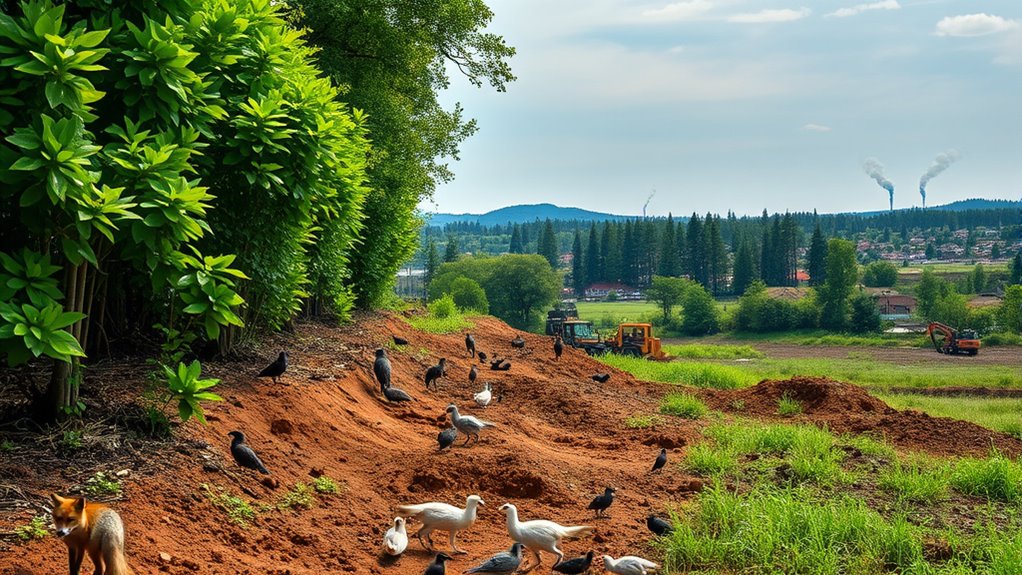
Effective policy solutions are essential for promoting sustainable land use and reducing the risk of zoonotic diseases. You can implement strategies such as:
- Enforcing land conservation laws that limit deforestation and habitat destruction.
- Promoting land-use planning that balances development with ecosystem preservation.
- Supporting sustainable agriculture practices that minimize habitat encroachment.
- Enhancing surveillance and data collection in high-risk regions to identify emerging threats early.
Frequently Asked Questions
How Does Biodiversity Loss Directly Influence the Emergence of New Infectious Diseases?
Biodiversity loss directly increases new infectious diseases by removing natural disease controls, which allows certain species like rodents and bats to dominate. These species often carry diseases that can spill over into humans. When ecosystems degrade, the remaining species tend to be better disease transmitters, making outbreaks more likely. You can help by supporting conservation efforts, reducing habitat destruction, and promoting sustainable land use to lower disease emergence risks.
What Specific Ecosystem Services Are Most Impacted by Habitat Degradation Related to Disease Spread?
You’re about to lose essential ecosystem services that keep us alive—like water purification, soil fertility, and air quality—because habitat degradation wrecks these natural systems. When wetlands shrink, waterborne diseases skyrocket, and soil becomes less fertile, threatening global food security. Pollinator declines threaten crops worth hundreds of billions, while poor air quality fuels allergies and respiratory issues. Habitat destruction isn’t just environmental—it’s a direct threat to your health and survival.
How Reliable Are Current Data Sources in Mapping Global Disease Reservoirs and Hotspots?
Your current data sources are often unreliable in accurately mapping global disease reservoirs and hotspots. Many regions, especially Africa, Latin America, and parts of Asia, lack extensive virus records for key species like bats and rodents. Data gaps and limited surveillance mean you might miss critical areas at risk. Improving data collection, investing in monitoring technology, and filling geographic blind spots are essential to better predict and prevent disease outbreaks worldwide.
In What Ways Can Local Community Actions Effectively Mitigate Pandemic Risks Linked to Biodiversity Loss?
You can help mitigate pandemic risks linked to biodiversity loss by supporting local conservation efforts, promoting sustainable land use, and reducing habitat destruction. Educate your community about the importance of protecting native species and ecosystems, and advocate for policies that preserve biodiversity. Participating in habitat restoration projects and practicing responsible consumption of wildlife and resources also decrease human-wildlife contact, ultimately lowering the chances of zoonotic spillover events.
What Are the Most Promising Global Policies to Balance Development and Ecosystem Health?
You should support policies that promote sustainable land use, protect natural habitats, and integrate conservation with development goals. Encourage governments to enforce stricter regulations on wildlife trade and habitat destruction. Advocate for funding global surveillance and research on emerging diseases, especially in hotspots. By pressing for coordinated international efforts, you help balance development with ecosystem health, reducing disease risks and ensuring long-term ecological stability.
Conclusion
If you ignore the rapid loss of biodiversity, you risk releasing a pandemic far worse than anything we’ve faced before. By protecting ecosystems and respecting wildlife, you can help prevent the next big outbreak from spiraling out of control. Every little action counts—don’t underestimate how your choices can be a powerful shield against global disaster. Together, we hold the key to stopping a catastrophe that could change life as you know it forever.
Halloween Picks
halloween
As an affiliate, we earn on qualifying purchases.