

Wildlife crime involves sophisticated criminal networks that operate across borders, using encrypted apps, cryptocurrencies, and shifting routes to evade detection. These traffickers target thousands of species, weakening ecosystems and threatening community safety. Governments and international agencies are fighting back with enforcement operations, technology, and global cooperation. Yet, organized crime continues to adapt, making the fight challenging. If you want to understand how wildlife protectors are countering these threats and what you can do, keep exploring.
Key Takeaways
- Global collaborations like Operation Thunderstorm target criminal networks through seizures, arrests, and route disruptions.
- Enforcement agencies utilize advanced technology, forensic tools, and capacity-building to detect and investigate wildlife crimes.
- Criminal networks shift strategies, exploiting regulatory gaps, using encrypted apps, and focusing on less conspicuous species.
- Dismantling transnational syndicates helps reduce trafficking volume and demonstrates enforcement resolve.
- Community engagement and sustainable practices are essential to combat wildlife crime’s ecological and socio-economic impacts.

Wildlife Ecology, Conservation, and Management
As an affiliate, we earn on qualifying purchases.
As an affiliate, we earn on qualifying purchases.
The Global Scale of Wildlife Trafficking
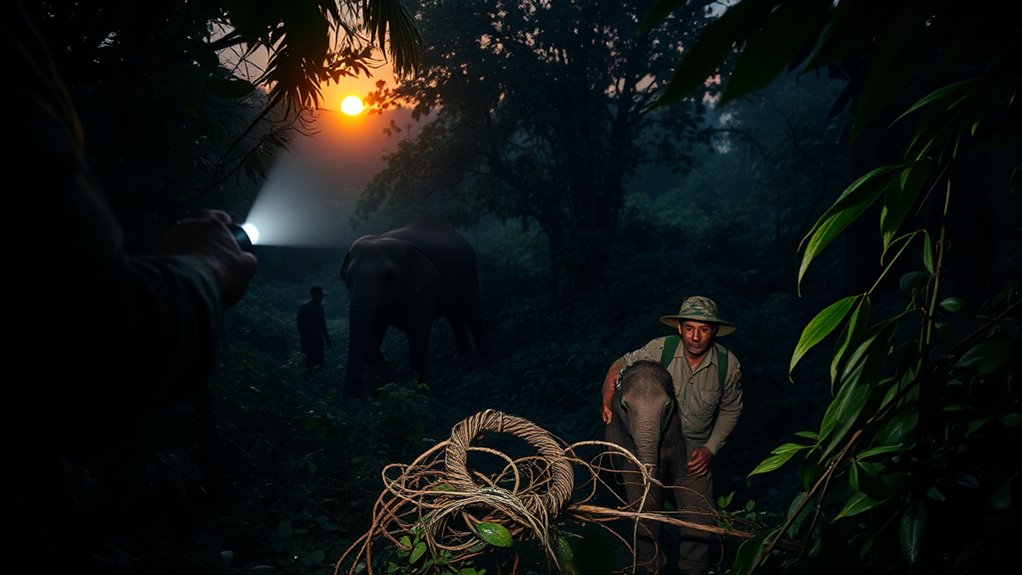
Wildlife trafficking is a massive international crime, estimated to generate around USD 20 billion annually. You might not realize it, but this illegal trade spans nearly every corner of the globe, with over 13 million wildlife parts seized across 162 countries between 2015 and 2021. It affects around 4,000 species, including many listed under CITES, threatening their survival. Criminal networks operate across borders, shifting routes and methods to evade law enforcement. Despite decades of efforts, wildlife crime persists, fueled by high profits and weak enforcement. The scope is staggering, involving everything from rare orchids to endangered big cats. This widespread illegal activity destabilizes ecosystems and undermines conservation efforts worldwide, making it a pressing issue requiring coordinated international action. The use of advanced tracking and monitoring technologies is increasingly crucial in combating wildlife crime and ensuring effective enforcement. Recognizing the causes and contributing factors of wildlife trafficking can help develop targeted strategies to disrupt these criminal networks and protect vulnerable species.

Crime Scene Photomacrographic Scale (No.2-Metric)
Rigid, 1mm thick L-shaped laminated plastic
As an affiliate, we earn on qualifying purchases.
As an affiliate, we earn on qualifying purchases.
Evolving Strategies of Criminal Networks

Criminal networks involved in wildlife trafficking are constantly evolving their strategies to stay one step ahead of law enforcement. They adapt routes, methods, and tactics to evade detection and prosecution. To do this, they:
- Use sophisticated communication tools like encrypted messaging apps and cryptocurrencies for transactions.
- Shift focus to less conspicuous species, reducing publicity and risk.
- Exploit regulatory gaps by operating across multiple countries with weak enforcement.
- Incorporate corruption, bribery, and violence to protect operations and intimidate officials.
- Employ psychological tactics such as covert manipulation to maintain control over involved parties and avoid suspicion.
These tactics make tracking and dismantling networks increasingly difficult. They also leverage global supply chains, employing local communities and corrupt officials to facilitate illegal trade. Staying ahead requires constant innovation and international cooperation to counter these evolving strategies.

DEVELOP A WILDLIFE TRACKING APP WITH PYTHON AND GPS APIS: Monitor species and learn conservation coding
As an affiliate, we earn on qualifying purchases.
As an affiliate, we earn on qualifying purchases.
Impact on Ecosystems and Communities

Wildlife crime disrupts ecosystems by reducing species populations and breaking vital interdependencies, threatening environmental stability. You should also consider how local communities face safety risks from violence and conflicts linked to poaching and trafficking. These illegal activities cause significant socioeconomic losses, undermining livelihoods and access to natural resources that communities rely on. Additionally, efforts to combat wildlife crime often involve increased law enforcement activities, which can sometimes lead to tensions and conflicts within affected communities. The use of protective measures can also help mitigate some of these conflicts and safeguard community interests. Implementing targeted community engagement strategies is essential to address the root causes of wildlife crime and promote sustainable coexistence. Integrating cybersecurity solutions into anti-trafficking operations can enhance data sharing and coordination among agencies, making enforcement more effective.
Ecosystem Disruption Risks
When illegal wildlife trade depletes key species, the resulting disruptions ripple through ecosystems, threatening their stability and resilience. You should understand that removing even a few species can cause cascading effects, destabilizing food webs and ecological functions. This disturbance can lead to habitat degradation, reduced biodiversity, and weakened climate regulation. The loss of predators or keystone species can cause overpopulation of certain animals, further damaging vegetation and soil health. Additionally, vulnerable ecosystems become less able to recover from natural or human-made stresses. The main risks include:
- Disruption of predator-prey relationships
- Loss of plant pollination and seed dispersal
- Decline in ecosystem services like water purification
- Increased vulnerability to climate change impacts
Understanding the importance of biodiversity helps emphasize how interconnected these issues are and the need for conservation efforts to maintain ecosystem balance. Protecting species diversity is crucial for sustaining healthy ecosystems and ensuring their resilience against environmental changes. Recognizing the significance of ecological balance underscores the urgency of combating illegal wildlife trade and preserving natural habitats for future generations. Moreover, maintaining ecosystem stability supports the long-term health of our environment and human communities alike. Implementing sound sound design techniques in environmental messaging and conservation campaigns can enhance public awareness and engagement.
Community Safety Concerns
Illegal wildlife trafficking often leads to violence and instability in local communities, putting residents at risk and disrupting social harmony. Armed conflicts between poachers and law enforcement create dangerous environments, with gunfire and injuries common. Communities near protected areas may become battlegrounds, risking lives and property. This violence can lead to arrests and imprisonment, deeply affecting families and social cohesion. In some cases, residents are caught in crossfire or targeted for their involvement, heightening fear and distrust. The table below summarizes these community safety concerns:
| Aspect | Impact | Response |
|---|---|---|
| Armed conflicts | Violence and injuries | Increased patrols and training |
| Community displacement | Loss of homes and safety | Relocation efforts |
| Family hardships | Social and economic strain | Support programs |
| Crossfire incidents | Civilian injuries | Enhanced security measures |
| Arrests and imprisonment | Family disruption | Legal aid and counseling |
Socioeconomic Losses
Trafficking in wildlife doesn’t just threaten species; it also causes profound socioeconomic losses for communities and ecosystems. When species decline or disappear, local livelihoods suffer, especially those relying on sustainable use of natural resources. You may see these impacts through:
- Reduced income from ecotourism, which relies on healthy, diverse ecosystems.
- Loss of medicinal plants and animals that communities depend on for healthcare.
- Disruption of ecological processes, leading to soil erosion, reduced crop yields, and increased vulnerability to climate change. Strengthening enforcement efforts can help curb illegal activities and support community development.
- Increased poverty and instability as illegal trade depletes resources and fuels corruption. Recognizing the importance of sustainable resource management is vital for restoring ecological balance and ensuring long-term community resilience. Additionally, community engagement is essential in creating effective conservation strategies that benefit both people and wildlife. Investing in local capacity building can further empower communities to combat wildlife crime and promote sustainable practices.
These losses weaken community resilience and harm ecosystems’ ability to recover, creating a cycle of environmental degradation and economic hardship. Wildlife crime therefore endangers both nature and the people who depend on it.

Finding Organic Church: A Comprehensive Guide to Starting and Sustaining Authentic Christian Communities
As an affiliate, we earn on qualifying purchases.
As an affiliate, we earn on qualifying purchases.
International Enforcement Initiatives

You play a vital role in understanding how global collaboration efforts, like major enforcement operations, target wildlife crime across borders. These initiatives bring together multiple countries and agencies to identify and dismantle criminal networks. Capacity-building programs further strengthen enforcement by equipping officials with the skills needed to combat trafficking effectively. Implementing vertical storage solutions can also improve organizational efficiency within enforcement agencies. Recognizing signs of spoiled lemon juice can aid in forensic investigations related to illegal trade, ensuring evidence integrity. Additionally, adopting specialized storage techniques for wildlife products can help preserve evidence quality during investigations. Employing appropriate equipment and technology enhances the detection and prevention of illegal activities at border points. Ensuring compliance with regulatory standards is crucial for maintaining the integrity of enforcement actions and legal processes.
Global Collaboration Efforts
Global collaboration plays an essential role in combating wildlife crime by uniting countries, agencies, and organizations to share information, coordinate enforcement efforts, and disrupt criminal networks. These joint initiatives enable authorities to act swiftly across borders and target illicit trade routes. Key efforts include:
- International task forces like Operation Thunderstorm and Thunderbird coordinate across multiple countries to seize illegal wildlife products and arrest suspects.
- Frameworks such as ICCWC Vision 2030 promote global strategies for reducing crime opportunities and increasing enforcement effectiveness.
- Information sharing platforms facilitate real-time data exchange on trafficking patterns and suspect networks, enhancing interagency cooperation and responsiveness.
- Capacity-building programs train law enforcement, judiciary, and customs officials worldwide to improve detection, investigation, and prosecution of wildlife crimes.
- Strengthening enforcement capacity and fostering international cooperation are crucial for disrupting trafficking networks and ensuring long-term success. Additionally, leveraging technological advancements can greatly improve surveillance and tracking of illegal activities.
Through these coordinated actions, you can help break the cycle of illegal wildlife trade.
Major Enforcement Operations
Major enforcement operations serve as the backbone of international efforts to combat wildlife crime. These coordinated initiatives, like Operation Thunderstorm and Operation Thunderbird, bring together multiple countries and agencies to target criminal networks. During these operations, you’ll see large-scale seizures of illegal wildlife products, arrests of suspects, and disruption of trafficking routes. For example, Operation Thunderstorm in 2018 involved 93 countries, leading to nearly 2,000 seizures and 1,400 suspects identified. These efforts rely on intelligence sharing, joint patrols, and specialized training to improve detection and enforcement capabilities. By pooling resources and expertise, you can help dismantle transnational wildlife crime syndicates, reduce trafficking volume, and send a strong message that illegal wildlife trade will not be tolerated globally.
Capacity Building Initiatives
Capacity building initiatives are essential for strengthening international enforcement against wildlife crime. They equip agencies with the skills, knowledge, and tools needed to combat trafficking effectively. Through training programs, you learn to verify permits, identify smuggled products, and conduct financial investigations. These initiatives foster collaboration among countries, improving information sharing and joint operations.
To maximize impact, focus on:
- Enhancing training for law enforcement and judiciary
- Developing standardized procedures for wildlife crime detection
- Fostering regional and international cooperation
- Providing technical assistance and resources for investigations
Challenges in Combating Wildlife Crime

Combating wildlife crime faces numerous obstacles that make enforcement difficult and often ineffective. Organized crime groups adapt quickly, shifting focus from high-profile species to less noticeable ones to evade detection. Corruption and weak regulations allow traffickers to operate across borders with little resistance, while inconsistent enforcement hampers progress. The vast scale of illegal trade—estimated at USD 20 billion annually—overwhelms authorities, making it challenging to track and intercept shipments. Limited resources, insufficient training, and lack of technological tools hinder investigations and prosecutions. Violence also complicates efforts, as poachers and law enforcement clash, risking lives and destabilizing communities. These persistent challenges enable traffickers to continue exploiting vulnerable species and ecosystems despite international cooperation and enforcement initiatives.
How You Can Help Protect Wildlife

You have the power to make a difference in the fight against wildlife crime. Your actions can help protect endangered species and support conservation efforts. Here are four ways you can get involved:
- Raise awareness — Share information about wildlife trafficking and its impacts to educate others.
- Support reputable organizations — Donate or volunteer with groups working to combat poaching and illegal trade.
- Be a responsible consumer — Avoid purchasing wildlife products or items made from endangered species.
- Report suspicious activity — Notify authorities if you see illegal wildlife trade or poaching in your community or online.
Every effort counts. By staying informed and taking action, you contribute to safeguarding our planet’s rich biodiversity for future generations.
Frequently Asked Questions
How Do Traffickers Launder Money From Wildlife Crimes?
You might not realize it, but traffickers launder money from wildlife crimes by using complex financial schemes. They often funnel illicit profits through shell companies, fake invoices, or cryptocurrency transactions to hide their illegal income. They also move money across borders via banks or money transfer services to obscure its origin. This allows them to integrate illegal gains into the legitimate economy, making detection and prosecution more difficult.
What Technologies Are Used to Detect Illegal Wildlife Shipments?
You use advanced technologies like X-ray scanners, canine detection units, and biometric tools to spot illegal wildlife shipments. Mobile apps and databases help verify permits and identify suspicious documents quickly. Satellite imagery and drone surveillance monitor remote areas and track movement patterns. These tools enable you to detect hidden shipments, intercept traffickers, and strengthen enforcement efforts, ultimately disrupting illegal trade networks and protecting endangered species from exploitation.
How Do Local Communities Benefit From Wildlife Conservation Efforts?
You benefit from wildlife conservation efforts through improved local economies, job opportunities, and sustainable resource use. Conservation initiatives often include eco-tourism, which attracts visitors and generates income for communities. Additionally, healthy ecosystems provide food, medicine, and materials, enhancing your quality of life. When wildlife populations are protected, it preserves ecological balance, reducing poverty and fostering community resilience. Your involvement in conservation can also strengthen community pride and environmental awareness.
What Legal Penalties Exist for Wildlife Trafficking Offenders?
You face serious legal penalties if you’re caught wildlife trafficking. Offenders can be fined heavily, imprisoned for years, or both, depending on the country’s laws. Many nations have strict penalties to deter crimes, and some impose confiscation of illegally traded items and equipment. International agreements like CITES also enable authorities to pursue offenders across borders. If you’re involved, knowing these consequences might make you think twice before participating.
How Can Consumers Distinguish Legal From Illegal Wildlife Products?
To tell if wildlife products are legal, check for proper permits and certifications like CITES. Look for detailed labels that specify species, origin, and legal status. Buy from reputable shops or online sellers with transparent sourcing policies. Avoid products that seem suspicious, such as those with vague labels, unusual prices, or from unknown sources. If you’re unsure, research the species and legal requirements to prevent supporting illegal trade.
Conclusion
By staying informed and supporting conservation efforts, you play a crucial role in safeguarding our planet’s treasures. Every small action, from choosing responsible products to spreading awareness, helps steer the tide against those who threaten wildlife’s harmony. Remember, your voice can be a gentle nudge that encourages change and preserves nature’s delicate balance. Together, we can nurture a future where wildlife thrives peacefully, free from the shadows of exploitation.