
Large-scale ocean cleanup efforts have made significant strides, removing millions of pounds of plastic and engaging thousands of volunteers worldwide. Innovative technologies like barriers, sensors, and filtration systems are helping target debris, but challenges remain—mainly the vast scale of pollution and high costs. While progress is promising, complete removal isn’t yet feasible. If you want to understand what’s really happening beneath the surface, keep exploring the truth behind these efforts.
Key Takeaways
- Large-scale efforts like The Ocean Cleanup aim to remove millions of kilograms of floating debris, targeting 90% of ocean plastics by 2040.
- Innovative barriers and real-time monitoring technologies enhance debris collection while minimizing environmental impact.
- Despite progress, complete cleanup is challenging due to debris dispersal across depths, high costs, and limited funding.
- International cooperation and policies like the UN Plastic Treaty are vital but face enforcement and compliance hurdles.
- Removing plastic debris benefits marine habitats and endangered species but cannot fully eliminate ocean pollution due to scale and complexity.
The Scope of Ocean Plastic Pollution Today

Have you ever wondered how extensive ocean plastic pollution really is? Right now, there are between 75 and 199 million tonnes of plastic and waste floating in our oceans. Every year, about 33 billion pounds of plastic enter the waters, fueling the problem. You’ll find five enormous garbage patches drifting across the ocean, where plastic accumulates in massive concentrations. Microplastics, tiny fragments less than five millimeters long, are consumed by marine life—up to 211,000 microplastics per person annually. Without action, projections warn that by 2050, plastic could outweigh fish in the ocean. This ongoing crisis threatens ecosystems and human health, demanding urgent, large-scale cleanup efforts to prevent further damage. Understanding battery technologies is crucial for developing sustainable energy solutions that can support cleanup initiatives and reduce reliance on harmful plastics. Additionally, promoting ecosystem conservation and reducing plastic production can significantly mitigate the impact of waste on marine biodiversity, emphasizing the importance of marine protected areas for habitat preservation. Implementing public awareness campaigns can also help foster responsible disposal and recycling habits among communities worldwide.
Major Players in the Global Cleanup Movement

Several organizations lead the global effort to combat ocean plastic pollution, each deploying innovative technologies and mobilizing volunteers worldwide. The Ocean Cleanup organization is at the forefront, removing millions of kilograms of plastic with advanced barriers and interceptors, aiming to eliminate 90% of floating debris by 2040. 4ocean has mobilized a vast network, removing over 41 million pounds of trash from oceans, rivers, and coastlines. The Seabin Project uses filtration devices to catch plastic in marinas and harbors, while river boom systems intercept debris before it reaches the sea. International efforts also include policies like the UN Global Plastic Treaty, with nearly 200 countries committed to reducing plastic waste. These players work together to protect vulnerable habitats and marine life. Vetted – Halloween Product Reviews
Innovative Technologies Transforming Ocean Cleanup
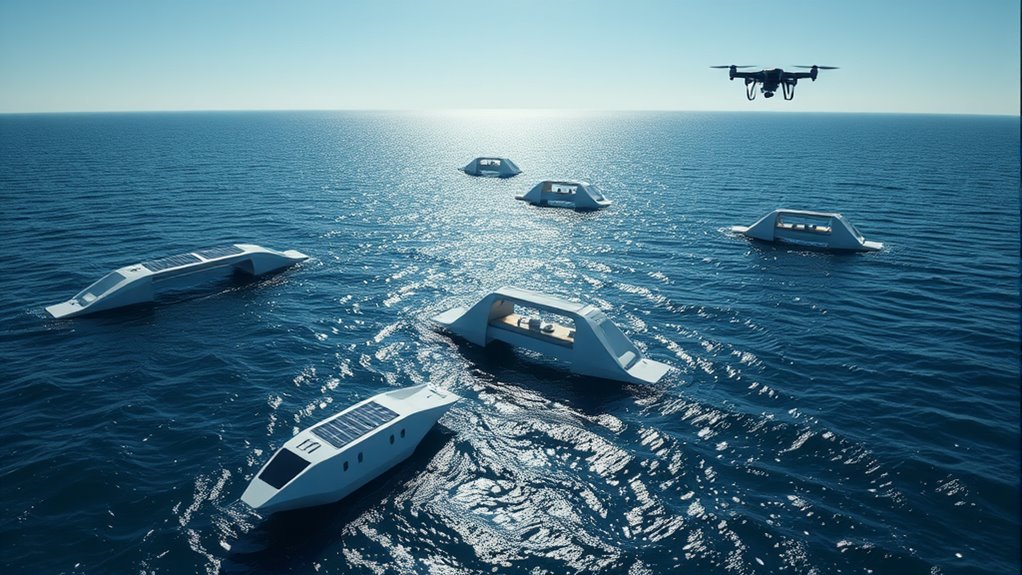
What innovative technologies are revolutionizing ocean cleanup efforts? You’re seeing game-changers like advanced barriers, GPS tracking, and river interceptors. These tools target plastic directly at its source, making cleanup more efficient. For example, the Ocean Cleanup’s U-shaped barriers capture floating debris, while satellite tech predicts debris paths. River booms intercept plastics before they reach the ocean, reducing pollution at its entry point. Proper maintenance of equipment is crucial to ensure long-term effectiveness and safety during operations. Additionally, technology integration allows for real-time monitoring and adaptive responses to changing conditions in marine environments, further enhancing cleanup efforts. The development of sustainable materials for barriers and equipment also minimizes environmental impact. Employing innovative approaches enhances the ability to address large-scale pollution challenges effectively. Incorporating environmental monitoring systems ensures that cleanup activities do not inadvertently harm marine ecosystems. Here’s a quick look:
| Technology | Impact |
|---|---|
| U-shaped barriers | Remove large floating trash |
| GPS tracking | Predicts debris movement |
| River booms | Stops plastics from reaching oceans |
These innovations boost cleanup speed, accuracy, and scope, bringing us closer to cleaner seas and healthier marine life. You play an essential role in supporting and adopting these cutting-edge solutions.
Results and Impact of Recent Cleanup Campaigns
Recent cleanup campaigns have removed thousands of tons of plastic from oceans and rivers, making a tangible difference in marine environments. These efforts have restored habitats and reduced threats to countless species, including endangered ones. As you review these results, consider how ongoing initiatives can build on this progress to protect ocean health further. Implementing sustainable practices and preventing pollution at the source are essential steps toward long-term preservation of our oceans. Incorporating mindfulness techniques, such as focused attention on environmental impact, can foster greater awareness and collective responsibility among communities. Understanding the marine debris removal process and the importance of community resilience can help support and improve future cleanup strategies. Additionally, promoting public awareness campaigns can significantly increase community participation and support for these vital efforts.
Quantitative Cleanup Achievements
In 2025, global cleanup campaigns successfully removed approximately 47.4 tons of waste across 54 initiatives in 25 countries, demonstrating significant progress in combating ocean plastic pollution. These efforts mobilized nearly 2,000 volunteers, restoring 53.3 square kilometers of habitats. The campaigns targeted key areas like beaches, rivers, and marine habitats, removing debris before it reaches open waters. Organizations like The Ocean Cleanup and 4ocean contributed substantially, removing millions of pounds of plastic and other waste. Advanced technologies, such as river booms and marine debris tracking, enhanced efficiency. Moreover, cookie management tools helped optimize the effectiveness of outreach and data collection efforts. The use of ocean cleanup techniques has been vital in reducing surface trash and microplastics, allowing communities to better protect their local environments. Additionally, ongoing research into microplastic removal methods promises to further improve cleanup outcomes. Overall, the combined impact of these initiatives highlights a measurable reduction in surface trash and microplastics, setting the stage for ongoing progress toward cleaner oceans and healthier ecosystems worldwide.
Ecological and Species Benefits
The tangible results of cleanup efforts extend beyond waste removal, markedly benefiting marine ecosystems and the diverse species that call them home. When you participate in these campaigns, you help restore habitats like coral reefs and mangroves, which are crucial for countless marine species. Removing debris reduces entanglement and ingestion risks for over 900 species, including over 100 endangered ones. Evidence of success demonstrates that targeted cleanup actions can significantly improve environmental conditions. Cleanups help protect breeding grounds and feeding areas, boosting biodiversity. For example, targeted efforts in protected areas like Malaysia’s Tunku Abdul Rahman Park and Kenya’s Kiunga Marine Reserve have cleared debris entangled in coral reefs, supporting healthier ecosystems. These improvements can lead to increased fish populations, better reproductive success, and overall resilience of marine life against climate change and pollution pressures. Additionally, implementing vacuums designed for delicate surfaces during cleanup operations can minimize potential damage to fragile ecosystems, ensuring that restoration efforts are both effective and environmentally responsible. Incorporating culturally intelligent strategies into planning and execution can further enhance community engagement and support for ongoing conservation initiatives. Employing advanced nanotechnology-based solutions can also aid in the precise removal of debris without harming sensitive habitats or species.
Challenges and Limitations of Large-Scale Efforts

Despite advancements in ocean cleanup technologies and increased global coordination, large-scale efforts face significant challenges that hinder their effectiveness. One major hurdle is the vast scale of plastic pollution, making complete removal nearly impossible. Even with systems like the Ocean Cleanup’s barriers and river interceptors, only a fraction of the waste is captured, leaving much behind. Operational costs are high, and funding remains limited compared to the scale of the problem. Additionally, debris disperses across different depths and remote areas, complicating collection efforts. Environmental factors such as storms, currents, and wildlife interactions also pose risks, sometimes damaging equipment or causing unintended harm. These limitations mean that while progress is made, current efforts alone can’t fully resolve ocean plastic pollution without complementary strategies. Understanding the complexities of debris dispersal highlights why comprehensive solutions are necessary. Moreover, financial sustainability remains a critical concern for the long-term success of these initiatives. Addressing technological limitations is essential for improving the efficiency and scope of cleanup operations in the future.
The Role of Policy and International Agreements
You play a vital role in shaping policies that can reduce ocean plastic pollution. While many countries commit to international agreements like the UN Global Plastic Treaty, enforcement remains inconsistent. Strengthening cooperation and accountability is essential to making meaningful progress in protecting our oceans.
Global Policy Commitments
How effective are international agreements in driving global action against ocean plastic pollution? These agreements set essential targets and foster cooperation among nations. The UN Global Plastic Treaty, with 175 countries committed, aims to coordinate efforts, reduce plastic production, and enhance waste management worldwide. While only 30% of companies meet 2025 reduction targets, international policies create pressure for industry change. Funding, like the $7.5 billion needed for all-encompassing cleanup, often depends on commitments from governments and organizations. These policies also encourage local legislation and community mobilization, amplifying cleanup efforts. Overall, international agreements serve as critical frameworks, aligning nations toward common goals. However, their success hinges on effective implementation, enforcement, and sustained political will across borders.
Enforcement Challenges Persist
International agreements like the UN Global Plastic Treaty set important targets and foster cooperation among nations, but their success depends heavily on enforcement. Many countries lack the political will, resources, or infrastructure to implement commitments effectively. Without strict monitoring and accountability, policies can be ignored or poorly enforced, reducing their impact. Illegal dumping, unregulated waste disposal, and weak penalties undermine efforts to curb plastic pollution. Enforcement also varies widely, with some nations prioritizing economic growth over environmental protection. Additionally, international disputes and lack of coordination can hinder cooperation. You may find that even well-designed policies falter without robust enforcement, making it harder to achieve meaningful progress in ocean cleanup. Strengthening legal frameworks and ensuring compliance are essential to turning policy promises into real change.
International Cooperation Efforts
Global efforts to combat ocean plastic pollution hinge on effective policy coordination and international agreements, which set shared goals and foster cooperation among nations. The UN Global Plastic Treaty, with 175 countries committed, aims to reduce plastic production and improve waste management worldwide. These agreements encourage countries to implement stricter regulations and share innovative cleanup technologies. However, progress varies, with only about 30% of companies meeting plastic reduction targets. Funding remains a challenge, requiring around $7.5 billion for extensive cleanup efforts. International collaborations, like beach cleanup networks and transboundary river systems, enable large-scale mobilization of volunteers and resources. By aligning policies and fostering partnerships, nations can accelerate cleanup efforts, protect marine ecosystems, and ensure a healthier ocean for future generations.
Protecting Marine Habitats and Endangered Species
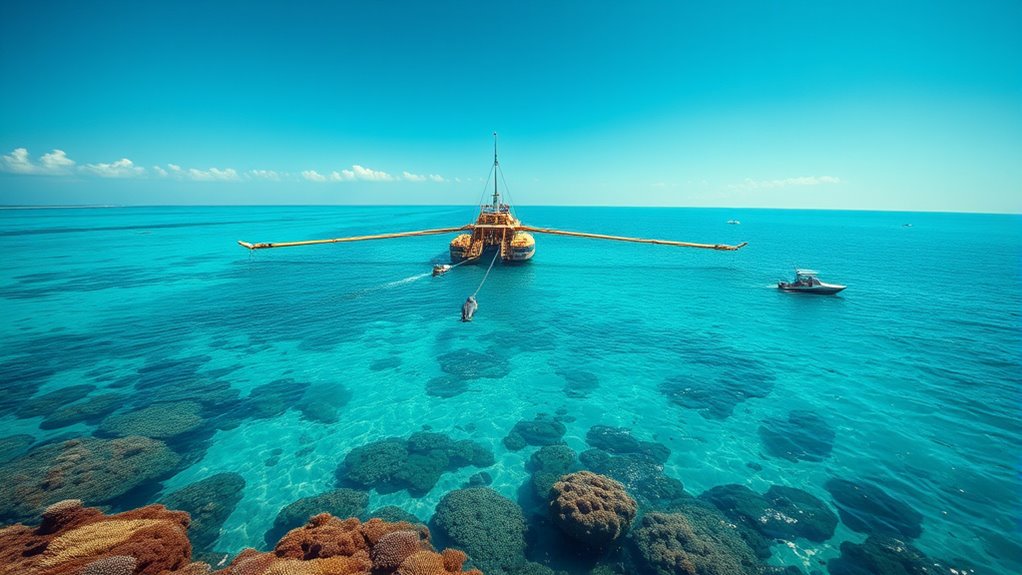
Did you know that plastic pollution threatens over 900 marine species, including more than 100 endangered ones? You can help protect these essential habitats through targeted cleanup efforts. Marine research groups focus on removing debris from coral reefs, mangroves, and coastal zones—key areas for biodiversity. Entangled plastics harm creatures like sea turtles, seabirds, and fish, disrupting ecosystems. Here’s a snapshot of some critical habitats and impacted species:
| Habitat | Endangered Species | Main Threats |
|---|---|---|
| Coral Reefs | Hawksbill Turtle | Entanglement, toxins |
| Mangroves | Mangrove Monitor | Plastic ingestion |
| Sandy Beaches | Loggerhead Sea Turtle | Nesting site destruction |
Your efforts can help preserve these habitats and species for future generations.
Moving Forward: Strategies for a Plastic-Free Ocean

To achieve a plastic-free ocean, we must implement a combination of innovative technologies, effective policies, and community-driven actions. You can support cleanup initiatives that deploy advanced barriers and river interceptors, preventing plastic from reaching the sea. Advocate for stronger regulations and international treaties that reduce plastic production and improve waste management. Participate in local beach and river cleanups to remove debris before it disperses. Educate others about reducing plastic use, reusing materials, and recycling properly. Encourage businesses to adopt sustainable practices and support products with minimal packaging. Policy reforms and community efforts must work together to create systemic change. Your active involvement accelerates progress toward a healthier, plastic-free ocean for future generations.
Frequently Asked Questions
How Do Cleanup Efforts Address Microplastics and Unseen Debris?
You can help address microplastics and unseen debris by supporting technologies like advanced filtration devices, which capture tiny particles before they reach the ocean, and tracking systems that predict debris movement. Participating in local coastal cleanups also prevents debris from entering waterways. Stay informed about innovative solutions like river booms and targeted removals, which focus on intercepting microplastics at their source, reducing their impact on marine life.
What Are the Main Environmental Impacts of Plastic Removal on Marine Ecosystems?
Removing plastic from oceans is like clearing a tangled web, restoring balance to marine ecosystems. You help protect endangered species, improve habitats, and reduce microplastics that threaten marine life and human health. By removing harmful debris, you prevent toxic chemicals from entering the food chain, promote healthier coral reefs, and support biodiversity. Your actions directly contribute to healthier oceans, ensuring vibrant marine ecosystems for future generations to enjoy.
How Sustainable Are Current Large-Scale Ocean Cleanup Initiatives?
You might think current large-scale ocean cleanup efforts are fully sustainable, but they face challenges. While organizations remove millions of pounds of plastic, the scale of pollution outpaces these efforts. Funding, technology limitations, and ongoing plastic input from rivers and coastal areas threaten long-term sustainability. To truly protect marine ecosystems, you’ll need continuous innovation, global cooperation, and increased reduction of plastic waste at its source.
What Role Do Local Communities Play in Supporting Ocean Cleanup Projects?
You play a crucial role in supporting ocean cleanup projects by volunteering for local initiatives, spreading awareness, and reducing plastic use. Your participation helps mobilize communities, making cleanups more effective. When you organize or join beach and river cleanups, you directly remove debris before it reaches the ocean. Additionally, advocating for policies that limit plastic production and disposal encourages broader change, ensuring healthier oceans for future generations.
How Can Individual Actions Contribute to Reducing Ocean Plastic Pollution?
You can make a difference by reducing your plastic use, recycling properly, and avoiding single-use items. Participate in local cleanup events and advocate for policies that limit plastic production. Educate friends and family about the impact of plastic pollution on marine life. By making conscious choices daily, you help decrease plastic waste entering oceans, supporting larger cleanup efforts and protecting marine ecosystems for future generations.
Conclusion
As you navigate this ocean of information, remember that big changes take time—like waiting for the dawn after a long night. By supporting innovative technologies and advocating for stronger policies, you can help turn the tide against plastic pollution. Every effort counts, from beach cleanups to global agreements. Together, we can chart a course toward cleaner waters, ensuring future generations won’t have to imagine a world once filled with plastic, like a forgotten chapter in history’s scroll.