

The U.S. is experiencing a renewable revolution as solar and wind power now produce more energy than coal, transforming the grid nationwide. Capacity keeps growing—solar reached 226 GW and wind 158 GW in 2024—supporting cleaner, more affordable energy. The shift is driven by technological advances, storage solutions, and policy support, expanding renewables across sectors. To discover how this progression impacts you and the future of energy, keep exploring this ongoing change.

Prime made for students and young adults
- Fast, free delivery for dorm and study essentials
- Prime Video and Amazon Music included
- Member-only deals
Key Takeaways
- Solar and wind capacity in the U.S. reached record highs, surpassing coal and driving a significant shift in power generation.
- Over 24 states, including California and Illinois, now generate more electricity from renewables than coal.
- Technological advancements and storage solutions enhance grid stability, enabling higher renewable integration nationwide.
- Renewable investments are increasing, supporting infrastructure growth, job creation, and cleaner energy adoption.
- The transition toward renewables is transforming America’s energy landscape, fostering a sustainable and resilient future.
As an affiliate, we earn on qualifying purchases.
Surging Solar and Wind Capacity Transforming the Grid
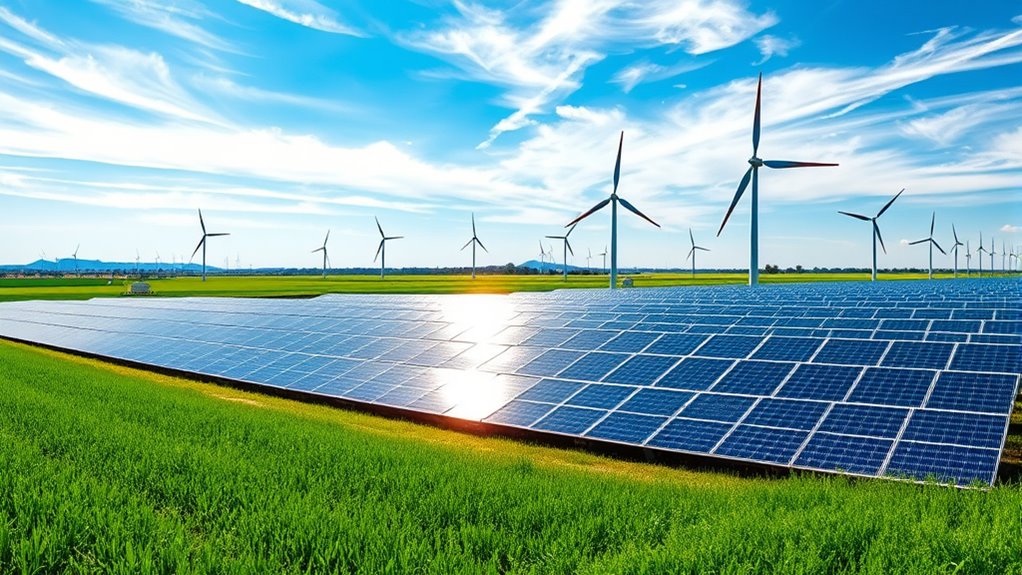
The rapid growth of solar and wind capacity is fundamentally reshaping the U.S. electricity grid. You’ll notice more solar panels and wind turbines across landscapes, as these sources expand rapidly. In 2024, solar capacity hit 226 gigawatts, a 27.9% jump from the previous year, while wind grew 3.1% to 158 gigawatts. Renewable capacity, excluding pumped hydro, reached 481 gigawatts—12.7% higher than before. In early 2025, renewables accounted for 91% of new generation, dominated by solar and wind, which made up 93% of additions. These trends are transforming how electricity is generated and distributed, pushing aside traditional fossil fuels. The grid is becoming cleaner, more flexible, and better suited for integrating large-scale renewable energy projects. Encouragement for continued growth and innovation in renewable technologies is vital to sustaining this momentum, especially as the Renewable capacity continues to increase rapidly, highlighting the importance of energy storage solutions to manage intermittent supply.
Historic Shift: Wind and Solar Surpass Coal in Power Generation
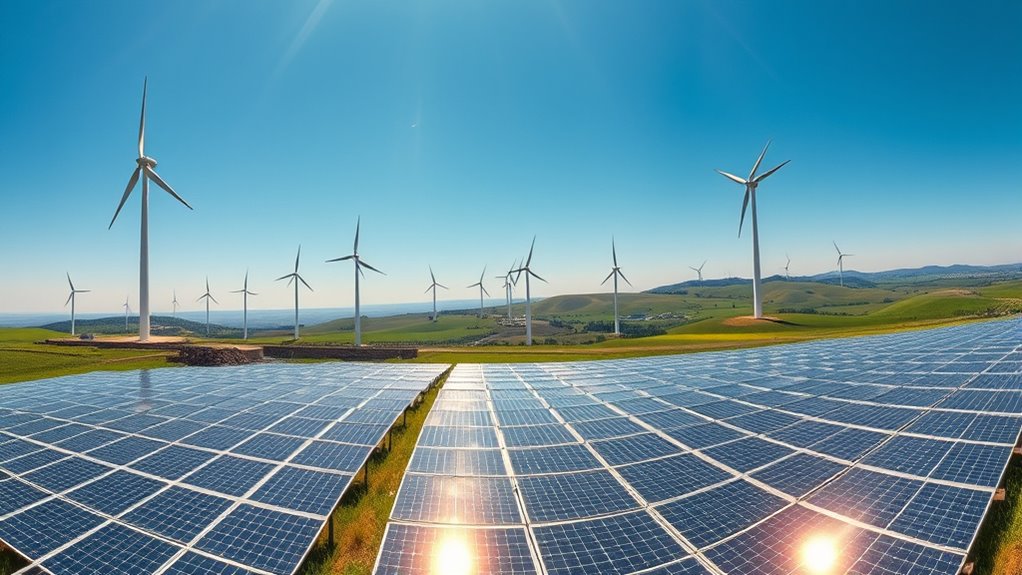
You’ve probably noticed how wind and solar have now surpassed coal in US power generation, marking a major shift in the energy landscape. Their growth has outpaced coal’s decline, with 24 states, including Illinois, reaching this milestone. This trend highlights how renewable sources are reshaping the grid and driving the country toward a cleaner energy future. Additionally, this transition underscores the importance of renewable energy adoption in fostering collaboration and understanding among stakeholders working on renewable energy projects. Growing support for renewable infrastructure also encourages sustainable agricultural practices, such as organic cultivation, which further benefits environmental health and promotes long-term energy and food security. Recognizing how trustworthy information supports informed decision-making can help communities better embrace these sustainable changes.
Wind and Solar Growth
As renewable energy sources continue their rapid expansion, wind and solar have achieved a historic milestone by surpassing coal in power generation for the first time in U.S. history. Solar capacity hit 226 gigawatts in 2024, increasing nearly 28%, while wind grew 3.1%, reaching 158 gigawatts. Together, they now account for 17% of US electricity, with wind leading at 43% of renewables. This shift reflects significant investment and technological advances. The table below highlights key growth metrics:
| Metric | Change (2024) |
|---|---|
| Solar Capacity | 226 GW (+27.9%) |
| Wind Capacity | 158 GW (+3.1%) |
| Renewable Share of Power | 17% of total US electricity |
| Total Renewable Capacity | 481 GW (+12.7%) |
This momentum signals a transformative move toward cleaner, sustainable energy. Renewable energy growth continues to accelerate as innovations make these sources more efficient and affordable, highlighting the increasing importance of energy transition in shaping America’s future energy landscape. Additionally, integrating hydrogen energy can further enhance the sustainability and flexibility of renewable energy systems.
Coal Decline Trends
A historic shift has occurred in the US energy landscape as wind and solar power have overtaken coal for electricity generation for the first time. This change reflects a major decline in coal’s role, reaching a historic low of 15% in 2024. Meanwhile, wind and solar combined accounted for 17%, marking a significant milestone. You’ll notice coal’s share has shrunk sharply compared to six years ago when it was three times larger than renewables. This trend is seen across many states, with wind remaining the largest renewable source. The growth of wind and solar is driven by falling costs, policy support, and increased investments. As coal declines, renewables continue to reshape the electricity landscape, signaling a cleaner, more sustainable future. The increasing cost competitiveness of wind and solar technology has played a crucial role in accelerating this transition. Additionally, the policy support at federal and state levels has been instrumental in fostering renewable energy development. The expansion of renewable energy infrastructure has further facilitated this transformation, making clean energy more accessible to communities nationwide. This ongoing shift also highlights the importance of energy transition strategies in achieving a sustainable energy future. Moreover, the decreasing reliance on coal aligns with efforts to reduce carbon emissions and combat climate change.
State Adoption Milestones
The shift in renewable energy generation is evident across many states, with wind and solar now surpassing coal for the first time in 2024. You’ll notice that 24 states, including Illinois in 2024, have seen wind and solar overtake coal, marking a historic milestone. This change reflects how renewables are becoming the primary power sources in these regions. Wind remains the leading renewable, accounting for 43% of total renewable output, while solar’s contribution grew 27% in 2024. States like California and Nevada reached over 30% solar share, and Texas outpaced California in capacity. These milestones show a decisive move away from coal, driven by falling costs, policy shifts, and technological advancements, transforming the energy landscape across the country.
Expanding Renewable Energy Across All Sectors of the Economy
You can see how sector-wide capacity growth is accelerating as renewables become integral across the economy. Increased electrification and efficiency efforts are driving demand for solar and wind power in transportation, industry, and buildings. This expansion not only boosts clean energy use but also helps reduce emissions and build a more resilient infrastructure. Additionally, understanding regional regulatory compliance challenges can inform expectations regarding the stability of energy policies and investments in different areas. Renewable energy technology advancements are also making these sources more cost-effective and reliable, further supporting their growth. Retail hours today can vary significantly by location, impacting planning for renewable project implementations and maintenance schedules.
Sector-Wide Capacity Growth
Renewable energy capacity is expanding rapidly across all sectors of the economy, driven by record growth in solar and wind installations. This surge is transforming how industries generate power, reducing reliance on fossil fuels, and boosting sustainability. You’ll see utilities, commercial, and industrial sectors all embracing renewables at unprecedented levels, supported by new infrastructure and investment. This growth not only increases capacity but also enhances grid reliability and energy resilience. As capacity expands, it creates opportunities for innovation, job creation, and cleaner energy adoption nationwide. You can expect to see further diversification of renewable sources across sectors, with more integration of solar, wind, and storage solutions. Regulatory frameworks exist to support the responsible growth of renewables and ensure compliance with evolving policies. Additionally, advancements in energy storage technologies are crucial in managing intermittent power supply and ensuring a stable energy grid. The integration of advanced grid management practices is also essential to accommodate the dynamic nature of renewable energy sources, further strengthening energy security and efficiency. Increased investments in renewable power infrastructure are accelerating this transition, facilitating broader access and integration. This momentum signals a profound shift toward a sustainable, low-carbon economy.
Electrification and Efficiency
As renewable energy sources continue to grow, industries and communities are increasingly electrifying their operations and improving efficiency. You can see this shift in sectors like manufacturing, transportation, and buildings, where electrification reduces reliance on fossil fuels. By upgrading infrastructure and adopting smart technologies, you’ll maximize energy savings and reduce emissions. The table below highlights key areas of electrification and efficiency efforts:
| Sector | Initiative | Impact |
|---|---|---|
| Transportation | Electric vehicles and charging | Lower emissions, cleaner air |
| Buildings | Smart thermostats, LED lighting | Reduced energy consumption |
| Industry | Electrified processes, automation | Increased productivity, savings |
This coordinated push helps accelerate renewable adoption while boosting overall efficiency, creating a more sustainable future.
Battery Storage and Technological Innovations Enable Record Deployments
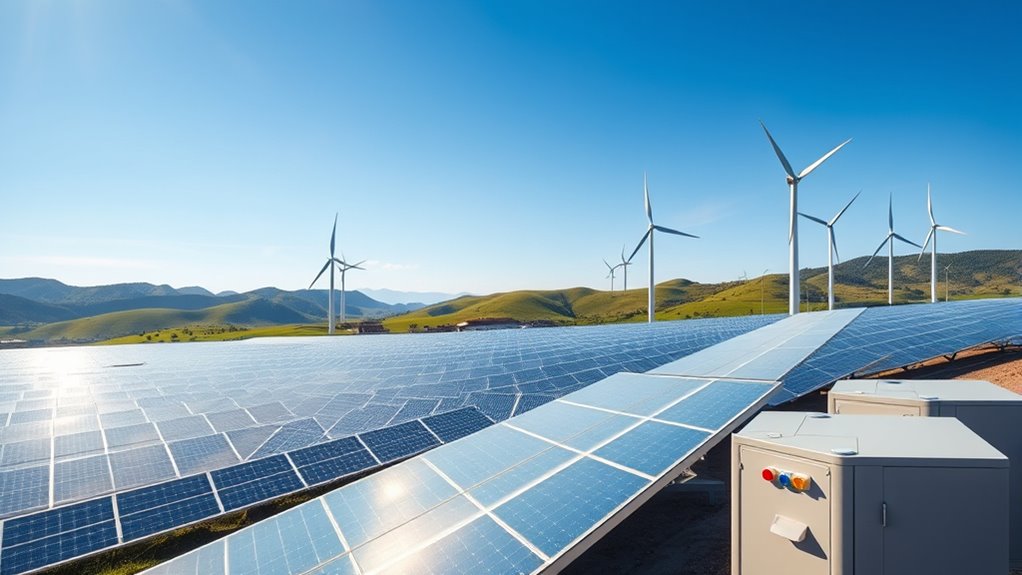
Battery storage has become a crucial driver of record solar deployments across the United States, enabling more reliable and flexible energy systems. It allows excess solar energy to be stored during the day and released during evening hours, balancing supply and demand. This progress is evident with a record 10 gigawatts of battery capacity installed nationwide, supporting grid stability. You’ll find that:
Battery storage drives U.S. solar growth, enhancing grid reliability and energy flexibility nationwide.
- California installed 20% more battery capacity than solar capacity, boosting evening power availability
- Texas installed 3.9 gigawatts of batteries alongside 7.4 gigawatts of solar, creating a robust energy mix
- Battery deployment now matches about one gigawatt for every three gigawatts of solar
- Technological innovations, like advanced chemistries and modular designs, continue to cut costs and improve performance
These advancements are accelerating renewable integration, ensuring cleaner, more resilient power for the future.
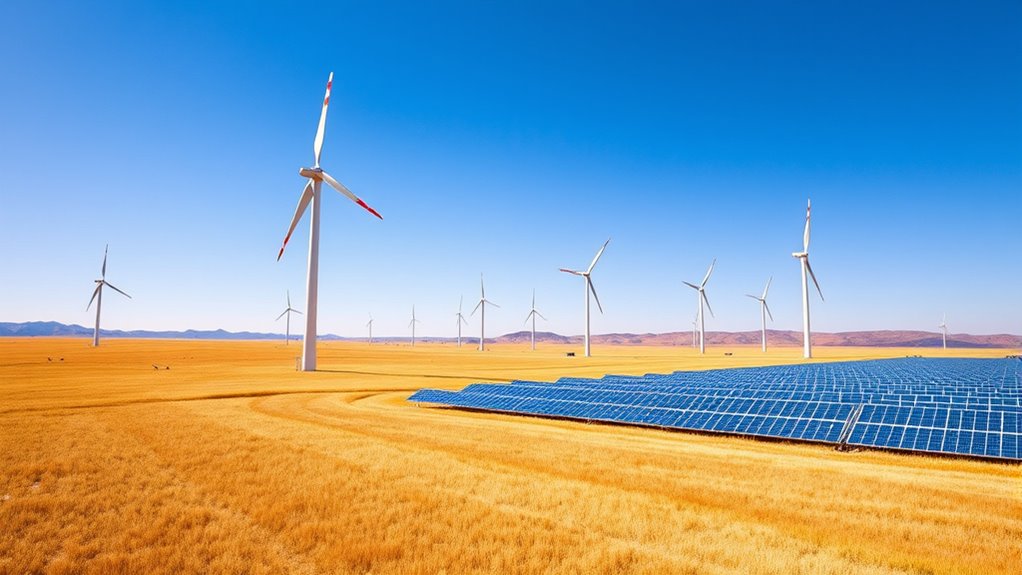
The share of renewables in U.S. energy consumption is steadily increasing, reflecting a shift toward cleaner and more sustainable power sources. In 2024, renewables accounted for 9.2% of total energy demand and 24% of electricity demand, marking significant growth. Wind and solar combined generated 17% of the nation’s electricity, overtaking coal for the first time, which fell to a historic low of 15%. Solar capacity alone reached 226 gigawatts, growing nearly 28% year-on-year, while wind capacity increased by 3.1% to 158 gigawatts. These sources now dominate new capacity additions, making up 81% of all new installations in 2024. As renewable generation expands across all sectors, its contribution to the US energy mix continues to rise, transforming the country’s energy landscape.
Investment Trends and the Outlook for Future Deployment

Despite the impressive growth in renewable capacity, investment in solar and wind projects has slowed in 2025 due to recent changes in tax laws and market uncertainties. You might notice a dip in project funding, with investments dropping 18% to nearly $35 billion in the first half of the year. This slowdown reflects cautious investor sentiment amid policy shifts, yet optimism remains. Key points include:
- Investment declines led to a 41% drop in deal value and a 45% decrease in volume in the first nine months
- Expect a surge in deployment in 2026 as developers prioritize safe-harbor projects
- Only 35% of the renewable pipeline is under construction, despite supply chain pressures
- Significant untapped potential exists in 28 states generating less than 5% of their electricity from solar
While short-term hurdles exist, future deployment looks promising as policy adjustments and market confidence rebound.
Unlocking Untapped Potential in State-Level Solar Adoption
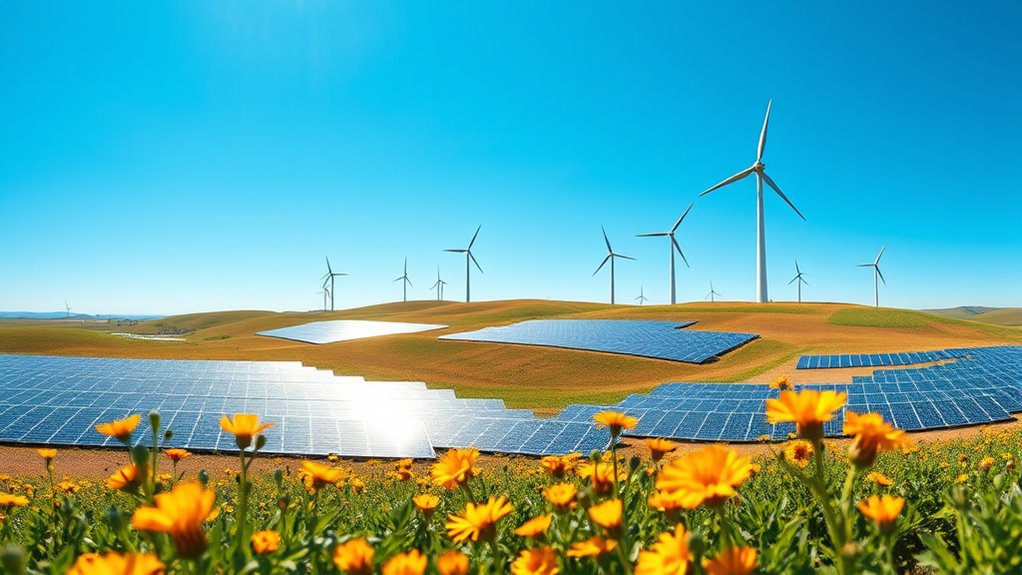
Many states in the U.S. have yet to fully harness their solar potential, leaving substantial opportunities for growth untapped. You can help unlock this potential by advocating for policies that streamline permitting processes and reduce bureaucratic barriers. Expanding incentives like tax credits and rebates can motivate more homeowners and businesses to install solar systems. Additionally, investing in community solar projects allows those who can’t install panels on their rooftops to participate in renewable energy. States with abundant sunlight, like Arizona and Texas, still have room to increase their solar capacity markedly. By supporting grid modernization and storage solutions, you can ensure solar energy is available when demand peaks. Tapping into these opportunities not only accelerates clean energy adoption but also drives economic growth and energy independence.
Frequently Asked Questions
How Are Renewable Energy Policies Impacting Future Growth Projections?
You’ll see that renewable energy policies are shaping future growth by providing incentives and regulations that encourage solar and wind expansion. These policies lower costs, support infrastructure, and promote investment, helping to accelerate deployment despite recent declines in investment value. As policies evolve, they’ll likely boost renewable capacity, increase grid integration, and unleash untapped potential across many states, ensuring a stronger, cleaner energy future for America.
What Are the Main Challenges Facing Grid Integration of Renewables?
You might find it surprising that battery storage reached 10 gigawatts in 2024, yet integrating renewables into the grid remains a challenge. Fluctuations in wind and solar output can cause grid instability, especially since only 35% of projects are under construction. You need advanced storage solutions and grid upgrades to manage variability, guarantee reliable power, and fully harness the rapid growth of renewables like solar and wind.
How Do Technological Innovations Improve Solar and Wind Efficiency?
Technological innovations boost solar and wind efficiency by improving energy capture and storage. You benefit from advanced materials like perovskite solar cells and larger, more aerodynamic wind turbines that generate more power. Smart grid systems and better battery storage allow you to store excess energy and use it during low production periods. These innovations help you maximize renewable energy output, reduce costs, and make clean energy more reliable and accessible.
What Role Do Incentives and Subsidies Play in Renewable Deployment?
You might be surprised, but incentives and subsidies act like gentle catalysts, encouraging you to invest in renewables. They make solar and wind projects more affordable, reducing financial risks and attracting more developers. These policies help accelerate deployment, create jobs, and boost innovation. By easing the economic burden, they guide your community toward cleaner energy, ensuring a more sustainable future while fostering growth in renewable industries.
How Will Renewable Energy Affect Long-Term Energy Prices and Affordability?
You’ll see renewable energy lower long-term energy prices and boost affordability. As solar and wind costs continue to drop, they become cheaper sources of power, reducing reliance on fossil fuels. Increased renewables can stabilize prices by providing more predictable costs and reducing exposure to fuel price swings. Plus, expanding battery storage helps manage supply and demand, making clean energy more reliable and affordable for households and businesses alike.
Conclusion
You’re witnessing a transformative era where solar and wind reshape America’s energy landscape, much like the Industrial Revolution once did. As investments grow and technology advances, you can expect renewables to become even more dominant. Keep in mind, this progress isn’t just a flash in the pan—it’s a long-term shift, akin to harnessing the power of the printing press. Embrace the change now, or risk being left in the dust of this renewable revolution.
Fall Picks
fall essentials
As an affiliate, we earn on qualifying purchases.