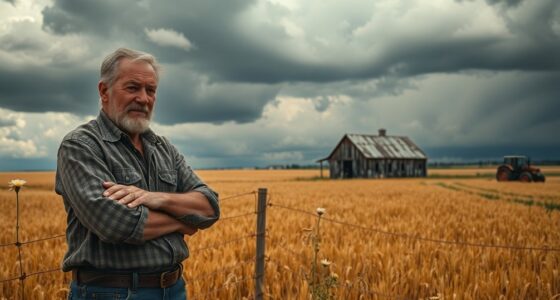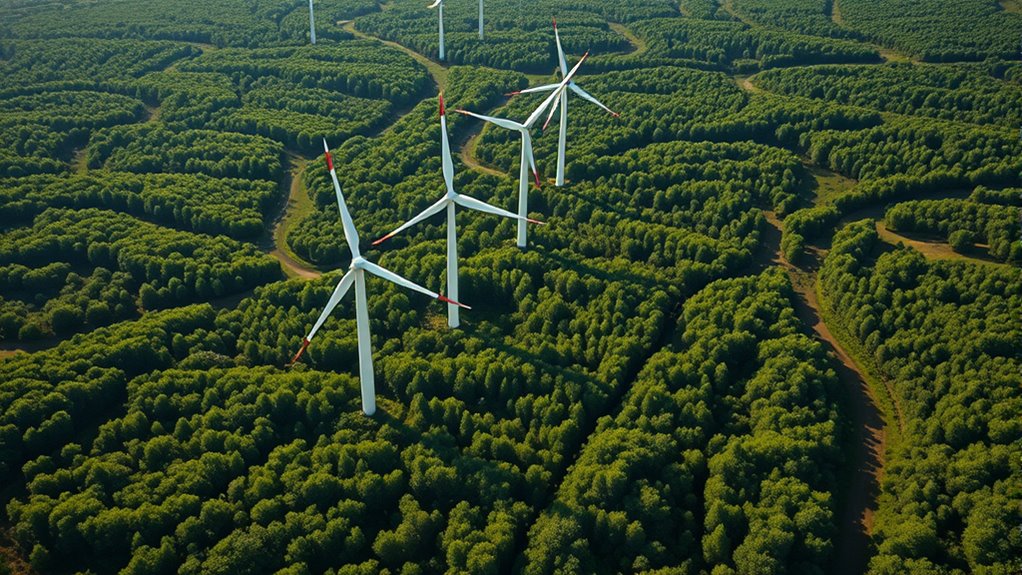

You might consider how renewable energy projects can harm wildlife through habitat loss, bird and bat fatalities, and habitat fragmentation. While these efforts help fight climate change, they often clash with wildlife protection goals. Careful site selection, advanced monitoring, and stakeholder engagement can reduce conflicts. If you’re curious about strategies to balance green energy with conservation, there’s more to explore that can help you understand sustainable solutions better.
Key Takeaways
- Proper siting and planning of renewable projects minimize habitat loss and reduce risks to vulnerable wildlife.
- Implementing advanced monitoring technologies helps detect and mitigate impacts on birds and bats in real-time.
- Standardized impact assessments and long-term monitoring improve understanding of ecological effects and inform adaptive management.
- Stakeholder engagement, including local communities and Indigenous groups, fosters collaboration and conflict reduction.
- Balancing renewable energy development with wildlife conservation requires integrating ecological data into regional planning frameworks.
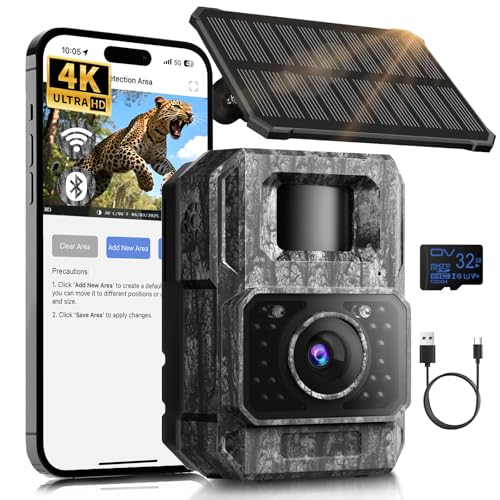
MAXDONE Solar Trail Camera, 4K 64MP WiFi Bluetooth Night Vision Game Camera
- Wi-Fi Hotspot Functionality: Creates its own short-range Wi-Fi
- Flexible Solar Panel Design: Manually adjustable for optimal sun exposure
- High-Capacity Rechargeable Battery: 6000mAh for long-term use
As an affiliate, we earn on qualifying purchases.
As an affiliate, we earn on qualifying purchases.
The Wildlife Toll of Wind and Solar Projects

Wind and solar projects, while vital for reducing greenhouse gas emissions, can have significant impacts on wildlife. Wind turbines pose direct threats, causing fatalities in birds and bats, especially in regions like California and the eastern U.S. Large numbers of raptors and bats are killed annually, disrupting local populations. Habitat loss and fragmentation from turbines and access roads further threaten wildlife movement and survival. Disturbances near turbines can have ecological effects that exceed the physical footprint, affecting species behavior and habitat use. Although mitigation techniques like curtailment during high wildlife activity help reduce collisions, their implementation is complex. Additionally, the lack of extensive post-construction monitoring limits understanding of long-term impacts, making it harder to develop effective strategies for wildlife preservation. Predictive analytics can support conservation efforts by analyzing data trends to identify high-risk areas and inform mitigation strategies. To improve these efforts, integrating data-driven approaches can enhance the accuracy of impact assessments and guide adaptive management practices. Furthermore, understanding RMDs and contribution limits is essential for balancing energy projects with responsible preservation efforts. Increasing awareness of wildlife corridors can also help in designing projects that minimize habitat disruption and promote ecological connectivity.
Balancing Habitat Conservation and Renewable Goals

Balancing habitat conservation with renewable energy development requires strategic planning and careful site selection. You need to identify areas where renewable projects can generate power with minimal ecological disruption. This involves analyzing wildlife habitats, migration corridors, and regional ecosystems to avoid sensitive zones. To succeed, consider these strategies:
Strategic site selection minimizes ecological impact in renewable energy development.
- Prioritize low-biodiversity or degraded areas for development
- Incorporate wildlife data early in planning processes
- Use advanced monitoring tools to track animal presence and behavior
- Collaborate with local communities and Indigenous groups for insight and support
- Implement adaptive management to adjust operations based on ongoing monitoring
- Leverage AI-powered data analytics to enhance environmental impact assessments and optimize project placement. Additionally, understanding local store hours can facilitate stakeholder engagement and project planning. Incorporating environmental considerations into project designs can further minimize ecological impacts and promote sustainable development. Integrating species movement patterns into planning can help prevent habitat fragmentation and ensure connectivity for wildlife. Recognizing the importance of biodiversity hotspots can guide project siting to protect critical ecosystems.
Challenges in Monitoring and Data Transparency

Effective habitat conservation and renewable energy development depend heavily on accurate, all-encompassing data. However, monitoring wildlife impacts remains a significant challenge. Many projects lack standardized protocols for data collection, making it hard to compare results across sites or assess long-term trends. You may find that post-construction studies are often limited in scope, leaving gaps in understanding true impacts. Additionally, transparency issues hinder access to existing data, causing delays in identifying effective mitigation strategies. Without comprehensive, openly shared information, policymakers and developers struggle to balance renewable growth with wildlife protection. You must advocate for consistent monitoring, data sharing, and robust reporting to inform better decision-making and minimize unintended ecological harm. Only through reliable data can sustainable solutions be truly achieved.
Innovative Strategies for Conflict Reduction

You can reduce conflicts by carefully choosing project locations that minimize wildlife disruption through strategic siting. Implementing advanced wildlife monitoring tools allows you to detect animal presence and adjust operations in real time. Engaging stakeholders early guarantees that project planning incorporates local knowledge and addresses conservation priorities effectively. Additionally, considering the impact of energy projects on local ecosystems helps ensure sustainable coexistence. Incorporating remote work strategies can also facilitate collaboration among stakeholders without the need for frequent site visits, thereby reducing human disturbance in sensitive areas. Proper planning that incorporates size restrictions for tiny houses can also serve as a model for understanding how to balance development with environmental preservation. Utilizing industry trends knowledge can further refine project approaches to align with best practices in sustainability and biodiversity conservation. Exploring innovative environmental impact assessment methods can enhance decision-making processes for energy projects.
Strategic Project Siting
Strategic project siting is essential for reducing conflicts between renewable energy development and wildlife conservation. By carefully selecting locations, you can minimize habitat disruption, avoid migration corridors, and reduce collision risks for birds and bats. Thoughtful siting considers ecological data, topography, and existing land use to maximize benefits while protecting wildlife.
- Use wildlife migration and movement data to identify low-impact zones
- Prioritize areas with minimal biodiversity or fragmented habitats
- Avoid regions with high densities of vulnerable species, especially during breeding seasons
- Incorporate stakeholder input, including local communities and Indigenous groups
- Leverage advanced mapping tools and AI to refine site selection and predict impacts
This proactive approach helps balance renewable growth with ecological preservation.
Advanced Wildlife Monitoring
How can innovative wildlife monitoring technologies transform conflict reduction in renewable energy projects? By providing real-time data on animal movements, these tools allow you to identify high-risk periods and locations. Cameras, acoustic sensors, and radar systems detect birds and bats near turbines, enabling you to adjust operations dynamically, such as curtailing turbines during peak activity. AI-powered analytics process vast datasets quickly, revealing migration patterns and behavioral responses. Incorporating advanced monitoring systems enhances your capacity to detect subtle changes in wildlife behavior and adapt promptly, promoting better coexistence. This exhaustive approach reduces collisions and habitat disturbance by informing better siting and operational decisions. Additionally, long-term monitoring builds a thorough impact record, guiding adaptive management and policy adjustments. Incorporating HEPA filtration and other filtration technologies can further improve the overall environment by capturing airborne pollutants that might affect wildlife health. Understanding regulatory requirements ensures compliance and supports sustainable project development. Utilizing these advanced monitoring systems improves your ability to detect subtle changes in wildlife behavior and adapt promptly, fostering more responsible energy projects. For instance, integrating behavioral response data can help predict how species might react to new infrastructure, enabling preemptive mitigation measures. Data-driven insights via real-time feedback help refine project strategies and minimize unintended consequences, creating a more sustainable coexistence between energy development and wildlife conservation.
Stakeholder Collaboration
Effective stakeholder collaboration is essential for reducing conflicts between renewable energy projects and wildlife conservation efforts. When diverse groups work together, you can develop innovative strategies that balance energy needs with ecological health. Building trust and sharing data early in project planning fosters transparency and informed decision-making. Engaging local communities, Indigenous peoples, scientists, and regulators ensures all perspectives are considered, leading to more sustainable solutions. Incorporating Cultural Intelligence into stakeholder interactions enhances mutual understanding and cooperation. Incorporating scientific data into planning processes ensures decisions are grounded in ecological realities. Utilizing conflict mitigation techniques can further minimize ecological impacts and foster harmonious coexistence. Facilitate joint workshops to identify wildlife hotspots and conflict zones. Share real-time wildlife monitoring data to inform turbine operation adjustments. Co-develop habitat restoration and mitigation plans with local stakeholders. Implement adaptive management based on ongoing collaboration and monitoring results. Promote transparent communication to build consensus and reduce project delays.
Ecosystem Impacts and Habitat Fragmentation
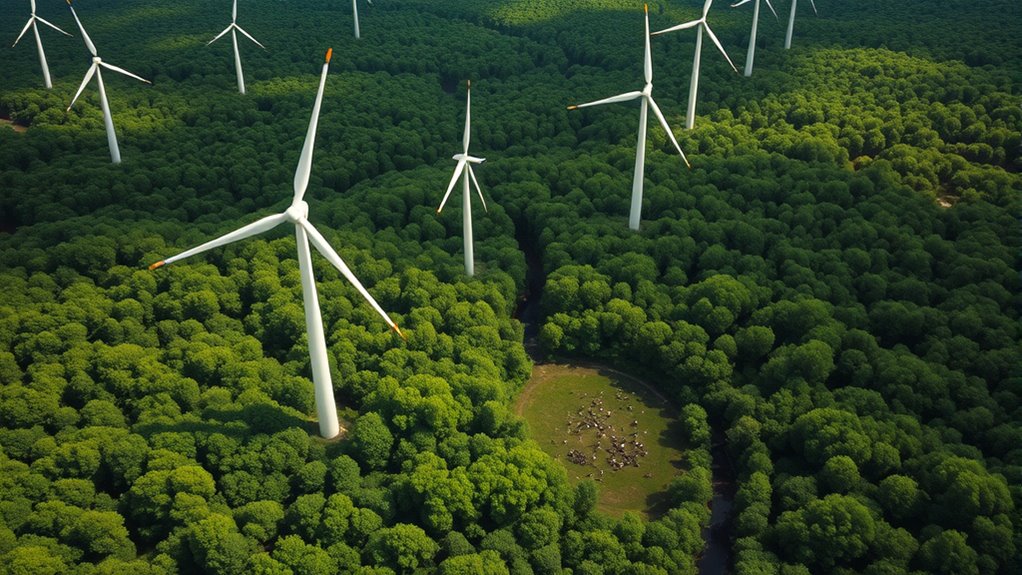
When developing renewable energy projects, you might unintentionally cause habitat loss and disrupt wildlife corridors, making it harder for animals to find food, water, and mates. These disruptions can fragment ecosystems, breaking connections that are essential for species survival. Adding proper planning can help mitigate these impacts by ensuring development occurs in less sensitive areas. Addressing these impacts requires careful site selection and strategies to maintain ecosystem connectivity. Additionally, considering alternative investments like Gold IRAs can provide financial stability during such environmentally driven transitions. Incorporating environmental impact assessments can help identify critical habitats before development begins, reducing negative effects on local wildlife.
Habitat Loss From Development
Habitat loss from renewable energy development poses a significant threat to ecosystems by fragmenting landscapes and disrupting wildlife movement. When you build wind farms, solar arrays, or infrastructure, you often remove vital habitats, forcing animals to travel farther or settle in smaller areas. This fragmentation reduces genetic diversity, hampers migration, and can lead to local extinctions.
- Displaces species from breeding or foraging grounds
- Creates barriers that prevent safe movement between habitats
- Diminishes available resources like water and shelter
- Alters natural disturbance regimes, affecting plant and animal communities
- Increases vulnerability to invasive species and human encroachment
Understanding these impacts helps you make smarter siting choices that balance energy needs and ecosystem health.
Fragmentation of Wildlife Corridors
The construction of renewable energy infrastructure often fragments wildlife corridors, disrupting animals’ natural movement patterns. This fragmentation isolates populations, making it harder for species to access resources, breed, and migrate. As a result, genetic diversity declines, and extinction risks rise. To visualize this, consider the following:
| Area | Impact | Species Affected |
|---|---|---|
| Wind farm edges | Barriers to migration | Raptors, bats |
| Transmission lines | Restricted movement | Deer, foxes |
| Access roads | Habitat fragmentation | Turtles, small mammals |
These barriers hinder movement, increase human-wildlife conflicts, and degrade ecosystem resilience. Minimizing corridor disruption requires careful siting and planning.
Disruption of Ecosystem Connectivity
Renewable energy infrastructure often fragments ecosystems, disrupting the natural flow of species and ecological processes. When you build wind farms or solar arrays, you may unintentionally block migration routes, isolate populations, and hinder access to essential resources. This fragmentation can lead to decreased genetic diversity and increased extinction risks. You should consider:
- Disrupted wildlife movement, leading to population declines
- Reduced access to food, water, and breeding sites
- Altered predator-prey dynamics within fragmented habitats
- Increased human-wildlife conflicts as animals seek alternative routes
- Long-term ecosystem imbalance due to disrupted ecological interactions
Mitigating these effects requires careful siting, maintaining habitat corridors, and employing adaptive management. Without strategic planning, your renewable projects might unintentionally undermine conservation efforts and ecosystem resilience.
Policy Gaps and the Path Toward Sustainable Development

Addressing policy gaps is essential for balancing renewable energy development with wildlife conservation. Currently, many regulations lack comprehensive, long-term monitoring protocols, making it difficult to assess true impacts. You might find that data sharing is limited, hindering transparency and collaborative efforts. Policies often prioritize project approval over ecological safeguards, leading to insufficient mitigation measures. You’ll notice that regional planning frameworks rarely integrate wildlife data, resulting in site selections that threaten biodiversity. To move toward sustainable development, policymakers need to establish standardized impact assessments, enforce adaptive management practices, and promote stakeholder engagement, including indigenous communities. Investing in advanced monitoring tools and ensuring transparent reporting can help identify conflicts early. Bridging these policy gaps is crucial for fostering renewable growth that truly aligns with wildlife conservation goals.
Frequently Asked Questions
How Do Wind and Solar Projects Specifically Affect Endangered Species Populations?
You might not realize it, but wind and solar projects can threaten endangered species by causing direct fatalities, habitat fragmentation, and disturbance. Wind turbines kill birds and bats, including some endangered ones, while solar farms can destroy vital habitats. Construction and human activity also disrupt breeding and foraging. To protect these vulnerable populations, careful siting, monitoring, and mitigation measures are essential, helping balance renewable energy growth with wildlife conservation.
What Are the Cost Differences Between Mitigation Techniques and Habitat Preservation Measures?
Mitigation techniques like turbine curtailment and bird detection systems often cost more upfront due to technology and monitoring needs, whereas habitat preservation measures usually involve land acquisition and restoration, which can be expensive but more long-term. You’ll find that effective mitigation might require ongoing investment, while habitat preservation can reduce future mitigation costs. Balancing these approaches depends on project size, location, and wildlife risks, making cost comparisons complex but essential for sustainable planning.
How Can Local Communities Be More Involved in Renewable-Wildlife Conflict Solutions?
You can involve your local community by hosting educational workshops to raise awareness about wildlife impacts, encouraging participation in project planning, and supporting stakeholder engagement efforts. Advocate for community-led monitoring programs to gather local data, and promote open communication with developers and conservation groups. Your involvement guarantees projects consider local ecological knowledge, fosters shared responsibility, and helps develop solutions that balance renewable energy growth with wildlife protection effectively.
Are There Successful Case Studies of Balancing Renewable Energy and Wildlife Conservation?
You can find successful examples where communities balance renewable energy and wildlife conservation by looking at projects like California’s Altamont Pass, which implemented innovative turbine designs and curtailment strategies to reduce bird fatalities. Engaging local stakeholders early, integrating wildlife data into siting decisions, and using advanced monitoring tools have helped other regions minimize ecological impacts while expanding renewable energy. These collaborative approaches demonstrate that with proper planning, both goals can be achieved effectively.
What Technological Innovations Show Promise for Reducing Wildlife Casualties?
You might be surprised to discover that innovative technologies are making a real difference. AI-powered monitoring systems detect wildlife presence in real-time, allowing turbines to shut down during high-risk periods. Bird and bat tracking devices help identify danger zones, guiding better siting choices. Drones rapidly survey habitats, and smart sensors optimize energy flow while minimizing harm. These breakthroughs promise a future where renewable energy and wildlife protection go hand in hand, reducing casualties effectively.
Conclusion
Balancing renewable energy with wildlife protection isn’t easy. While you push for greener solutions, you must also safeguard fragile ecosystems. The clash between progress and preservation reminds you that growth shouldn’t come at nature’s expense. By addressing gaps and embracing innovative strategies, you can help guarantee that renewable energy supports a sustainable future—where green means more than just a color, but a commitment to coexistence. In this fight, harmony is your ultimate goal.