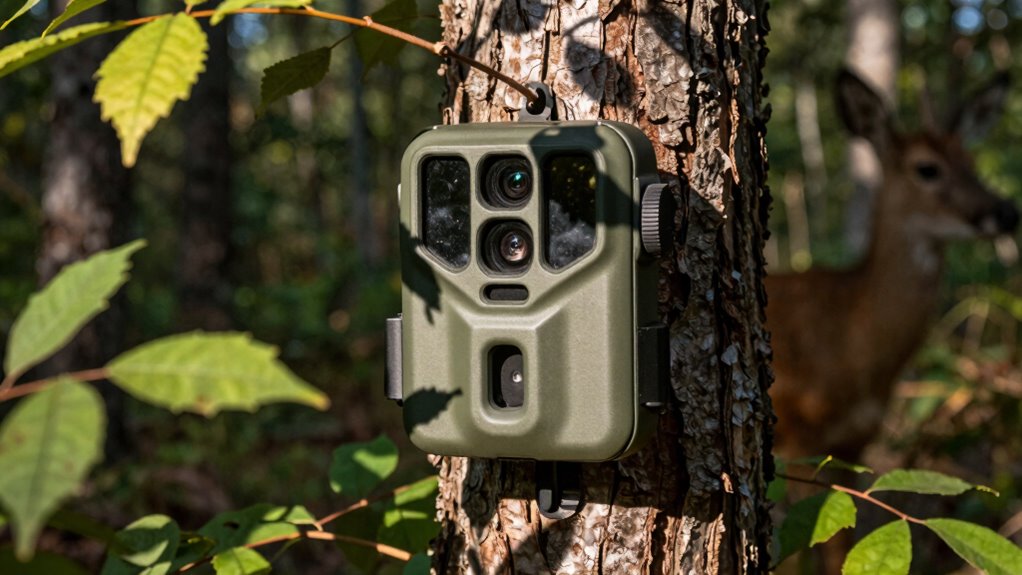
A good trail camera for research use combines high image quality, user-friendly navigation, and robust battery life. You’ll want a model with at least 12 megapixels for clear images that aid in species identification. Weather resistance is essential for gathering data in harsh conditions, while cost-effectiveness helps manage your budget. These features guarantee your research is both efficient and reliable. Discover how these elements can enhance your fieldwork even further.
Key Takeaways
- High-resolution images (minimum 12 megapixels) are crucial for accurate species identification and behavioral analysis.
- An intuitive user interface streamlines setup and settings adjustments, enhancing fieldwork efficiency.
- Long battery life reduces the frequency of changes, essential for extended monitoring in remote locations.
- Weather resistance is vital for durability, ensuring continuous data collection in harsh environmental conditions.
- Cost-effectiveness allows research teams to balance quality features with budget constraints, maximizing resource use.
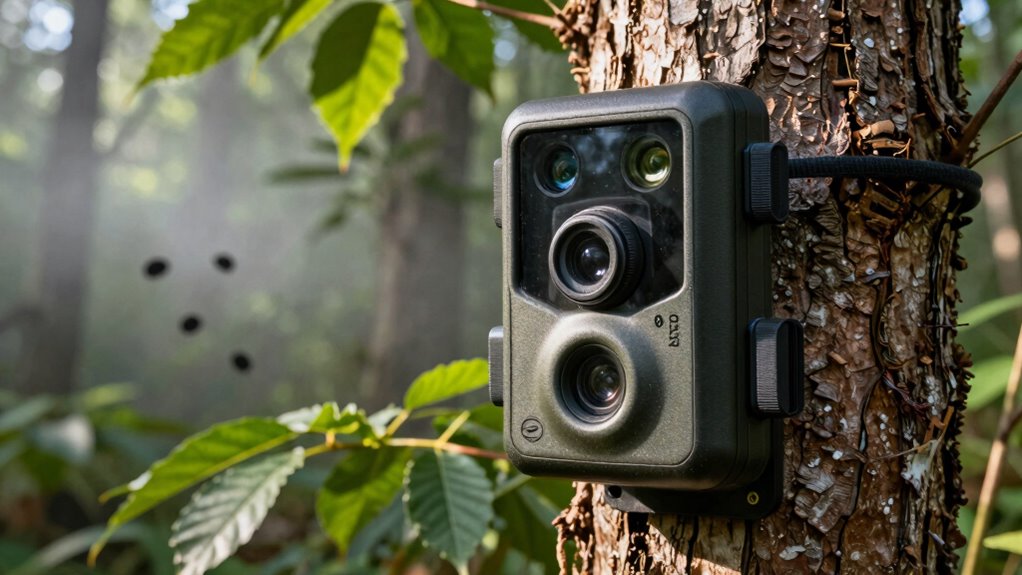
When you’re studying wildlife or monitoring environmental changes, trail cameras can be invaluable tools. They provide a reliable way to collect data without disturbing the environment, making them essential for effective field studies. But what makes a trail camera particularly suited for research use? Several key features can notably enhance your wildlife monitoring efforts.
First, consider the image quality. A camera with high-resolution capabilities guarantees that you capture clear, detailed images of wildlife. This clarity not only helps you identify species but also aids in evaluating animal behavior. If you’re aiming for data accuracy, the last thing you want is blurry images that make identification challenging. Look for cameras that offer at least 12 megapixels to guarantee quality photos.
Consider image quality: high-resolution cameras ensure clear, detailed wildlife images, crucial for accurate species identification and behavior evaluation.
Next, the user interface is key. A camera that’s easy to navigate allows you to set up quickly and efficiently. You’ll want a device that lets you adjust settings without fumbling through complicated menus, especially when you’re out in the field. An intuitive interface saves time and minimizes the risk of errors, allowing you to focus on your research rather than technical issues.
Battery life is another important factor. When you’re in remote locations, you can’t afford to constantly check or change batteries. A camera with excellent battery longevity guarantees that you capture data over extended periods, which is essential for thorough wildlife monitoring. Look for models that boast long-lasting batteries or the option for external power sources to maximize your camera’s operational time.
Weather resistance is a must-have feature, too. Field studies often expose equipment to harsh conditions, so you need a camera that can withstand rain, snow, and extreme temperatures. A weatherproof design not only protects your investment but also guarantees that you can continue gathering data regardless of environmental challenges.
Lastly, consider the cost effectiveness. While it’s tempting to go for the latest high-end models, balancing features with budget constraints is essential. There are plenty of cameras that strike a good balance between quality and affordability, allowing you to equip your research team without breaking the bank.
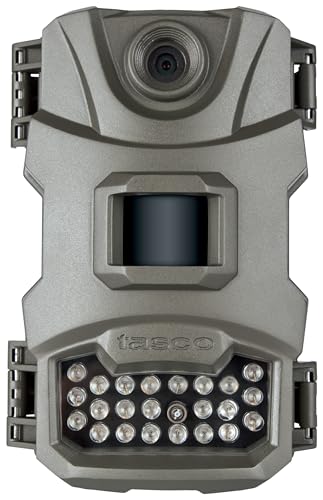
Tasco 12MP Trail Camera with Low Glow Infrared Flash
High-Resolution Images: Crystal clear 12MP images for detailed captures
As an affiliate, we earn on qualifying purchases.
As an affiliate, we earn on qualifying purchases.
Frequently Asked Questions
How Do I Choose the Right Location for My Trail Camera?
To choose the right location for your trail camera, consider wildlife patterns and environmental factors. Look for areas with signs of animal activity, like tracks or droppings. Place your camera where it can capture movement but avoid spots with too much human interference. Keep visibility concerns in mind; make certain the camera isn’t easily spotted or tampered with. Proper camera placement will help you gather valuable data without disturbing the wildlife.
What Is the Ideal Height to Mount a Trail Camera?
Mounting a trail camera at eye level can feel like inviting wildlife to a front-row seat. Ideally, you should set your camera about 3 to 4 feet off the ground. This height captures a natural perspective while avoiding false triggers from grass and debris. Experiment with different mounting techniques and camera angles to optimize your shots. Remember, a well-placed camera can reveal the secrets of the wild in stunning detail.
How Often Should I Check My Trail Camera?
You should check your trail camera every two to four weeks. This frequency helps you assess camera settings and guarantee battery life is ideal. If you notice low battery levels or issues with image quality, adjust accordingly. Regular checks also let you review captured data and make any necessary changes to improve your research results. Keeping tabs on your camera keeps it running smoothly and maximizes your chances of capturing valuable information.
Can Weather Affect Trail Camera Performance?
Sure, you’d think a trail camera would thrive in any weather, right? In reality, weather can seriously affect its performance. If your camera isn’t weather-resistant, rain or snow could ruin it. Plus, temperature extremes might cause battery issues or impact the internal components. It’s essential to choose a model built to withstand various conditions, ensuring you capture the wildlife action you’re after, no matter how wild the weather gets.
How Do I Maintain My Trail Camera for Long-Term Use?
To maintain your trail camera for long-term use, focus on battery management and lens cleaning. Regularly check and replace batteries to prevent leaks and guarantee consistent performance. Clean the lens with a microfiber cloth to avoid blurry images and improve picture quality. Store the camera in a cool, dry place when not in use, and periodically test it to catch any issues early. These steps will help extend your camera’s lifespan and functionality.

MAXDONE Solar Trail Camera WiFi Bluetooth – 4K 64MP Game Camera with 6000mAh Battery, Rechargeable Trail Cam with Night Vision Motion Activated IP66, Wildlife Cameras Deer Cams for Outdoor Backyard
𝐈𝐌𝐏𝐎𝐑𝐓𝐀𝐍𝐓 𝐍𝐎𝐓𝐄: This is 𝐍𝐎𝐓 a home Wi-Fi or internet camera. It does 𝐍𝐎𝐓 connect to your household…
As an affiliate, we earn on qualifying purchases.
As an affiliate, we earn on qualifying purchases.
Conclusion
To sum up, a good trail camera for research isn’t just about capturing images; it’s about reliability, data quality, and ease of use. Some might worry that these cameras can be expensive, but investing in a quality model often pays off in the long run with clearer images and better durability. By choosing the right trail camera, you’re not just documenting wildlife; you’re gathering essential data that can make a real difference in research outcomes.
MAXDONE Solar Trail Camera WiFi Bluetooth – 4K 64MP Game Camera with 6000mAh Battery, Rechargeable Trail Cam with Night Vision Motion Activated IP66, Wildlife Cameras Deer Cams for Outdoor Backyard
𝐈𝐌𝐏𝐎𝐑𝐓𝐀𝐍𝐓 𝐍𝐎𝐓𝐄: This is 𝐍𝐎𝐓 a home Wi-Fi or internet camera. It does 𝐍𝐎𝐓 connect to your household…
As an affiliate, we earn on qualifying purchases.
As an affiliate, we earn on qualifying purchases.
MAXDONE Solar Trail Camera WiFi Bluetooth – 4K 64MP Game Camera with 6000mAh Battery, Rechargeable Trail Cam with Night Vision Motion Activated IP66, Wildlife Cameras Deer Cams for Outdoor Backyard
𝐈𝐌𝐏𝐎𝐑𝐓𝐀𝐍𝐓 𝐍𝐎𝐓𝐄: This is 𝐍𝐎𝐓 a home Wi-Fi or internet camera. It does 𝐍𝐎𝐓 connect to your household…
As an affiliate, we earn on qualifying purchases.
As an affiliate, we earn on qualifying purchases.