TL;DR

Prime made for students and young adults
- Fast, free delivery for dorm and study essentials
- Prime Video and Amazon Music included
- Member-only deals
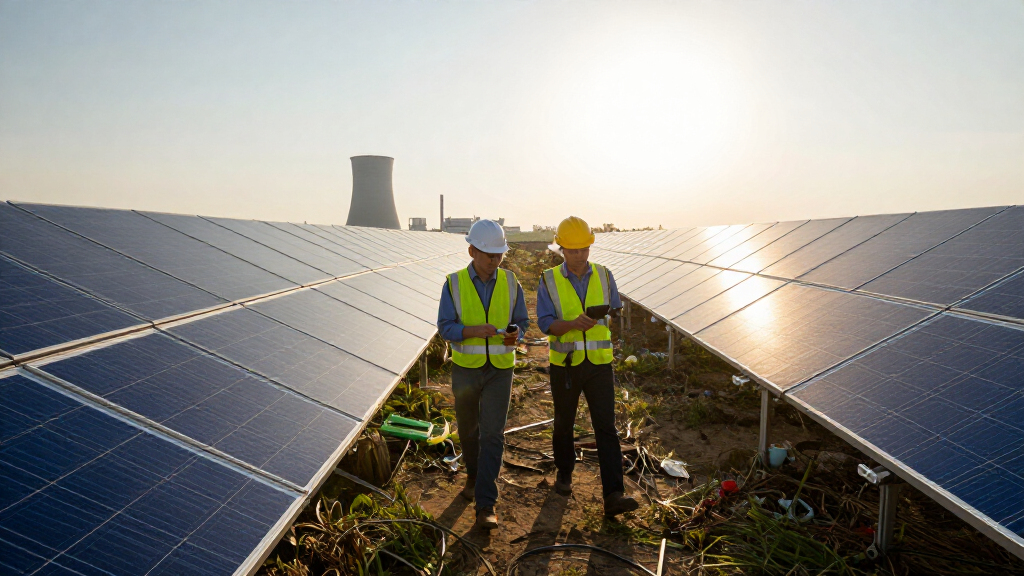
Ember data cited by the BBC shows solar electricity generation narrowly surpassed nuclear in 2025, and is expected to exceed it by a wider margin in 2026. The shift reflects rapid solar growth and low panel costs, but future expansion depends increasingly on batteries, electricity grids and managing demand.
Solar power generated slightly more electricity than nuclear worldwide in 2025, according to Ember data cited in a BBC report, and is expected to move further ahead in 2026. The change marks a shift between two major sources of low-carbon electricity, as detailed in solar’s global rise past nuclear, though the 2026 figure is a forecast rather than a final annual total.
The BBC report, published on Oct. 23, 2026, says solar supplied about 1% of global power a decade ago and is expected to reach about 10% in 2026. It describes solar generation as having narrowly passed nuclear in 2025. The report does not provide the underlying generation totals or a precise size for the gap, so the comparison should be read as an estimate based on Ember data rather than a detailed accounting presented in the article.
Solar has expanded rapidly as panel prices have fallen. Dave Jones, co-founder of energy think tank Ember, said the price decline in 2023 and 2024 helped usher in an era of what he called “offensively cheap” solar. The BBC report also says solar met three-quarters of global electricity-demand growth in 2025, citing Ember. That figure describes the share of demand growth met by solar during that year, not solar’s share of total electricity generation.
Deployment is not limited to China, which remains the largest solar-power producer, according to the report. It points to rooftop installations in Australia, where more than four million homes have solar, and rapid adoption in Pakistan. Jan Rosenow, an energy and climate policy professor at the University of Oxford, said solar went from Pakistan’s fifth-largest electricity source in 2023 to its largest in 2025. These country examples illustrate growth but do not, by themselves, establish a uniform global trend.
Solar’s Lead Reshapes Power Growth
The comparison matters because it signals how quickly the electricity mix is changing: a technology that supplied a small fraction of global power a decade ago is now generating at a level comparable to a long-established source. Solar’s momentum also affects where new electricity capacity is being built. The BBC report says solar was the largest source of new electricity globally and met most of the increase in demand in 2025, a trend that could influence investment and energy planning.
Yet generation totals are not the same as reliability or usefulness at every hour. Solar output varies with daylight and weather, while nuclear plants can generate electricity at different times of day. The BBC report notes that batteries can shift midday solar power into evening use, but longer periods of cloudy weather and seasonal changes remain harder to manage. A higher annual total does not mean solar has replaced the need for other power sources or system support.
The development is also relevant to energy security. In countries where households and businesses can install panels directly, solar can add capacity without waiting for large utility projects. The report describes uptake in Pakistan and other countries as partly driven by unreliable fossil-fuel supplies and household investment. That can diversify supply, but outcomes depend on local grids, financing, rules and storage availability.
Popular right now

Vitamix Propel Series 750 Professional-Grade Blender, 4 Programs, Black

Apple AirPods Pro 3 Wireless Earbuds with Active Noise Cancellation

Samsung 42-Inch Class OLED S90F 4K Smart TV (2025)
As an affiliate, we earn on qualifying purchases.
How Solar Reached Nuclear Scale
The comparison follows a decade of rapid growth in solar generation. The BBC report says solar provided roughly 1% of global power ten years ago; it expects the share to reach about 10% in 2026. Nuclear has been a major electricity source since the late 1970s, making the reported crossover a notable change in the relative scale of the two technologies.
The report attributes solar’s growth to several connected factors: falling panel costs, installations across a widening range of countries, and batteries that can store power for later use. China remains the largest producer, while cheaper exports from China have helped solar spread internationally, according to the report. It also cites rooftop systems and household purchases as important in markets where consumers can act independently of government or utility projects.
Policy and technology shape the outlook. Alicia Zhao, an expert on U.S. emissions pathways at the University of Maryland, said tariffs and other federal policies could raise costs and slow U.S. expansion relative to what would otherwise occur. She also said solar remains among the cheapest sources of new power in the United States and is being built across political lines. The BBC report further points to agrivoltaics, which combines solar panels with farming, as one approach to address land-use concerns.
““[Solar] generating more electricity than all the world’s nuclear power plants is a pretty insane stat, for sure.””
— Dave Jones, co-founder of Ember
The Gap and Grid Limits
The reported crossover is described as narrow in 2025, but the BBC report does not give exact solar and nuclear generation totals, the margin between them, or the methodology used for the comparison. Its statement that solar will “almost certainly” exceed nuclear in 2026 is a projection, not a confirmed full-year result. Final figures could differ as data are collected and revised.
It is also unclear how quickly storage and grid upgrades will keep pace with additional solar capacity. Batteries can help move electricity from sunny hours into the evening, but the report says longer-duration storage across cloudy spells and seasons remains a challenge. The scale and timing of those constraints will vary by country and are not quantified in the source material.
Policy is another uncertain factor. Zhao said tariffs and federal policies could raise costs and slow U.S. growth, but the report does not estimate the size of that effect. Nor does it establish how much of the expected global rise will come from rooftop systems, utility-scale installations, or particular national markets.
Grid Capacity Will Shape Growth
The next measure will be the completed 2026 generation data, which can show whether solar widened its lead over nuclear and by how much. Until those totals are available, the forecast should not be treated as a final result.
Power-system investment will help determine whether new solar output can be delivered when and where it is needed. The issues identified in the report include expanding grids, deploying batteries and other longer-duration storage, and adding flexibility as electricity demand grows. Data centres and wider electrification are contributing to rising U.S. power demand, Zhao said, while the report describes energy security as a growing priority.
Developments to watch include battery costs and deployment, national policy changes, and projects that combine solar with agriculture. The source material does not give a timetable for these changes or a single forecast for how they will affect the global generation mix. The immediate question is whether power systems can absorb the capacity being built while maintaining dependable supply.
Key Questions
Has solar already overtaken nuclear worldwide?
Ember data cited by the BBC puts solar generation narrowly ahead of nuclear in 2025. The article does not provide exact totals or the margin, and the figures may be subject to revision.
How much of global power is solar expected to provide in 2026?
The BBC report says solar is expected to provide about 10% of global power in 2026, compared with about 1% a decade earlier. The 2026 figure is a forecast, not a finalized annual measurement.
Does solar producing more electricity mean nuclear is no longer needed?
No. Annual generation comparisons do not show whether a source can supply electricity at every hour. Solar varies with sunlight, and the report says grids, batteries and longer-duration storage remain important to managing that variability.
What is driving solar’s rapid growth?
The BBC report points to falling panel prices, adoption across more countries, household installations and improved battery economics. It identifies China as the largest producer and cites growing rooftop solar in Australia and rapid uptake in Pakistan.
Source: hn