
Drones and AI are transforming wildlife protection by providing faster, more accurate monitoring with minimal disturbance to animals. They help track species, detect poaching, and assess habitats using high-resolution imagery and thermal sensors. Autonomous flights and AI analysis improve efficiency and precision, while reducing costs and environmental impact. These high-tech tools also assist in ecological restoration and anti-poaching efforts worldwide. If you keep exploring, you’ll discover how these innovations continue shaping conservation efforts globally.
Key Takeaways
- Drones with advanced cameras enable non-invasive, real-time wildlife monitoring and habitat mapping, improving conservation accuracy.
- AI analyzes drone data for species identification, poaching detection, and habitat classification, enhancing protection efforts.
- Autonomous drones facilitate large-scale reforestation and habitat restoration, accelerating ecological recovery.
- Thermal and multispectral sensors help detect illegal activities and wildfires, enabling rapid response and reducing environmental damage.
- Global collaborations and technological advancements are expanding drone use, making wildlife protection more effective and eco-friendly.

Autel Robotics EVO II Dual 640T V3, 640×512 Thermal Imaging Drone, Remote ID Supported, 0.8'' CMOS&50MP 8K RYYB Sensor,10+ Temp Measurement, D-RI Ranges, Thermal Analysis Tool, for Search&Rescue/Power Inspection/Public Safety/Hunting
🏆【AUTEL ROBOTICS USA AUTHORIZED】We are the longest and largest distributors of Autel Robotics. Over the years, we have…
As an affiliate, we earn on qualifying purchases.
As an affiliate, we earn on qualifying purchases.
Revolutionizing Wildlife Monitoring With Drone Technology
Revolutionizing wildlife monitoring with drone technology has transformed conservation efforts by providing faster, more accurate data with minimal disturbance to animals. You can now conduct near real-time species counts, behavior observations, and habitat mapping with ease. Drones equipped with high-resolution RGB and thermal cameras help you spot cryptic or elusive species during surveys, capturing detailed images that were previously difficult or impossible to obtain. Unlike satellite imagery, drones offer higher resolution and more frequent data collection, enabling precise assessments of population changes and ecosystem health. You benefit from less invasive monitoring, reducing stress on wildlife while gathering critical information. This technology empowers you to make timely decisions, optimize conservation strategies, and better protect endangered species and fragile habitats.

Artificial Intelligence and Conservation (Artificial Intelligence for Social Good)
As an affiliate, we earn on qualifying purchases.
As an affiliate, we earn on qualifying purchases.
AI-Driven Data Analysis Enhances Conservation Strategies
Building on the advancements in drone technology for wildlife monitoring, integrating AI-driven data analysis takes conservation efforts to the next level. AI quickly processes vast amounts of drone imagery, identifying species, tracking migration, and detecting behaviors with high accuracy. This enables you to make data-driven decisions faster and more effectively. AI algorithms classify habitats, monitor population trends, and flag suspicious activities, optimizing resource allocation. To illustrate, consider this table:
| Feature | Benefit | Impact |
|---|---|---|
| Species Identification | Accurate and rapid detection | Better population estimates |
| Behavior Monitoring | Detects elusive activities | Informs protective measures |
| Pattern Recognition | Spotting poaching signs | Enhances anti-poaching efforts |
This integration empowers conservationists, giving you sharper insights and more targeted strategies. Additionally, cybersecurity measures are essential to protect sensitive wildlife data from unauthorized access and tampering, ensuring the integrity of conservation efforts. Implementing advanced encryption techniques further safeguards data privacy and maintains public trust in conservation initiatives. Incorporating machine learning can also improve the accuracy of data analysis over time, adapting to new patterns and threats. Moreover, understanding the importance of data integrity helps ensure that conservation decisions are based on reliable and accurate information. Establishing robust data management systems is also crucial for maintaining data quality and consistency across projects.

Radiolink M435 3KG Heavy Lift Drone with 120km/h Flight Speed, Support Routes Planning And Autopilot, Autonomous Takeoff or Landing, 4KM Long Range Ready to Fly
6.6 LBS/3KG Payload: The power configuration can easily be equipped with 3KG/6.6 Pounds of packages such as food,…
As an affiliate, we earn on qualifying purchases.
As an affiliate, we earn on qualifying purchases.
Drones in Ecological Restoration and Reforestation Efforts

Drones are transforming ecological restoration and reforestation by enabling rapid, large-scale planting and habitat monitoring. You can deploy drones to plant thousands of trees daily, far surpassing manual efforts and making big projects feasible. They also provide high-resolution vegetation maps before and after disturbances, helping you assess habitat health and track progress over time. Drones can access difficult terrains quickly, reducing the need for heavy machinery and minimizing environmental disruption. With their precision, you can target reforestation efforts exactly where they’re needed most, improving survival rates. Additionally, drones support ongoing monitoring of restored areas, ensuring that reforestation efforts succeed and ecosystems recover effectively. This technological edge accelerates climate mitigation and habitat restoration, making your conservation strategies more efficient and impactful. Environmental data collection with drones enhances the accuracy of ecological assessments and informs better decision-making.
high-resolution drone for habitat mapping
As an affiliate, we earn on qualifying purchases.
As an affiliate, we earn on qualifying purchases.
Cutting-Edge Anti-Poaching Surveillance Tactics
Advanced anti-poaching surveillance tactics leverage drone technology to monitor vast and remote conservation areas continuously. You can deploy drones equipped with thermal and multispectral sensors to detect human activity at night or through dense foliage, drastically reducing poaching success. AI-powered pattern recognition analyzes drone footage in real-time, automatically flagging suspicious behaviors and alerting rangers instantly. These drones can cover large territories quickly, providing high-resolution imagery that helps identify illegal camps or vehicles. Additionally, autonomous flight planning optimizes patrol routes based on recent activity data, increasing efficiency. AI safety measures are crucial to ensure these systems operate reliably and ethically, minimizing false alarms and safeguarding wildlife.
Global Growth and Adoption of Drone Conservation Solutions
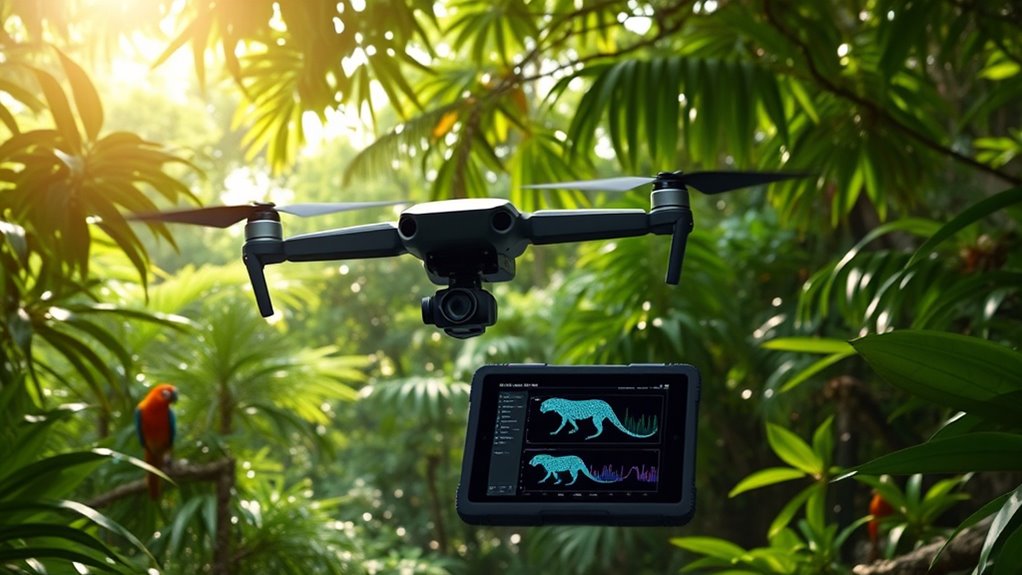
As investments in drone technology for conservation continue to rise, more countries are adopting these solutions to protect their ecosystems. Global trends show increased collaboration between governments and organizations, fueling widespread deployment. This growth reflects a shared commitment to leveraging high-tech tools for more effective and sustainable wildlife management. Additionally, the integration of cutting-edge technologies into conservation efforts is enhancing the precision and impact of these initiatives. The use of data analysis is further improving decision-making and resource allocation in conservation projects. Moreover, the development of innovative monitoring methods is enabling more detailed and real-time tracking of wildlife populations and habitats. Emphasizing work-life balance can also improve the effectiveness of conservation teams by ensuring staff well-being and sustained engagement.
Rising Market Investment
Global investment in drone conservation solutions is experiencing rapid growth as awareness of environmental challenges increases. This surge reflects confidence in drone technology’s ability to transform wildlife protection and ecosystem management. Funding from governments, NGOs, and private investors fuels innovation, driving advancements in AI integration, autonomous flight, and sensor capabilities. As a result, more organizations adopt these solutions to improve efficiency and data accuracy. Key factors include:
- Increasing government grants and international aid supporting drone deployment
- Rising interest from private sectors investing in eco-technology startups
- Expanding use of AI-powered autonomous drones for real-time monitoring and sensor capabilities
- Cost reductions making drone solutions accessible for smaller conservation groups
- Relationships – Personality Test insights help tailor communication strategies to improve collaboration among conservation teams. Additionally, ongoing research into environmental impact ensures that these technological tools align with sustainable conservation goals. Further, the development of sustainable practices in drone manufacturing and operation emphasizes the sector’s commitment to ecological responsibility. Incorporating data-driven decision-making enhances the effectiveness of conservation efforts by enabling precise targeting of resources and interventions.
Global Adoption Trends
The rapid growth in investment and technological innovation has spurred widespread adoption of drone conservation solutions across continents. Countries in Asia Pacific and Latin America lead the charge, driven by biodiversity challenges and government support. Collaboration between governments and global organizations accelerates deployment, making drones more accessible worldwide. Technological advances, especially AI-powered autonomous drones, improve data accuracy and operational efficiency. As awareness of environmental issues grows, more conservation groups recognize drones’ benefits.
| Region | Adoption Drivers |
|---|---|
| Asia Pacific | Biodiversity, government backing |
| Latin America | Conservation needs, international support |
| Africa | Anti-poaching efforts, remote area access |
| Europe | Sustainability, regulatory frameworks |
Environmental Benefits of Using Drones Over Traditional Methods
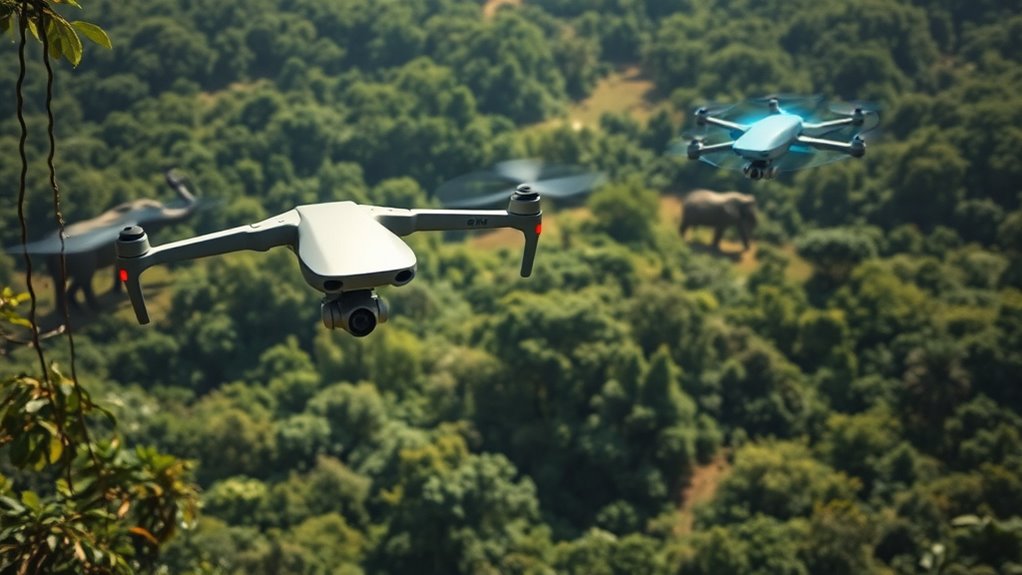
Using drones for wildlife monitoring offers significant environmental advantages over traditional methods. They drastically cut carbon emissions, reducing the need for fuel-intensive vehicles like helicopters by up to 87%. Drones also enable faster wildfire detection, giving conservationists essential minutes to respond. Their cost-effectiveness is notable—they cost around $7,000, compared to expensive helicopter rentals. Additionally, drones disturb wildlife less, minimizing stress and behavioral disruption during surveys. They can access hard-to-reach areas safely and repeatedly, ensuring consistent data collection. The enhanced maneuverability allows for detailed habitat assessments without damaging ecosystems. Furthermore, drones’ ability to operate with minimal human presence means less habitat disturbance overall. They are also capable of high-resolution imaging, which provides detailed insights into ecosystems and wildlife populations without intrusive methods. These benefits make drone technology a sustainable, efficient, and less invasive alternative to traditional wildlife monitoring methods. Advanced Techniques continue to improve drone capabilities, further enhancing their role in conservation efforts. Moreover, the use of drones can facilitate regional conservation strategies, aligning efforts across different areas for more effective wildlife protection. Additionally, ongoing innovations in battery technology are extending drone flight times, allowing for longer observation periods and more comprehensive surveys. The integration of artificial intelligence with drone systems is also enhancing data analysis and decision-making processes in conservation.
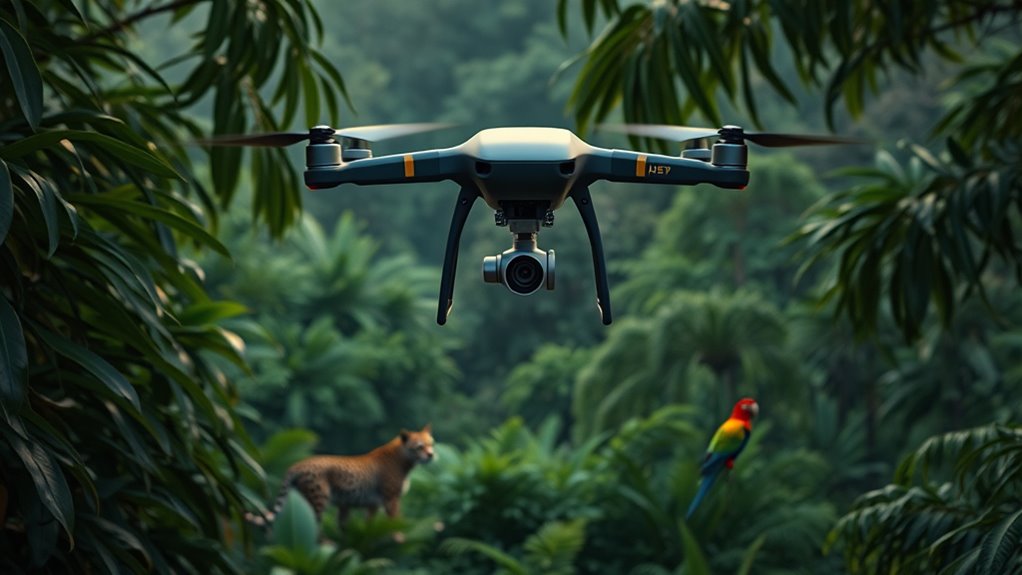
Ever wonder how researchers uncover the secret lives of elusive wildlife? High-resolution imaging plays a vital role. With advanced RGB and thermal cameras mounted on drones, you gain detailed views of animals in their natural habitats, even at night or through dense foliage. This technology reveals behaviors that are often hidden from traditional observation methods, like hunting patterns, nesting routines, or social interactions. The clarity of these images allows you to identify individual animals and monitor their activities over time. By capturing fine details, high-res imaging helps pinpoint rare or cryptic species, track migration, and assess habitat use. This precise data facilitates insights into wildlife behavior, informing smarter conservation strategies and ensuring better protection for vulnerable populations. Additionally, the integration of thermal imaging enhances the ability to detect animals in complete darkness or obscured environments, further expanding our understanding of their nocturnal and hidden behaviors.
Autonomous Drones Optimize Field Operations

Autonomous drones are revolutionizing field operations by streamlining data collection and reducing the need for manual intervention. They efficiently cover large areas, optimize flight paths, and adapt to changing conditions in real time. With AI-driven algorithms, these drones can plan routes that maximize coverage while minimizing energy consumption. They automatically adjust altitude, speed, and sensor focus, ensuring high-quality data with fewer flights. This autonomous operation reduces labor costs and human error, allowing teams to focus on analysis rather than logistics. Additionally, understanding asset division laws can help in planning the deployment of drone technology in collaborative environments. Incorporating GMC tuning techniques can further enhance drone performance and reliability during extended missions.
Collaborative Efforts Bridging Technology and Conservation
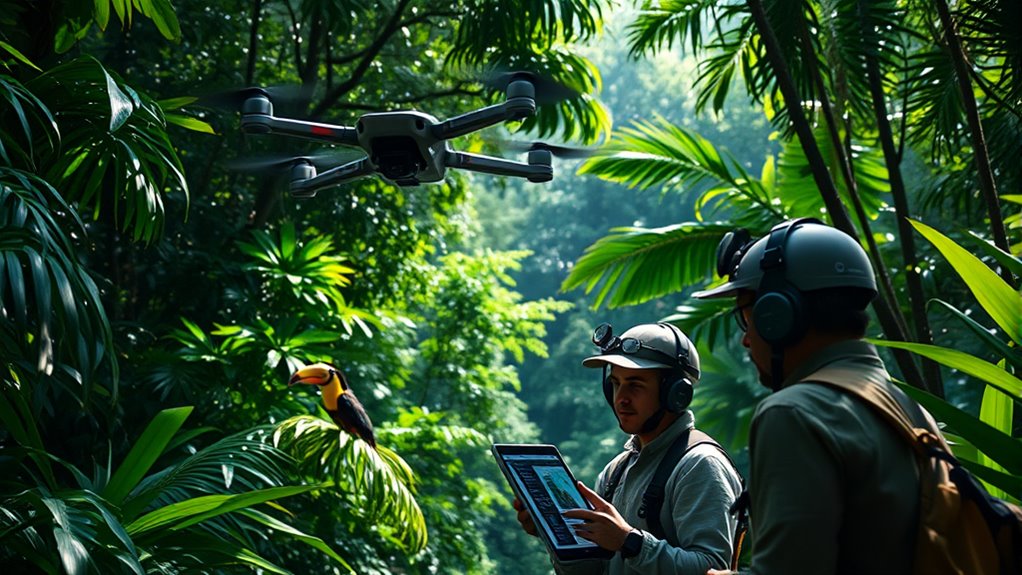
Collaboration between technology developers and conservation organizations is essential for maximizing the impact of drone-enabled wildlife protection. When these groups work together, they combine technical innovation with on-the-ground expertise, creating more effective solutions. Developers gain valuable insights into conservation needs, tailoring drone systems with features like thermal imaging and AI for specific challenges. Conservation groups, in turn, access cutting-edge tools that improve monitoring, anti-poaching efforts, and habitat restoration. This partnership fosters knowledge sharing, accelerates technology adoption, and ensures solutions are practical and sustainable. By bridging the gap between innovation and conservation, these collaborations strengthen efforts to protect endangered species and ecosystems. Ultimately, working hand-in-hand amplifies the benefits of drone and AI technologies, making wildlife protection more precise, efficient, and adaptable.
Future Trends in Drone and AI Wildlife Protection

Advancements in drone and AI technology promise to transform wildlife protection in the coming years. You’ll see more autonomous drones with enhanced sensors, capable of covering vast areas without human input. AI algorithms will become increasingly sophisticated, enabling real-time species identification, behavior analysis, and threat detection. Expect smarter flight planning that adapts dynamically to changing conditions, maximizing efficiency. Additionally, integration of machine learning will improve data accuracy and predictive modeling for conservation strategies.
Future wildlife protection will leverage autonomous drones, advanced AI, and smarter strategies for more effective conservation efforts.
- Increased use of AI-powered autonomous drones for continuous, real-time monitoring
- Development of lightweight, affordable drone hardware for broader accessibility
- Enhanced multispectral sensors for early detection of ecological changes
- Greater collaboration between tech firms and conservation groups to innovate solutions
Frequently Asked Questions
How Do Drones Ensure Minimal Disturbance to Sensitive Wildlife During Surveys?
You can guarantee minimal disturbance to sensitive wildlife during surveys by operating drones with precision and care. Use advanced sensors like thermal and multispectral cameras to detect animals from a safe distance, avoiding direct contact. Keep drone altitude and speed appropriate to reduce noise and avoid startling animals. Regularly monitor their behavior, adjusting your approach as needed to maintain a non-intrusive presence and protect their natural activities.
What Are the Privacy Considerations for Drone Use in Conservation Areas?
You should consider privacy concerns when using drones in conservation areas. Drones can unintentionally capture images or data of nearby communities or individuals, raising issues about consent and surveillance. To address this, establish clear guidelines, limit data collection to wildlife and habitat, and inform local stakeholders about drone operations. Regularly review policies to guarantee compliance with privacy laws, and use technology that minimizes unnecessary data collection or intrusion.
How Does AI Accurately Identify Individual Animals in Dense Habitats?
You can rely on AI to accurately identify individual animals in dense habitats by analyzing high-resolution images captured by drones. AI uses advanced algorithms to detect unique markings, patterns, and features, even through thick vegetation. It compares these details against existing databases, ensuring over 95% accuracy in simple cases. Continuous learning improves identification over time, helping you track animals precisely without disturbing their natural behavior.
Can Drone Technology Detect and Monitor Invasive Species Effectively?
You’ll be amazed to learn that drones can monitor invasive species more effectively than traditional methods. In 2025, over 2,400 endangered species were tracked globally, thanks to drone technology. Equipped with high-resolution and thermal cameras, drones detect invasive plants and animals in dense habitats with precision. AI analysis helps identify and map these species swiftly, enabling rapid response to control spreads and protect native ecosystems more efficiently and less invasively.
What Are the Challenges of Deploying Drones in Remote or Extreme Environments?
You’ll face challenges deploying drones in remote or extreme environments, like harsh weather, rugged terrain, and limited communication signals. These conditions can hinder drone stability, battery life, and data transmission. You might also struggle with navigation and maintaining safety protocols. Additionally, logistical issues, such as transporting equipment and ensuring operator training, can complicate missions. Overcoming these hurdles requires specialized drone designs, robust planning, and adaptable strategies.
Conclusion
So, next time you think conservation’s just about hugging trees, remember—drones and AI are doing the heavy lifting. While you’re busy ignoring your phone, these high-tech heroes are quietly saving wildlife from poachers and destruction. Who knew that killer robots and flying cameras could be the planet’s best friends? Stay tuned—because if this keeps up, even animals might start requesting their own app updates. Mother Nature’s finally getting her high-tech glow-up!