
Access to clean water is becoming a major global crisis, with over 2.2 billion people lacking safely managed supplies. Scarcity worsens due to climate change, population growth, and infrastructure gaps, leading to conflicts over resources. Vulnerable communities, especially in Africa and the Middle East, face health risks and social instability. If you want to understand how nations are managing these challenges and what solutions are on the horizon, there’s more to discover.

Get school and study supplies delivered free — and shop member deals
- Fast, free delivery on millions of items
- Access to Prime Big Deal Days deals on October 6–7
- Prime Video, Amazon Music and more included
Key Takeaways
- Increasing water scarcity due to climate change, population growth, and infrastructure gaps heightens the risk of conflicts over shared resources.
- Regions like the Middle East and sub-Saharan Africa face severe shortages, fueling tensions and potential disputes.
- Unequal access and socioeconomic disparities exacerbate vulnerabilities, potentially leading to localized or international water conflicts.
- International cooperation and equitable management are crucial to prevent water disputes from escalating into wars.
- Technological innovations and joint investments can mitigate scarcity and reduce the likelihood of water-driven conflicts.
As an affiliate, we earn on qualifying purchases.
The Scope of Global Water Scarcity
How widespread is the issue of water scarcity? It affects over 2.2 billion people who lack access to safely managed drinking water. Around 703 million still struggle to find clean water daily. Women and girls spend countless hours walking miles to fetch water, often from unsafe sources. Regions like India, Ethiopia, Yemen, and Mexico face severe shortages, with infrastructure damage worsening the crisis. Urban areas are also vulnerable; by 2050, water scarcity could impact over 2.4 billion city dwellers. Globally, water demand is expected to grow dramatically—up to 55% by 2050—placing immense pressure on existing supplies. Vulnerability is highest in Africa and parts of Asia, where droughts, population growth, and inefficient use exacerbate shortages and threaten health, livelihoods, and stability. Efficient water management is essential to address these mounting challenges and prevent further crises. Furthermore, implementing sustainable practices can help conserve resources for future generations. Engaging communities and fostering public awareness are also crucial for promoting responsible water use and ensuring equitable distribution. Effective water conservation strategies are vital for managing this increasing demand and ensuring equitable access worldwide. Additionally, promoting eco-friendly tourism and sustainable development can reduce the strain on water resources in popular destinations.
Key Factors Driving Freshwater Loss
Several key factors contribute to the ongoing loss of freshwater resources worldwide. Droughts reduce surface water and groundwater recharge, while deforestation and wetland degradation diminish natural water storage. Inefficient irrigation wastes significant amounts of water in agriculture, the largest user sector. Weak coordination among sectors causes mismanagement and overextraction. To illustrate, consider the table below:
| Factor | Impact | Example |
|---|---|---|
| Drought | Surface water depletion | California’s recurrent droughts |
| Deforestation | Reduced water retention | Amazon rainforest deforestation |
| Irrigation waste | Excessive water use in farming | Drip vs. flood irrigation |
Additionally, the loss of natural water storage capabilities due to environmental changes further exacerbates freshwater scarcity. Restoring wetlands and natural landscapes plays a crucial role in water retention and combating these issues. Recognizing the importance of ecosystem services can guide effective conservation strategies. Implementing sustainable land management practices enhances natural water infrastructure and resilience. Furthermore, promoting community awareness and water conservation efforts is vital to reducing unnecessary water use and ensuring long-term sustainability. Addressing these factors is essential to curbing freshwater loss and ensuring sustainable water availability.
Regional Disparities in Water Access
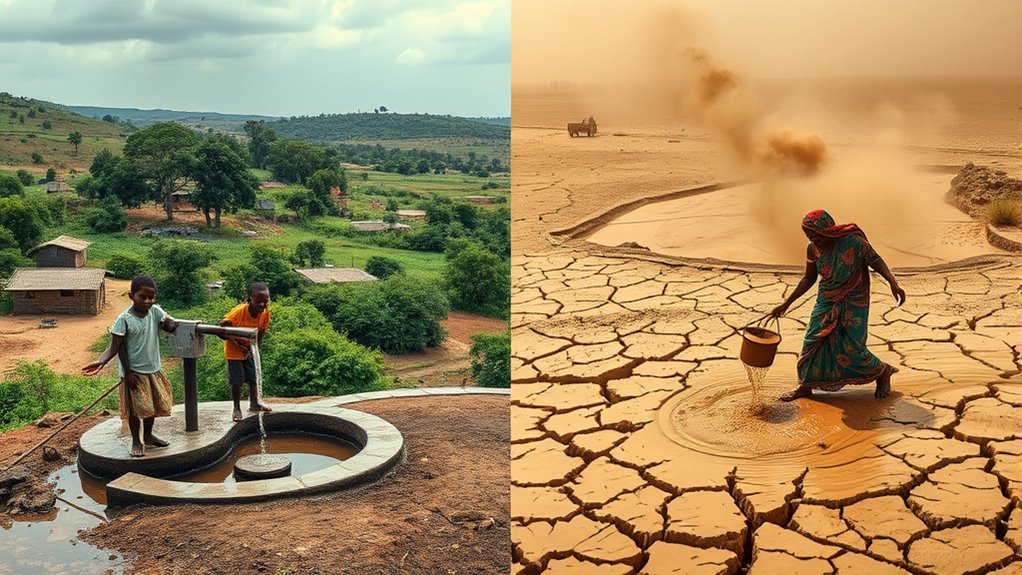
You see that water access isn’t equal everywhere; some regions suffer severe shortages while others have surplus. These disparities are driven by natural scarcity, infrastructure gaps, and economic inequalities. Addressing these gaps requires understanding regional differences and tackling socioeconomic barriers. Additionally, innovations in tuning technologies can serve as a metaphor for how targeted upgrades and solutions can optimize resource distribution and efficiency. Embracing equity in resource allocation is essential for creating sustainable and fair water systems worldwide. Recognizing regional disparities can help prioritize efforts and allocate resources more effectively.
Water Access Gaps
Why do water access disparities persist across regions? Several factors contribute, including infrastructure gaps, economic constraints, and political instability. Wealthier countries often have better systems, while poorer regions struggle to provide clean water. Geographic challenges, like remote locations or arid climates, amplify these gaps. Additionally, water management practices can significantly influence access levels and efficiency. Effective resource allocation is crucial for optimizing water distribution and ensuring sustainability. Better understanding of regional differences can help tailor solutions to specific challenges faced by each area. Here’s a quick overview:
| Region | Key Issue | Impact |
|---|---|---|
| Sub-Saharan Africa | Limited infrastructure | High reliance on unsafe sources |
| South Asia | Rapid population growth | Overburdened water systems |
| Middle East | Arid climate, conflict | Severe water shortages |
| Latin America | Urban-rural divide | Unequal access |
| Southeast Asia | Industrial pollution | Contaminated water sources |
These disparities highlight the need for targeted investments and policies to guarantee equitable water access worldwide. Improving water infrastructure can significantly reduce disparities and provide cleaner, more reliable water sources. Understanding user privacy and data protection practices is also crucial when implementing technological solutions to address these issues.
Regional Water Scarcity
Regional disparities in water access reveal stark inequalities driven by geographic, economic, and political factors. You’ll see that some areas, like parts of Sub-Saharan Africa and the Middle East, face severe shortages due to limited natural water sources and inadequate infrastructure. Conversely, wealthier regions often have better access because of investments in water management and technology. Political stability also plays a role; conflict zones struggle with disrupted supply systems, making water scarce for communities. Climate variations further exacerbate these disparities, with drought-prone regions experiencing chronic shortages. Urban areas may have more infrastructure, but rapid growth can outpace supply, leading to localized scarcity. Overall, these regional differences highlight the urgent need for targeted strategies that address specific geographic and political challenges to ensure equitable water access worldwide.
Socioeconomic Inequities
Socioeconomic factors heavily influence who has access to safe water and who does not, often deepening existing inequalities across different communities. Wealthier areas usually enjoy reliable water supplies, while impoverished regions struggle with shortages and contaminated sources. Marginalized groups, including women and rural populations, bear the brunt of these disparities, facing longer walks for water and higher health risks. This divide worsens health, education, and economic outcomes, perpetuating cycles of poverty. Additionally, regional disparities in water access are often exacerbated by inadequate infrastructure and policy neglect. Proper water management practices and investment in infrastructure can help address some of these disparities by promoting sustainable water use and improving living conditions. Addressing these issues requires a comprehensive approach that considers both socioeconomic and geographic factors to ensure equitable water access for all communities.
The Impact of Water Shortages on Health and Society
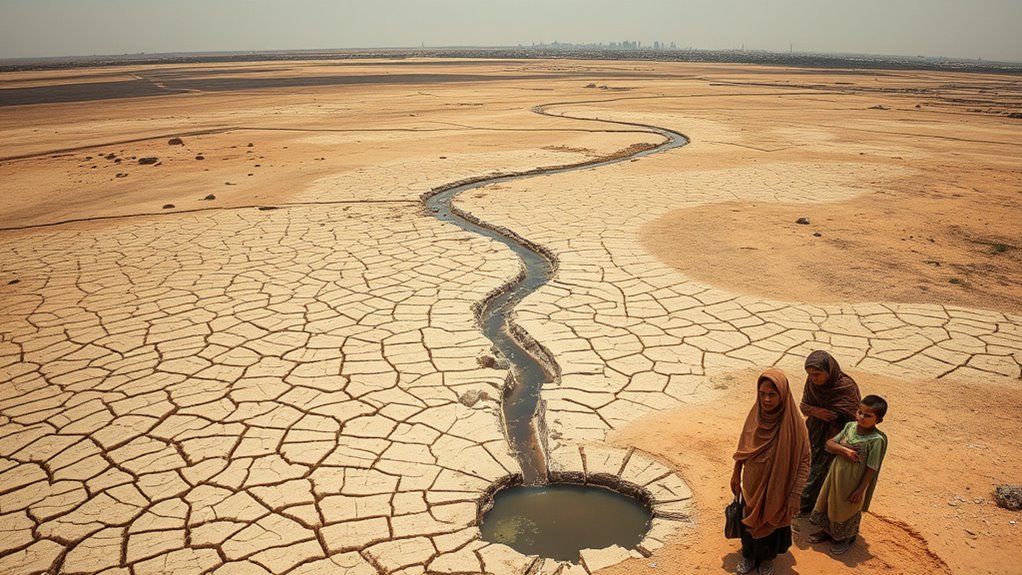
Water shortages increase the risk of disease transmission, threatening your health and that of your community. When access to safe sanitation and clean water is compromised, education and work productivity suffer, deepening societal inequalities. Women and marginalized groups often bear the heaviest burden, highlighting how water scarcity worsens social disparities. Additionally, climate change-driven seasonal influences can exacerbate water shortages, making resource management even more critical.
Disease Transmission Risks
When access to clean water becomes scarce, the risk of disease transmission skyrockets, posing a serious threat to public health and societal stability. Without safe water, you face increased exposure to waterborne illnesses like cholera, dysentery, and typhoid. Contaminated water sources enable pathogens to spread rapidly, especially in crowded or impoverished areas. You should be aware that:
- Poor sanitation and limited hygiene contribute to the proliferation of infectious diseases.
- Unsafe water sources become breeding grounds for bacteria, viruses, and parasites.
- Lack of sanitation infrastructure heightens the risk of fecal-oral transmission.
- Vulnerable groups, like children and the elderly, are disproportionately affected by waterborne illnesses.
- Creating tribute spaces or memory books can help communities remember and honor those affected by water-related health crises, fostering awareness and resilience. Additionally, understanding the symptoms of waterborne diseases can aid in early detection and treatment, reducing their impact.
This cycle worsens health, burdens healthcare systems, and deepens social inequalities in water-scarce regions.
Education and Productivity Losses
Limited access to clean water directly hampers education and reduces workforce productivity, especially in vulnerable communities. When children, particularly girls, spend hours fetching water, they miss school, limiting their learning opportunities. Poor sanitation caused by water shortages leads to increased illness, which keeps students home and hampers their development. In the workplace, water scarcity diminishes productivity as workers face dehydration, illness, or must take time off to find water or care for sick family members. Agricultural disruptions due to drought reduce food availability, causing malnutrition that weakens physical and cognitive abilities. These combined effects create a cycle of poverty, where limited education and health outcomes hinder economic growth. Addressing water shortages is essential for improving societal stability, educational attainment, and workforce efficiency worldwide.
Gender and Social Inequalities
Have you ever considered how water shortages deepen existing social and gender inequalities? When water is scarce, women and girls bear the brunt, spending hours fetching water instead of attending school or working. This reinforces gender gaps and limits opportunities. Water shortages also worsen health disparities, as marginalized groups lack access to clean sanitation, increasing disease risks. Here’s how water scarcity impacts social and gender inequality:
- Women and girls spend 250 million hours daily collecting water.
- Vulnerable communities face higher exposure to waterborne diseases.
- Education declines as girls miss school to fetch water.
- Economic productivity drops when health and work are affected.
Addressing water shortages requires inclusive policies that prioritize equitable access, empowering marginalized groups and closing gender gaps.
Future Water Demand and Supply Challenges
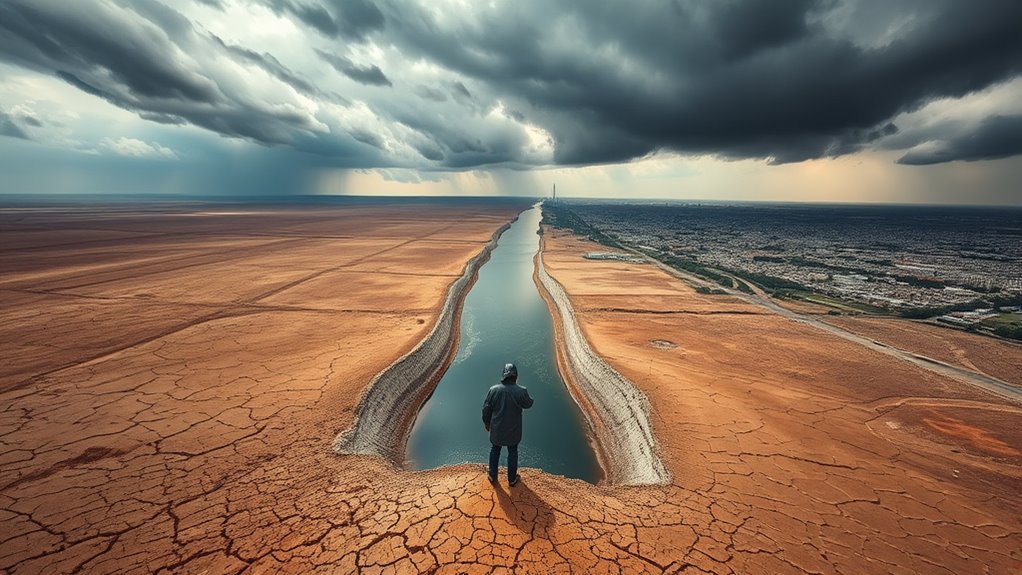
As global populations grow and economies expand, the demand for freshwater is expected to increase substantially, creating mounting pressure on existing water supplies. By 2050, global water demand could rise by 55%, with manufacturing use skyrocketing by 400%. Agricultural water consumption will climb nearly 19%, driven by population growth and food needs. Meanwhile, half of the world’s population may live in countries with rapidly falling water tables. Energy sector water use is projected to grow 15% by 2035, matching increased energy consumption. Many developing countries, including India, Pakistan, and parts of Africa, will face severe shortages, risking economic stability and health. To meet these challenges, strategies like improving efficiency, expanding recycling and desalination, and better water management are essential.
Vulnerable Populations and Exacerbated Inequalities
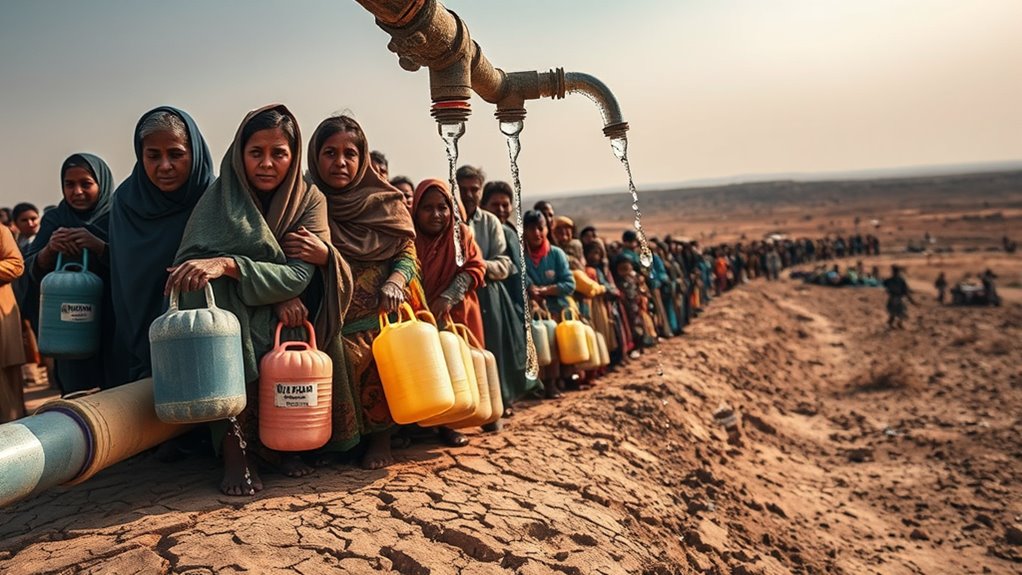
Vulnerable populations bear the brunt of water scarcity, experiencing disproportionate health, economic, and social impacts. You’ll find that marginalized groups face barriers to clean water access, worsening inequalities. Key issues include:
- Limited infrastructure, leaving rural and impoverished communities reliant on unsafe sources.
- Increased health risks, with higher rates of waterborne diseases and related child mortality.
- Economic hardships, as women and girls spend hours fetching water, missing school or work.
- Social disparities, where marginalized groups face exclusion and reduced opportunities for development.
These challenges deepen existing inequalities, making vulnerable populations more exposed to the consequences of water crises. Addressing these disparities requires targeted policies that prioritize equitable water access and infrastructure development for marginalized communities.
Strategies for Managing Water Resources
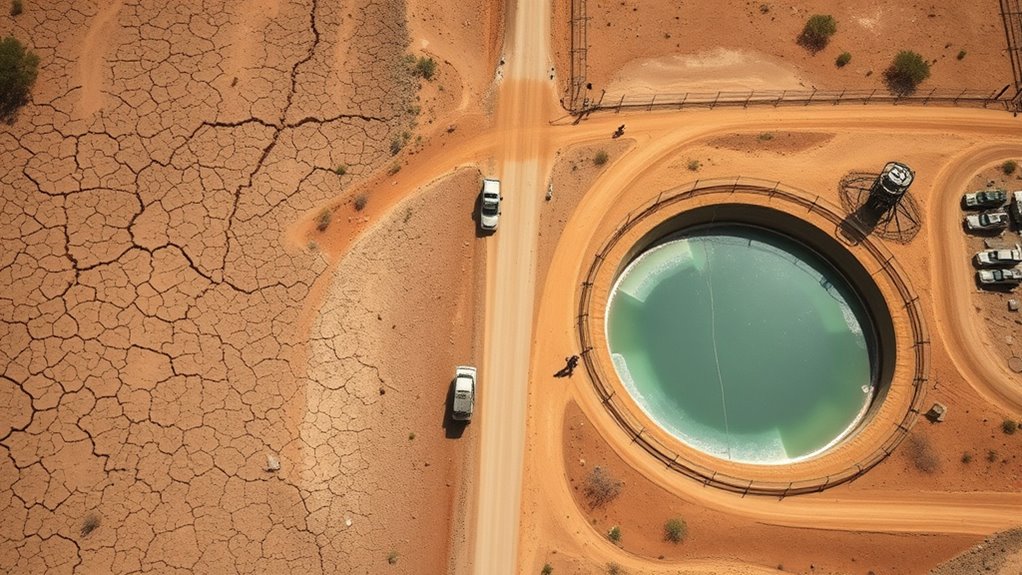
Effective management of water resources requires implementing a combination of demand reduction, innovative supply solutions, and equitable distribution policies. You can reduce demand by promoting water-saving techniques, such as efficient irrigation and low-flow fixtures. Expanding alternative water sources like recycling and desalination helps increase supply without overtaxing existing sources. Investing in infrastructure improvements, such as better storage and leak detection, minimizes water loss. Fair water allocation ensures that vulnerable populations receive access, preventing conflicts and inequalities. Strong coordination among sectors and stakeholders is essential to avoid waste and maximize efficiency. Additionally, adopting pricing policies that reflect water’s true value encourages conservation. By combining these strategies, you can better manage water resources, address shortages, and promote sustainable use in the face of growing demand and climate challenges.
The Role of International Cooperation and Policy

International cooperation plays a vital role in addressing the global water crisis, especially as water scarcity crosses borders and affects shared resources. You need coordinated policies to manage transboundary water systems effectively. International agreements can:
International cooperation is essential for managing shared water resources effectively and preventing conflicts.
- Facilitate fair water sharing among nations, preventing conflicts.
- Promote joint investments in infrastructure, like dams and pipelines.
- Support data sharing for better resource management.
- Enable disaster response and drought mitigation efforts across borders.
Technological Innovations in Water Management
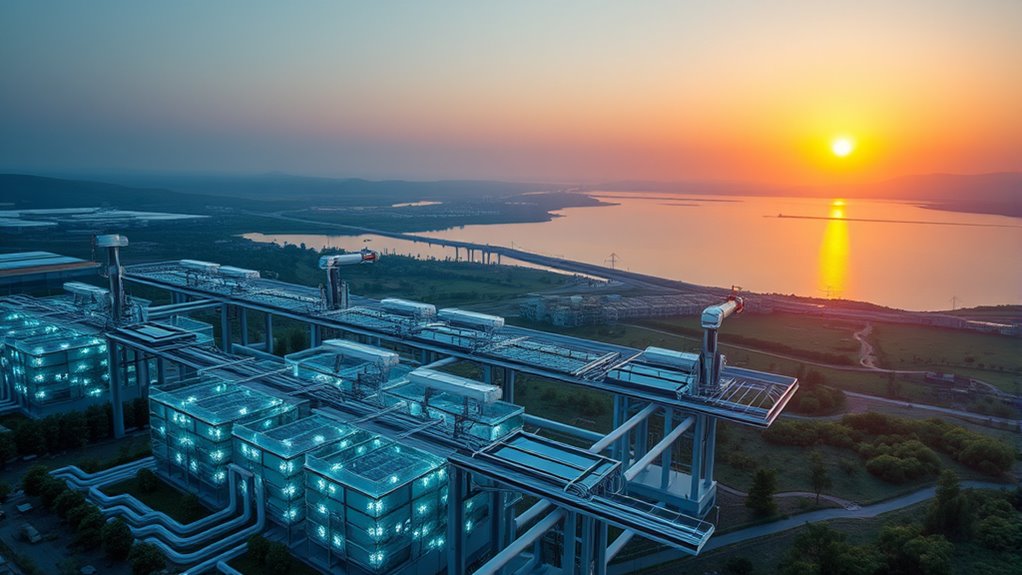
How can technological innovations transform water management and address the global crisis? Advanced tools like smart sensors and data analytics enable you to monitor water quality and flow in real-time, reducing waste and detecting leaks early. Desalination technologies, such as reverse osmosis, provide alternative freshwater sources in arid regions. Water recycling and treatment processes allow you to reuse wastewater safely, easing demand on natural supplies. IoT devices and remote sensing help optimize irrigation, ensuring efficient water use in agriculture. Cutting-edge storage solutions like underground reservoirs prevent evaporation losses. These innovations empower you to implement precise, efficient water management strategies, helping to close supply gaps, conserve resources, and build resilience against droughts and scarcity. Embracing technology is vital for securing water access globally.
Navigating the Path Toward Water Security
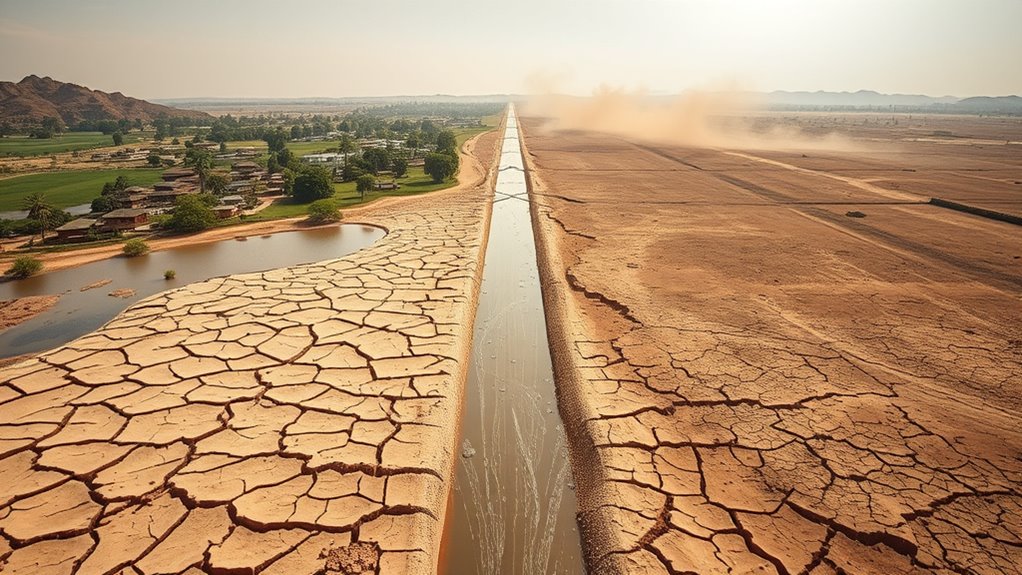
To achieve water security, you need to focus on promoting efficient water use across sectors and communities. Strengthening global cooperation is essential to manage shared resources and address regional disparities. By working together and adopting smarter practices, you can help build a more sustainable and resilient water future.
Promoting Efficient Water Use
Promoting efficient water use is essential for addressing the global water crisis, especially as demand continues to rise and supply becomes more strained. You can make a difference by adopting smarter practices that reduce waste and conserve resources. Here are four key strategies:
- Implementing water-saving technologies like low-flow fixtures and drip irrigation.
- Fixing leaks promptly to prevent unnecessary losses.
- Reusing greywater for landscaping or industrial purposes.
- Educating communities about water conservation habits.
Strengthening Global Cooperation
Global cooperation is crucial in addressing water scarcity because water systems often cross political boundaries, making isolated efforts insufficient. You need to foster international agreements that promote equitable sharing of transboundary water resources and coordinate policies across nations. Strengthening collaboration helps prevent conflicts over water, encourages data sharing, and supports joint infrastructure projects like desalination plants and water recycling initiatives. You should also advocate for global frameworks that prioritize vulnerable regions, ensuring fair access and sustainable management. Collaboration extends to addressing climate change impacts and managing shared ecosystems. By building trust and commitment among countries, you can create resilient strategies that adapt to growing demands and reduce risks of water conflicts. Effective global cooperation is essential for ensuring water security for all, now and in the future.
Frequently Asked Questions
How Can Individual Actions Help Reduce Global Water Scarcity?
You can help reduce global water scarcity by conserving water daily. Fix leaks, take shorter showers, and only run dishwashers and laundry machines when full. Use drought-tolerant plants in your yard and avoid wasting water on unnecessary activities. Spread awareness about water issues, support policies promoting water efficiency, and choose products from companies committed to sustainable water use. Small actions collectively make a big difference in conserving this crucial resource.
What Role Does Climate Change Play in Exacerbating Water Shortages?
They say “a chain is only as strong as its weakest link,” and climate change weakens our water supply chain. It intensifies droughts, disrupts rainfall patterns, and causes glaciers to melt, reducing freshwater sources. These changes lead to more severe shortages, especially in vulnerable regions. You can help by conserving water and supporting policies that address climate change, because every action counts in breaking this growing crisis.
Are There Successful Case Studies of Countries Overcoming Severe Water Crises?
Yes, some countries have successfully tackled severe water crises. For example, Israel implemented advanced water recycling, desalination, and efficient management strategies, transforming a water-scarce nation into a water-secure one. Similarly, Singapore invested heavily in water infrastructure, rainwater harvesting, and public awareness campaigns, ensuring reliable access. You can learn from these models by prioritizing innovative solutions, strong policy support, and community involvement to overcome water shortages effectively.
How Does Water Scarcity Impact Global Economic Stability?
Imagine your economy teetering on the brink—water scarcity can cause that. It disrupts industries, raises costs, and shrinks productivity, pushing nations into financial turmoil. You might see job losses, increased poverty, and strained healthcare systems. When water becomes scarce, the ripple effect threatens global markets, destabilizing economies. You must understand, managing water efficiently isn’t just about survival; it’s about securing your economic future.
What Are the Ethical Considerations in Allocating Limited Water Resources?
You need to prioritize fairness and equity when allocating limited water resources. It is vital to consider vulnerable populations, like women, children, and rural communities, who face disproportionate impacts. You should balance economic needs with environmental sustainability, avoiding favoritism or exploitation. Transparency and international cooperation are essential to guarantee everyone gets enough water for health, sanitation, and livelihoods, even amid scarcity. Ethical allocation promotes social justice and long-term stability.
Conclusion
If we don’t act now, water scarcity could become a storm that sinks our future. Think of water as a fragile thread holding our world together—once broken, it’s hard to mend. By embracing innovative solutions and fostering global cooperation, you can be part of the effort to turn the tide. The path to water security is challenging, but with collective action, we can guarantee a future where everyone has access to this essential resource.
Fall Picks
fall essentials
As an affiliate, we earn on qualifying purchases.