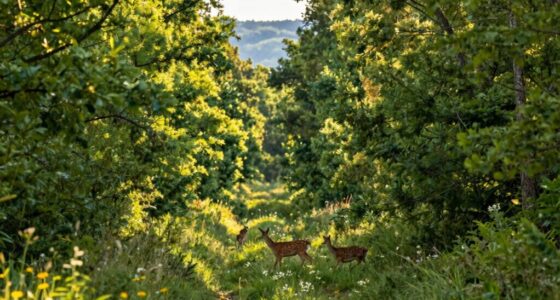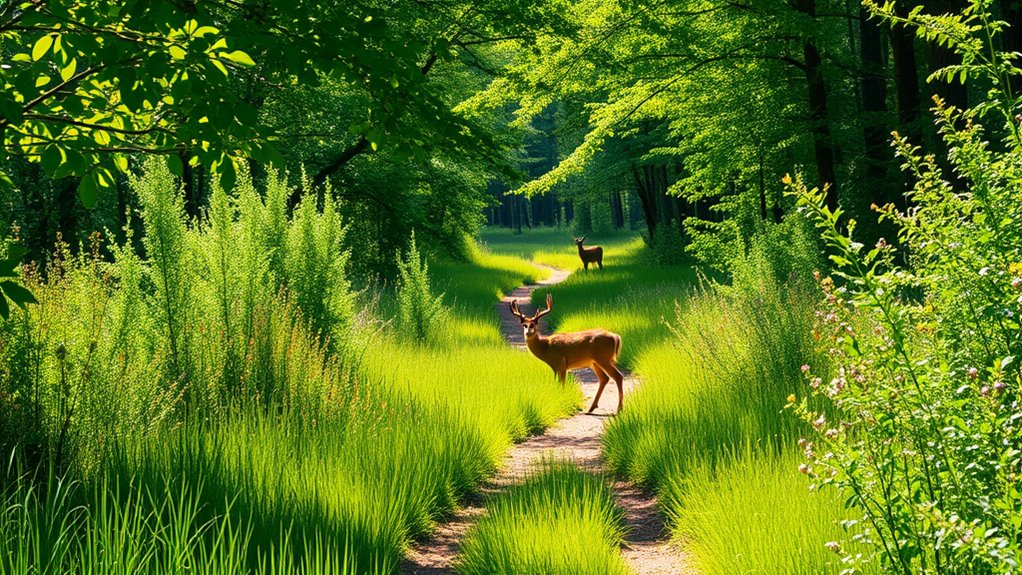

Inside a wildlife corridor, you see how connecting fragmented habitats allows animals to move safely, find resources, and access mates. These pathways promote gene flow and help populations avoid inbreeding, making them healthier and more adaptable. They also support natural behaviors like migration and breeding, which stabilizes species numbers and ecosystems. By understanding how corridors work, you’ll discover why protecting these crucial links is essential for saving many species from extinction.

Prime made for students and young adults
- Fast, free delivery for dorm and study essentials
- Prime Video and Amazon Music included
- Member-only deals
Key Takeaways
- Wildlife corridors reconnect fragmented habitats, allowing animals to move freely and access vital resources.
- They facilitate gene flow among isolated populations, increasing genetic diversity and reducing inbreeding risks.
- Corridors support natural behaviors like migration and breeding, promoting healthy, stable populations.
- They enhance ecosystem resilience by maintaining biodiversity and ecological interactions across landscapes.
- Properly designed corridors serve as safe pathways, minimizing human-wildlife conflicts and habitat destruction.

Have you ever wondered how animals travel safely between fragmented habitats? It’s a crucial question because, without safe pathways, many species struggle to survive in increasingly broken ecosystems. Wildlife corridors serve as vital links that connect isolated patches of habitat, allowing animals to move freely and access resources they need. When habitats become fragmented—often due to urban development, agriculture, or infrastructure projects—the populations within them become isolated, which can lead to decreased genetic diversity. This reduction in genetic variation makes species more vulnerable to disease, reduces their ability to adapt to environmental changes, and increases the risk of local extinctions. By establishing wildlife corridors, we help reverse these negative effects, creating pathways that facilitate gene flow among populations.
Wildlife corridors reconnect habitats, boost genetic diversity, and help species survive habitat fragmentation.
Connecting habitats through corridors means animals can migrate, find mates, and access food and water sources without risking dangerous crossings or encountering human-made obstacles. This movement is essential for maintaining healthy, resilient populations. When animals move between habitat patches, they mix and exchange genes, which boosts genetic diversity. Higher genetic diversity equips populations with a broader range of traits, increasing their capacity to adapt to shifting climates and emerging threats. Without corridors, isolated populations become inbred, losing genetic variation over time and becoming more susceptible to diseases or environmental stresses. Wildlife corridors act as lifelines that restore this essential genetic exchange, promoting long-term species survival. Additionally, these corridors can serve as migration routes that support seasonal movements and breeding behaviors unique to certain species.
Moreover, habitat fragmentation often leads to smaller, more vulnerable populations that struggle to sustain themselves. Corridors allow for larger, more stable groups, reducing the risks associated with small population sizes. They also help species that require large territories or migratory routes, such as big cats, elephants, or certain bird species, to maintain their natural behaviors. This not only benefits individual animals but also supports broader ecosystem health. Additionally, implementing low-impact connectivity strategies can enhance the effectiveness of these corridors while minimizing environmental disturbance. Well-designed corridors can also serve as habitat stepping stones, providing resting and feeding sites that facilitate movement across fragmented landscapes. An intact, connected habitat supports biodiversity by enabling different species to coexist and interact naturally, which is essential for ecological stability.
In essence, wildlife corridors are more than just pathways—they’re lifelines that reconnect fragmented ecosystems, preserve genetic diversity, and ensure species can thrive amid ongoing environmental challenges. By protecting and designing these corridors thoughtfully, we help secure a future where wildlife can move freely, adapt, and flourish despite the pressures of habitat fragmentation. It’s a simple yet powerful way to support biodiversity and maintain the natural balance of our planet.
As an affiliate, we earn on qualifying purchases.
Frequently Asked Questions
How Do Wildlife Corridors Affect Local Human Communities?
Wildlife corridors impact your local community by promoting community engagement and sustainable land use planning. As you participate in conservation efforts, you help balance development with nature, reducing conflicts and fostering coexistence. These corridors can also boost eco-tourism and create green spaces for recreation, benefiting everyone. By supporting habitat connectivity, you contribute to healthier ecosystems, which ultimately enhance the quality of life for residents and preserve natural beauty for future generations.
What Are the Costs Involved in Establishing a Wildlife Corridor?
Think of building a wildlife corridor as constructing a essential bridge, much like the Great Wall of China. You face a cost analysis that includes land acquisition, habitat restoration, and ongoing maintenance. Funding challenges are common, requiring you to seek grants or government support. These costs can be significant, but investing now helps prevent future species loss, making it a worthwhile effort for ecological balance and biodiversity.
How Do Corridors Adapt to Climate Change?
You can see that corridors help species adapt to climate change by enhancing habitat connectivity, allowing animals to migrate to more suitable areas. This boosts climate resilience, giving species a better chance to survive and thrive despite shifting conditions. By maintaining these connected habitats, you support ecological stability, ensuring that wildlife can respond flexibly to climate impacts, ultimately safeguarding biodiversity for future generations.
Can Wildlife Corridors Be Designed for Multiple Species Simultaneously?
Think of wildlife corridors as symphonies where different instruments play in harmony. You can design these corridors for multiple species through careful multi-species planning and habitat integration. By understanding each species’ needs, you create a shared space that benefits all. This approach guarantees diverse wildlife can move freely, reducing conflicts and fostering resilient ecosystems. Ultimately, your design becomes a crucial thread weaving together the rich tapestry of life.
What Monitoring Methods Are Used to Assess Corridor Effectiveness?
You can assess corridor effectiveness using camera traps and genetic analysis. Camera traps capture images of wildlife movement, helping you track species crossing the corridor. Genetic analysis, on the other hand, reveals gene flow and population connectivity. By combining these methods, you gain a holistic understanding of how well the corridor supports species movement and genetic diversity, ensuring the habitat link effectively conserves biodiversity.
Conclusion
As you walk through the lush corridor, it’s no coincidence that you feel a sense of harmony in the air. Connecting habitats isn’t just about saving species; it’s about restoring the delicate balance of life itself. When you realize how these corridors link diverse ecosystems, you see how small actions can create big ripples. Protecting these pathways isn’t just a duty—it’s a fortunate chance to witness nature’s resilience and guarantee it thrives for generations to come.
Fall Picks
fall essentials
As an affiliate, we earn on qualifying purchases.