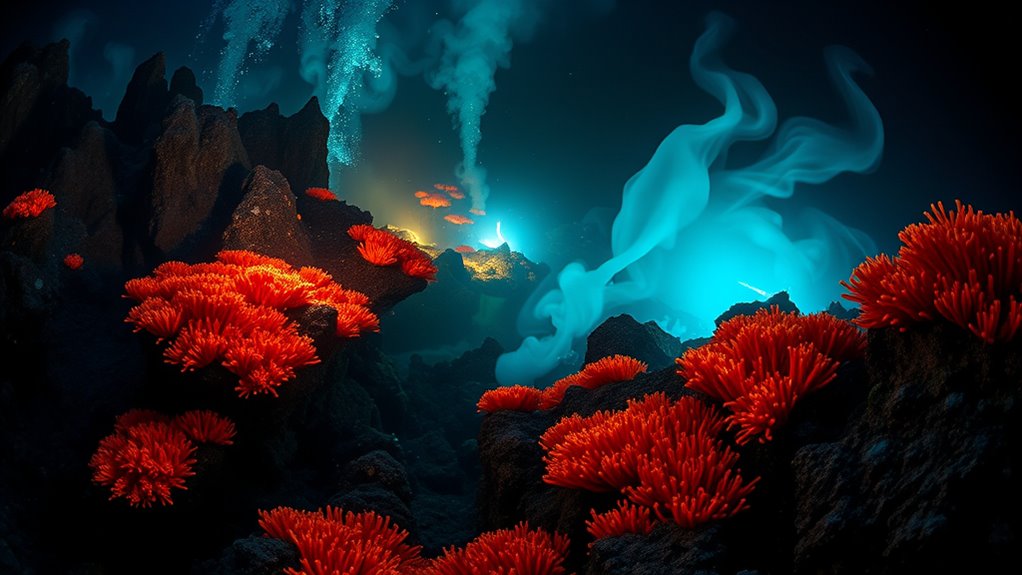

Deep beneath the ocean surface, hydrothermal vents create a mysterious ecosystem where life thrives without sunlight. You’ll find microbes using chemicals like hydrogen sulfide and methane for energy, forming the base of complex communities that include tubeworms, shrimp, and other unique creatures. These organisms have special adaptations to survive extreme heat, pressure, and toxicity. To discover how these extraordinary ecosystems sustain themselves and their importance, keep exploring the fascinating world they hide beneath the waves.
Key Takeaways
- Hydrothermal vents host unique ecosystems fueled by chemosynthesis, supporting diverse life without sunlight.
- Microbes oxidize inorganic chemicals like hydrogen sulfide and methane, forming the base of vent food webs.
- Organisms adapt with specialized proteins and cellular mechanisms to tolerate extreme heat, pressure, and toxins.
- Deep-sea vent communities include endemic invertebrates, worms, and microbes, many of which are newly discovered species.
- These ecosystems influence global biogeochemical cycles and reveal profound mysteries of life in Earth’s extreme depths.
The Birth of Hydrothermal Vents and Their Formation

Hydrothermal vents form when seawater seeps through cracks in the ocean crust near spreading centers or subduction zones. As this cold water interacts with magma-heated rocks below the seafloor, it heats up rapidly, reaching temperatures up to 750°F (400°C). The heated water becomes mineral-rich and pressurized, then escapes through chimney-like structures called black smokers. These vents create temperature gradients between the superheated fluids and surrounding cold seawater, forming habitable zones for microorganisms. During this process, chemical composition changes occur: magnesium and sulfate ions are removed, while sulfur, copper, zinc, and other metals transfer into the water. The result is a dynamic, mineral-laden environment that sets the stage for unique deep-sea ecosystems. Understanding the types of headphone jacks used in marine research equipment can enhance data collection and communication in such extreme environments. Additionally, recent advancements in marine sensor technology enable scientists to monitor these ecosystems more effectively, capturing real-time data on vent activity and biological responses. These technological improvements are essential for uncovering the complex interactions within these extreme environments, and they also facilitate the study of geothermal energy sources beneath the ocean floor, providing insights into Earth’s geothermal processes. Innovations in underwater communication technology further support long-term monitoring of these vital ecosystems.
Chemical Energy: Microbial Life Without Sunlight
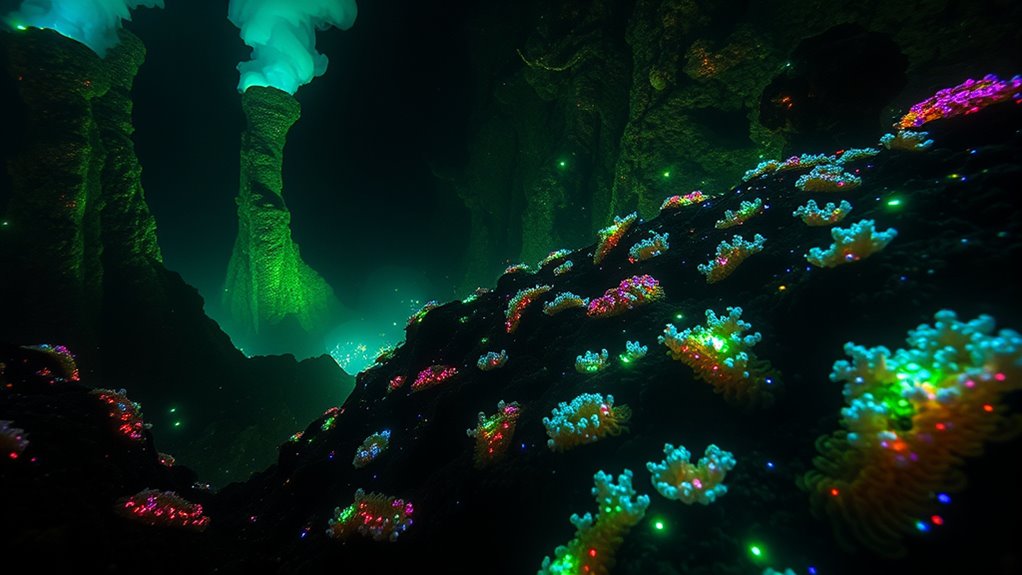
Microbes near hydrothermal vents rely on chemosynthesis to produce organic molecules without sunlight. They harness energy from minerals like hydrogen sulfide, hydrogen, and methane emitted by vent fluids. This process forms the foundation of the entire vent ecosystem, supporting diverse and unique life forms. The efficiency of this biological process depends on the availability of energy sources, which are abundant in vent environments due to geothermal activity.
Chemosynthesis Process Details
Chemosynthesis allows microbial life to thrive in the absence of sunlight by converting inorganic molecules into organic matter. Microbes use enzymes to oxidize compounds like hydrogen sulfide, hydrogen, and methane, releasing energy that powers carbon fixation. They transform carbon dioxide into organic molecules such as sugars, forming the base of the vent ecosystem’s food web. Hydrogen sulfide, abundant in vent fluids, serves as a primary energy source for chemoautotrophic bacteria and archaea. These microbes often live symbiotically inside vent animals or freely in mineral-rich sediments. The process depends on the chemical gradients created by superheated fluids mixing with cold seawater, enabling microbes to harness energy efficiently. This biological mechanism sustains entire communities, providing an alternative to photosynthesis in this dark, extreme environment. Cybersecurity measures are essential in protecting data related to marine research and exploration of these unique ecosystems.
Microbial Energy Sources
In the absence of sunlight, life at hydrothermal vents relies on chemical energy derived from the minerals and compounds released by vent fluids. You’ll find microbes using chemosynthesis to convert chemicals like hydrogen sulfide, hydrogen, and methane into organic molecules, fueling the entire ecosystem. These microorganisms are primary producers, forming the foundation of the vent food web. They thrive in the temperature gradients just outside the superheated fluids, where conditions are stable enough for life. Hydrogen sulfide, despite being toxic to most organisms, provides a crucial energy source for bacteria and archaea. These microbes often live in symbiosis with larger animals, supplying nutrients directly or indirectly. This unique energy process allows life to flourish in a dark, extreme environment where sunlight never reaches. Understanding these microbial energy sources highlights the importance of chemosynthesis as an alternative to photosynthesis in such environments. Additionally, ongoing research into these microbes helps scientists understand potential biotechnological applications for sustainable energy solutions.
The Unique Biodiversity of Deep-Sea Vent Communities
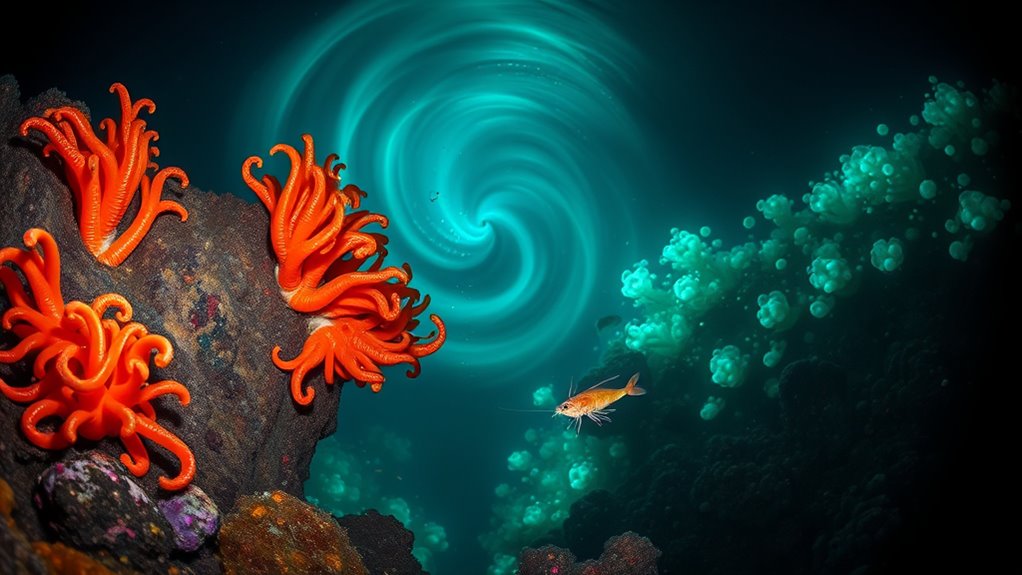
Deep-sea hydrothermal vent communities boast an extraordinary diversity of life adapted to extreme conditions. You’ll find over 500 invertebrate species, many unique to these environments, including tubeworms, shrimp, clams, and crabs. These animals have evolved to survive in complete darkness, crushing pressures, and toxic chemicals. Some, like the Yeti crab, carry bacteria on their bodies, while others rely on chemosynthetic microbes for nourishment. Large, dense populations challenge the idea of the deep sea as a barren wasteland. Recent discoveries reveal animals living in subsurface volcanic cavities at moderate temperatures, expanding your understanding of how life persists beneath the seafloor. These ecosystems are remarkably productive, supporting biomass far beyond typical deep-sea expectations. Chemosynthesis enables these organisms to thrive by converting chemical energy from vent fluids into organic matter, fueling the entire community. Moreover, specialized adaptations among vent species highlight their ability to colonize and thrive in such an extreme environment. Additionally, ongoing research into extreme environment survival continues to uncover the resilience of these unique organisms, broadening our knowledge of life’s possibilities under harsh conditions.
Symbiosis: The Mutualism That Sustains Vent Ecosystems
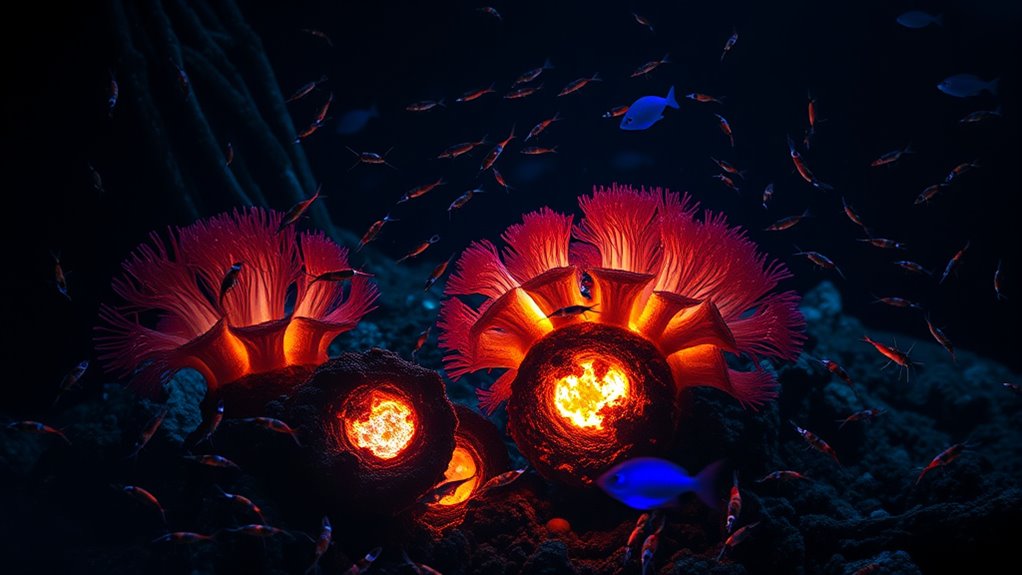
The survival of hydrothermal vent communities hinges on complex partnerships between macroinvertebrates and specialized microbes. You’ll find that microbes, such as chemosynthetic bacteria, live inside or on the tissues of vent animals like tubeworms, clams, and shrimp. These microbes convert chemicals from vent fluids—like hydrogen sulfide—into organic nutrients through chemosynthesis. In return, the animals provide microbes with shelter and access to chemicals they need for energy. This mutualism is essential because vent animals rely entirely on microbial symbionts for food, as sunlight doesn’t reach these depths. Together, they form an interconnected web where microbes fuel the entire ecosystem. This partnership enables organisms to thrive in extreme conditions, creating a vibrant and productive environment amidst the abyss.
Adaptations to Extreme Conditions in the Abyss
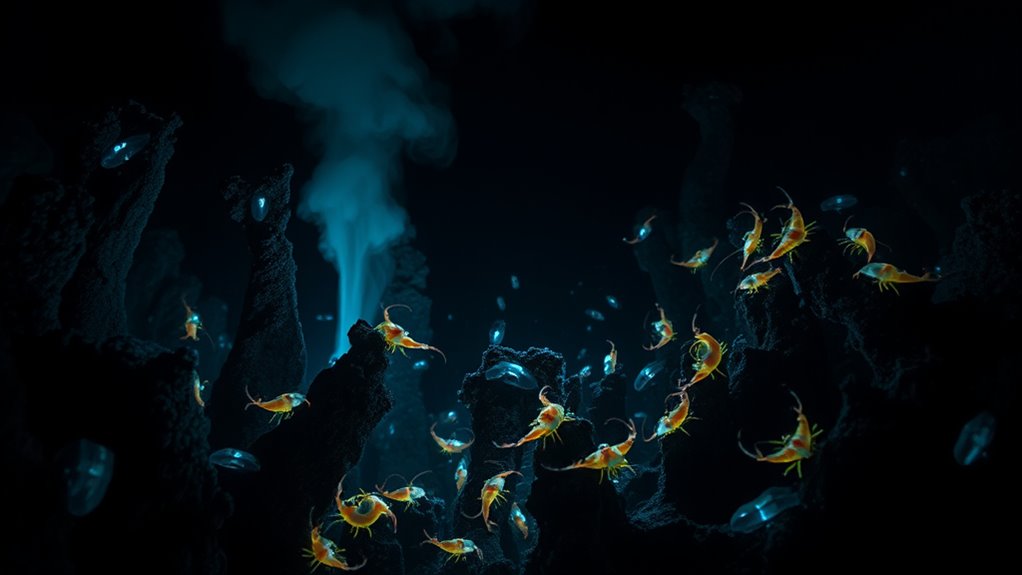
You’ll find that vent organisms have evolved remarkable strategies to tolerate extreme temperatures and toxic chemicals. They develop specialized proteins and cellular mechanisms that protect them from thermal stress and chemical damage. Understanding these adaptations reveals how life persists in some of the most hostile environments on Earth. Recognizing patterns in recurring numbers can help researchers identify key survival traits and adaptations in these unique organisms. Moreover, genetic diversity within vent communities plays a crucial role in their resilience against environmental fluctuations. These adaptations are often supported by molecular mechanisms that enable rapid responses to environmental stressors. Additionally, the presence of specialized enzymes allows these organisms to detoxify harmful substances efficiently, ensuring survival in chemically harsh settings. Recent studies also highlight the importance of symbiotic relationships that facilitate nutrient exchange and enhance survival capabilities in extreme habitats.
Thermal Tolerance Strategies
Organisms living around hydrothermal vents have developed remarkable adaptations to survive the extreme temperatures they encounter. You’ll find that many species tolerate a narrow temperature range, thriving just outside the hottest vent fluids. Some have specialized proteins that stabilize their cellular structures, preventing heat damage. Others produce heat-shock proteins that repair proteins denatured by high temperatures. Many animals inhabit microhabitats with moderate temperatures, avoiding direct contact with superheated fluids. Additionally, their cell membranes contain unique lipids that maintain fluidity across temperature extremes. These adaptations allow them to withstand the intense thermal gradients, from scorching vent emissions to colder surrounding waters. Moreover, some vent organisms utilize temperature regulation strategies to maintain cellular function amidst fluctuating thermal conditions. By fine-tuning their physiology, vent organisms can exploit these extreme environments, turning what seems inhospitable into a thriving ecosystem. Understanding thermal tolerance is essential for comprehending how life persists in such hostile habitats. Recent studies also suggest that some vent species employ behavioral adaptations to better cope with temperature variations, enhancing their survival prospects. Furthermore, research indicates that these adaptations may involve molecular mechanisms that enable rapid responses to changing temperatures.
Chemical Resistance Adaptations
In the extreme chemical conditions of hydrothermal vent environments, organisms have evolved remarkable adaptations to resist toxicity and maintain cellular function. You’ll find they produce specialized proteins and enzymes that neutralize harmful chemicals like hydrogen sulfide and heavy metals. Some develop cell membranes that prevent toxin entry, while others sequester toxic elements in safe compartments. To thrive, they modify metabolic pathways, turning toxic substances into energy sources. The table below highlights key adaptations:
| Adaptation | Function | Example |
|---|---|---|
| Toxin-neutralizing enzymes | Break down or detoxify harmful chemicals | Sulfide oxidases |
| Membrane modifications | Prevent toxin entry | Lipid layer alterations |
| Metal sequestration | Store toxic metals safely | Metallothioneins |
These strategies enable survival amidst the vent’s hostile chemistry, supporting life in one of Earth’s most extreme habitats.
The Dynamic Interplay of Community Succession and Disturbance

The community dynamics at hydrothermal vents are shaped by a constant interplay between succession processes and disturbance events. When a vent forms or reactivates, it creates a blank slate, allowing pioneer species like microbial mats and opportunistic invertebrates to colonize quickly. Over time, these early inhabitants modify the environment, paving the way for more specialized species such as tubeworms and clams to establish stable communities. The ability of these communities to recover and adapt depends on dispersal of larvae and the resilience of their members, maintaining a dynamic balance in this extreme environment. Additionally, personal development techniques such as goal setting and resilience training can enhance the ability of these communities to adapt to ongoing disturbances. Recognizing the importance of biodiversity in maintaining ecosystem health, even in extreme environments like hydrothermal vents, underscores the resilience of life in diverse habitats. Moreover, research indicates that the stability of such ecosystems can be supported by ecosystem resilience, which plays a critical role in recovery after disturbances. In fact, adaptation strategies employed by species can significantly influence their long-term survival amid environmental fluctuations.
Dispersal and Colonization of New Vent Sites

Dispersal and colonization of new hydrothermal vent sites hinge on the ability of vent larvae to travel across the seafloor’s vast and often hostile landscape. You witness tiny larvae hitch a ride on ocean currents, drifting toward unexplored regions. These resilient travelers navigate extreme pressures and toxic chemicals, seeking suitable habitats. When they reach a new vent, they settle and anchor, initiating a complex colonization process. The following table captures the emotional journey of these organisms:
| Hopeful Voyage | Harsh Reality | New Beginnings |
|---|---|---|
| Drifting across miles | Facing crushing pressure | Establishing fresh communities |
| Seeking refuge | Battling toxic waters | Thriving in extreme habitats |
| Touching new ground | Overcoming uncertainty | Rebirth in hidden ecosystems |
This delicate dance of dispersal fuels the life cycle of vent communities amid the abyss.
Unveiling Hidden Ecosystems Beneath the Seafloor
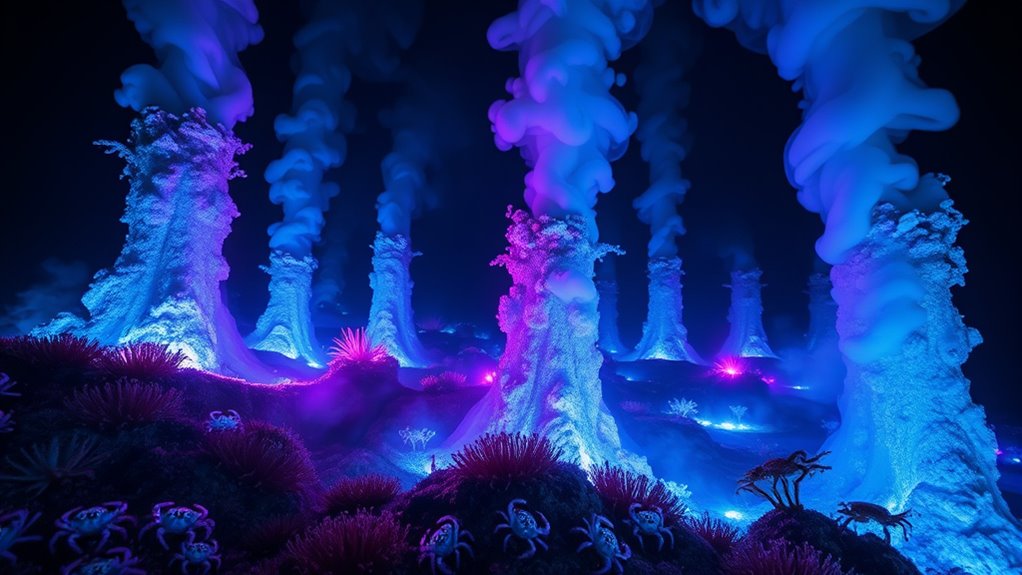
You might be surprised to learn that vast ecosystems exist beneath the seafloor, hidden from surface view. These subsurface vent habitats host unique microbial communities and underground animal populations that thrive in extreme conditions. Exploring these concealed worlds reveals a complex web of life shaped by chemical energy and specialized adaptations.
Subsurface Vent Habitats
Have you ever wondered what lies beneath the seafloor where hydrothermal vents form? Beneath the surface, complex habitats exist within volcanic cavities and fissures, creating isolated ecosystems. These subsurface environments are filled with mineral-rich fluids that circulate through cracks, supporting microbial life far from sunlight. Microorganisms thrive in these hidden zones, using chemosynthesis to convert chemicals like hydrogen sulfide into energy. Some animals, including worms and snails, live in these underground habitats, often in volcanic cavities at around 25°C. These ecosystems are separated from surface vent communities by layers of rock and sediment, making them unique refuges for life. They reveal how life can adapt to extreme, dark, and chemically rich environments deep beneath the seafloor.
Hidden Microbial Communities
Beneath the seafloor, hidden microbial communities thrive in environments that are completely isolated from surface waters. These microbes form unseen ecosystems that play a vital role in deep-sea chemistry and energy flow. Here’s what grabs your attention:
- They live in volcanic cavities and beneath thick mineral deposits, often miles below the ocean surface.
- Microbial life persists in temperature gradients, where superheated fluids meet cooler rocks, creating habitable zones.
- These microbes use chemosynthesis, converting chemical compounds like hydrogen sulfide into organic matter without sunlight.
You might not see them, but these microbes sustain entire ecosystems. They act as primary producers, fueling the food web that supports larger animals and maintaining the balance of deep-sea environments.
Underground Animal Ecosystems
Did you know that complex animal communities thrive deep within the Earth’s crust, far below the seafloor’s surface? These underground ecosystems form where seawater seeps through fissures near spreading centers or subduction zones, heating up to 750°F (400°C). Microbes use chemosynthesis to convert chemicals like hydrogen sulfide into organic matter, supporting entire communities. Recent discoveries show animals like worms, snails, and even crustaceans living in volcanic cavities beneath vents at about 75°F (25°C). These animals are adapted to extreme pressures, darkness, and chemical toxicity. They form symbiotic relationships with microbes, relying entirely on chemosynthesis for food. These hidden ecosystems expand our understanding of life’s resilience and reveal a vibrant, interconnected world beneath the seafloor, largely untouched and remarkably diverse.
Recent Discoveries and the Expanding Horizon of Vent Biology
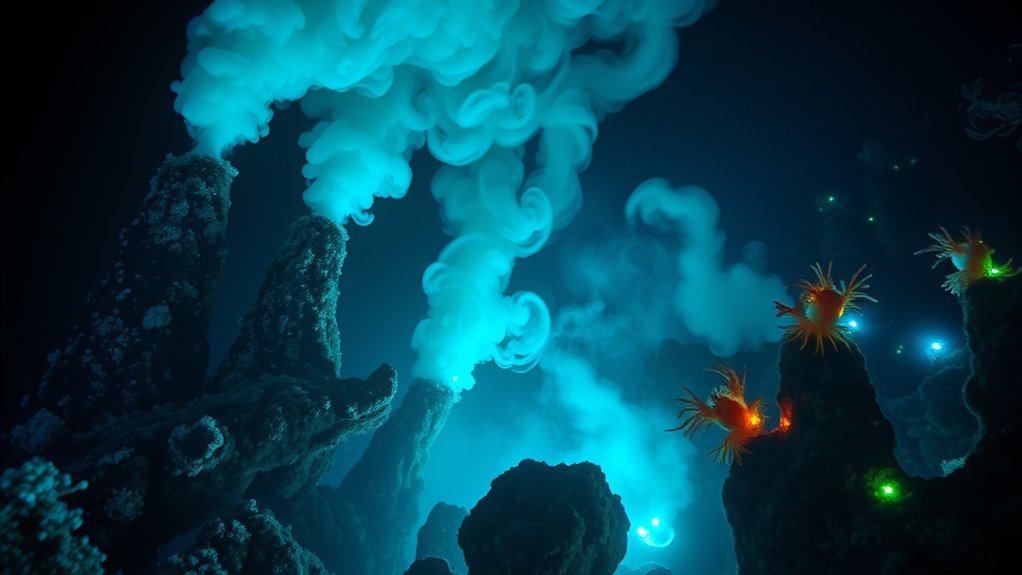
Recent discoveries have considerably broadened our understanding of vent biology, revealing unexpected habitats and expanding the known diversity of life forms. You now know that life isn’t limited to the hot, mineral-rich chimneys; recent finds include organisms living in volcanic cavities 75°F (25°C) beneath vents. Here are three key highlights:
- Marine species thriving in subsurface ecosystems, such as worms and snails, on the seafloor’s volcanic cavities.
- The discovery of tubeworm larvae settling beneath the seafloor, showing complex life cycles beyond surface vents.
- The identification of new species, including unique bacteria and invertebrates, adapted to extreme conditions previously thought uninhabitable.
These breakthroughs reveal an expanding horizon, emphasizing how much more there is to learn about life in Earth’s deepest environments.
The Significance of Hydrothermal Vents in Earth’s Deep Biosphere
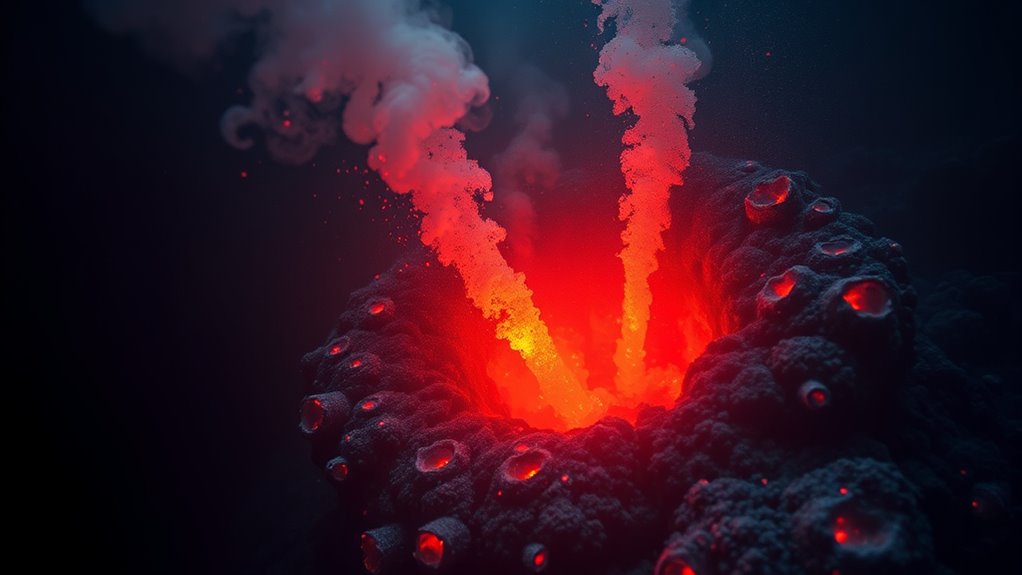
Hydrothermal vents serve as essential hubs for Earth’s deep biosphere, supporting a diverse array of life far below the surface. They provide unique habitats where chemosynthetic microbes transform chemical energy into organic matter, forming the foundation of deep-sea ecosystems. This process sustains a wide variety of invertebrates, fish, and microbial communities, many of which are endemic. The vents’ chemical-rich fluids create localized ecosystems that thrive despite the extreme pressure, darkness, and toxicity. These environments influence global biogeochemical cycles by cycling metals and sulfur and supporting biomass production independent of sunlight. Their importance extends beyond local ecosystems, offering insights into life’s resilience, potential extraterrestrial life, and Earth’s early biosphere, making hydrothermal vents key to understanding life’s origins and sustainability deep within our planet.
Frequently Asked Questions
How Do Vent Organisms Detect and Locate New Vent Sites?
You can think of vent organisms as having specialized sensory adaptations that help them find new vent sites. They detect chemical signals, like hydrogen sulfide and other minerals, in the water. These chemicals act as cues, guiding them toward nutrient-rich areas. Some animals might also respond to temperature gradients or water flow patterns, helping them locate suitable habitats quickly and efficiently in the harsh deep-sea environment.
What Is the Lifespan of Hydrothermal Vent Communities?
Hydrothermal vent communities typically last from a few years to several decades, depending on geological activity. You should know that vents can form rapidly, and their ecosystems can establish within a few years. However, geological disturbances like eruptions or shifts can wipe out entire communities, causing new vents to form elsewhere. Some vent ecosystems persist for 10 to 20 years, but their lifespan ultimately hinges on ongoing volcanic activity and environmental stability.
Can Hydrothermal Vent Ecosystems Recover After a Disturbance?
Yes, hydrothermal vent ecosystems can recover after a disturbance. When new vents form or existing ones are disrupted, species quickly colonize fresh habitats through dispersing larvae. Within a few years, ecosystems reestablish, thanks to the rapid colonization of vent animals and microbial communities. Your understanding of these resilient ecosystems shows how they adapt and bounce back, maintaining their essential biological functions despite environmental changes.
How Do Vent Animals Communicate in the Deep-Sea Environment?
You’re swimming against the tide by asking how vent animals communicate deep beneath the ocean’s surface. These creatures mainly rely on chemical signals and vibrations rather than sound, which travels poorly in their dark, high-pressure environment. They use tactile cues like touching or waving antennae, and some release chemical messages into the water. This silent language helps them find mates, warn of danger, and coordinate activities amid the extreme conditions.
Are There Any Potential Human Benefits From Studying Vent Microbes?
Studying vent microbes offers you potential benefits like developing new medicines, enzymes, and biotechnologies. These microorganisms produce unique compounds that can lead to advanced drugs or industrial applications. Their enzymes work in extreme conditions, which could improve industrial processes. Additionally, understanding their adaptations helps you develop bio-inspired technologies for environmental cleanup or sustainable energy. Exploring vent microbes unravels innovative solutions that could markedly impact medicine, industry, and environmental management.
Conclusion
You’ve explored a world where darkness and extreme heat coexist, yet life thrives in these hidden depths. Unlike the sunlit surface, these vents fuel ecosystems without sunlight, revealing nature’s resilience. As you uncover their mysteries, remember that beneath the abyss lies a universe of adaptation and discovery. This contrast between harshness and importance challenges what you thought was possible, reminding you that life’s potential extends far beyond the known—deep into Earth’s most enigmatic corners.