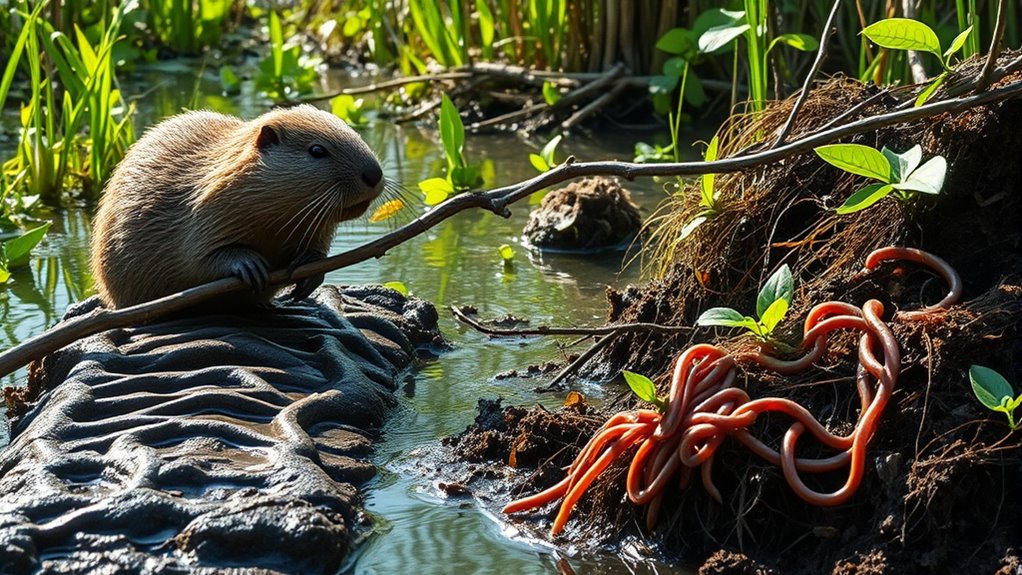

Ecosystem engineers like beavers and worms actively reshape their environments in different ways. Beavers build dams that create wetlands, slow water flow, improve water quality, and help regulate climate, especially in Arctic regions by supporting permafrost stability. Worms modify soil by burrowing, enhancing aeration and nutrient cycling at local scales. Their activities boost habitat diversity and resilience. If you want to explore how these species influence landscapes and ecosystems further, keep exploring their fascinating roles.
Key Takeaways
- Beavers build dams that create wetlands, modify water flow, raise water levels, and influence hydrology and landscape features.
- Worms burrow into soil, aerating it, improving nutrient cycling, and enhancing water infiltration at localized scales.
- Beavers’ dam-building activities support biodiversity, water quality, and climate buffering through habitat complexity.
- Worms contribute to soil health by breaking down organic matter, increasing fertility, and promoting plant growth.
- Both species impact ecosystems at different scales, with beavers shaping large hydrological systems and worms modifying soil microenvironments.
Top picks for "ecosystem engineer beaver"
Open Amazon search results for this keyword.
As an affiliate, we earn on qualifying purchases.
The Role of Beavers in Hydrological Modification

Have you ever considered how beavers actively shape their environment through dam construction? When they build dams, they raise water levels and slow water flow, which considerably alters local hydrology. This activity creates ponds that modify water movement across entire catchments and floodplain systems. Beavers also influence subsurface water flow, especially in gravel bed systems, where ponds can enhance groundwater recharge in shallow soils. Their engineering increases surface water control, accounting for about 66% of disturbance factors in some Arctic regions, affecting permafrost stability. By changing water patterns, beavers impact aquatic habitats, nutrient cycling, and the availability of water resources. Their dam-building behavior is a powerful force that reshapes the landscape, creating dynamic environments that support diverse ecosystems. Additionally, their activity can influence wetland formation and biodiversity, further emphasizing their role as ecosystem engineers. Furthermore, their ability to modify water flow can lead to the development of habitat diversity, promoting overall ecological resilience.
Beavers as Architects of Wetland Ecosystems
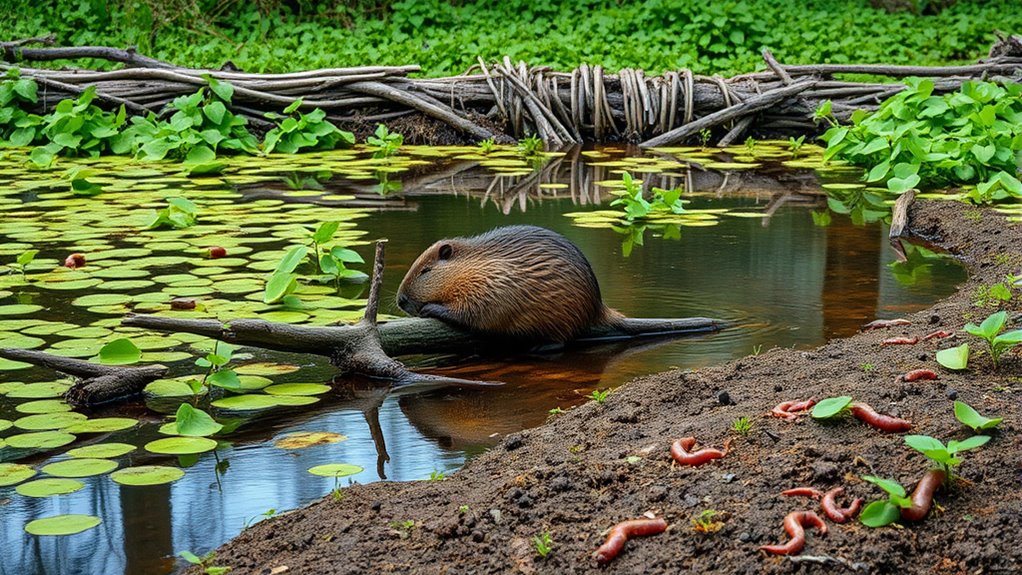
You can see how beaver dam construction reshapes landscapes by raising water levels and slowing flows, creating new habitats. These structures boost biodiversity and support diverse species in wetland ecosystems. Their engineering actions markedly influence hydrological patterns across entire catchments, transforming the environment around them.
Dam Construction Dynamics
Beavers actively shape their environment through dam construction, transforming the hydrology and geomorphology of riverine systems. They select suitable sites and build dams using branches, logs, mud, and stones, creating barriers that raise water levels and slow water flow. This process alters water distribution, causing upstream flooding and sediment accumulation, which deepens and broadens the stream channels. The dams also influence groundwater recharge, particularly in gravel bed systems, by impeding subsurface water movement. As beavers continuously modify their structures, they generate dynamic wetlands that support diverse plant and animal life. Their engineering activities promote habitat stability and resilience, even as they adapt and rebuild. These dam-building behaviors serve as a powerful force, actively reshaping landscape features and hydrological patterns over time.
Habitat Diversity Benefits
By constructing dams and creating wetlands, beavers act as ecosystem architects that substantially enhance habitat diversity. Their dam-building activities transform flowing streams into complex wetland systems, supporting a wide range of plant and animal species. These wetlands provide refuge for fish, amphibians, birds, and insects, creating habitats that didn’t exist before their intervention. The variety of water depths, vegetation types, and substrate conditions fosters diverse ecological niches. Beavers’ engineering also promotes the coexistence of terrestrial and aquatic communities, increasing overall biodiversity. This habitat diversification stabilizes ecosystems, making them more resilient to environmental changes. Additionally, their activities contribute to ecosystem resilience by buffering against climate variability and environmental disturbances. The resulting habitat complexity also facilitates species coexistence, promoting a balanced and healthy ecosystem.
Hydrological Impact Modulation
Beaver dam construction directly influences hydrological processes by controlling water flow and distribution within ecosystems. You’ll notice that dams raise water levels and slow water speed, which transforms how water moves through the landscape. This creates ponds that store water during flood events and release it gradually, reducing downstream flooding and maintaining streamflow during dry periods. Beavers also alter groundwater recharge, especially in gravel bed systems, by increasing surface water infiltration. These modifications extend across entire catchments, affecting water routing and availability. As a result, beaver activities help stabilize hydrological cycles, support wetland formation, and influence water quality. Their engineering actions are pivotal for shaping the hydrological dynamics that sustain diverse ecosystems and improve landscape resilience. Additionally, their activities can impact the hydrological balance by influencing evapotranspiration and groundwater levels, further contributing to ecosystem stability. Moreover, beaver activities promote groundwater recharge, which plays a critical role in maintaining aquifer levels and supporting plant and animal life during drought conditions.
Impact of Beaver Dams on Water Quality and Biodiversity

The construction of dams by beavers considerably enhances water quality and boosts biodiversity within freshwater ecosystems. Beavers slow water flow and create wetlands, which improve filtration by trapping sediments and pollutants. These wetlands increase nutrient cycling, supporting healthier aquatic plants and invertebrates. As a result, water clarity improves, reducing harmful algal blooms and enhancing oxygen levels. The diverse habitats formed by beaver dams attract a variety of species, from fish and amphibians to birds and mammals, enriching local biodiversity. These ecosystems serve as critical breeding and feeding grounds, fostering complex food webs. By increasing habitat complexity, beaver dams promote ecological resilience, ensuring healthier, more stable environments. Their engineering activities directly contribute to cleaner water and richer biological communities. Additionally, the presence of UV filters in some natural and artificial water bodies can further protect aquatic life from harmful sun exposure.
Beavers and Climate Stability in High-Latitude Regions
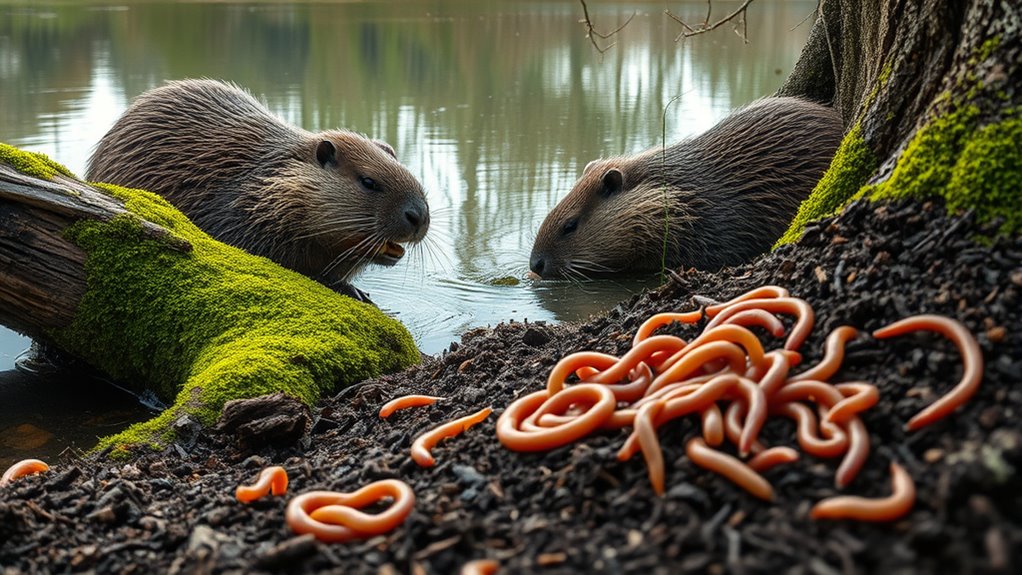
You can see how beaver activity helps buffer climate impacts by creating wetlands that stabilize local climate conditions in high-latitude areas. Their dam-building efforts also influence permafrost stability, reducing thaw and associated methane release. These hydrological changes strengthen ecosystem resilience, making northern environments more adaptable to ongoing climate change. Additionally, the creation of diverse habitats through wetland formation promotes biodiversity, which is crucial for maintaining ecological balance in these sensitive regions. Research suggests that these natural processes can also influence Gold IRA Rollovers by modulating environmental vibrations that support ecosystem health. Moreover, the presence of beavers and worms impacts necessary cookies, which are essential for basic site functionalities and understanding ecosystem dynamics. Incorporating an understanding of ecosystem engineers like beavers and worms highlights their critical role in shaping environmental stability and resilience.
Beavers as Climate Buffers
How do beavers contribute to climate stability in high-latitude regions? They do this mainly by creating wetlands that regulate water flow and retain moisture, which buffers temperature extremes. Beavers slow water movement through dam construction, increasing water retention during dry periods and reducing flood impacts during storms. Their ponds stabilize local hydroclimates by maintaining consistent water levels, which helps prevent rapid temperature fluctuations. These wetlands also promote groundwater recharge, supporting stable soil moisture and delaying permafrost thaw. By enhancing water availability and moderating temperature swings, beavers help sustain ecosystems amid climate change. Their engineering activities create resilient landscapes that absorb and buffer the impacts of warming, making high-latitude environments more resistant to extreme weather and climate variability. Additionally, their role in ecosystem engineering influences broader ecological processes, strengthening the capacity of these environments to adapt to ongoing climate shifts. The creation of such wetlands can also foster biodiversity, further contributing to ecosystem resilience. The wetlands formed by beaver activity also act as carbon sinks, helping to sequester atmospheric carbon and mitigate climate change impacts. Moreover, these wetlands can serve as natural climate solutions, integrating ecological restoration into climate adaptation strategies. Furthermore, these habitats support diverse species interactions, which are crucial for maintaining ecosystem health and resilience.
Permafrost Stabilization Effects
Beaver activity considerably influences permafrost stability in high-latitude regions by altering hydrological conditions. When beavers build ponds, surface water levels rise, insulating permafrost and slowing thawing. This wetland formation preserves the ground’s thermal balance, reducing permafrost degradation. Their dam-building behavior increases groundwater recharge, maintaining moisture levels that support permafrost persistence. The table below highlights key impacts:
| Impact Area | Effect | Significance |
|---|---|---|
| Water Level Fluctuations | Elevated water levels insulate permafrost | Slows thawing and preserves stability |
| Hydrological Changes | Increased groundwater recharge | Maintains soil moisture |
| Surface Water Presence | Expands pond areas in Arctic zones | Protects permafrost from rapid thaw |
| Subsurface Dynamics | Alters permafrost thermal regimes | Enhances climate resilience |
Additionally, these hydrological modifications contribute to climate stability by buffering temperature fluctuations in the soil. These processes are further supported by the hydrological impact of beaver activities, which help regulate local moisture conditions. Their dam-building behavior also influences permafrost thermal regimes, helping prevent rapid thawing. Through these processes, beavers help stabilize permafrost, supporting climate resilience in cold regions.
Hydrological Resilience Enhancement
The hydrological modifications caused by beaver activity play a vital role in bolstering climate stability in high-latitude regions. By raising water levels and slowing water flow, beavers create wetlands that buffer extreme temperature fluctuations, supporting local climate regulation. Their dam-building activities increase water retention, prolonging summer streamflow and reducing flood risks. These wetlands also enhance groundwater recharge, helping maintain stable water supplies during droughts. In Arctic areas, beaver ponds influence permafrost stability and mitigate rapid thawing, indirectly supporting climate resilience. Their engineering fosters diverse habitats that improve biodiversity and ecosystem services, which further reinforce landscape resilience. Overall, beavers act as natural climate buffers, strengthening hydrological stability amid ongoing climate change and helping high-latitude environments adapt more effectively. In addition, their presence can promote market research by attracting a variety of species, which supports a resilient and balanced ecosystem.]
The Connection Between Beaver Activity and Carbon Storage
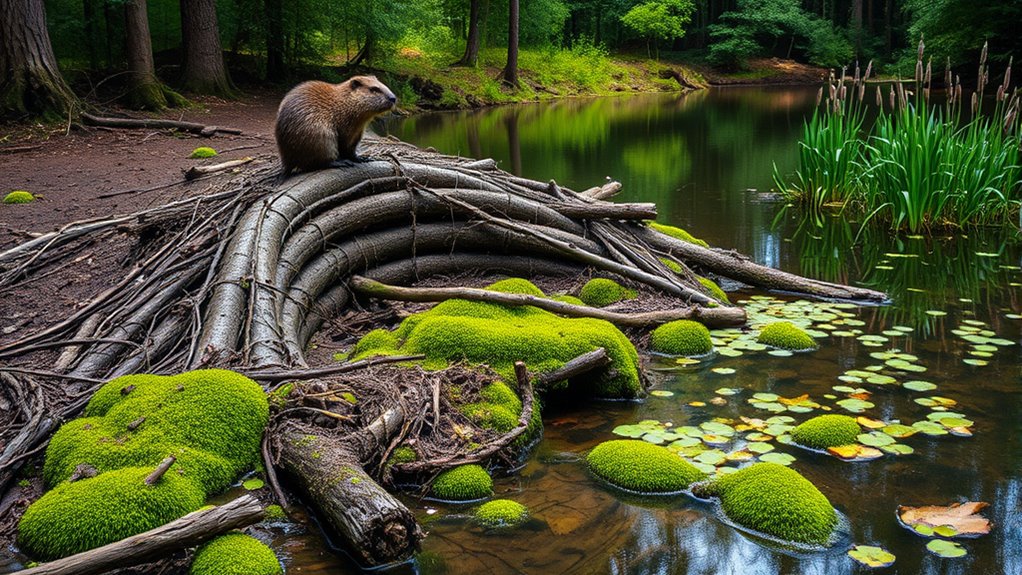
Active beaver engineering plays a significant role in enhancing carbon storage within freshwater ecosystems. By building dams and creating wetlands, beavers increase the amount of standing water and organic matter accumulation. These wetlands act as carbon sinks, trapping organic material that would otherwise decompose and release greenhouse gases. The slow water flow and flooded soils promote plant growth, especially riparian vegetation, which further sequesters carbon. Additionally, the expanded wetlands improve nutrient cycling and reduce the frequency of fires, which can release stored carbon. Over time, these ecosystems develop substantial carbon stocks, contributing to climate mitigation efforts. Understanding sound design is crucial for appreciating how these ecosystems evolve and support carbon storage. Your involvement in preserving or restoring beaver populations supports natural carbon sequestration, demonstrating how these ecosystem engineers help combat climate change efficiently.
Beavers’ Influence on Permafrost and Arctic Landscapes
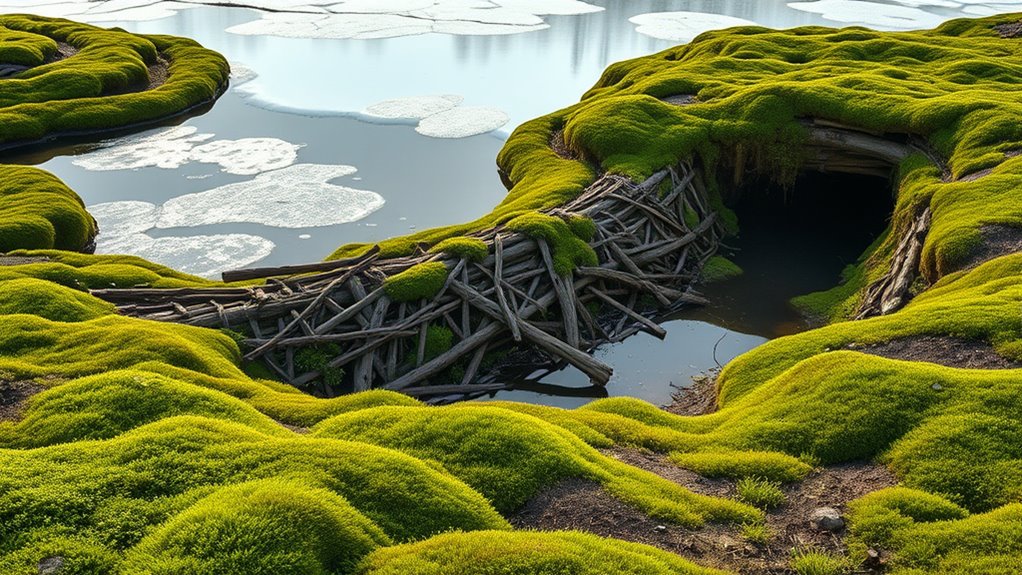
Recent studies show that beaver activity has dramatically transformed Arctic landscapes by increasing the number and size of ponds, with satellite imagery revealing a doubling of beaver ponds over the past two decades. These ponds influence permafrost stability by altering surface water levels and hydrological flow. As water levels rise, permafrost thaws, potentially releasing greenhouse gases like methane. The table below illustrates key impacts:
| Impact | Description |
|---|---|
| Permafrost Thawing | Increased surface water accelerates permafrost melt. |
| Groundwater Interaction | Beavers modify subsurface water flow, affecting stability. |
| Methane Emissions | Pond formation influences greenhouse gas fluxes. |
The Recovery and Conservation of Beaver Populations

Despite past declines caused by overhunting, beaver populations are steadily recovering thanks to targeted conservation efforts and reintroduction programs. These initiatives have helped restore beaver numbers across North America and Europe, where populations now exceed 1.5 million in Eurasia. In North America, populations have rebounded from near-extinction levels of 100-200 million to around 10-15 million individuals. Reintroduction projects aim to re-establish beavers in historic habitats, promoting ecosystem restoration and biodiversity. Land managers increasingly recognize the ecological benefits of beavers, integrating their presence into watershed management and habitat recovery plans. This recovery supports natural flood control, water filtration, and habitat creation, highlighting the importance of ongoing conservation to maintain and expand these crucial ecosystem engineers. Additionally, ongoing research emphasizes the role of beavers in ecosystem resilience, further strengthening conservation initiatives.
Ecosystem Services Provided by Beavers
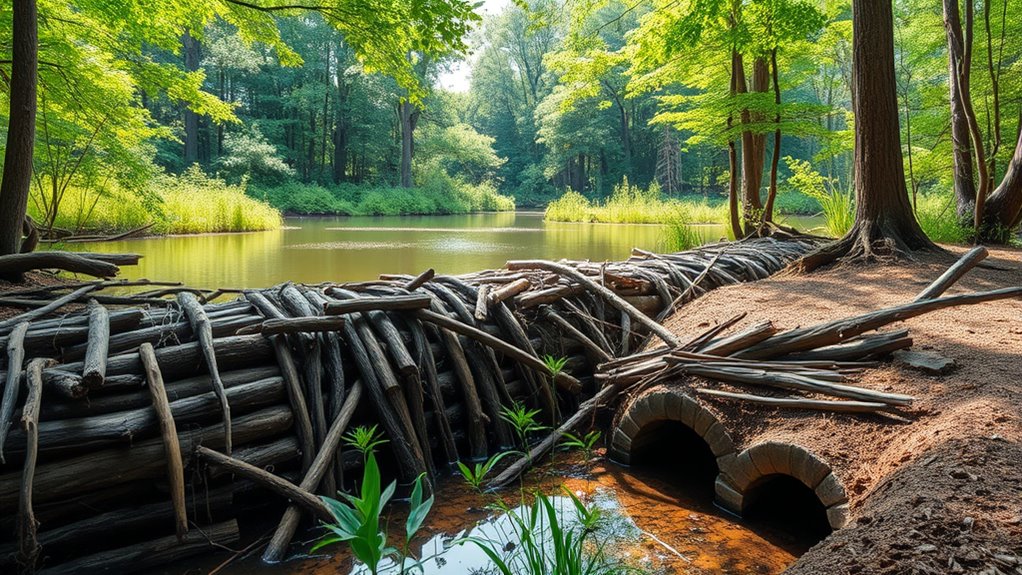
Have you ever considered how beavers naturally enhance ecosystems? Their dam-building activities create wetlands that support diverse plant and animal species. By raising water levels and slowing water flow, beavers improve water retention, which helps sustain streams during dry periods. These wetlands filter pollutants and increase water quality, benefiting aquatic life. Beavers also provide critical habitats for fish, amphibians, birds, and insects, boosting local biodiversity. Their presence stabilizes hydrological cycles, reducing flood risks and moderating temperature extremes. Additionally, beaver-created wetlands sequester carbon, contributing to climate mitigation. In Arctic regions, their ponds influence permafrost stability, affecting greenhouse gas emissions. Overall, beavers offer essential ecosystem services that maintain ecological balance, improve water resources, and foster resilience amid environmental changes.
Comparing Beavers and Worms as Ecosystem Engineers
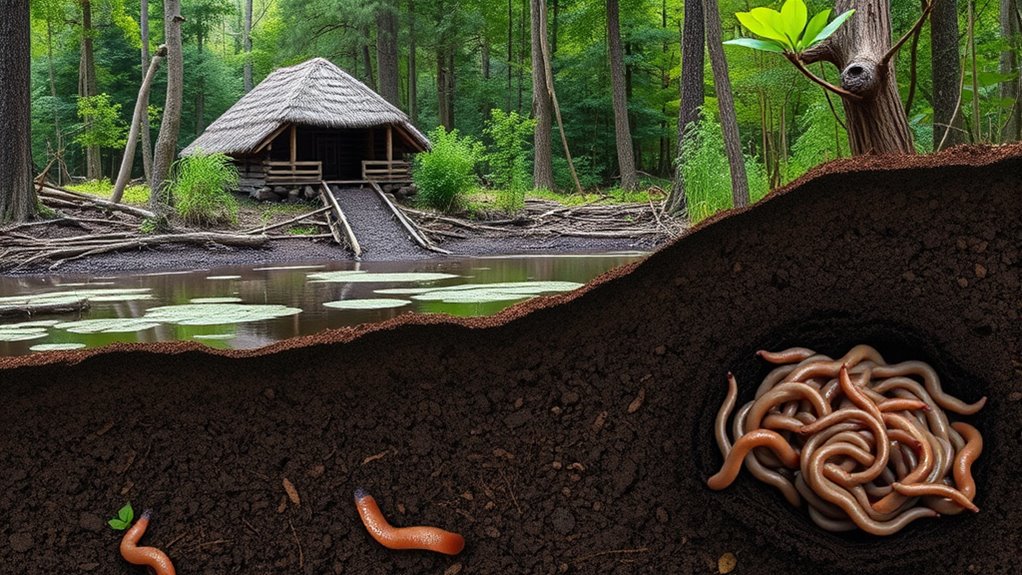
Beavers and worms are both remarkable ecosystem engineers, but they shape environments in fundamentally different ways. Beavers alter landscapes by building dams that control water flow, create wetlands, and influence hydrology on a large scale. Their activities impact entire catchments, affecting water levels, groundwater movement, and biodiversity. Worms, on the other hand, modify soil structure through burrowing, enhancing aeration, nutrient cycling, and water infiltration. Their influence is more localized but vital for soil health and plant growth. While beavers engineer physical habitats and hydrological systems, worms improve soil quality and nutrient availability. Both species drive ecosystem resilience, but beavers tend to have broader landscape impacts, whereas worms focus on soil processes at a micro to meso scale.
Frequently Asked Questions
How Do Beavers Choose Locations for Dam Construction?
You observe beavers selecting locations for dam construction based on water flow, tree availability, and terrain. They prefer areas with steady water, abundant trees for building materials, and suitable soil for dam integrity. Beavers also look for places with shallow water to make construction easier and to create ideal wetland habitats. These choices help guarantee their dam’s stability, safety, and effectiveness in creating a suitable environment.
What Are the Long-Term Impacts of Beaver Dams on River Morphology?
You’ll see beaver dams reshape river morphology over time by raising water levels and slowing flow, which causes sediment to settle and creates new landforms. These structures influence the entire catchment, promoting wetland development and altering channel patterns. As the dams persist, they can lead to meandering rivers, expanded floodplains, and increased habitat diversity, ultimately transforming the landscape and stabilizing local hydrology for decades or even centuries.
How Does Beaver Activity Influence Groundwater Levels Beyond Surface Water?
You’re opening a can of worms when considering how beaver activity influences groundwater beyond surface water. Their dam-building raises water levels and slows water movement, which enhances groundwater recharge, especially in gravel bed systems. Beavers create ponds that act like natural sponges, allowing water to seep into the soil and increase groundwater levels. This process benefits ecosystems by maintaining water availability during dry periods and supporting plant and animal life underground.
Are There Negative Ecological Effects of Beaver Dam Expansion?
Yes, beaver dam expansion can cause negative ecological effects. You might see localized flooding, which can disturb existing terrestrial habitats and displace plant and animal species. Excessive damming may also lead to nutrient buildup, impacting water quality and fish populations. In some cases, the altered hydrology can destabilize soil and increase erosion. Be aware that while beavers benefit ecosystems, unchecked dam growth can sometimes create unintended environmental challenges.
How Do Beavers Adapt to Changing Climate Conditions Globally?
You see, beavers adapt to changing climate conditions by altering their behaviors and habitats. They expand their dam-building activities to create more wetlands for water storage during droughts and move to new areas as ice melts or habitats shift. This flexibility helps them survive in diverse environments, maintaining their populations and continuing to shape ecosystems even as climate patterns change globally.
Conclusion
Just as Prometheus reshaped the world with fire, beavers and worms transform their environments daily. By engineering wetlands and enriching soils, they remind us that nature’s quiet architects hold the power to restore balance. Embrace their roles as custodians of change, understanding that even small creatures can spark monumental shifts. In their persistence, you see the enduring dance of life—an ongoing story of renewal and resilience written in the very fabric of our ecosystems.