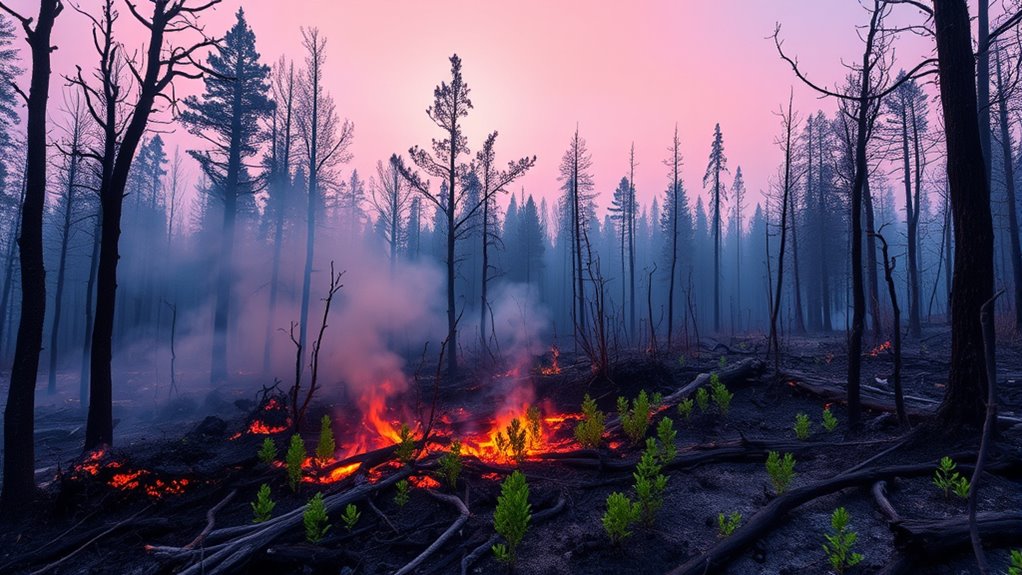

Fire ecology shows how flames can renew landscapes by clearing dead material, encouraging new growth, and supporting diverse ecosystems. Fire interacts with nature, shaping plant communities and maintaining natural cycles. Human efforts to suppress fire often lead to dangerous fuel buildup, increasing the risk of severe wildfires. Adaptive management, including prescribed burns, helps restore natural fire regimes and promotes resilient ecosystems. To discover how fire’s role in landscape renewal works, keep exploring this fascinating balance.

Prime made for students and young adults
- Fast, free delivery for dorm and study essentials
- Prime Video and Amazon Music included
- Member-only deals
Key Takeaways
- Fire plays a crucial role in maintaining healthy ecosystems by promoting biodiversity and natural regeneration.
- Prescribed burns are controlled fires used to reduce fuel loads and prevent severe wildfires.
- Fire regimes shape landscape structure, supporting habitat diversity and ecosystem resilience.
- Human fire suppression efforts can lead to fuel buildup, increasing risk of uncontrollable, destructive wildfires.
- Adaptive management involves monitoring fire effects and adjusting strategies to balance natural fire processes and safety.

Fire ecology is the study of how fire interacts with ecosystems, shaping their structure, composition, and function. When you look at landscapes affected by fire, you might see destruction, but in reality, fire plays a crucial role in maintaining healthy ecosystems. Many regions have a history of natural fire regimes that promote biodiversity and resilience. However, human activities, particularly fire suppression, have altered these natural processes. Fire suppression involves efforts to prevent or extinguish fires, often leading to an accumulation of combustible material. While this might seem beneficial, it can actually make ecosystems more vulnerable to severe fires when they do occur. This buildup of fuels increases the risk of large, uncontrollable wildfires that can damage ecosystems, property, and even human lives.
Understanding this, land managers now adopt adaptive management strategies to balance fire suppression with natural fire processes. Adaptive management is a flexible, science-based approach where policies and actions evolve based on ongoing monitoring and research. Instead of trying to eliminate fire altogether, you learn to work with it, recognizing that fire is a natural and necessary component of many ecosystems. For example, prescribed burns—intentionally set, controlled fires—are used to reduce fuel loads safely and restore natural fire regimes. These treatments help prevent catastrophic wildfires and support ecosystem health.
In this context, fire suppression is no longer viewed as a one-size-fits-all solution. Instead, you’re encouraged to weigh the specific needs of the landscape, its history, and its species when planning fire management. Adaptive management allows you to test different approaches, monitor their effects, and adjust tactics accordingly. This iterative process helps you develop strategies that mimic natural fire cycles, promoting plant regeneration, controlling invasive species, and maintaining habitat diversity. It also fosters resilience, enabling ecosystems to recover more quickly after fire events.
As an affiliate, we earn on qualifying purchases.
Frequently Asked Questions
How Do Fire Seasons Vary Globally?
You might notice that fire seasons vary globally due to regional fire patterns and climate differences. In some areas, fire seasonality aligns with dry, hot months, while others experience year-round fire risks. Factors like vegetation type, weather, and human activity influence these patterns. Understanding these regional fire patterns helps in preparing for and managing fires effectively across diverse landscapes worldwide.
What Role Do Indigenous Practices Play in Fire Management?
Like the ancient whispers of Prometheus, indigenous practices shape fire management through cultural burning on indigenous land. You’re part of a tradition that uses controlled burns to clear land, promote growth, and reduce wildfires. These practices, rooted in deep respect for nature, help maintain healthy ecosystems. By honoring these methods, you support a sustainable balance, ensuring fire’s role as a renewal tool rather than a destructive force.
Can Fire Ecology Apply to Urban Environments?
You might wonder if fire ecology can apply to urban environments. It definitely can, especially through urban greening and fire-resistant design. By integrating native plants that naturally resist fire and designing neighborhoods to reduce fire spread, you help protect communities. These strategies mimic natural fire cycles, promoting healthier, resilient landscapes. Applying fire ecology principles in cities encourages sustainable development and safer living spaces while maintaining ecological balance.
How Is Climate Change Affecting Fire Frequency?
You see, climate change is increasing fire frequency by causing hotter, drier conditions that fuel wildfires. As a result, fire suppression efforts become more challenging, as fires start more often and spread faster. To address this, climate mitigation strategies are vital, helping reduce greenhouse gases and lessen the severity of future fires. This way, you can better manage fire risks and protect ecosystems and communities alike.
What Are the Economic Impacts of Fire Suppression?
You face the fallout of fire suppression strategies, which can considerably strain your economy. The escalating economic costs stem from extensive firefighting efforts, equipment, and resources needed to control blazes. These suppression strategies often lead to higher expenses over time, reducing funds for other essential services. You might also encounter environmental costs, like degraded land and lost resources, making fire management a costly, complex challenge that impacts your community’s financial and ecological stability.
Conclusion
You might be surprised to learn that nearly 80% of U.S. forests depend on fire to thrive. Fire isn’t just destructive—it’s crucial for renewing landscapes and nurturing diverse ecosystems. By understanding fire ecology, you can appreciate how flames help clear out dead material, make space for new growth, and maintain healthy environments. So, next time you see a wildfire, remember it’s a fundamental part of nature’s cycle, helping landscapes rebirth and flourish.
Fall Picks
fall essentials
As an affiliate, we earn on qualifying purchases.