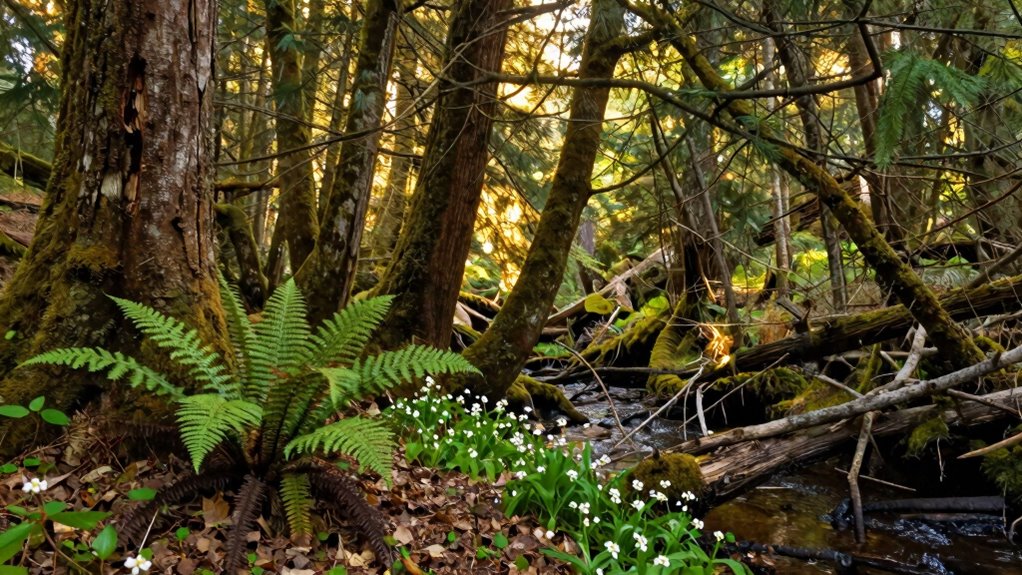

Forest gaps open up space for a variety of species to grow, encouraging biodiversity and ecosystem resilience. When sunlight reaches these areas, pioneer plants quickly take hold, changing the environment and making it suitable for others. These gaps support natural renewal, helping ecosystems recover from disturbances like storms or fires. By creating habitats for animals, insects, and microorganisms, gaps guarantee new life can flourish. Keep exploring to understand how these openings sustain forest health and promote long-term growth.

Prime made for students and young adults
- Fast, free delivery for dorm and study essentials
- Prime Video and Amazon Music included
- Member-only deals
Key Takeaways
- Forest gaps allow sunlight to reach the ground, promoting growth of diverse plant and pioneer species.
- Open spaces provide habitats for species that require specific conditions found in gaps.
- Gaps facilitate natural succession, leading to the development of complex, resilient ecosystems.
- They enable new growth that stabilizes soil, enhances fertility, and supports further ecological development.
- Gaps foster biodiversity hotspots, increasing habitat diversity and supporting a wide range of organisms.
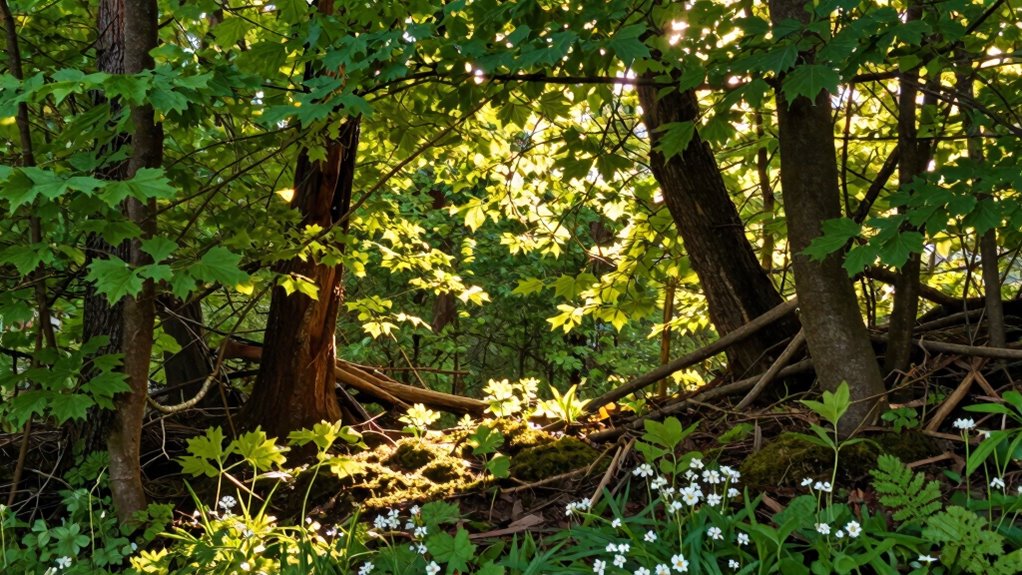
When a forest gap opens, it creates more than just space—it offers a pivotal opportunity for new life to thrive. These openings are essential for promoting biodiversity hotspots, which are areas teeming with a rich variety of species. As sunlight floods into the cleared space, it encourages the growth of plants and trees that might have struggled to survive beneath the dense canopy. This increase in plant diversity provides food and shelter for a wide array of animals, insects, and microorganisms, helping to sustain a vibrant and resilient ecosystem.
Forest gaps spark new growth, supporting rich biodiversity and strengthening ecosystem resilience through sunlight and habitat diversity.
You might not realize it, but forest gaps play a key role in maintaining ecosystem balance. By creating patches of open space, they enable natural succession processes to unfold, allowing different species to establish themselves at different stages. This dynamic process guarantees that no single species dominates, which helps prevent ecological imbalance. As new plants sprout and grow, they stabilize the soil and improve its fertility, setting the stage for further ecological development. This cycle of disturbance and renewal keeps the forest healthy and adaptable to environmental changes. Recognizing the importance of ecosystem dynamics enhances our understanding of how these disturbances shape the landscape over time. Additionally, these gaps act as crucial habitats for many species, offering refuge and resources in otherwise densely wooded areas.
In these gaps, pioneer species—those hardy plants that are quick to colonize open ground—take hold first. They modify the environment, making it more hospitable for other species that follow. Over time, these areas develop into complex communities that contribute to overall biodiversity hotspots. The presence of such diverse habitats increases the resilience of the forest, enabling it to recover from disturbances like storms, fires, or human activities more rapidly. Moreover, high contrast ratios in projectors help simulate the natural variations in light and shadow found in forest environments, enhancing the immersive experience. Furthermore, understanding the succession process in these gaps highlights how ecosystems naturally regenerate and adapt over time, ensuring long-term ecological stability. Recognizing the role of disturbance in shaping ecosystems underscores how these openings are vital for ecological health.
Your understanding of forest gaps also highlights their importance in conserving species that rely on specialized habitats found only in these transition zones. Many plants and animals depend on the unique conditions created by gaps for breeding, feeding, or shelter. Without these openings, some species might struggle to survive, leading to a decline in biodiversity and a disruption of ecosystem balance.
Ultimately, forest gaps are not just voids in the landscape—they are active, dynamic spaces that foster new growth and sustain the intricate web of life. They promote biodiversity hotspots and help maintain ecosystem balance, guaranteeing forests remain resilient and vibrant. By recognizing their significance, you can appreciate how these natural disturbances contribute to the health and diversity of our forests, offering continuous opportunities for new life to flourish.
As an affiliate, we earn on qualifying purchases.
Frequently Asked Questions
How Long Does It Take for a Forest Gap to Fully Regenerate?
It takes about 50 to 100 years for a forest gap to fully regenerate, depending on factors like soil nutrients and climate. During this time, plant succession occurs, starting with grasses and shrubs, then gradually replaced by young trees. As soil nutrients improve and more plants establish, the gap closes, restoring the forest. Your understanding of this process highlights how natural regeneration supports biodiversity and ecosystem health over time.
Do All Tree Species Benefit Equally From Forest Gaps?
Not all tree species benefit equally from forest gaps. Some species thrive quickly due to higher regeneration rates and adaptability, increasing species diversity. Others, especially shade-tolerant or slow-growing species, may struggle to establish in open gaps. You notice that gaps promote a mix of species, but the benefits vary depending on each species’ traits. Overall, gaps support diverse plant communities, though the degree of benefit depends on species-specific regeneration strategies.
Are Forest Gaps More Common in Certain Types of Forests?
You might assume forest gaps are evenly spread, but they’re more common in certain forest types, especially those with high forest diversity. These gaps boost ecosystem resilience by creating varied microhabitats. In mixed forests or tropical rainforests, natural disturbances like storms or disease often produce gaps more frequently, fostering new growth and supporting diverse species. Recognizing this helps you understand how different forests adapt and thrive over time.
How Do Animals Adapt to Changes Caused by Forest Gaps?
You notice animals adapt quickly to changes caused by forest gaps through behavioral adaptations, such as shifting foraging times or seeking new shelter. These gaps boost species diversity by offering new niches and resources. As a result, animals become more versatile, developing strategies to survive and thrive in these dynamic environments. Your observation shows how species evolve behaviors to cope with and benefit from the opportunities created by forest gaps.
Can Human Activities Unintentionally Create Beneficial Forest Gaps?
Yes, human intervention can unintentionally create beneficial forest gaps. When people clear small areas for agriculture, logging, or construction, they might disrupt the ecological balance temporarily, but these gaps often promote new growth and biodiversity. These disturbances allow sunlight to reach the forest floor, encouraging plant regeneration and creating habitats for various species. So, while unintentional, such gaps can enhance ecological balance by fostering diverse life opportunities.
Conclusion
Just like sunlight floods a dark room, forest gaps open up invigorating opportunities for new life to thrive. You see, these gaps act as nature’s reset button, inviting plants and animals to flourish where they once couldn’t. Embrace these moments of change—they’re like a refreshing gust, inspiring growth and renewal. So, next time you notice a gap in the forest, remember it’s an essential space where life begins anew, brighter and stronger than before.
Halloween Picks
halloween
As an affiliate, we earn on qualifying purchases.