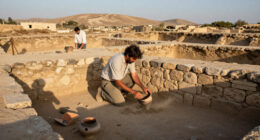

A new laboratory build for a pharmaceutical manufacturer, an auditor with thirty years of experience, and the only question that matters in this trade: How do you know that? A morning of auditing at Reinbau Sondertechnik GmbH.

Get school and study supplies delivered free — and shop member deals
- Fast, free delivery on millions of items
- Access to Prime Big Deal Days deals on October 6–7
- Prime Video, Amazon Music and more included
Field audit · Reinbau Sondertechnik GmbH (scenario)
Three hours in which someone tries to break the evidence
An auditor with thirty years of experience checks the documentation state of a pharmaceutical laboratory build — one day pass, minimal rights, and the only question that matters: how do you know that?
Scenario story: fictional example company showing the Gewerkton target build-out; individual features in beta or under development.
QR day pass, minimal rights — she sees her assignment, nothing else
Zone C: observations and raw values — nowhere a cleanroom class, nowhere a checkmark
“Show me something that is not documented” — the gaps view answers
The changing area is a no-recording zone — by data architecture, not by promise
Versioned auditor export: real files with checksums, no screenshots
Verdict delivered while walking — 45 minutes earlier than planned
“I distrust any documentation that claims 100 percent.”
— Dr. Ines Krall, client quality assurance
What the export is
A versioned control catalogue whose evidence is real files with checksums — plus low-content key figures on tested access paths and suggestion paths that demonstrably remain without effect before a human approves.
What it is not
Not an attestation — a readiness survey, stated on the cover page. No screenshots, no retrospectively assembled folders, no self-certification. “The most honest cover I have seen this year.”
Her verdict, while walking: “You spared me nothing. You just didn’t pretend anything to me.”
Scenario story: Reinbau Sondertechnik is a fictional example company. The story shows the target build-out of Gewerkton; individual features are in beta or under development.
As an affiliate, we earn on qualifying purchases.
8:00 a.m. — the ID badge that expires in the evening
Dr. Ines Krall comes from the client’s quality assurance department and has no obligation to be friendly today. Her assignment is to check the state of documentation for the new laboratory build before the zones enter the qualification phase.
Her access is a day pass: a QR code with minimal rights that expires in the evening. She sees what belongs to her audit assignment, and nothing else. On the first page that opens, sober lines state who can see what — a role overview showing every participant which information is visible to whom. Krall nods approvingly, which rarely happens: “Half the resistance to systems like this arises because nobody knows who is reading along.”
Project manager Marcus Deubel accompanies her, but says surprisingly little over the next three hours. That is the real test.
8:40 a.m. — the question of evidence
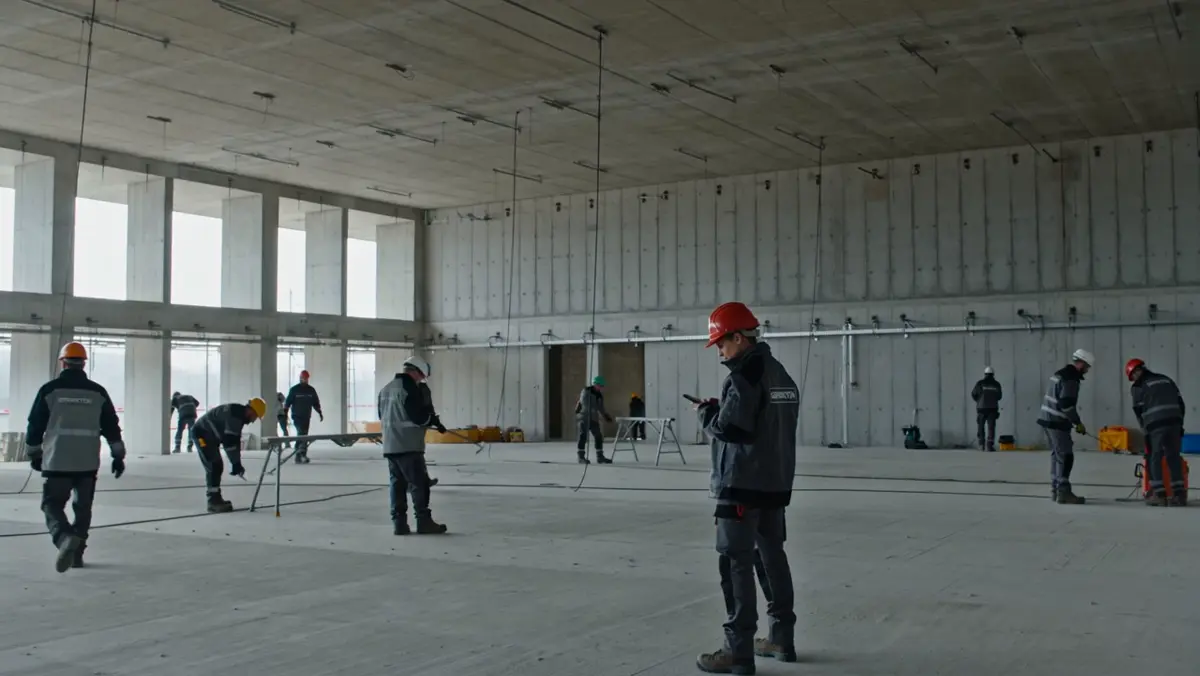
Krall starts where audits always start: with a zone that has been reported as ready. Cleanroom zone C, third floor.
What she sees is not a confirmation but a collection of observations: room, zone, operating state, visible surface condition, cleaning status, utility connections, raw measured values, photos. Nowhere does it state a cleanroom class. Nowhere does it state a hygienic release. The template does not pronounce one — it records what was measured and seen, and leaves the classification to the specialist.
Krall tests this with her standard trap. She looks for a green checkmark that asserts something, and finds none. Instead she finds points where the target range is empty because it has to be maintained on a project-specific basis — and which are visibly empty rather than filled with a default value that nobody is responsible for.
“That is unusual,” she says. “Most tools give me an assessment that nobody feels responsible for afterwards.”
9:20 a.m. — the system and its measurement series
Second checkpoint: the technical building equipment. Every system is a data record with an identifier, room, visible product data, and document references; attached to it are functional tests as measurement series. Queried are raw value, unit, method, device, operating state.
Krall pulls out a ventilation system and demands the chain backwards: from the functional test report through the installation situation to the delivery. She gets it, including the images from the state before the suspended ceiling — documented in the window that the platform enforces before every closure.
Then comes her sharpest question, and it is not technical: “Show me something that is not documented.”
Deubel opens the gaps view. It is part of the product, not a report generated on request: areas reported as active that have had no photo for 14 days; points awaiting an acceptance inspection without an after-image; tests whose deadline is running. For zone C there are three items. Deubel knows them; they are on his list.
Krall notes this as positive and adds a sentence that sums up the industry: “I distrust any documentation that claims 100 percent.”
10:05 a.m. — the zone where the camera stays off
On the way through the third floor, something happens that has nothing to do with cleanroom technology and still belongs in this audit.
The construction workers’ changing area is stored in the platform as a no-recording zone. Anyone who opens the camera there gets a notice. There is no location history per person, no evaluation of working hours per person, no performance ranking — and not as a promise in a contract, but as a property of the data architecture: evaluations that would add up individual performance are structurally not provided for.
Reinbau needed that. Nine external companies work on the construction site; the rollout of the tool went through the works council of the main contractor, and the conversation took one meeting instead of half a year, because the self-restriction was available as a document that can be read and exported.
The nine external companies were not trained in the classic sense. Each received, on first access, a ninety-second video in its company language and a practice task: mark a test point as complete. Reinbau measures how long it takes from invitation to the first real response — two days on average, three weeks for one company, and that one company got a phone call instead of a warning. Reinbau obtained the cleanroom specialist templates themselves as a package and adapted them to its own zone designations; aligning them with the client’s quality system required onboarding support at the beginning, because a pharmaceutical customer does not adapt its testing processes to the software, but the other way around.
10:50 a.m. — the auditor export
The last part is the one Krall does not know from other projects.
Reinbau presents a versioned control catalogue whose evidence consists exclusively of real files with checksums — no screenshots, no retrospectively assembled folders, no copies in a database. Plus low-content key figures: how many access paths have been tested, how many suggestion paths demonstrably remain without effect before a human approves.
On the cover page it states what this is and what it is not: a readiness survey, not an attestation. Nobody here is certifying themselves anything. Krall looks up. “That is the most honest cover I have seen this year.”
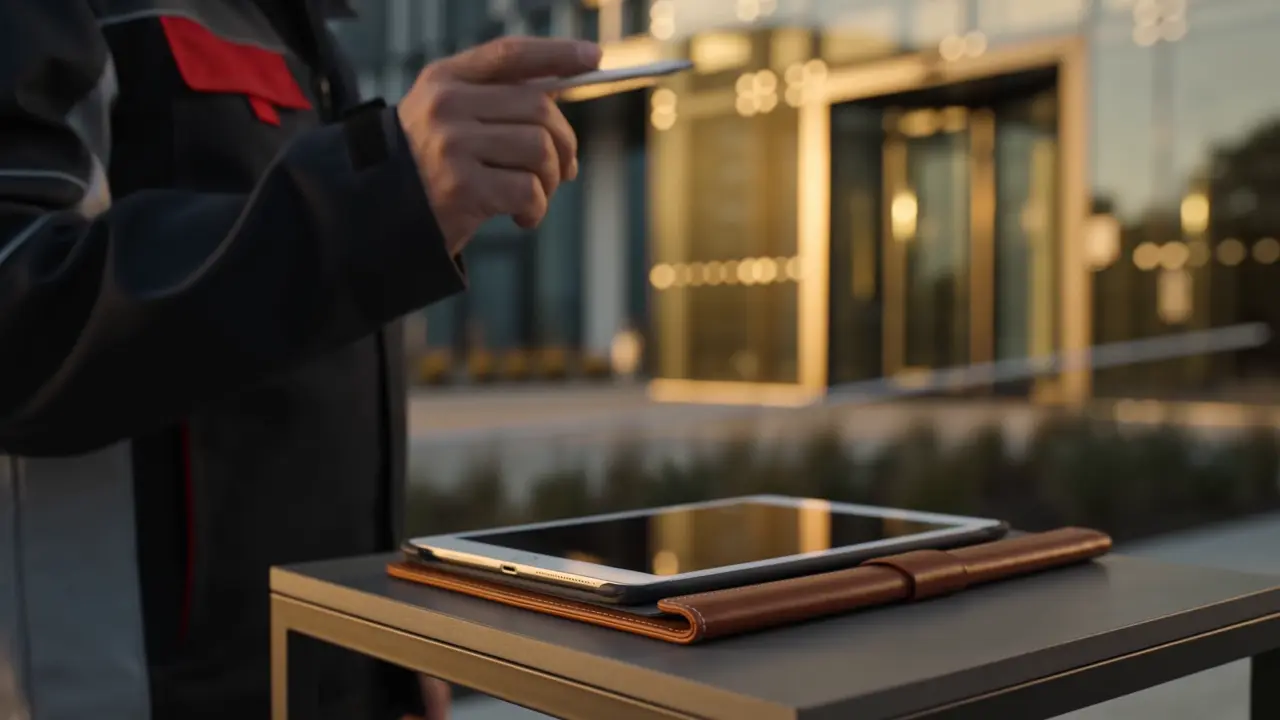
And then she writes a finding anyway. Two measurement series of the utility supply have no maintained target range, even though the zone had already been reported as ready. The tool did not prevent it — it cannot prevent it, because it does not know the technical specification and is not allowed to invent one. Deubel does not object. The finding goes as a case into the same chain as everything else, with a deadline, with a responsible person, with evidence upon completion.
The conversion next door
The new laboratory build is the easy part. The difficult one lies a hundred meters away: the renovation of a hospital wing during ongoing operations.
There, no model exists, but rather a set of existing plans from four decades. Reinbau’s technician captured the affected floors herself in the browser — walls, doors, shafts, utility zones — in order to have a common reference body at all, to which rooms, systems, and findings are attached. From the model she derives the plan extracts the ward management needs in order to understand which area cannot be used in which week. That is not detailed planning; that remains with the planning office.
For the hospital as the client, a different question was decisive: where the data resides. The platform’s operations side leaves the choice — location, operating model, provider of the language models used — and for each project it is visible how many AI calls occurred in which region. In a building that manages patient data, that is not a footnote but the admission ticket.
What happens afterwards
With handover, a data record comes into being, not a shelf of binders: systems, rooms, document references, testing and maintenance cycles, in a sheet set that can be imported into common facility management systems. Reinbau labels it honestly — conformity with a handover standard is not validated, and that is stated alongside.
From there, operations takes over: recurring inspections with evidence, hygiene and maintenance documentation, deadlines derived from the actual acceptance dates. And when the project goes quiet, it goes into the archive — read access, chain of evidence intact, stored immutably. In a regulated environment, retention periods are not a matter of caution but of duty.
Krall says goodbye at 11:15 a.m., three quarters of an hour earlier than planned. She delivers her verdict while walking, and it does not sound like praise: “You spared me nothing. You just didn’t pretend anything to me.”
Deubel takes that as top marks.
Transparency: Gewerkton is a product from the house of the publisher of this publication.
[Powered by Thorsten Meyer AI](https://thorstenmeyerai.com/)Learn more about Gewerkton and its lines: Field, Studio and Cloud.
Fall Picks
fall essentials
As an affiliate, we earn on qualifying purchases.