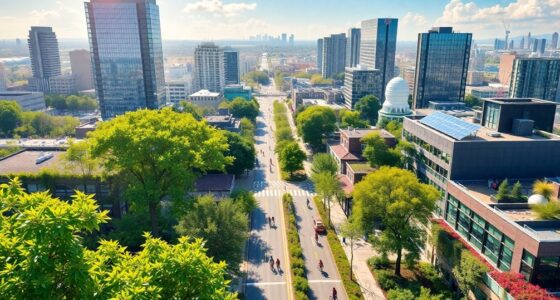
Mangroves play a crucial role in protecting coastlines from storms, erosion, and flooding by absorbing wave energy and stabilizing shorelines with their dense root systems. They act as natural barriers, reducing storm surges by over 50%, and support ecosystems that help communities adapt to climate change. Their benefits extend beyond flood prevention, including water filtration and carbon storage. Keep exploring to discover how conserving these ecosystems can strengthen shoreline resilience.
Key Takeaways
- Mangroves reduce wave energy and storm surges by over 50%, protecting coastal communities from flooding and erosion.
- Their dense root systems trap sediments, stabilizing shorelines and supporting natural beach recovery.
- Mangroves buffer storm surges and extreme weather events, shielding infrastructure and saving millions from disaster impacts.
- They act as natural barriers against tsunamis and hurricanes, enhancing coastal resilience.
- By trapping sediments and stabilizing shores, mangroves mitigate coastal erosion and promote shoreline stability.
The Global Economic Value of Mangroves in Flood Defense
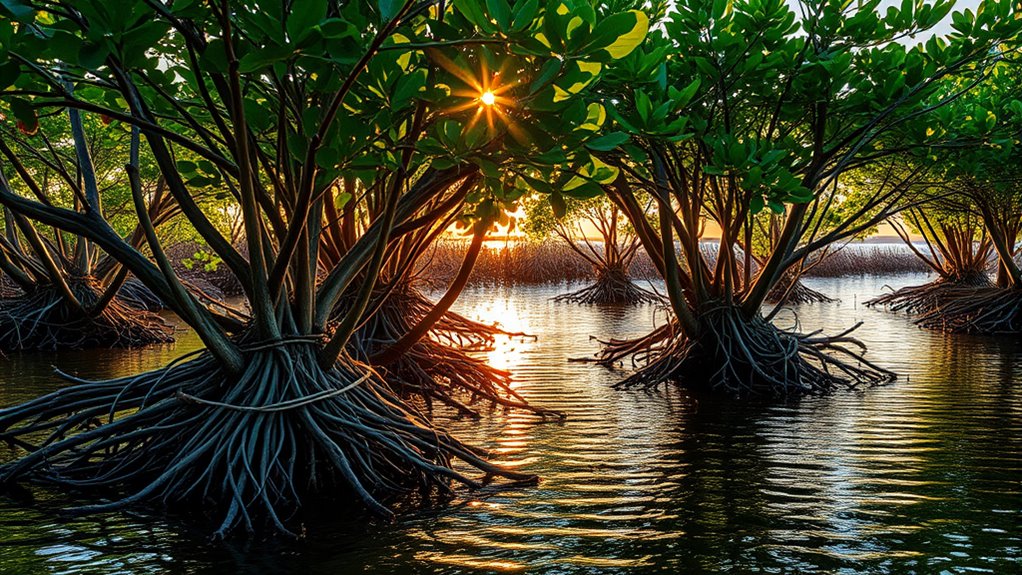
Mangroves play a crucial role in protecting coastlines and saving lives, and their economic value reflects this importance. Globally, they provide an estimated $855 billion in flood protection over the next century as natural capital assets. This valuation highlights the significant economic benefits that emerge from preserving healthy mangrove ecosystems. This value has risen by $130 billion from 1996 to 2010 and an additional $502 billion from 2010 to 2020, driven by increasing populations and coastal development. Countries like China, Vietnam, Australia, the U.S., and India benefit the most from these natural defenses. Despite some loss of mangroves, the decline rate slowed to 0.66% from 2010 to 2020, while their protective benefits grew considerably. This underscores how mangroves are an essential, cost-effective solution for reducing flood risks and safeguarding communities worldwide. Additionally, integrating proper management practices can ensure the longevity and resilience of mangrove ecosystems, maximizing their protective benefits. Recognizing the ecosystem services provided by mangroves highlights their importance beyond just flood prevention, including biodiversity support and carbon sequestration. Moreover, understanding the vibrational energy of ecosystems can help in designing better conservation strategies that enhance their natural protective functions. Such insights are vital for developing sustainable conservation approaches that maintain ecosystem health and economic value over time. Incorporating scientific research into conservation efforts can further improve the effectiveness of mangrove protection initiatives.
How Mangroves Protect Coastal Areas From Storms and Erosion
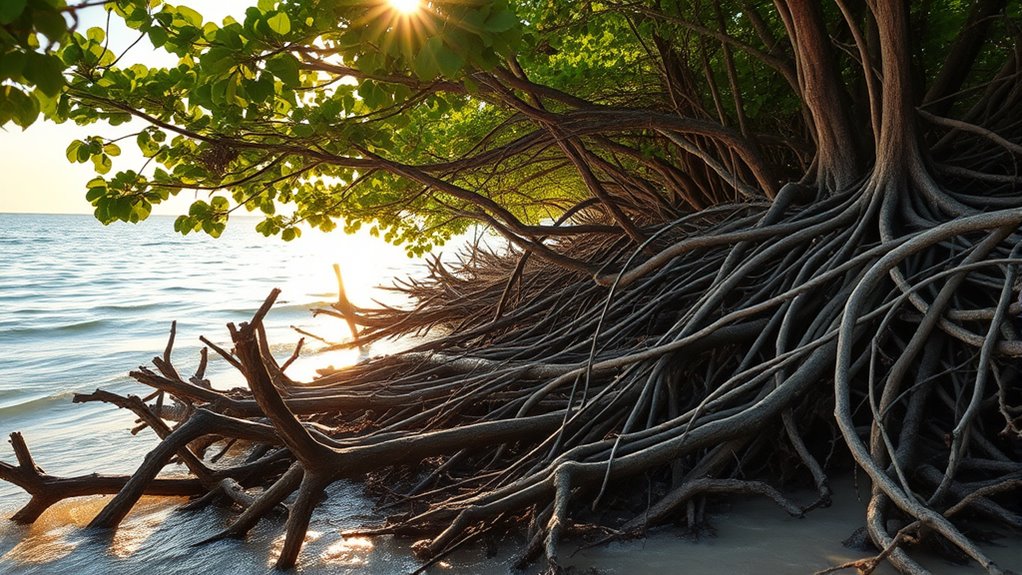
Building on their proven ability to reduce flooding, mangroves also serve as powerful natural barriers against storms and shoreline erosion. Their dense root systems and thick foliage absorb wave energy, cutting storm surges by over 66%, which lessens the force reaching the coast. A 500-meter-wide mangrove belt can reduce wave heights by 50-100%, markedly decreasing erosion and flood risks. These roots trap sediment, helping to rebuild beaches after storms and stabilize shorelines. During hurricanes and cyclones, mangroves buffer the impact, reducing wave height and storm surge intensity. This natural armor shields coastal infrastructure and communities, preventing damage and loss. By dissipating wave energy, mangroves maintain shoreline integrity and protect against the destructive forces of storms and erosion. Additionally, their role in offensive security measures highlights their effectiveness in mitigating threats and protecting vital assets from natural hazards.
Beyond Flooding: Ecosystem Services Provided by Mangroves
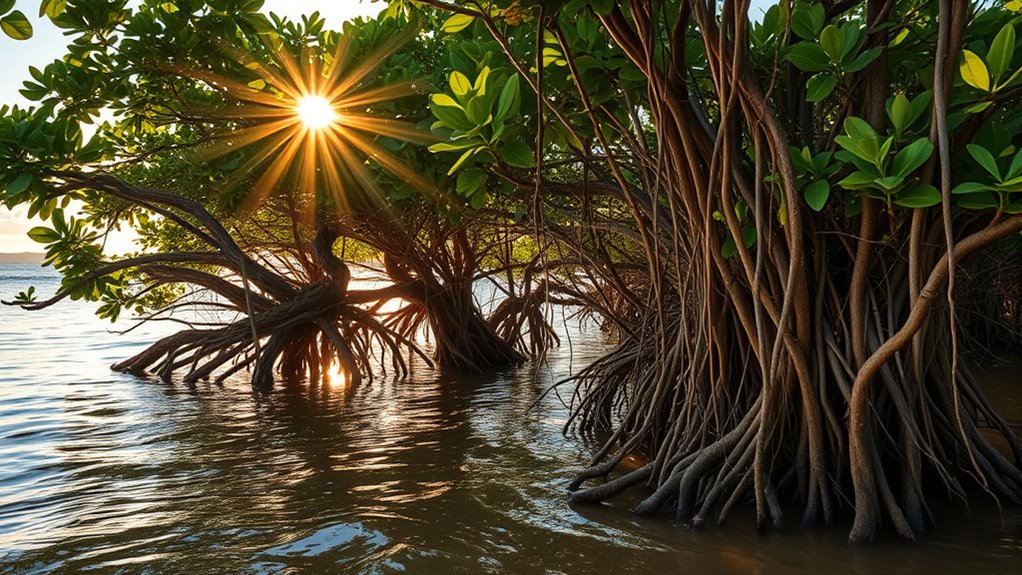
Beyond their role in flood prevention, mangroves deliver a wide range of essential ecosystem services that support both environmental health and human well-being. They serve as critical nurseries for fish and marine species, boosting local fisheries and food security. As carbon sinks, mangroves capture large amounts of CO₂, helping combat climate change—despite covering only a small fraction of tropical forests, they account for about 10% of deforestation-related emissions. They also improve water quality by filtering pollutants and trapping sediments, which benefits coastal ecosystems and communities. Additionally, mangroves support livelihoods through sustainable harvesting and eco-tourism. Preserving and restoring these forests enhances biodiversity and ensures the resilience of coastal communities, making them indispensable for sustainable development and climate adaptation efforts. Ecosystem services are vital for maintaining the health and sustainability of these coastal environments. The protection of mangroves also promotes biodiversity hotspots, which are crucial for sustaining diverse species and ecological stability in coastal regions. Moreover, healthy mangrove ecosystems can provide opportunities for home decor and other sustainable products, fostering economic development while maintaining ecological integrity. Recognizing the importance of marine habitats can further aid in the conservation strategies necessary to safeguard these vital ecosystems.
Challenges and Efforts in Conserving and Restoring Mangrove Forests

Conservation and restoration of mangrove forests face significant challenges due to human activities and environmental pressures. Deforestation from shrimp farming, coastal development, pollution, and climate change continues to threaten these essential ecosystems. Despite slowing loss rates, ongoing degradation persists. To address this, efforts focus on policy measures, community engagement, and restoration projects. Governments and organizations are implementing programs like protected areas and mangrove reforestation initiatives. Enhancing conflict resolution skills within communities can further support collaborative conservation efforts. Raising awareness about mangroves’ value encourages local support and participation. Strengthening legal protections helps prevent illegal clearing and encroachment. Investing in restoration projects yields economic returns and enhances coastal resilience. Promoting community involvement is vital for the long-term success of conservation initiatives. Additionally, understanding the importance of ecosystem services provided by mangroves can motivate stakeholders to prioritize their preservation. Recognizing the role of coastal ecosystems in climate regulation and biodiversity conservation underscores their global significance. These combined actions aim to secure mangroves’ future, ensuring they continue providing critical coastal protection and ecosystem services.
Mangroves as a Key Component of Climate Resilience for Coastal Communities
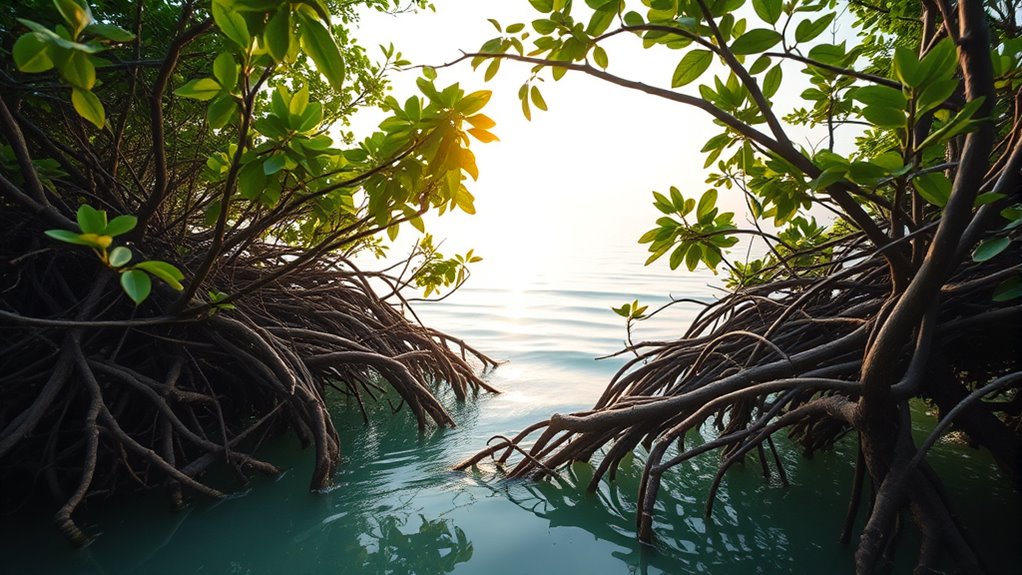
Mangroves play a vital role in enhancing the climate resilience of coastal communities by acting as natural barriers against storms, flooding, and erosion. You benefit from their ability to reduce wave energy and storm surges, which can lower flood risks by over 50%. Mangroves stabilize shorelines by trapping sediments, helping natural beach recovery after storms. They protect over 15 million people worldwide annually from flooding and storm damage, preserving lives, livelihoods, and infrastructure. By acting as carbon sinks and filtering pollutants, mangroves also support climate mitigation and water quality. Automation’s role in business intelligence Their conservation strengthens local economies, safeguards biodiversity, and enhances food security. Protecting and restoring mangroves is essential for building resilient coastal communities facing rising sea levels and more intense storms. Incorporating restoration techniques and adopting community-based management can further enhance their effectiveness in climate resilience strategies, ensuring these vital ecosystems continue to provide their crucial services.
Frequently Asked Questions
How Do Mangroves Compare Cost-Wise to Engineered Flood Defenses?
You’ll find that mangroves are more cost-effective than engineered flood defenses. They reduce wave energy by over 66%, stabilize shorelines, and prevent property damages, saving billions annually. Maintenance costs are lower, and they provide additional benefits like supporting biodiversity and capturing carbon. Investing in mangroves offers long-term resilience and protection at a fraction of the cost of constructing and maintaining seawalls or levees, making them a smart economic choice.
What Species of Mangroves Are Most Effective for Coastal Protection?
You should focus on species like Rhizophora, Avicennia, and Laguncularia because they have dense root systems that effectively reduce wave energy and stabilize shorelines. Rhizophora mangroves, with their prop roots, are especially good at dissipating wave forces, making them ideal for coastal protection. Avicennia and Laguncularia also form thick forests that trap sediments and buffer against storm surges, providing essential natural defenses against flooding and erosion.
How Does Climate Change Threaten Mangrove Ecosystems Globally?
Climate change threatens mangroves worldwide by causing sea levels to rise, which can drown these ecosystems if they can’t adapt quickly enough. Increased storm intensity and frequency, along with higher temperatures, lead to more frequent damage and habitat loss. Additionally, human activities like coastal development and pollution worsen these effects. To protect mangroves, you need to support conservation efforts and advocate for policies that address climate change’s impacts on these essential coastal buffers.
Can Mangrove Restoration Fully Replace Natural Protection Systems?
Restoration can’t fully replace natural protection systems because mature mangroves provide complex, extensive barriers that take years to develop. You’ll see that while replanting helps rebuild ecosystems, it often lacks the depth, root structure, and biodiversity of untouched mangroves. Without their full growth, restored mangroves can’t offer the same level of wave energy reduction, shoreline stabilization, or resilience against storms that natural, established mangroves provide.
What Policies Are Most Successful in Promoting Mangrove Conservation?
You should focus on policies that combine legal protections, community involvement, and financial incentives. Successful strategies include establishing protected areas, enforcing anti-deforestation laws, and offering payments for ecosystem services. Engaging local communities in conservation fosters stewardship, while restoring degraded mangroves enhances natural defenses. Governments that align policies with scientific data and promote sustainable development see better results in conserving mangroves, ultimately strengthening coastal resilience and supporting local livelihoods effectively.
Conclusion
You might think concrete barriers are the best defense against storms, but mangroves prove otherwise—they naturally absorb wave energy and reduce erosion more effectively. Research shows that intact mangrove forests can lower flood risk by up to 70%. By protecting and restoring these essential ecosystems, you’re not just saving wildlife—you’re strengthening your community’s resilience against climate change. Embracing mangroves isn’t just eco-friendly; it’s a smart, proven strategy for coastal safety.