After Mount St. Helens erupted in 1980, the landscape was devastated, but nature quickly began its recovery. Plants like fireweed sprouted within weeks, using ash as fertilizer, while microorganisms and seeds helped rebuild soil. Wildlife adapted and returned, using new habitats and migration strategies. Reforestation and ongoing monitoring show how ecosystems can heal over time. If you want to discover how this remarkable comeback continues, there’s more to explore.
Key Takeaways
- Volcanic ash enriched soils, providing nutrients that supported rapid plant regrowth after the eruption.
- Pioneer species like fireweed quickly colonized the devastated landscape, initiating ecological succession.
- Microorganisms and seed banks facilitated soil health and accelerated vegetation recovery.
- Wildlife adapted through migration, burrowing, and exploiting new habitats, aiding ecosystem rebuilding.
- Long-term monitoring and reforestation efforts helped restore forests, lakes, and wildlife, demonstrating resilience.

Mount St. Helens 35th Anniversary Edition: The Eruption and Recovery of a Volcano
As an affiliate, we earn on qualifying purchases.
As an affiliate, we earn on qualifying purchases.
The Catastrophic Eruption and Immediate Aftermath
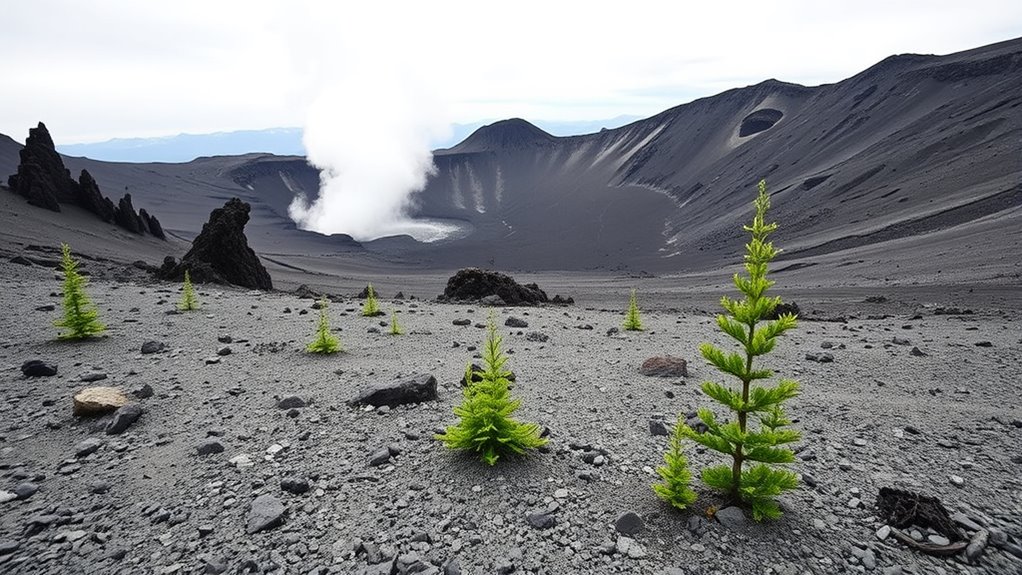
On May 18, 1980, Mount St. Helens erupted with catastrophic force in southwestern Washington. You would have witnessed a massive explosion that instantly devastated 151,000 acres of forest and recreation land. The eruption produced a towering ash column and a lethal pyroclastic flow that flattened everything in its path over 230 square miles. Tragically, 57 people lost their lives in the disaster. The eruption was rated a 5 on the Volcanic Explosivity Index, classified as a powerful Plinian event. In just 15 minutes, the landscape was transformed from lush forest to a barren wasteland. The eruption’s immediate aftermath left a chaotic scene of destruction, with ash, debris, and altered terrain dominating the region.

Everwilde Farms – 800 Fireweed Native Wildflower Seeds – Gold Vault Seed Packet
First Quality Native Wildflower Seeds – Current Lab Test Data Shown on Packet
As an affiliate, we earn on qualifying purchases.
As an affiliate, we earn on qualifying purchases.
Devastation and Landscape Transformation
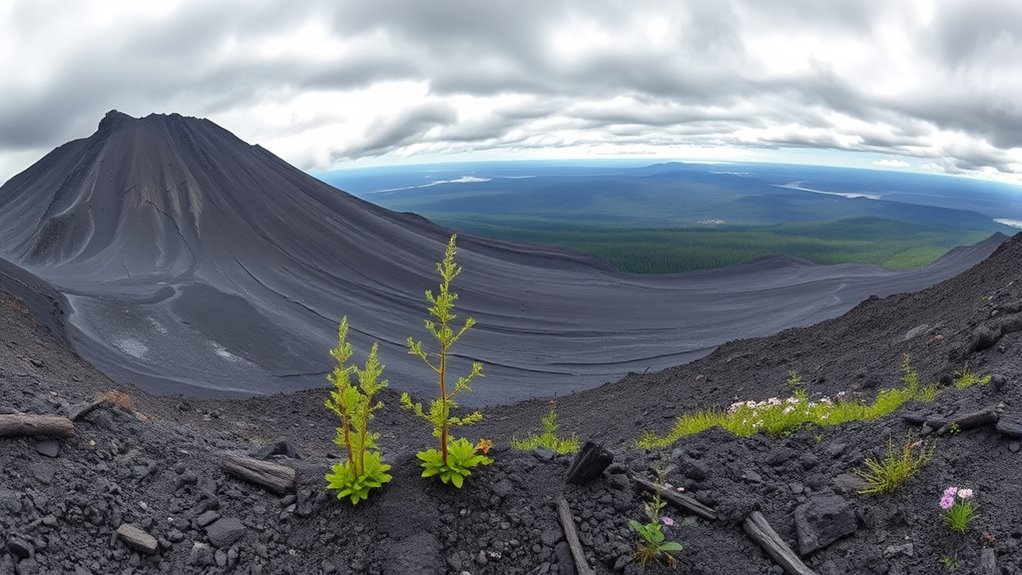
The eruption of Mount St. Helens transformed the landscape in a matter of minutes. Forests vanished, rivers changed courses, and new lakes flooded the area. The terrain became a barren, rugged wasteland. To visualize this, consider the following:
| Before Eruption | After Eruption |
|---|---|
| Lush, green forests | Desolate, ash-covered ground |
| Meandering rivers | New, altered river paths |
| Clear lakes and streams | Flooded banks and sediment-filled lakes |
| Rolling hills and valleys | Piled debris and volcanic deposits |
| Vibrant wildlife | Sparse, disturbed habitat |
This landscape, scarred but dynamic, set the stage for ecological recovery, revealing both devastation and the potential for renewal.

Nutrient Release From Mount St. Helens Volcanic Ash and Retention by Western Montana Soil
As an affiliate, we earn on qualifying purchases.
As an affiliate, we earn on qualifying purchases.
Unexpected Signs of Life and Rapid Vegetation Emergence

You’ll notice plants sprouting through the ash almost immediately after the eruption, defying expectations of long recovery times. The volcanic ash acts as a nutrient-rich fertilizer, fueling rapid growth in certain species. This quick habitat recolonization highlights nature’s resilience and its ability to bounce back swiftly. Interestingly, this rapid vegetation emergence is supported by the presence of resources and tools that facilitate ecological recovery and adaptation. Additionally, early colonizers often include hardy pioneer species that are specially adapted to thrive in harsh environments, kickstarting the process of succession and stabilizing the soil for future plant growth. The availability of nutrients in the ash further accelerates this process, enabling plants to establish more quickly than anticipated. Furthermore, the presence of ecological resilience mechanisms such as seed dispersal and soil stabilization contributes to the swift recovery of the ecosystem after such a destructive event.
Immediate Sprouting Success
Despite the catastrophic nature of the Mount St. Helens eruption, you’ll find that life sprang back surprisingly fast. Within weeks, plants like fireweed emerged through the ash, their roots pushing through the tephra. You might notice how eroded slopes revealed patches of soil, allowing grasses and small plants to take hold rapidly. Water flowing over the deposits helped flush away loose ash, creating pockets of bare ground where new vegetation thrived. In rills and along lakeshores, seedlings broke through the surface almost immediately after the eruption, signaling nature’s resilience. This swift sprouting defied expectations, showing that even in a seemingly lifeless wasteland, the seeds of recovery are sown quickly, setting the stage for a broader ecological comeback. The process of ecosystem succession demonstrates how disturbed landscapes can stabilize and regenerate over time.
Ash as Fertilizer
After plants began to sprout through the ash, scientists quickly realized that the volcanic deposits were acting as natural fertilizer. The ash contained essential nutrients like potassium, calcium, and magnesium, which are crucial for plant growth. These nutrients enriched the soil, promoting rapid germination and development of seedlings. The mineral-rich ash also helped retain moisture, creating a more stable environment for new plants. Additionally, the second trimester of plant succession is often characterized by increased biodiversity as different species begin to establish themselves. As a result, vegetation appeared surprisingly fast, even in areas with thick tephra deposits. Partial erosion of the ash by wind and water further exposed nutrients, accelerating plant recovery. This natural fertilization jump-started the ecosystem’s rebuilding process, allowing pioneer species like fireweed and mosses to establish quickly and prepare the terrain for more complex plant communities. The process of soil enrichment plays a vital role in supporting the growth of various plant species during this early stage of succession. Moreover, ongoing research into sound vibrations and their influence on cellular regeneration suggests that natural processes may be further aided by environmental factors, enhancing recovery. Recent studies also indicate that the presence of microorganisms in volcanic ash can further promote plant colonization and soil health.
Rapid Habitat Recolonization
Unexpected signs of life appeared almost immediately after Mount St. Helens erupted. Within weeks, plants like fireweed and various grasses sprouted through the ash, signaling rapid recovery. As tephra eroded from hillsides, more plants reached the surface, especially in rills and along lakeshores. You can observe how nature quickly reclaims disturbed areas, with vegetation covering barren lands. Key factors driving this swift recolonization include:
- Pioneer species thriving in ash deposits
- Rapid soil stabilization by early plants
- Water removal of tephra exposing roots
- Surviving seed banks in the soil
- Microbial activity aiding plant growth
- Natural materials like wood and stone play a role in supporting new plant life and creating microhabitats that foster growth.
This fast response highlights nature’s resilience, showcasing how life finds a way to adapt and flourish even after catastrophic destruction. The landscape begins transforming almost immediately, setting the stage for long-term ecosystem recovery.

Land Animal Adaptations
As an affiliate, we earn on qualifying purchases.
As an affiliate, we earn on qualifying purchases.
The Role of Biological Legacies in Ecosystem Recovery
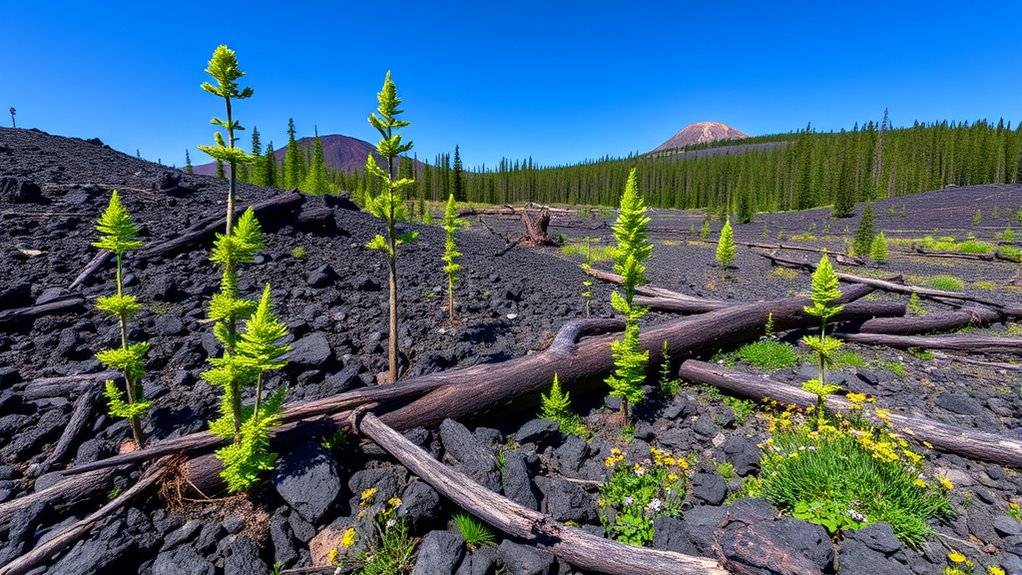
You can see how surviving species serve as essential anchors for ecosystem recovery, providing seeds and roots that jump-start growth. These biological legacies create pathways for recolonization, guiding how plants and animals return to the area. Their presence lays the foundation for rebuilding a resilient and functioning ecosystem after a disaster. Their role is further reinforced by cost and budgeting considerations, which influence the resources available for restoration efforts. The importance of biodiversity is evident in how these biological legacies facilitate the recovery process. Vetted Halloween products also demonstrate the importance of community and celebration in recovery efforts, fostering social bonds that support ecological and cultural renewal. Incorporating restoration planning strategies can optimize the use of biological legacies to accelerate ecosystem resilience. Additionally, understanding how lifestyle choices impact environmental health can inform more sustainable recovery practices.
Surviving Species’ Impact
Surviving species play a crucial role in shaping the recovery of ecosystems following a volcanic eruption. Their presence provides essential ecological functions that jump-start the rebuilding process. These species help stabilize soil, prevent erosion, and create microhabitats for new growth. Their survival allows food webs to re-establish more quickly. You should note:
- Small animals emerge within weeks, forming the foundation for future communities
- Large mammals gradually return, restoring predator-prey dynamics
- Plants from residual seeds or root systems quickly sprout, aiding succession
- Microorganisms survive in soil pockets, facilitating nutrient cycling
- Birds and insects exploit remaining habitats, supporting pollination and seed dispersal
These biological legacies act as ecological anchors, enabling the ecosystem to rebound despite the devastation. Their resilience accelerates recovery and fosters biodiversity.
Recolonization Pathways
Biological legacies, such as residual seeds, root systems, and surviving microorganisms, serve as primary pathways for ecosystem recolonization after a volcanic eruption. These remnants enable plants, animals, and microbes to reestablish more quickly than starting from scratch. Some seeds in the soil remain dormant until conditions improve, while underground roots resprout when exposed. Microorganisms in the soil help break down ash and organic material, creating nutrients for new growth. The table below illustrates how different biological legacies contribute to recovery:
| Legacy Type | Role in Recolonization | Timeframe |
|---|---|---|
| Residual Seeds | Sprout new plants | Weeks to months |
| Root Systems | Resprout and stabilize | Months to years |
| Microorganisms | Nutrient cycling | Immediate to ongoing |
| Small Animals | Rapid ground activity | Weeks after disturbance |
Additionally, the presence of biological diversity accelerates the recovery process by fostering resilient and adaptable ecosystems. Moreover, the diversity of species present contributes to a more robust and sustainable ecosystem, which enhances resilience and its ability to recover from future disturbances. This natural resilience is supported by the residual biological material that persists in the environment, facilitating a quicker and more effective recovery. Furthermore, research indicates that microbial communities play a crucial role in soil health and plant succession during recovery.
Foundation for Recovery
The foundation for ecosystem recovery after a volcanic eruption relies heavily on the presence of biological legacies—residual seeds, root systems, and microorganisms—that remain in the environment. These survivors enable rapid reestablishment of life, jumpstarting the recovery process. You’ll find that:
- Some species from each trophic level persisted through the eruption.
- Small animals, like insects and rodents, appeared within weeks.
- Larger mammals eventually migrated back as habitats recovered.
- Microorganisms in soil helped plants to sprout quickly.
- Roots and dormant seeds in the soil provided a genetic reservoir for plant regrowth.
- The influence of native plant species on ecological resilience highlights the importance of preserving genetic diversity for long-term recovery.
These biological legacies act as the ecosystem’s initial building blocks, ensuring that recovery begins sooner than expected and guiding the development of a resilient, diverse landscape. Their survival is essential for the ecosystem’s long-term revival.
Reforestation Efforts and Habitat Restoration
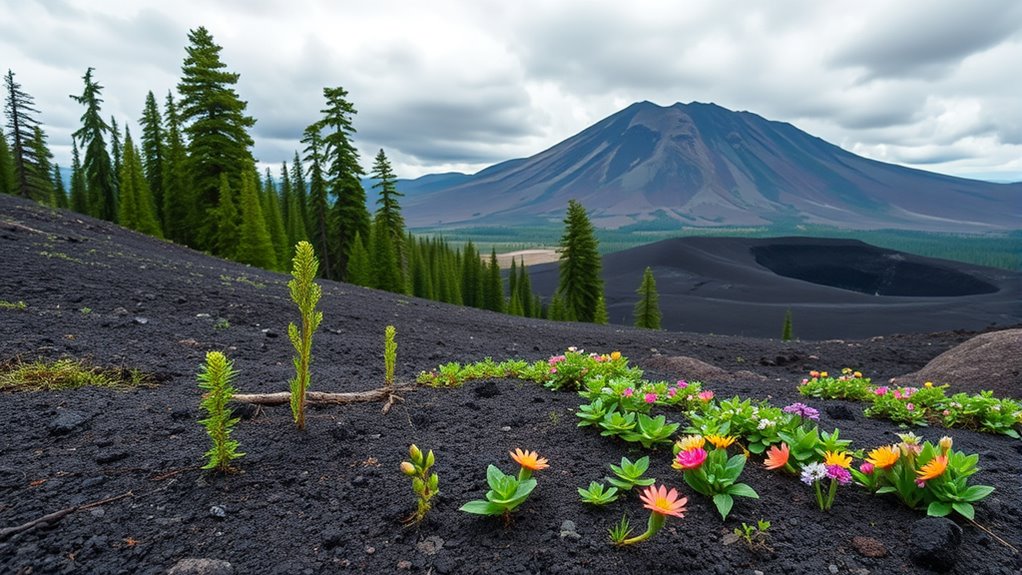
Following the devastating eruption of Mount St. Helens, reforestation efforts began quickly. You see, specialists focused on stabilizing soil and restoring habitats. They used native trees like cottonwoods and willows along rivers and streams to prevent erosion and provide shade for aquatic life. Here’s a snapshot of some key activities:
| Area Type | Restoration Method | Timeline |
|---|---|---|
| Riparian zones | Planting cuttings | First 2 years |
| Mountain slopes | Natural regeneration | Ongoing |
| Lakeshore | Vegetation planting | 3-6 years after eruption |
| Forest interior | Controlled burns, planting | 5-10 years |
These efforts helped accelerate ecosystem recovery, supporting plant regrowth, stabilizing soil, and creating habitats for wildlife. For successful reforestation, understanding ecosystem resilience is essential to adapt strategies as the environment heals. Additionally, ongoing monitoring systems are crucial to assess the effectiveness of restoration activities and inform future actions.
Water Bodies and Lakes: From Destruction to Regeneration
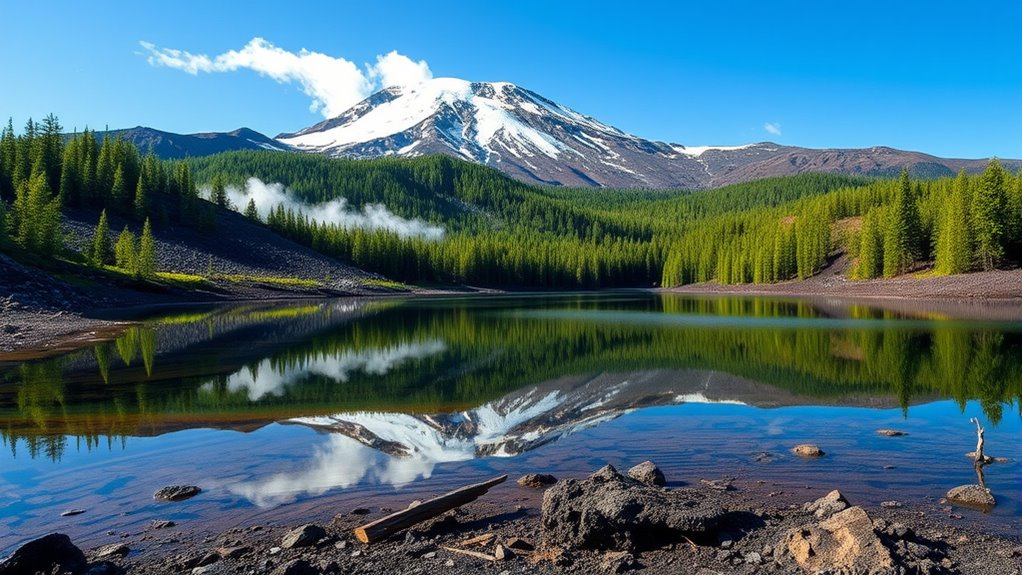
Reforestation efforts along rivers and lakeshore areas played a significant role in restoring the region’s aquatic ecosystems after Mount St. Helens. These projects stabilized sediment, reduced erosion, and improved water quality. As new lakes formed, natural processes began clearing sediment, allowing aquatic life to reestablish. Key factors in lakes’ recovery include:
- Sediment removal through natural erosion
- Vegetation planting stabilizing banks
- Water temperature regulation by riparian buffers
- Habitat creation for fish and invertebrates
- Improved conditions for aquatic plant growth
These actions helped lakes regain their ecological functions, supporting biodiversity and complex food webs. Over time, water clarity improved, fish populations rebounded, and aquatic habitats flourished. The transformation illustrates nature’s resilience and the importance of targeted restoration efforts in ecosystem recovery.
Wildlife Resilience and Migration Patterns
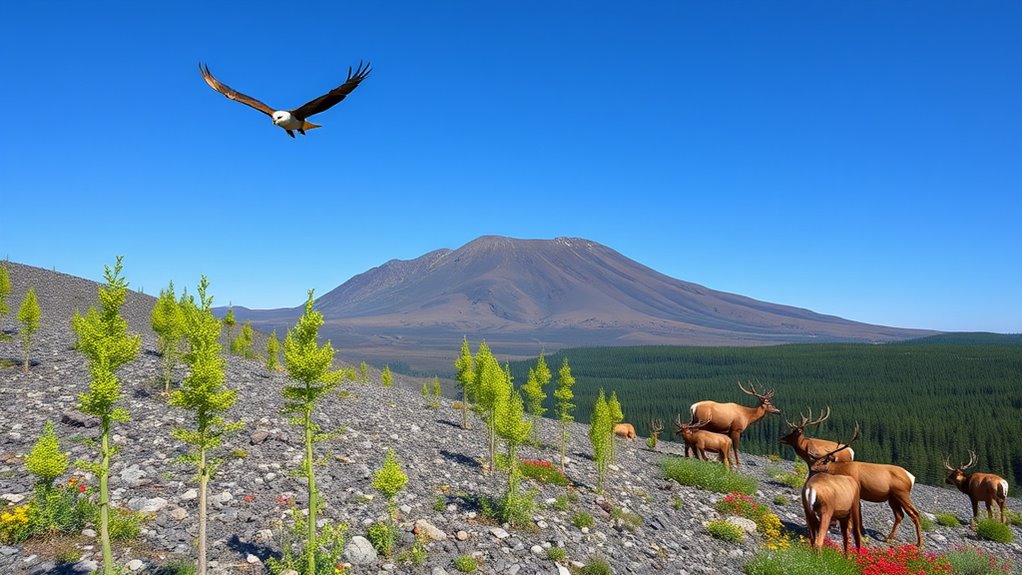
You can observe how animals survive by using clever strategies like burrowing or shifting their activity times to avoid dangers. As the landscape begins to recover, many species start returning, often within months or a few years. Their adaptation showcases resilience, allowing ecosystems to rebuild despite the scars of catastrophe.
Animal Survival Strategies
Animals in the aftermath of Mount St. Helens adapt quickly to survive and recover. Many species employ strategies like burrowing, hiding, or shifting habitats to avoid harm. You’ll find that:
- Small animals hide in underground burrows or dense cover to escape ash and predators
- Larger mammals migrate to unaffected areas, then return as conditions improve
- Some species, like insects, rapidly recolonize disturbed zones by flying or crawling into available niches
- Amphibians breed early, taking advantage of new lakes and ponds
- Birds adjust migration timings, exploiting new food sources and nesting sites
These strategies enable wildlife to persist despite extreme habitat changes. Their resilience relies on behavioral flexibility, quick recolonization, and the ability to exploit newly available resources, ensuring the ecosystem’s gradual recovery.
Migration Return Timelines
Wildlife migration patterns after Mount St. Helens began returning within months of the eruption. Small animals, like rodents and insects, reappeared quickly, recolonizing the devastated landscape in weeks. Larger mammals, such as deer and black bears, migrated back over the course of a few years, following the regrowth of vegetation and water sources. Birds returned as soon as trees and shrubs provided nesting sites and food. Some species, especially those with longer migration routes or specialized habitats, took decades to fully reestablish their traditional pathways. Overall, migration timelines varied by species, influenced by habitat recovery and food availability. The resilience of wildlife migration patterns highlights the ability of ecosystems to adapt and recover, even after catastrophic disturbance.
Adaptation of Species
Following the devastating eruption of Mount St. Helens, you observe how species adapt to survive amid chaos. Many animals display remarkable resilience by modifying behaviors and habitats. You notice that some species, like small mammals and insects, quickly rebound by exploiting new niches. Key adaptations include:
- Shifting migration timings to avoid harsh conditions
- Developing tolerance to ash and altered terrain
- Using new water sources formed by flooded basins
- Changing foraging strategies around disrupted food webs
- Establishing new burrows or nests in ash-covered areas
These adjustments enable species to recover swiftly, demonstrating their resilience. Over time, you see populations stabilize and even flourish in the transformed landscape, highlighting nature’s ability to adapt and thrive after extreme disturbance.
Long-Term Ecological Monitoring and Research

Long-term ecological monitoring at Mount St. Helens tracks ecosystem recovery over decades. Researchers established 92 permanent vegetation plots in 1980, documenting plant regrowth. Satellite data from Landsat satellites offers continuous insights into forest changes, showing recovery patterns from space. These efforts help you understand how ecosystems rebound after catastrophic events. The data reveals trends like soil stabilization, forest expansion, and wildlife return. Monitoring also identifies areas needing restoration, guiding conservation actions. Over time, this research uncovers the resilience mechanisms that drive recovery. The combination of ground surveys and satellite imagery creates a comprehensive picture of ecological dynamics. Your understanding deepens as you see how nature heals itself, highlighting the importance of sustained study in shaping effective management strategies.
| Monitoring Method | Key Focus Areas |
|---|---|
| Vegetation plots | Plant recovery and succession |
| Satellite imagery | Forest cover and landscape change |
| Soil analysis | Erosion and stabilization |
| Wildlife surveys | Animal recolonization |
| Hydrological studies | Water quality and stream recovery |
The Significance of Mount St. Helens as a Natural Laboratory
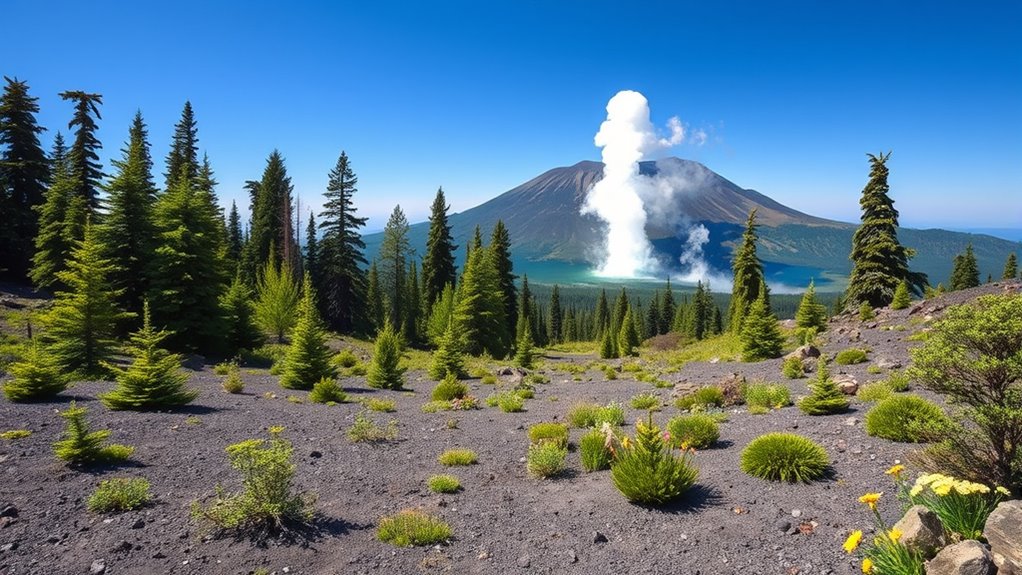
Mount St. Helens serves as a crucial natural laboratory for studying ecological recovery. You can observe firsthand how ecosystems respond to catastrophic disturbances, providing insights into resilience and succession. Its diverse habitats and rapid changes make it ideal for research. Key aspects include:
- Real-time monitoring of plant and animal regrowth
- Long-term data collection on soil and water recovery
- Understanding species survival and migration patterns
- Studying the impact of volcanic activity on ecosystems
- Developing models to predict future ecological responses
Lessons Learned and the Resilience of Nature

What can the recovery of Mount St. Helens teach you about the resilience of nature? It shows that even after devastation, ecosystems have an extraordinary capacity to bounce back. Many plants sprouted within weeks, taking advantage of exposed soil and fresh ash. Some animals, from small insects to large mammals, survived the initial eruption and gradually returned. The landscape’s natural processes, like erosion and sedimentation, worked alongside human reforestation efforts to restore forests and waterways. This resilience highlights nature’s ability to adapt and heal over time, often faster than expected. It reminds you that disturbance doesn’t mean destruction forever; ecosystems can recover, evolve, and even flourish after catastrophic events, demonstrating the strength and persistence at the core of the natural world.
Frequently Asked Questions
How Did Specific Plant Species Survive the Initial Blast and Ash Fall?
You see, specific plant species survived the initial blast by being resilient or growing close to the ground, where the ash and debris were less intense. Many plants, like fireweed, sprouted quickly through tephra because their seeds could germinate in ash-rich soil. Additionally, some plants had underground parts that protected them from the eruption’s heat and destruction, allowing them to resprout soon after the event.
What Genetic Traits Enable Some Animals to Endure Volcanic Disturbances?
You should know that animals with adaptable genetic traits like rapid reproduction, diverse diets, and flexible habitat use endure volcanic disturbances better. These traits allow them to recover quickly, find new food sources, and survive in changing environments. For example, small animals with fast breeding cycles can repopulate sooner, while species with broad diets can exploit available resources. Such genetic advantages help animals withstand and rebound from the chaos caused by eruptions.
How Do Soil Nutrients Recover After Such Massive Volcanic Eruptions?
You’ll find that soil nutrients recover quickly after volcanic eruptions because the ash deposits are rich in minerals like potassium, phosphorus, and calcium. These nutrients help plants reestablish, and natural processes like erosion, weathering, and organic matter buildup accelerate soil renewal. As plants grow and decompose, they add organic material, further enriching the soil. Over time, this cycle restores the fertility needed for ecosystems to recover and thrive.
What Are the Long-Term Impacts on Fish Populations in Affected Lakes?
Think of fish populations in affected lakes as a phoenix rising from ash. Over time, as lakes recover and sediment clears, fish return and repopulate. The rebuilding process is gradual, with water quality improving and habitats stabilizing. Reforestation and natural erosion help restore food sources and shelter. In the long run, fish populations adapt, thrive, and flourish again, illustrating nature’s resilience after such a dramatic upheaval.
How Does Volcanic Activity Influence Future Ecosystem Resilience and Stability?
Volcanic activity can both challenge and strengthen ecosystems’ resilience and stability. When a volcano erupts, it creates new habitats and triggers natural recovery processes. You’ll see ecosystems adapt by forming new plant and animal communities, often faster than expected. Over time, this disturbance promotes biodiversity and ecological diversity, making the environment more resilient. However, repeated eruptions can hinder stability, emphasizing the importance of natural recovery mechanisms and adaptive species.
Conclusion
Just like a phoenix rising from ashes, Mount St. Helens proves nature’s incredible resilience. Imagine standing on a barren, ash-covered landscape just decades ago, now witnessing lush forests and thriving wildlife. This transformation shows that even after the worst destruction, life finds a way to rebound stronger than before. Your journey through this recovery reminds us all that, with patience and care, nature can turn devastation into renewal.