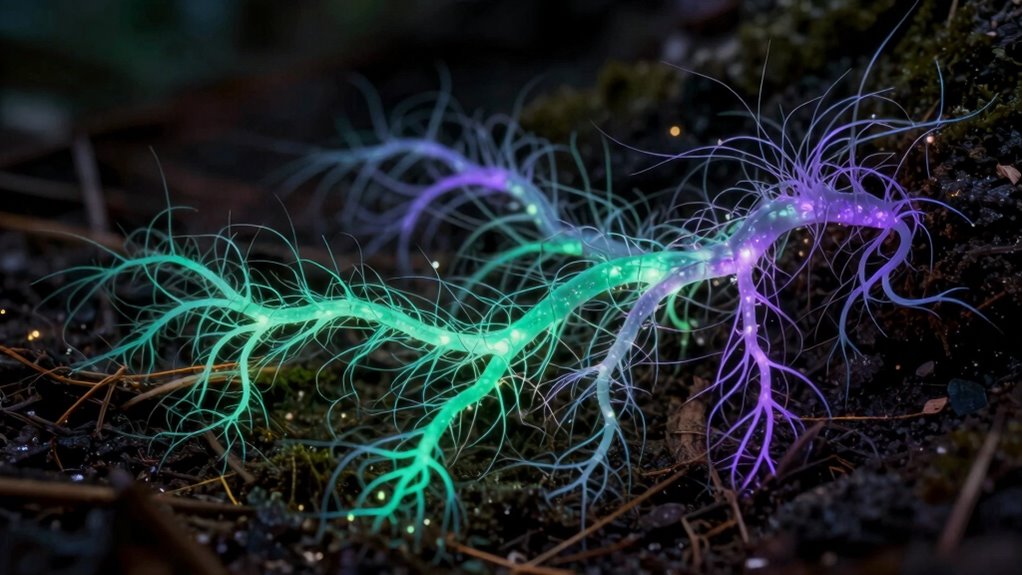

You can think of mycorrhizal networks as an underground highway connecting plants and trees, allowing them to share nutrients like phosphorus and nitrogen. These networks also enable plants to communicate about threats such as pests or droughts, helping them prepare defenses and support weaker neighbors. This interconnected system boosts forest resilience, promotes health, and allows trees to adapt quickly to environmental changes. Explore further to discover how these underground links sustain entire ecosystems.

Prime made for students and young adults
- Fast, free delivery for dorm and study essentials
- Prime Video and Amazon Music included
- Member-only deals
Key Takeaways
- Mycorrhizal networks create underground connections that facilitate nutrient and resource sharing among plants and trees.
- These networks act as an underground highway, enabling efficient transfer of nutrients like phosphorus and nitrogen.
- They support plant communication by transmitting chemical signals about threats, pests, or environmental stress.
- The networks enhance forest resilience by aiding weaker or younger plants and promoting ecosystem stability.
- Preserving these symbiotic relationships is vital for sustainable forestry and ecosystem health.
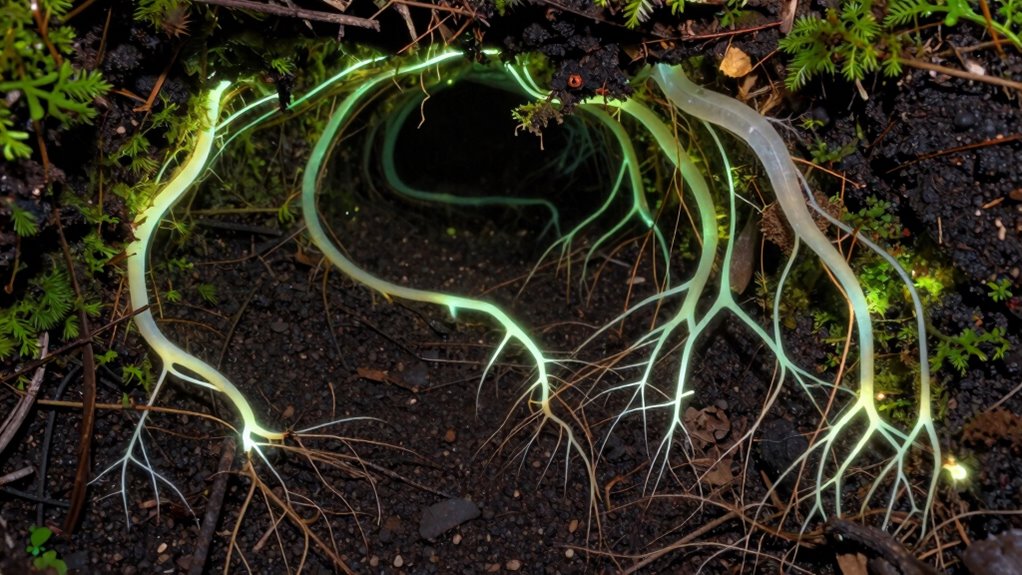
Beneath the forest floor, an intricate network of mycorrhizal fungi forms an underground highway that connects plants and trees, enabling them to share nutrients and communicate. This hidden web is essential for plant communication, allowing trees and plants to send signals about environmental threats, like pests or droughts. When a tree detects danger, it can release chemical signals through mycorrhizal connections, alerting neighboring plants to prepare their defenses. This kind of communication isn’t just about individual survival; it’s a fundamental part of forest resilience. When trees share resources through these networks, they support weaker or younger plants, helping the entire forest adapt to changing conditions. This interconnected system acts as a collective intelligence, ensuring that the forest can recover from disturbances more effectively.
Underground mycorrhizal networks connect trees, enabling nutrient sharing and vital communication for forest resilience and recovery.
As you observe the forest, you might notice how some trees seem to thrive despite adverse conditions. That’s partly thanks to these underground networks. Healthy mycorrhizal connections help trees access nutrients they can’t obtain alone, like phosphorus and nitrogen. They also facilitate the movement of sugars and other organic compounds, which can be critical during times of stress. When one tree is struggling, its neighbors can supply support through the network, strengthening the forest’s overall resilience. In this way, the mycorrhizal web acts as a biological safety net, distributing resources where they’re needed most and ensuring the forest’s long-term health. Recognizing the symbiotic relationships between fungi and plants highlights the importance of preserving these natural partnerships for ecological health. Additionally, these networks can quickly adapt to environmental changes, demonstrating their vital role in ecosystem stability. Understanding how these networks operate can also inform sustainable forestry practices that promote ecosystem health.
As an affiliate, we earn on qualifying purchases.
Frequently Asked Questions
How Do Mycorrhizal Networks Influence Plant Communication?
Mycorrhizal networks play a vital role in plant signaling by acting as underground communication channels. Through fungal symbiosis, they transfer nutrients and chemical signals between plants, helping them warn each other about pests or stress. You’ll notice that plants connected by these networks can share resources and information, making them more resilient. This fungi-assisted communication enhances their ability to adapt and survive in challenging environments.
Can Mycorrhizal Networks Benefit Crop Growth Commercially?
Yes, mycorrhizal networks can boost crop yield through improved nutrient uptake and plant health, making them valuable for commercial application. You can incorporate these fungi into your farming practices to enhance soil fertility naturally, reducing reliance on chemical fertilizers. This sustainable approach not only increases crop productivity but also promotes environmental health, offering a practical, eco-friendly solution for commercial growers aiming to optimize yields efficiently.
Are Mycorrhizal Networks Affected by Soil Pollution?
Yes, soil pollution, especially with heavy metals, can negatively impact mycorrhizal networks. You might notice reduced fungal diversity and weakened connections, which can hinder nutrient exchange between fungi and plants. Heavy metals can be toxic, disrupting the symbiotic relationship and ultimately affecting crop growth. To maintain healthy networks, it is crucial to monitor soil contamination levels and implement remediation strategies if heavy metals or other pollutants are present.
How Do Plants Recognize Their Specific Fungal Partners?
You recognize your specific fungal partners through a process called fungal recognition, which involves detecting unique signals or molecular patterns. This plant specificity guarantees you form beneficial mycorrhizal relationships, optimizing nutrient exchange. You use receptor proteins to identify compatible fungi, which then initiate symbiosis. This selective process helps you avoid harmful fungi, maintaining healthy growth and efficient cooperation within the underground mycorrhizal network.
What Role Do Mycorrhizal Networks Play in Forest Resilience?
You see, mycorrhizal networks boost forest resilience by enhancing Mycorrhizal diversity, which supports a variety of plant species. These networks facilitate forest nutrient cycling, ensuring essential nutrients reach roots efficiently during stresses like droughts or disease. By connecting trees and plants underground, the networks promote cooperation, helping forests recover more quickly and adapt to environmental changes, ultimately strengthening the entire ecosystem’s health and stability.
Conclusion
As you walk above, remember the silent highway beneath your feet—an intricate web of life connecting roots and fungi. This underground network whispers of interconnectedness and shared survival, reminding you that no plant stands alone. Like a secret symphony, it plays a crucial role in nature’s harmony. Recognize this hidden network, for in understanding it, you see the fragile yet resilient threads that bind all life together—an unspoken truth beneath the surface.
Fall Picks
fall essentials
As an affiliate, we earn on qualifying purchases.