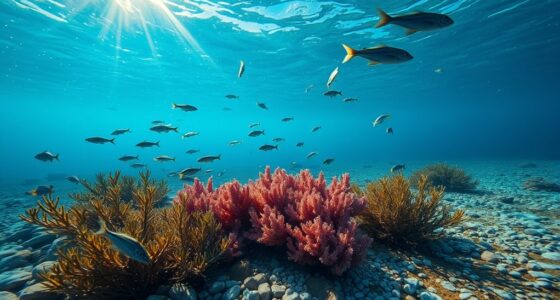
The twilight zone is a mysterious, essential part of the ocean between 200 and 1,000 meters deep, where light fades and darkness dominates. It hosts unique creatures like bioluminescent fish, squids, and tiny zooplankton that survive in extreme conditions of cold, pressure, and darkness. These animals adapt with special features like glowing bodies and large eyes. Their daily migration helps regulate Earth’s climate by moving nutrients and carbon deep into the ocean. If you keep exploring, you’ll uncover how this hidden world impacts our planet’s health.
Key Takeaways
- The twilight zone, or mesopelagic zone, spans 200-1,000 meters deep and hosts unique, bioluminescent marine life adapted to darkness and high pressure.
- It plays a vital role in global climate regulation through nutrient cycling and carbon sequestration via daily vertical migrations.
- The ecosystem supports diverse species, including tiny zooplankton, large squids, and fish with specialized adaptations like large eyes and bioluminescence.
- Human activities such as deep-sea fishing, mining, and climate change threaten this fragile environment and its ecological functions.
- Protecting the twilight zone is essential for maintaining ocean health, biodiversity, and its significant role in Earth’s carbon cycle.
Defining the Twilight Zone: Where Light Fades and Darkness Reigns

The twilight zone, also known as the mesopelagic zone, is where sunlight begins to fade and darkness takes over. You’re at depths between 200 and 1,000 meters below the ocean surface, where just 1% of sunlight filters through. Photosynthesis becomes impossible here, so the environment stays cold, dark, and pressurized. As you descend, the light diminishes rapidly, and the environment shifts from dim to pitch black. The zone covers vast areas across the globe, from the Arctic to the Antarctic, mainly in high seas. Despite the darkness, this zone teems with life, adapted to survive under extreme conditions. It’s a unique part of the ocean, acting as a bridge between sunlit waters and the deep midnight zone below. The diverse ecosystem relies on specialized adaptations to thrive in such an environment.
The Unique Conditions: Cold, Pressure, and Darkness in the Midwater Depths
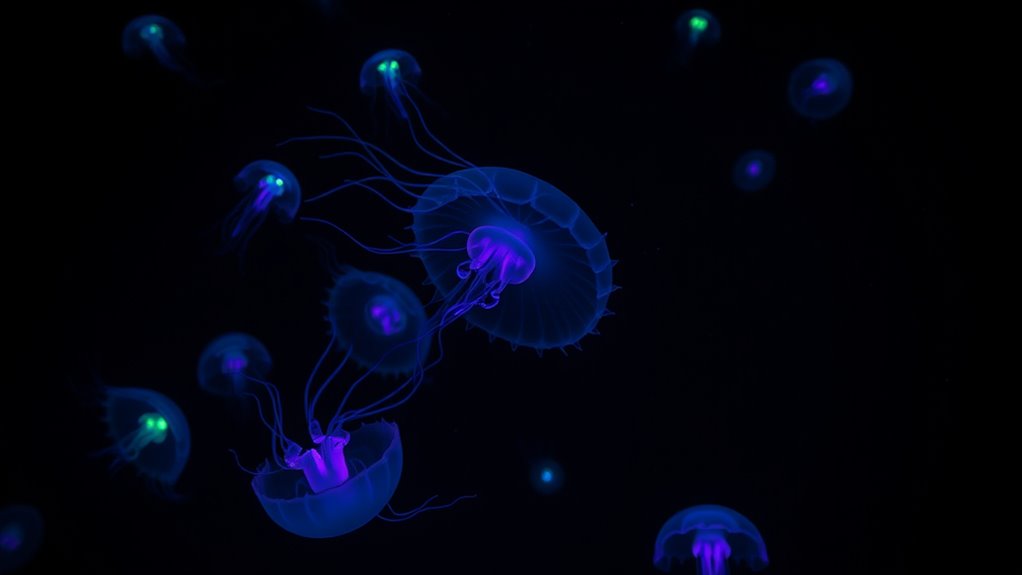
As you descend into the twilight zone, you encounter conditions that are both extreme and unforgiving. The temperature drops sharply, often just above freezing, creating a cold environment that’s uninhabitable for surface species. You also face immense pressure—up to 1,000 times greater than at the surface—compressing everything in your vicinity and limiting the survival of many organisms accustomed to shallower waters. Darkness dominates, with only a faint glow from bioluminescent creatures, as no sunlight penetrates this depth. These conditions force life to adapt in extraordinary ways, with organisms evolving specialized structures to withstand pressure and thrive in near-total darkness. The environment’s harshness shapes a unique, resilient ecosystem hidden beneath the ocean’s surface.
Life in the Shadows: Biodiversity and Adaptations of Deep-Sea Creatures
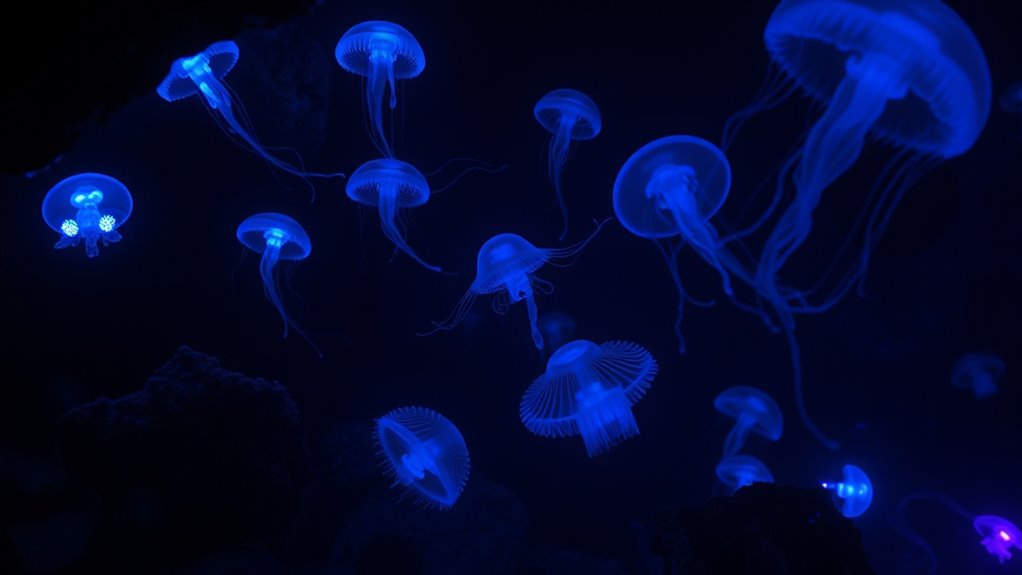
Beneath the harsh conditions of cold, pressure, and darkness, life persists through remarkable adaptations. You’ll find a diverse array of creatures, from tiny zooplankton to large squids and fish. Many have developed bioluminescence, producing light to communicate, hunt, or defend themselves. Others have evolved specialized bodies—elongated, flexible, or with enormous jaws—to survive high pressure and scarce food. You might notice eyes that are large or highly sensitive, helping them detect faint shadows or movement. Some species have slow metabolisms, conserving energy in nutrient-poor waters. Many organisms feed on detritus or each other, forming complex food webs. These adaptations enable survival in an environment with little light, low oxygen, and extreme pressure—making the twilight zone a unique, resilient ecosystem. The presence of colorful bioluminescent displays serves not only as a survival mechanism but also as a mesmerizing adaptation to the darkness. Additionally, some creatures possess highly sensitive visual systems, allowing them to navigate and find prey in pitch-black conditions.
Bioluminescence: Nature’s Living Lights in the Abyss
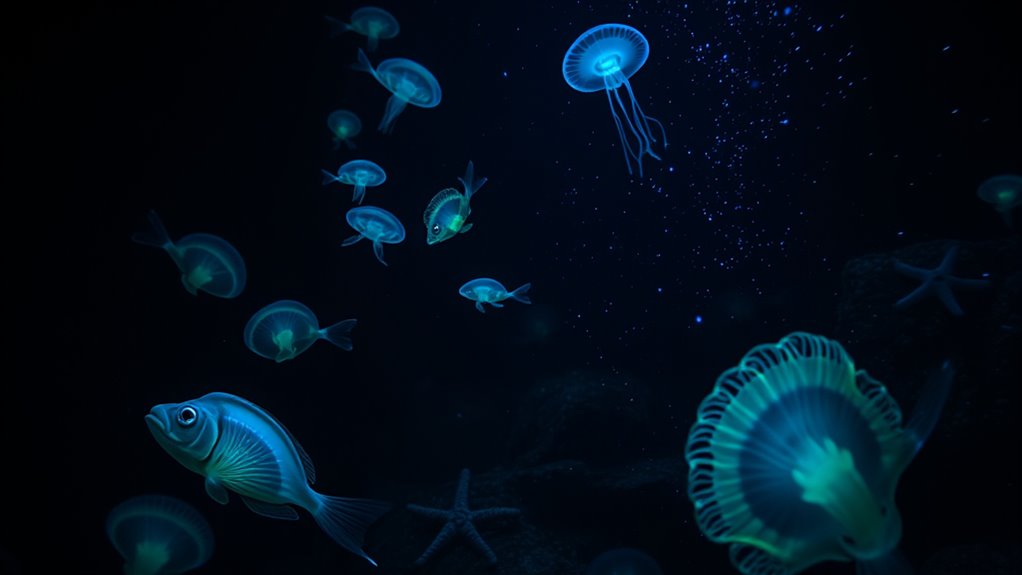
In the dark depths of the ocean’s twilight zone, many creatures have turned to bioluminescence to survive. They produce light through chemical reactions, using it for communication, attracting prey, or avoiding predators. This living light creates a mesmerizing glow in an otherwise pitch-black environment. Some species, like anglerfish, use bioluminescent lures to lure prey close. Others, like jellyfish, emit flashes to startle predators or signal mates. This adaptation is essential in the high-pressure, nutrient-scarce environment, where light is a rare commodity. The following table helps you understand the deeper significance of bioluminescence: bioluminescent adaptations are a key survival strategy in this unique ecosystem. Additionally, the ability to produce light is often linked to biochemical processes, which are highly specialized for the extreme conditions of the deep ocean. These bioluminescent mechanisms can also serve as indicators of environmental health and changes within this delicate ecosystem. Moreover, ongoing research into these processes enhances our understanding of bioluminescence in other species, revealing the broader applications of this remarkable adaptation. Studying these mechanisms further can provide insights into potential biomedical applications and innovative technologies.
The Daily Voyage: Diel Vertical Migration and Its Ecological Significance

Every night, billions of creatures in the twilight zone undertake a remarkable journey—dipping from their deep, dark habitats toward the surface waters to feed, then retreating back to their cold, high-pressure homes by dawn. This diel vertical migration is the largest animal movement on Earth, involving tiny zooplankton, fish, and squid. As they ascend, they consume surface nutrients and prey, then return deeper to escape predators and conserve energy. This daily cycle plays a essential ecological role by transporting nutrients and organic matter between surface and deep waters. It also influences global carbon cycling, as migrating organisms help move carbon from the surface to the depths. Additionally, this migration can be affected by headphone noise pollution, which may interfere with their sensory cues and disrupt their natural behaviors. Understanding these migration patterns reveals how interconnected and indispensable the twilight zone is to the health of our planet’s oceans.
The Carbon Conveyor: How the Twilight Zone Regulates Global Climate
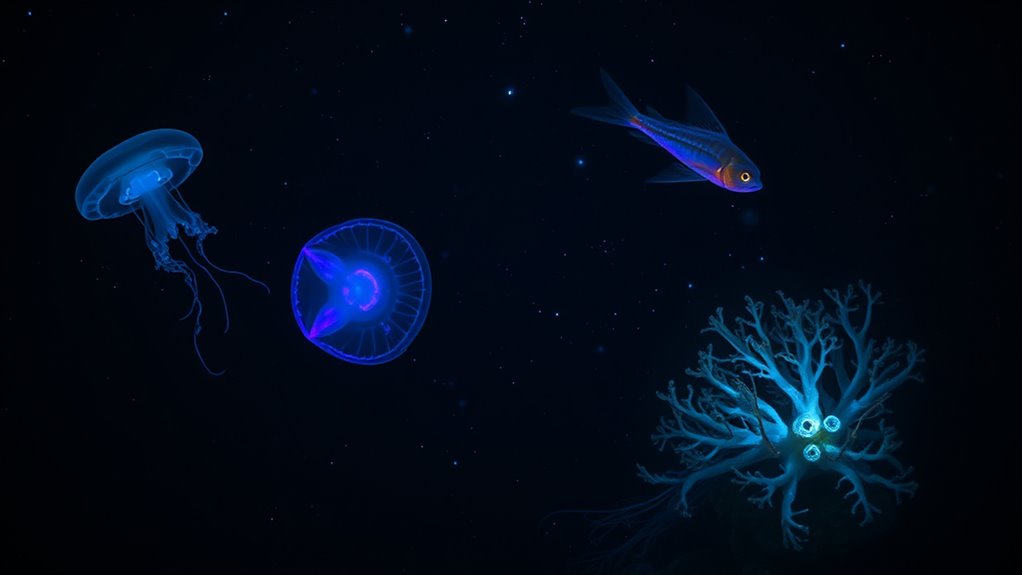
You might not realize it, but the twilight zone acts as a crucial carbon conveyor, moving carbon from surface waters to the deep ocean. Through biological processes like the carbon pump, organisms transport and store carbon for centuries, helping regulate Earth’s climate. This zone’s ability to control carbon flow considerably impacts global warming and climate stability.
Carbon Transport Mechanisms
The twilight zone acts as an essential component of the Earth’s carbon cycle by actively transporting carbon from the surface to the deep ocean. During diel vertical migration, countless organisms move upward at night to feed and descend during the day, carrying carbon with them. These creatures consume carbon-rich organic material at the surface and excrete or die at depth, effectively sequestering carbon away from the atmosphere for centuries. Marine snow, organic debris falling from above, also contributes considerably by sinking through the zone, where most is recycled by small organisms. The remaining organic matter sinks further, forming long-term carbon storage. This continuous process of biological transport and recycling stabilizes atmospheric CO₂ levels, making the twilight zone a crucial regulator of Earth’s climate. Additionally, tuning modifications to marine ecosystems can influence the efficiency of this carbon transfer process.
Biological Carbon Pump
How does the twilight zone help regulate Earth’s climate? It does so mainly through the biological carbon pump, where tiny organisms actively move carbon from surface waters to the deep ocean. Each night, billions of creatures, like zooplankton and small fish, migrate upward to feed and then descend, transporting carbon in their bodies. When they die or excrete waste, organic material—marine snow—sinks deeper, with up to 90% being recycled by microbes in the zone. The remaining 10% sinks further, trapping carbon for centuries. This process effectively sequesters carbon away from the atmosphere, helping to regulate global temperatures. The biological activity within the twilight zone, including microbial decomposition, plays a vital role in maintaining the efficiency of this carbon sequestration. By controlling how much carbon stays in the deep ocean, the twilight zone plays a crucial role in Earth’s climate stability.
Climate Regulation Impact
The biological activities in the twilight zone form a powerful conveyor belt that influences Earth’s climate. As billions of organisms migrate daily, they transport carbon from surface waters to the deep ocean, effectively removing it from the atmosphere. This process, known as the biological carbon pump, sequesters up to 90% of deep-sea carbon storage. When these creatures feed near the surface and descend, they carry organic carbon downward, helping regulate global temperatures. Additionally, marine snow and organic debris sink into the zone, further trapping carbon for centuries. Without this natural conveyor, greenhouse gases would accumulate more rapidly, intensifying climate change. The use of sustainable materials and innovative technologies in the twilight zone highlight its critical role in climate regulation. Your understanding of this ecosystem highlights its essential role in maintaining Earth’s climate stability and underscores the importance of preserving the twilight zone. Recognizing the importance of carbon sequestration underscores how vital this ecosystem is for climate regulation.
Food Web Dynamics: From Tiny Zooplankton to Giant Squid
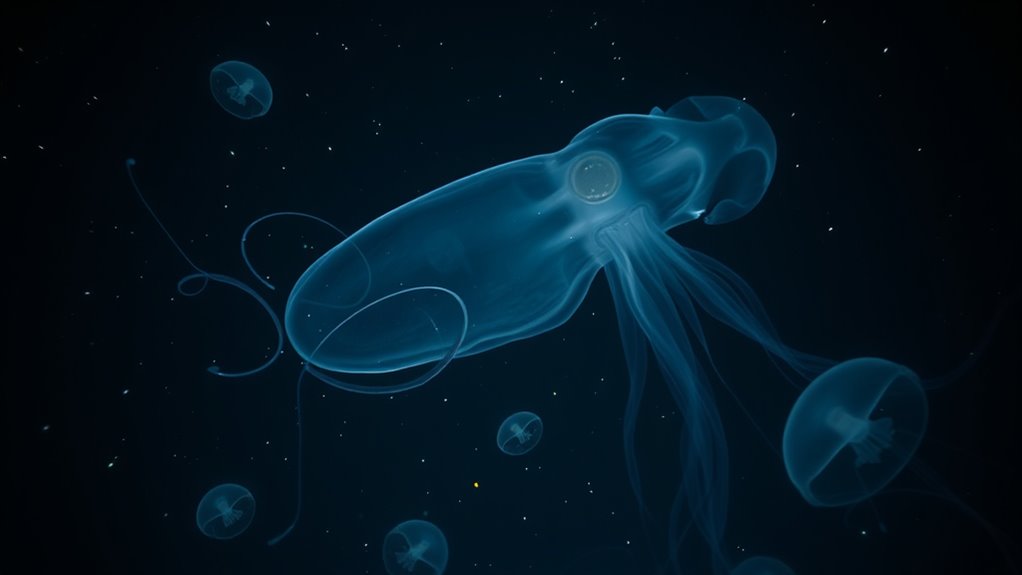
Beneath the ocean’s surface, a complex and dynamic food web unfolds within the twilight zone, linking tiny zooplankton to massive predators like the giant squid. Tiny zooplankton feed on organic particles and phytoplankton that drift down from above, forming the foundation of the web. Small fish and gelatinous creatures consume zooplankton, passing energy up the chain. Larger fish, such as lanternfish, prey on smaller species, while intermediate predators like cutthroat eels hunt even bigger prey. At the top, the giant squid and other deep-sea predators sustain themselves by capturing the largest prey, including other squids and large fish. This intricate web maintains energy flow and nutrient cycling, supporting the biodiversity that thrives in this dark, pressure-filled environment. Understanding food webs in the twilight zone helps reveal how energy transfer and nutrients sustain this unique ecosystem. Recognizing the importance of marine biodiversity underscores the delicate balance maintained in these remote depths. Studying these trophic interactions provides insight into how species adapt to extreme conditions and maintain ecosystem stability.
Threats and Challenges: Human Activities Impacting the Twilight Zone

Human activities like overfishing and bycatch threaten the delicate balance of the twilight zone, disrupting its food webs and reducing biodiversity. Climate change alters temperature and oxygen levels, making it harder for species to survive in this fragile environment. Additionally, deep-sea mining damages habitats and releases pollutants, further endangering these crucial, yet vulnerable, ecosystems.
Overfishing and Bycatch
Overfishing and bycatch pose significant threats to the delicate ecosystems of the twilight zone, often targeting species that play essential roles in maintaining ocean health. When you fish in these depths, you unintentionally catch non-target species, disrupting food webs and reducing populations of key organisms. This not only affects biodiversity but also hampers the zone’s ability to sequester carbon. Below is a comparison highlighting the impact:
| Effect of Overfishing | Consequence |
|---|---|
| Reduced prey availability | Decline in predator populations |
| Disruption of migration patterns | Impaired nutrient cycling |
| Loss of bioluminescent species | Decreased ecological diversity |
Protecting the twilight zone requires sustainable fishing practices to preserve its critical ecological functions.
Climate Change Effects
Climate change poses a growing threat to the twilight zone by altering temperature, oxygen levels, and ocean chemistry. As global temperatures rise, surface waters warm and affect the deep ocean’s temperature, disrupting the delicate balance organisms depend on. Reduced oxygen levels, caused by increased stratification and decreased circulation, threaten species adapted to stable, low-oxygen environments. Ocean acidification, driven by higher CO₂ absorption, weakens shells and skeletons of calcifying organisms like plankton and mollusks. These changes impair reproductive success, disrupt food webs, and hinder migration patterns. The resulting stress reduces biodiversity and weakens the zone’s ability to sequester carbon effectively. Without intervention, these impacts could destabilize this essential ecosystem, undermining its role in global climate regulation and ocean health.
Deep-Sea Mining
Deep-sea mining poses a significant threat to the twilight zone by directly disturbing its delicate ecosystems and the critical processes they support. Extracting minerals from the seafloor destroys habitats and releases sediments, which can smother organisms and disrupt food webs. The noise and light pollution from mining operations interfere with the bioluminescent communication and migration patterns of deep-sea species. Below is a comparison of the impacts:
| Impact | Consequence |
|---|---|
| Habitat destruction | Loss of biodiversity and ecosystem stability |
| Sediment plumes | Reduced oxygen levels and smothered organisms |
| Noise pollution | Disrupts communication and migration |
| Chemical release | Toxicity affecting deep-sea life |
| Disruption of carbon cycle | Impairs organism-driven carbon sequestration |
These threats jeopardize the twilight zone’s role in climate regulation and biodiversity. Additionally, the disruption of the carbon cycle can have far-reaching effects on global climate regulation, further underscoring the importance of protecting this unique ecosystem.
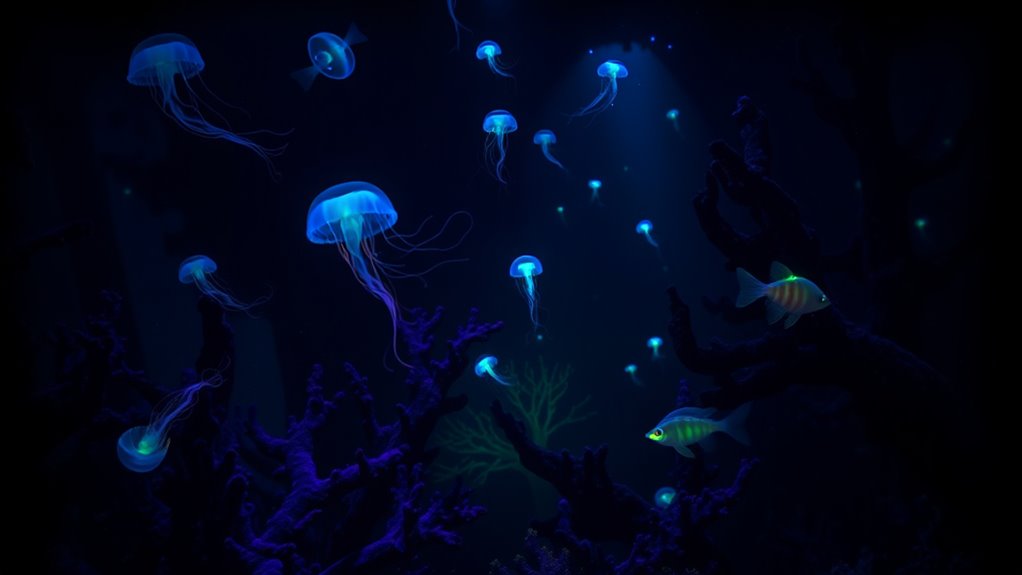
Protecting the twilight zone is crucial because this hidden ecosystem plays a critical role in regulating the Earth’s climate and supporting marine life. To safeguard it, you need to support international policies that establish marine protected areas (MPAs) targeting the mesopelagic zone. Reducing deep-sea mining and unsustainable fishing helps prevent habitat destruction and species loss. Promoting research enhances our understanding of this ecosystem, guiding effective conservation. You can also advocate for stricter regulations on pollution and carbon emissions, which threaten its delicate balance. Public awareness campaigns are essential to emphasize its importance, encouraging responsible behavior. By supporting these strategies, you help ensure the twilight zone continues to function as a necessary component of global climate regulation and marine biodiversity.
Frequently Asked Questions
How Do Deep-Sea Creatures Withstand Extreme Pressure and Darkness?
You might wonder how deep-sea creatures survive extreme pressure and darkness. They’ve evolved specialized adaptations, like flexible, compressible bodies and cell structures that withstand immense pressure. Many produce bioluminescent light to see and communicate. Their eyes and sensory organs are highly adapted for darkness, and they often lack air-filled cavities that could crush. These biological features help them thrive in the harsh, pitch-black environment of the mesopelagic zone.
What Role Does the Twilight Zone Play in Climate Change Mitigation?
The twilight zone is an absolute climate hero, sequestering more carbon than you might believe—up to 90% of deep ocean carbon storage. You can think of it as Earth’s giant carbon vault, constantly pulling in and locking away greenhouse gases through tiny creatures’ daily migrations. Without this zone, our atmosphere would be overwhelmed with CO2, making climate change even more unstoppable. Protecting it is vital for our planet’s future.
How Many Species Are Estimated to Live in the Twilight Zone?
You’re curious about how many species inhabit the twilight zone, and it’s estimated that thousands of species live there. This zone hosts a diverse range, from microscopic zooplankton to larger fish and squids, many of which are adapted for extreme conditions like darkness and high pressure. The biodiversity is immense, with new species still being discovered. Overall, the twilight zone is a vital, yet largely unexplored, part of ocean life.
Can Humans Explore or Access the Twilight Zone Safely?
You can explore the twilight zone safely if you use specialized submersibles and remotely operated vehicles designed for deep-sea conditions. These tools withstand high pressure, darkness, and cold temperatures. However, it’s still a challenging environment due to its extreme conditions, so proper training, equipment, and precautions are essential. Advances in technology are making exploration safer, but it remains a complex and risky endeavor that requires careful planning and expertise.
What Are the Most Effective Conservation Methods for Protecting This Ecosystem?
You can best protect this fragile ecosystem by establishing marine protected areas that limit fishing and mining. Enforce strict regulations on deep-sea activities, and support sustainable practices. Raising awareness is crucial, too—people need to understand its importance in climate regulation. Every effort counts, but time is running out. If you act now, you can help preserve this hidden world before irreversible damage occurs, ensuring its survival for future generations.
Conclusion
As you step back from exploring this mysterious domain, remember that the twilight zone is like a hidden treasure chest, essential yet fragile. Just as Galileo glimpsed the stars with his telescope, you now see how this dark ocean layer shapes our planet’s climate and life. Protecting it requires your awareness and action—before it’s lost to the depths forever. The fate of this otherworldly ecosystem depends on you, right here, right now.