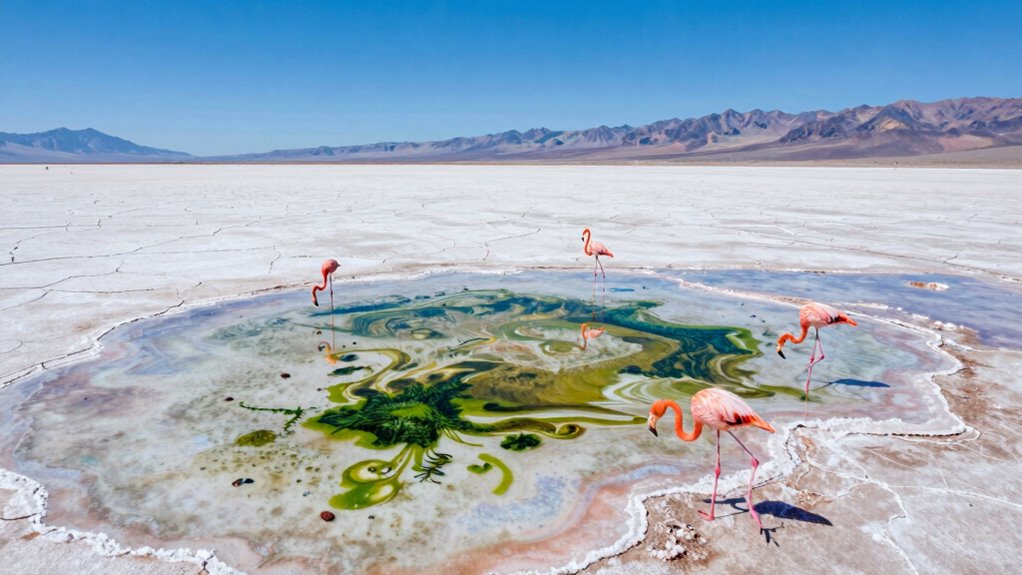

Even though salt flats seem lifeless, they come alive thanks to tiny, resilient organisms like microbes, algae, and brine shrimp that thrive in extreme conditions. These organisms develop special adaptations to survive high salinity, drought, and temperature fluctuations, creating tiny ecosystems. Their microbial communities initiate biological activity, support other species, and recycle nutrients. If you’re curious about how these hidden life forms sustain such vibrant ecosystems, there’s much more to discover beneath the surface.

Prime made for students and young adults
- Fast, free delivery for dorm and study essentials
- Prime Video and Amazon Music included
- Member-only deals
Key Takeaways
- Microbial communities form dense biofilms that create microhabitats, supporting diverse life forms.
- Unique adaptations of organisms enable survival in extreme salinity and temperature fluctuations.
- Microbes initiate ecological succession, paving the way for larger plants and animals to establish.
- Specialized desert ecosystems with resilient species sustain biodiversity despite harsh conditions.
- Microorganisms recycle nutrients and fix carbon, maintaining ecosystem stability and productivity.
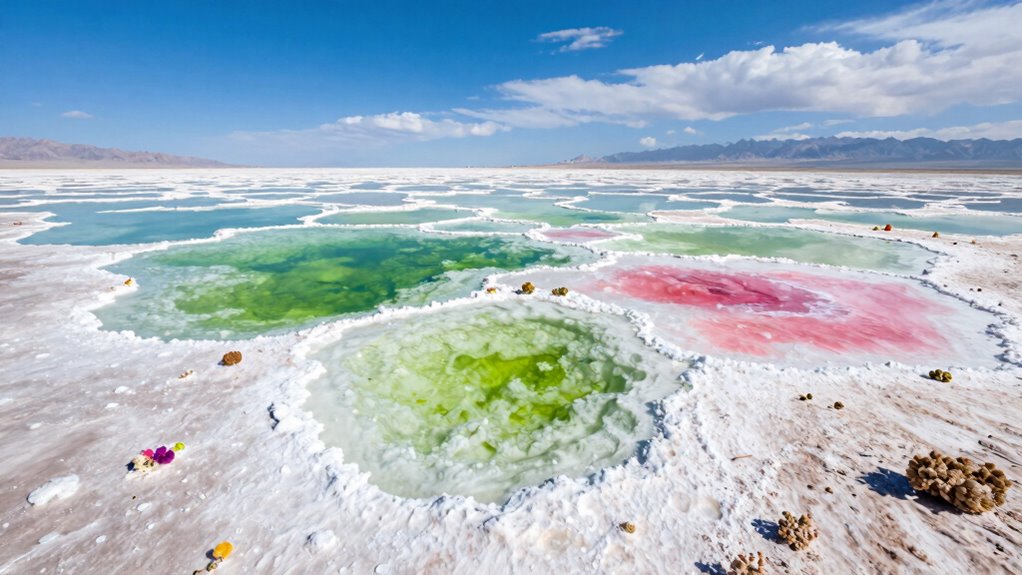
Have you ever wondered how life persists in the seemingly barren expanse of salt flats? It might seem like these vast, white plains are lifeless, but they’re actually teeming with tiny, resilient organisms. What makes a salt flat come alive with biodiversity is the unique way life adapts to extreme conditions, creating a surprising complexity beneath the surface. You might think that the harsh environment would wipe out all forms of life, but the truth is that these ecosystems host specialized desert ecosystems and microbial communities that thrive despite the odds.
Desert ecosystems, which are often associated with arid regions, are surprisingly diverse in salt flats. These ecosystems are characterized by extreme temperature fluctuations, high salinity, and minimal water availability. Yet, some plants, insects, and animals have evolved to survive here. For example, brine shrimp and certain species of algae flourish in the hypersaline waters, forming the foundation of the food web. These organisms are uniquely adapted to cope with the high salt content, often producing protective compounds that prevent dehydration and toxicity. Their presence not only sustains other forms of life but also contributes to the overall biodiversity of the area, turning what seems like a lifeless landscape into a dynamic environment.
Salt flats support diverse life, from brine shrimp to algae, thriving despite extreme conditions and enriching the ecosystem.
Central to the survival of these ecosystems are microbial communities. These microscopic life forms are the true pioneers in salt flats, capable of living where few others can. Microbes, including bacteria and archaea, form the core of the salt flat’s biodiversity. They thrive in extreme conditions by developing specialized enzymes and metabolic pathways that allow them to extract nutrients from the salty environment. These microbial communities are often organized into biofilms—dense mats of microorganisms that trap moisture and create microhabitats. This micro-scale activity is critical because it initiates the process of biological succession, paving the way for larger organisms to establish themselves over time.
The resilience of microbial communities in salt flats exemplifies the remarkable adaptability of life. They perform essential roles like fixing carbon, recycling nutrients, and maintaining the delicate balance of these ecosystems. Without them, the entire biodiversity of the salt flats would collapse, as they form the foundation upon which other species depend. Interestingly, research into extremophile microbes has revealed insights into the potential for life in other extreme environments, including extraterrestrial settings. These microbes demonstrate how adaptations to harsh conditions enable organisms to survive in environments once thought uninhabitable. In this way, salt flats are far from barren—they are complex, vibrant habitats driven by organisms that have evolved to thrive in some of the most extreme environments on Earth. Through their persistence, they remind us that life finds a way, even in the most unlikely places.
As an affiliate, we earn on qualifying purchases.
Frequently Asked Questions
How Do Salt Flats Support Microbial Life?
You might find that salt flats support microbial life through specialized organisms like halophilic bacteria and salt crust microorganisms. These microbes thrive in extreme salinity and utilize unique adaptations to survive. They often play crucial roles in nutrient cycling and create microenvironments that support other life forms. Their ability to flourish in such harsh conditions makes salt flats surprisingly vibrant ecosystems, teeming with life beneath the surface.
What Adaptations Allow Organisms to Survive Extreme Salinity?
You see, organisms survive extreme salinity through halophilic adaptations, which enable them to thrive where others can’t. They use osmotic regulation to balance their internal salt levels, preventing cell dehydration or rupture. These adaptations involve specialized proteins and enzymes that function in high salt conditions. By maintaining internal stability, these organisms can flourish in salt flats, turning the harsh environment into a vibrant habitat.
Are There Any Endemic Species Unique to Salt Flats?
You’ll find endemic flora and unique fauna thriving in salt flats, creating a vivid tapestry of life amid shimmering white expanses. These species, specially adapted to harsh conditions, are exclusive to these environments, making them truly one-of-a-kind. Their existence highlights the salt flats’ fragile beauty, where tiny plants and resilient animals have evolved in isolation, turning stark landscapes into vibrant ecosystems filled with life that you can’t find anywhere else on Earth.
How Do Seasonal Changes Affect Biodiversity in Salt Flats?
Seasonal moisture fluctuations profoundly impact biodiversity in salt flats. During wetter seasons, temporary pools form, attracting migratory bird patterns and supporting a variety of insects and microorganisms. As the dry season returns, these species adapt by surviving in dormant states or relocating. Your understanding of these seasonal changes reveals how life persists and even thrives in such extreme environments, demonstrating nature’s resilience amid fluctuating conditions.
Can Salt Flats Recover From Environmental Disturbances?
Imagine a salt flat as a resilient hero from the movies, able to bounce back from environmental disturbances. You can help it recover by reducing human impact and supporting climate resilience efforts. While some damage might be permanent, many salt flats can regenerate over time if conditions improve. Your actions, like limiting pollution and conserving water, play an essential role in restoring these delicate ecosystems and ensuring their biodiversity thrives again.
Conclusion
You might think salt flats are barren, but they’re actually vibrant ecosystems. When conditions change—like seasonal rains or unique mineral compositions—they create microhabitats that support life. Think of it like a desert bloom: just as a sudden rain awakens flowers, these shifts bring bacteria, algae, and tiny invertebrates to life. So, next time you see a salt flat, remember it’s not dead, but a surprisingly dynamic landscape waiting for the right moment to come alive.
Columbus Day / Indigenous Peoples' Day Picks
long weekend sales
As an affiliate, we earn on qualifying purchases.