
Savannas and prairies differ mainly in vegetation, with savannas featuring scattered trees and grasses, while prairies are mostly open with dense grasses and few or no trees. Soils in prairies are richer and better at retaining moisture, whereas savanna soils are often sandy or shallow, draining quickly. Climate and fire regimes also vary, shaping their distinct ecosystems. To uncover more about these grasslands’ subtle, essential differences, keep exploring further.
Key Takeaways
- Prairies have dense, nutrient-rich soils supporting lush grasses, while savannas feature sandy or shallow soils with scattered trees.
- Savannas are characterized by scattered deciduous trees and seasonal fire regimes, unlike the open, treeless prairies.
- Prairies typically have consistent moisture levels promoting dense vegetation, whereas savannas experience seasonal dryness and irregular rainfall.
- Savannas support a mosaic of grasses and woody plants, creating diverse habitats; prairies are predominantly grassland with minimal tree cover.
- Transitional zones and edge habitats blend features of both ecosystems, fostering high biodiversity and ecological resilience.

Ecosystem: Savanna – A Family Card Game About Animals on Grassy Woodland of African Savanna – Fun & Educational Ecology Game for Kids & Adults – Strategy Board Game for Gamers, Students & Teachers
SCIENCE BOARD GAME: Embark on a captivating journey into the heart of the African savanna with Ecosystem: Savanna,…
As an affiliate, we earn on qualifying purchases.
As an affiliate, we earn on qualifying purchases.
Key Differences in Vegetation and Tree Cover

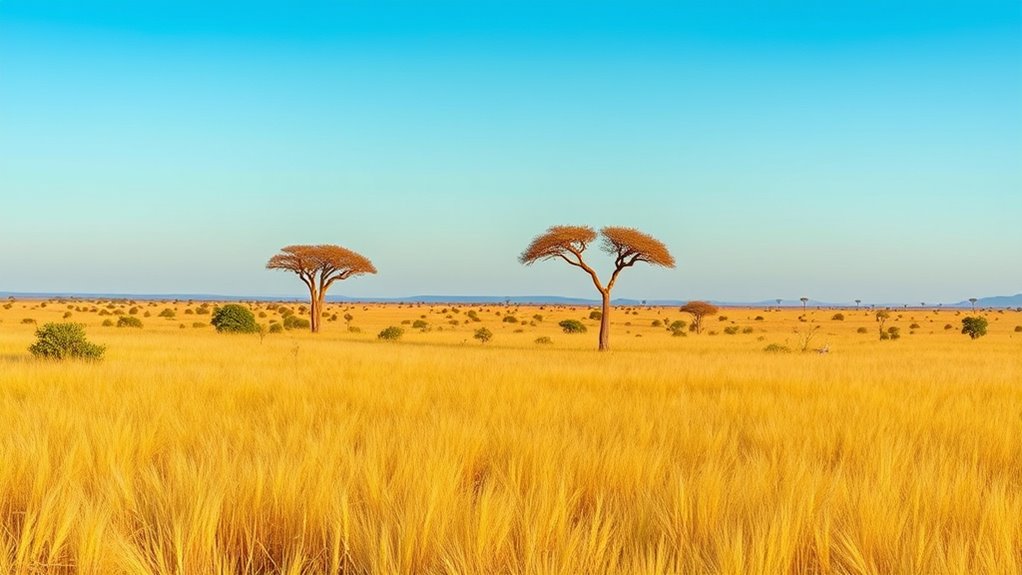
The key difference between savannas and prairies lies in their vegetation and tree cover. Prairies have minimal to sparse trees, mainly grasses and flowering plants dominating the landscape. Trees are rare, and when present, they’re usually small or young. Grassland ecosystems are shaped by these vegetation patterns, influencing the local climate and biodiversity. The vegetation structure in prairies results in open, expansive terrains with little shade or shelter, affecting animal habitats. Savannas, on the other hand, feature scattered trees and shrubs distributed across grasslands. These trees, often deciduous like oaks, are more common and sometimes exceed the density found in forests, though they tend to be smaller with incomplete canopies. While savannas support a higher number of trees overall, the tree cover remains patchy, allowing grasses to thrive underneath. This scattered tree pattern creates a distinct mosaic of open grassland interspersed with individual trees, contrasting sharply with the mostly treeless prairies. Additionally, vegetation patterns influence the local climate and biodiversity, shaping the unique ecosystems of each grassland type. The presence of tree cover in savannas can also impact fire regimes and soil conditions, further differentiating them from prairies. Moreover, the soil composition and fire frequency play crucial roles in maintaining these distinct landscapes.

Outsidepride Perennial Tall Native Grass Seed Mix – 1 lbs. Blend of Drought-Tolerant, Low-Maintenance Bluestem, Switchgrass & Indian Grass Seeds for Wildlife Habitat, Erosion Control & Landscaping
PREMIUM NATIVE GRASS SEED MIX FOR LANDSCAPING: Our tall native grass seed blend combines Big Bluestem, Little Bluestem…
As an affiliate, we earn on qualifying purchases.
As an affiliate, we earn on qualifying purchases.
Soil Types and Water Drainage Characteristics
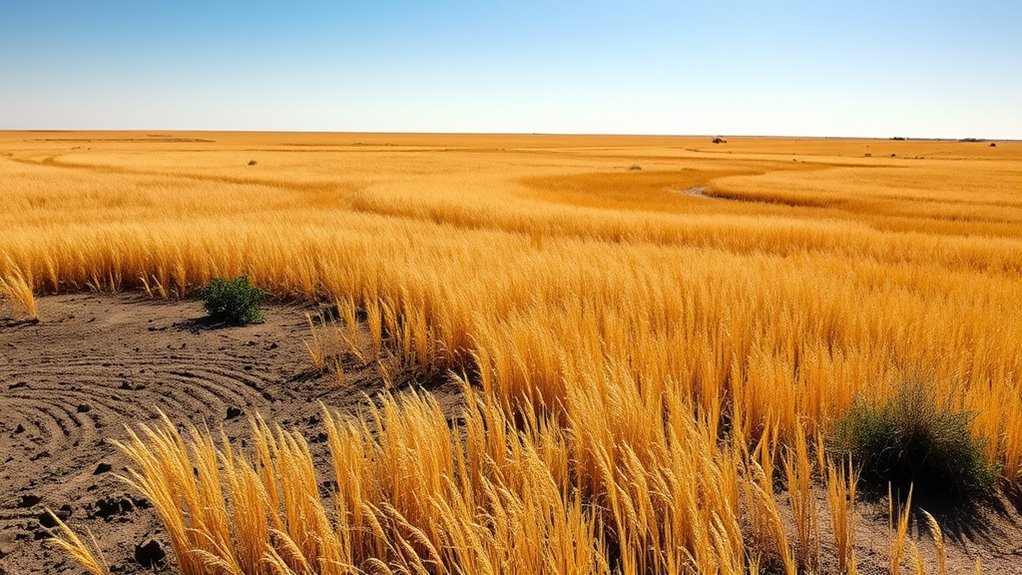
You’ll notice that prairie soils are rich, fertile, and hold water well, supporting dense plant growth. In contrast, savanna soils are often sandy or clayey, draining quickly and providing less nutrients. Understanding how these soil types influence water retention helps explain the distinct vegetation and ecosystem dynamics in each grassland. Additionally, the presence of discoloration or separation in soil can indicate poor water retention and potential spoilage, highlighting the importance of soil composition in both ecological and practical contexts. Recognizing soil texture variations further aids in assessing drainage and fertility across different grassland types. Moreover, soil fertility plays a crucial role in determining the type and density of vegetation that each grassland can sustain. Variations in soil composition also affect the resilience of these ecosystems to environmental stressors such as drought or overgrazing.
Soil Fertility and Composition
Soil fertility and composition differ markedly between savannas and prairies, shaping the ecosystems’ plant growth and water dynamics. Prairies generally have nutrient-rich, deep soils that support dense, diverse grasses and forbs. These soils are often fertile due to historical organic matter buildup and minimal erosion. In contrast, savanna soils tend to be less fertile, often sandy, gravelly, or clay-based, with low nutrient levels and thin humus layers. These porous soils drain quickly, limiting water retention and favoring drought-tolerant plants. Many savannas sit on shallow soils over bedrock or on seasonal wetlands, which influences vegetation types. The soil differences contribute to the distinct plant communities and water availability, with prairies thriving in rich, moist soils and savannas adapted to poorer, well-drained substrates. Additionally, the type of soil impacts water retention and availability, further shaping the distribution of plant species in each ecosystem. The Soil drainage characteristics also play a crucial role in determining the types of vegetation that can establish and persist in these environments. Furthermore, the soil composition influences microbial activity, which in turn affects nutrient cycling and plant growth in each grassland type. Variations in soil moisture levels also significantly influence plant adaptation strategies and overall ecosystem resilience.
Drainage and Water Retention
In savanna ecosystems, the soil’s composition directly influences water movement and availability. You’ll find soils that are porous, such as sandy, gravelly, or clay-based substrates, which drain quickly and retain little water. These soils often feature thin humus layers and are seasonally wet or shallow over bedrock, limiting water retention for plants. Because of rapid drainage, water doesn’t linger, creating dry conditions that favor grasses over dense tree growth. In contrast, prairies tend to have more fertile, moisture-retentive soils that hold water longer, supporting denser vegetation. Understanding these differences helps explain why savannas experience seasonal droughts and why water availability varies so considerably between these ecosystems. Soil drainage patterns ultimately shape plant distribution, ecosystem dynamics, and how each grassland responds to rainfall. Soil properties also influence nutrient availability, further impacting plant growth and ecosystem health. Additionally, the soil’s texture affects its capacity to retain nutrients and support diverse plant life.
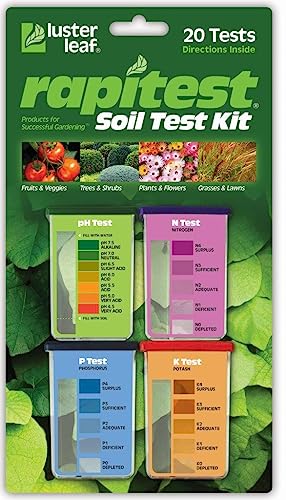
Rapitest Soil Test Kit for Gardens, Vegetables, Flowers and Lawns. USA designed and assembled soil tester completely, quickly and accurately measures/analyzes soil pH acidity and garden nutrients.
Quick, at home results for Soil pH, Nitrogen, Phosphorous and Potash Innovative and inexpensive soil test kit features…
As an affiliate, we earn on qualifying purchases.
As an affiliate, we earn on qualifying purchases.
Climate Conditions and Rainfall Patterns

Climate conditions and rainfall patterns differ markedly between savannas and prairies, shaping their distinct ecosystems. You’ll find savannas in warm or hot climates with annual rainfall between 20-50 inches, showing clear dry and rainy seasons. You may also notice that seasonal rainfall variation plays a key role in their ecological processes. Rainfall in savannas averages 30-40 inches, supporting scattered trees and grasses. Prairies, however, usually receive enough moisture to support dense grasslands, often with less pronounced seasonal variation. Consider these facts:
- Savannas experience a distinct dry season, which influences plant growth and fire regimes.
- Rainfall in savannas averages 30-40 inches, supporting scattered trees and grasses.
- Prairies often get consistent moisture, promoting lush, dense vegetation.
- Seasonal fires in savannas help maintain ecological balance, while prairies depend less on fire for water management and nutrient cycling.
- Climate patterns play a crucial role in defining the vegetation types and fire frequency in each ecosystem.
- The vegetation structure of prairies is typically more uniform and continuous compared to the scattered tree cover in savannas.
- Soil moisture levels also significantly influence the types of plants that thrive in each grassland type.
- The ecological processes in each ecosystem are closely linked to their specific climate conditions, impacting biodiversity and resilience.
Understanding these patterns highlights how climate shapes each ecosystem’s unique character.

Outdoor Fire Pit, 43" Fire Pit for Outside Wood Burning with Adjustable 2 Grills, Outdoor Fireplace with Lid and Fire Poker, BBQ, Bonfire, Round Firepit 3 in 1 for Patio, Backyard, Garden, Black
3 IN 1 VERSATILITY: Enjoy ultimate outdoor versatility with 2 removable grill plates, a protective lid, and a…
As an affiliate, we earn on qualifying purchases.
As an affiliate, we earn on qualifying purchases.
Fire Regimes and Ecological Maintenance Practices

Fire plays a crucial role in maintaining the balance and health of savanna ecosystems, shaping their structure and biodiversity. Regular, low-intensity fires clear away dead grass and prevent woody plant encroachment, keeping trees and shrubs sparse. Historically, native peoples and natural lightning strikes ignited these fires, creating a natural cycle essential for ecosystem stability. Without fire, savannas can succeed to dense forests, disrupting native plant and animal species. Today, fire suppression efforts have led to overgrown landscapes, reducing biodiversity. Controlled burns are now used to mimic natural fire regimes, maintaining open grasslands and promoting diverse habitats. These periodic fires support nutrient cycling, control invasive species, and sustain the unique ecological balance that defines savanna ecosystems. Proper fire management practices are vital for ecosystem health and long-term conservation.
Geographic Distribution and Global Presence
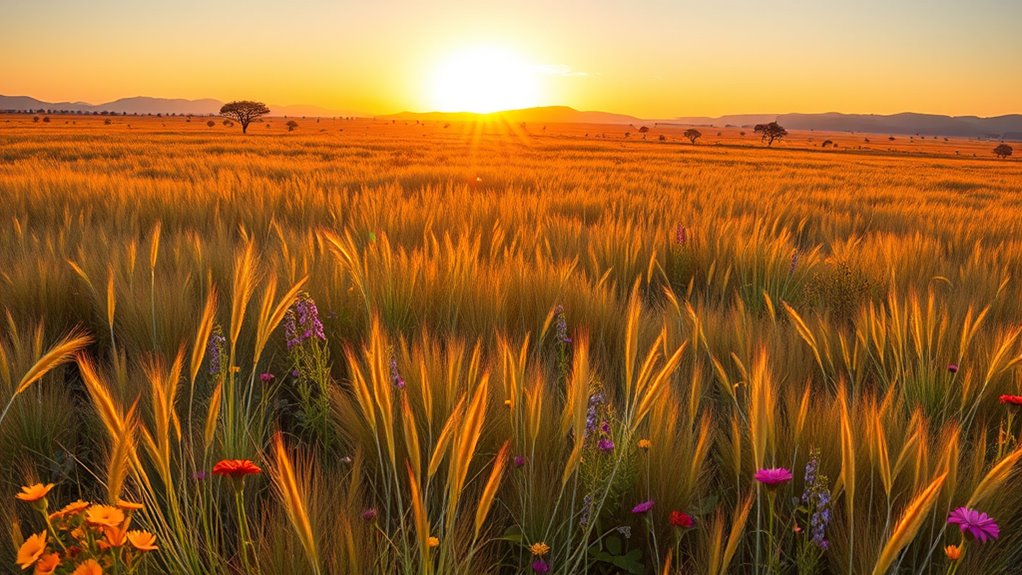
Savannas and prairies are distributed across various continents, demonstrating their widespread ecological significance. You might feel awe knowing these grasslands cover vast areas and support diverse life. Consider:
Savannas and prairies span continents, supporting diverse ecosystems and vital global biodiversity.
- Africa’s savannas span nearly half the continent, home to iconic wildlife like lions and elephants.
- Australian savannas stretch across the northern regions, supporting unique marsupials and plants.
- North America’s prairies once blanketed millions of acres from Maryland to Texas, now reduced by over 99%.
- South American grasslands like the cerrado and pampas host remarkable biodiversity and essential ecosystems.
Their presence highlights the importance of conserving these ecosystems, which shape global biodiversity and climate resilience. Despite extensive loss, remnants remain crucial for ecological balance and future preservation.
Tree Density and Canopy Cover Variations
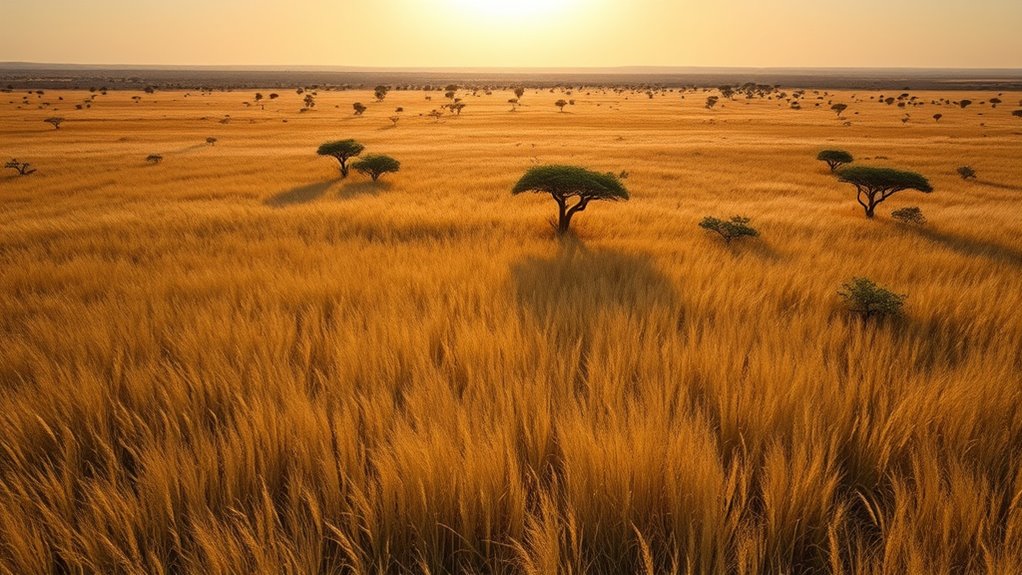
You’ll notice that tree distribution patterns differ markedly between savannas and prairies. Savannas have scattered, often smaller trees that create partial canopy cover, while prairies have very few or no trees at all. These canopy cover variations shape the ecosystems’ structure and influence the plant and animal life within each landscape. Understanding these cultural nuances can help in managing and conserving these distinct grassland types effectively. Additionally, the canopy cover impacts fire regimes and nutrient cycling, which are vital components of grassland ecology. Variations in vegetation structure also play a crucial role in determining habitat availability and biodiversity levels across these ecosystems.
Tree Distribution Patterns
Tree density and canopy cover vary markedly between prairies and savannas, shaping their distinct landscapes. In savannas, trees are scattered, often clustered in small groups, creating a patchwork of open space and shade. Prairies, by contrast, have very few trees, with pure grasslands mostly lacking canopy cover.
Consider these points:
- Savannas can have higher tree densities than some forests, yet still maintain open grassland views.
- Trees in savannas are generally smaller, with limited canopy spread, allowing sunlight to reach the ground.
- Prairie trees are sparse, often confined to riverbanks or rocky outcrops.
- Tree distribution in savannas is uneven, creating a mosaic of open areas and shaded refuges, crucial for wildlife and ecological balance.
Canopy Cover Differences
The canopy cover in savannas differs markedly from that in prairies, despite the presence of numerous scattered trees. In savannas, trees are widely spaced, creating a patchy canopy that allows sunlight to reach the ground, supporting diverse grasses and plants. Although tree density can sometimes surpass that of forests, their smaller size means the overall canopy coverage remains incomplete. In contrast, prairies have minimal to no tree canopy, with grasses forming an almost continuous ground cover. This sparse or absent canopy results in open landscapes with unobstructed views and consistent sunlight. The difference in canopy cover influences fire regimes, grazing patterns, and plant diversity, making canopy variation a key factor in distinguishing savannas from prairies.
Soil Fertility and Nutrient Availability
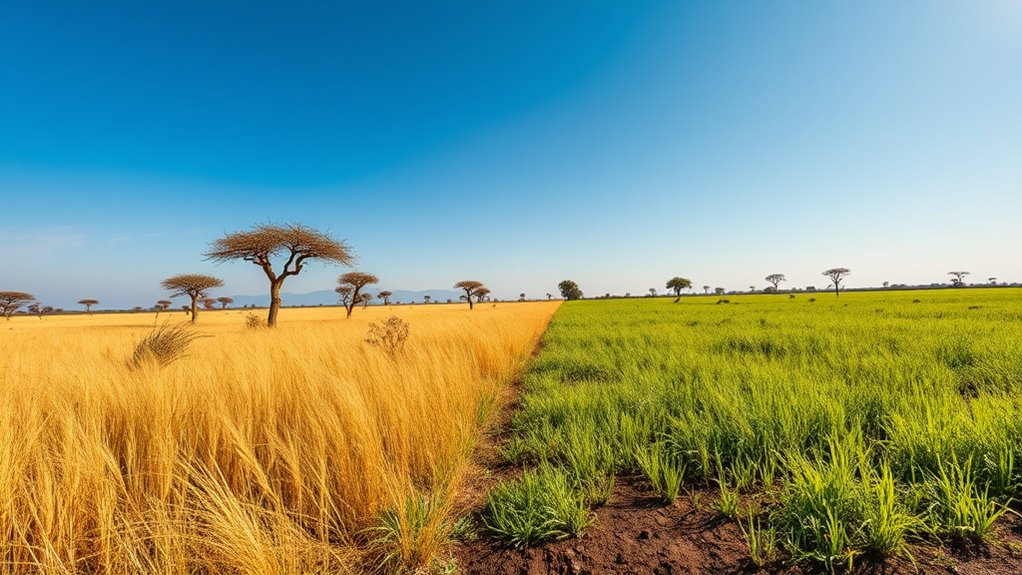
Have you ever wondered why prairies support such lush and diverse plant life? It’s because the soil fertility in prairies is unmatched. You can feel the difference when you step onto a prairie, where nutrient-rich soils fuel dense, vibrant growth. In contrast, savannas rest on less fertile, sandy, and rocky soils that drain quickly and hold fewer nutrients. Here’s what sets them apart:
Prairie soils are nutrient-rich and moisture-retentive, supporting lush, diverse plant life.
- Prairies boast deep, fertile soils rich in organic matter, supporting abundant plant diversity.
- Savanna soils are often thin, porous, and nutrient-poor, limiting plant growth.
- Prairie soils retain moisture better, fostering dense roots and lush vegetation.
- Savannas experience rapid water drainage, restricting plant development and diversity.
This stark contrast shapes how each ecosystem sustains its unique plant communities and overall health.
Biodiversity and Plant Species Diversity
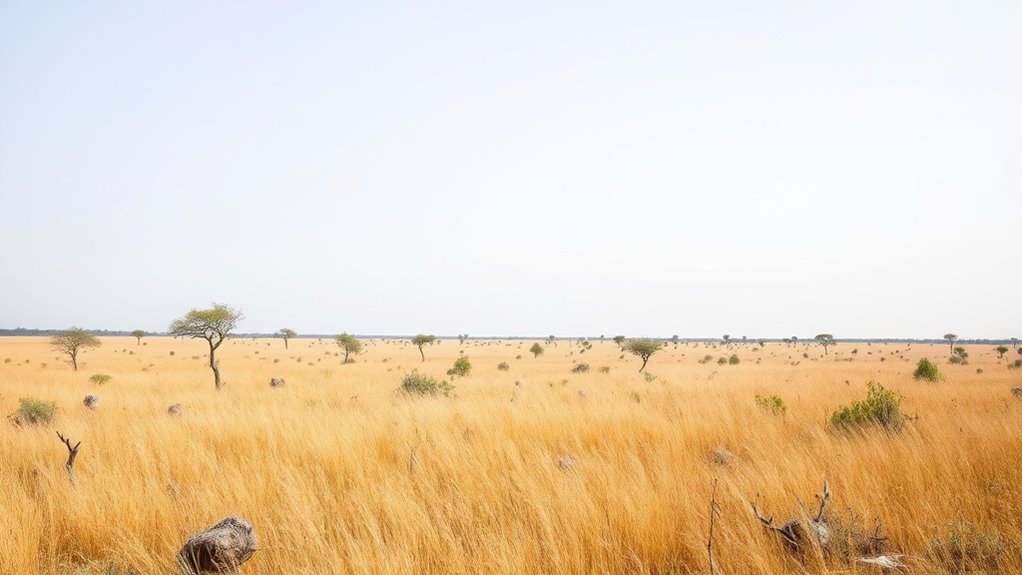
Despite the differences in soil fertility, both prairies and savannas support impressive levels of biodiversity. Prairies boast a rich variety of grasses, with about 40-60 species making up 80% of their plant life, and up to 300 forbs and flowering plants. A small patch can host over 200 native species, showing remarkable diversity in a tiny area. Savannas, though less dense in trees, still support a variety of grasses, forbs, and scattered trees, including oaks and other deciduous species. The seasonal climate and fire regimes shape their plant communities, promoting coexistence of grasses, shrubs, and scattered woody plants. Overall, both ecosystems sustain a vibrant mix of plant species, essential for supporting diverse animal life and ecological stability.
Human Impact and Conservation Challenges
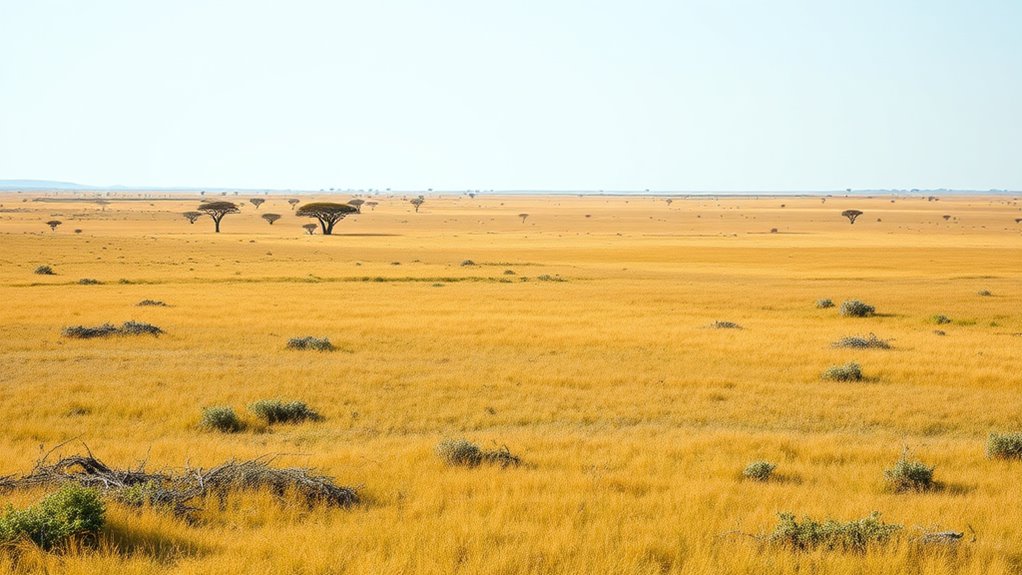
Human activities such as agriculture, urban development, and intensive fire suppression have substantially threatened grassland ecosystems like prairies and savannas. These actions lead to habitat loss, fragmentation, and altered fire regimes that maintain these ecosystems. You should be aware that:
- Overgrazing and land conversion have wiped out vast prairie areas, reducing biodiversity.
- Urban expansion encroaches on remaining grasslands, pushing species toward extinction.
- Fire suppression policies prevent natural burns, causing woody plant encroachment and ecosystem degradation.
- Climate change intensifies droughts and extreme weather, threatening the resilience of grasslands.
Conservation efforts are vital to restore and protect these ecosystems. You can support sustainable land management and advocate for policies that balance human needs with ecological health.
Transitional Zones and Ecosystem Overlaps
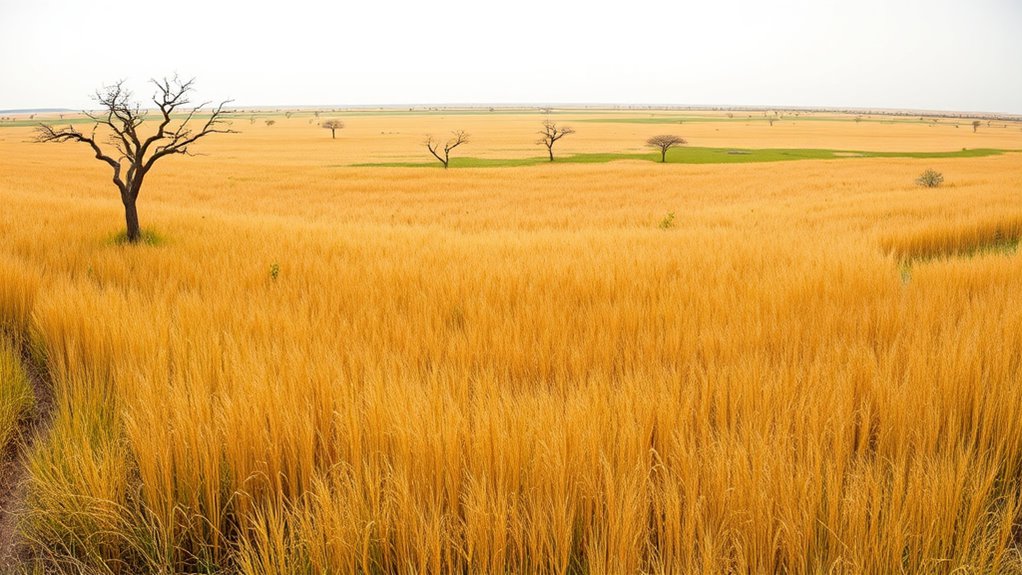
You’ll notice that the boundaries between prairies and savannas aren’t sharp but gradually blend, creating crossover zones. These areas often feature unique edge habitats where vegetation characteristics overlap, supporting diverse species. Exploring how these ecosystems interconnect can reveal important insights into their resilience and management.
Gradual Ecosystem Transitions
Ecosystems like prairies and savannas often blend gradually rather than abruptly, creating transitional zones where characteristics of both ecosystems coexist. These borders are fluid, revealing a rich tapestry of plant life, soil, and climate. You might notice a mix of scattered trees and dense grasses, signaling an overlap. These zones evoke a sense of continuity and change, reminding you that nature seldom fits into neat categories.
Consider these points:
- You’ll see trees becoming more scattered as you move from prairie to savanna.
- Soil changes from nutrient-rich to more porous, affecting plant diversity.
- Vegetation shifts gradually, blending grasses with occasional shrubs.
- Seasonal fire patterns influence the landscape, maintaining this delicate balance.
This transition embodies nature’s seamless adaptability and resilience.
Edge Habitat Characteristics
Transitional zones between prairies and savannas often feature a dynamic mix of plant life and landscape traits, creating distinct edge habitats. You’ll notice a blend of grasses, scattered trees, and shrubs, forming a mosaic that supports diverse species. These edges typically have increased structural complexity, with some taller grasses bordering isolated trees or small woody patches. Soil conditions may vary sharply, with richer, more fertile soils supporting denser vegetation near prairies and poorer, well-drained soils on the savanna side. Fire frequency and grazing influence these zones, maintaining openness and preventing forest encroachment. The boundary is often irregular, shifting with climate, disturbance, and land management. These edge habitats serve as essential corridors, fostering biodiversity and ecosystem resilience across the prairie-savanna transition.
Overlapping Vegetation Zones
Where prairies and savannas meet, their boundaries often overlap, creating zones rich in diversity and complexity. These transitional areas are dynamic, fluctuating with climate, fire, and human activity, making them essential for ecosystem health.
Here’s what makes them special:
- Biodiversity hotspots—these overlaps host species from both ecosystems, fostering resilience and adaptation.
- Vegetation mosaics—scattered trees in grasslands and grasses among open woodlands create striking visual contrasts.
- Fire corridors—fires shape these zones, maintaining open landscapes and preventing forest encroachment.
- Habitat corridors—these overlaps facilitate animal movement, supporting migration and genetic exchange.
Understanding these zones reveals nature’s delicate balance, highlighting their importance in preserving grassland diversity and ecological stability.
Frequently Asked Questions
How Do Fire Frequency and Intensity Differ Between Prairies and Savannas?
You’ll find that fire frequency and intensity differ markedly between prairies and savannas. In savannas, fires are more regular and often low-intensity, driven by seasonal dry conditions and maintained by the continuous grass layer, which prevents overgrowth. Prairies experience less frequent fires, but when they occur, they tend to be more intense, helping control invasive species and promoting native plant diversity. This balance shapes each ecosystem’s unique landscape.
What Role Do Seasonal Droughts Play in Savanna Ecosystems?
Seasonal droughts in savanna ecosystems act like a fierce, relentless beast, testing every plant and animal’s endurance. You see, they strip away surface moisture, turning lush landscapes into cracked, parched earth, forcing species to adapt or perish. These droughts shape the savanna’s rhythm, sparking fires, encouraging deep roots, and selecting for tough, drought-resistant plants. Without them, the delicate balance of life in the savanna would collapse into chaos.
How Does Human Activity Impact Savanna and Prairie Biodiversity?
You impact savanna and prairie biodiversity by altering fire regimes, introducing invasive species, and changing land use. Fire suppression in savannas leads to overgrowth and tree encroachment, reducing grassland diversity. Agriculture, urban development, and invasive plants disturb native species and soil health. Your actions can fragment habitats, threaten endangered species, and diminish ecosystem resilience, making it essential to manage land carefully to preserve these delicate grassland ecosystems.
Are There Notable Animal Species Unique to Savanna or Prairie Habitats?
You’ll find some animal species are unique to savanna or prairie habitats. In savannas, elephants, lions, and giraffes thrive due to the scattered trees and open landscape. Prairies host species like bison, prairie dogs, and grassland songbirds adapted to dense grasses and nutrient-rich soils. These animals evolve specifically for their environments, making them essential indicators of ecosystem health and uniqueness within their respective grassland types.
How Do Climate Change Effects Vary Between These Grassland Types?
Climate change impacts both grassland types differently. You’ll see more frequent droughts and altered rainfall patterns, stressing plants and animals. Savannas may experience increased fire frequency due to drier conditions, threatening tree and grass balance. Prairies face soil erosion and shifts in plant diversity as temperatures rise. You’ll need to monitor these ecosystems closely, as changing climate patterns could accelerate habitat loss and disrupt native species’ survival.
Conclusion
As you explore these grasslands, you’ll see that each plays a unique role in our planet’s tapestry. While their boundaries may gently blur, understanding their subtle differences helps you appreciate their delicate balance. Embracing their quiet resilience reminds us of nature’s wisdom—sometimes, it’s the gentle shifts that keep ecosystems thriving. By respecting and protecting these essential landscapes, you contribute to a future where their gentle harmony continues to flourish quietly, yet profoundly.