Discover how different species work together in surprising ways to survive and thrive. From bees pollinating flowers and clownfish hiding in anemones to fungi aiding plants and oxpeckers helping herbivores, nature is full of mutual benefits. Some relationships, like parasites such as ticks, show dependence, while others, like cattle egrets and cattle, showcase simple yet effective teamwork. Keep exploring to uncover more of these fascinating partnerships hiding in our ecosystems.
Key Takeaways
- Symbiosis includes mutualism, parasitism, and commensalism, illustrating diverse species interactions in nature.
- Mutualistic relationships like bees and flowers enhance biodiversity and ecosystem resilience.
- Parasitic partnerships, such as ticks on hosts, benefit one species while harming the other.
- Marine partnerships like remora fish and sharks demonstrate mutual convenience and adaptation.
- Understanding these relationships reveals nature’s complex strategies for survival and ecological balance.

SICWEDIM Beehive Starter Kit,Self-Flowing Honey Beehive with Observation Window and Honey Spout,Complete Beekeeping Wooden Bee Box with 4 Frames & 6 Honeycomb Trays
Complete Starter Kit: This Flow Hive Beehive Starter Kit includes everything you need to begin beekeeping, featuring a…
As an affiliate, we earn on qualifying purchases.
As an affiliate, we earn on qualifying purchases.
The Mutual Benefits of Bee and Flower Partnerships
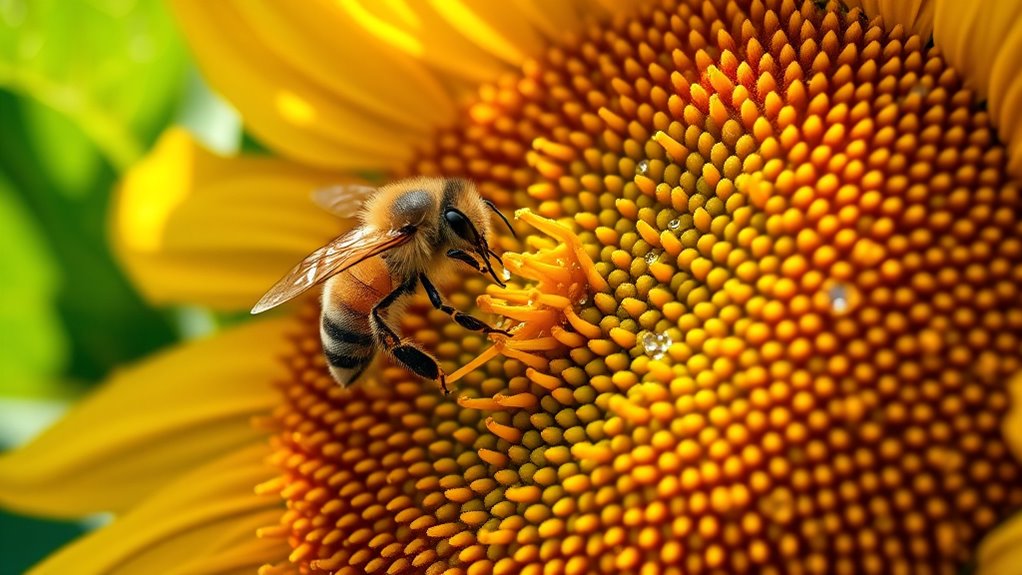
The partnership between bees and flowers is a classic example of mutualism, where both species gain essential benefits. You’ll notice that bees collect nectar from flowers, which provides them with crucial energy. In return, as bees move from flower to flower, they inadvertently transfer pollen, enabling plants to reproduce. This exchange boosts plant survival and seed production, ensuring the continuation of their species. Bees rely on this nectar as a primary food source, supporting their colonies and daily activities. You might also observe how this relationship influences local ecosystems, promoting biodiversity. Without bees and flowers working together, many plant species would struggle to reproduce, and bees would face food shortages. Their cooperation exemplifies how interconnected life forms sustain each other in nature’s delicate balance. Additionally, the mutualistic relationship has inspired biomimicry innovations in technology, emphasizing the importance of collaboration in natural systems. Recognizing the role of AI security in protecting these natural processes highlights how technology can support ecological preservation and resilience. Moreover, this mutualism demonstrates how specialized adaptations enable species to thrive through cooperation.
The Complete Clownfish Care Handbook: A Comprehensive Clownfish Guide for All Aquarists, With Expert Tips On Breeding, Aquarium Setup, Feeding, Health, And Aquarium Maintenance
As an affiliate, we earn on qualifying purchases.
As an affiliate, we earn on qualifying purchases.
How Clownfish and Sea Anemones Thrive Together
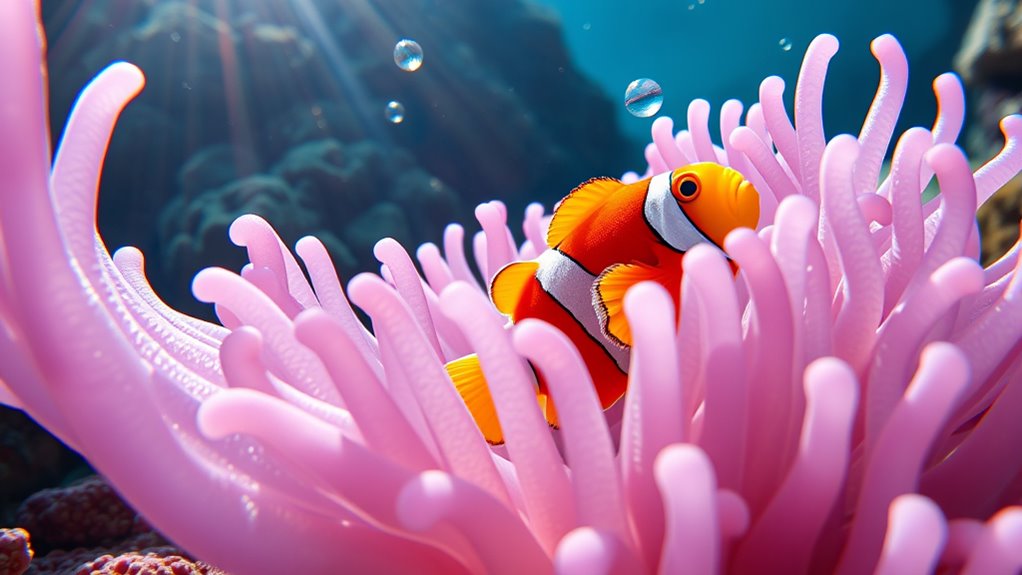
Have you ever wondered how clownfish and sea anemones manage to thrive together in the colorful depths of the ocean? You might think their relationship is risky, but it’s a perfect example of mutualism. The clownfish gains protection from predators by hiding among the anemone’s stinging tentacles, which normally deter other fish. In return, the clownfish keeps the anemone clean by eating leftover food and debris, preventing infections. Its waste provides nutrients that support the anemone’s growth. Over time, these species have developed a tolerance to each other’s presence, with the clownfish’s mucus coating preventing stings. This partnership allows both to survive and flourish, demonstrating how cooperation can create a thriving, symbiotic community beneath the waves. Proper understanding of these relationships can also shed light on reliable, safe partnerships in nature that help ecosystems function effectively. Recognizing such mutualistic relationships can inspire more sustainable practices in various environmental contexts. Additionally, studying these interactions can offer insights into ecosystem stability and resilience. Exploring the role of attention in observing these delicate interactions can enhance our appreciation of their complexity. Such partnerships exemplify the importance of cooperative strategies that can be observed across diverse ecological systems.
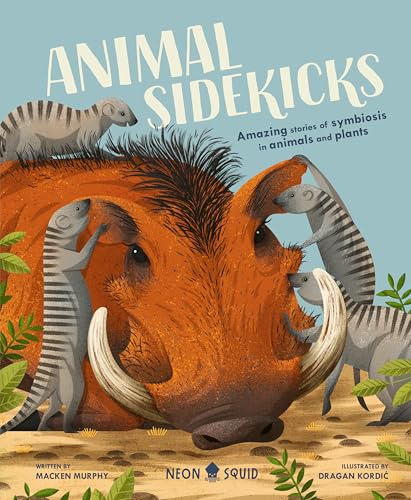
Animal Sidekicks: Amazing Stories of Symbiosis in Animals and Plants
As an affiliate, we earn on qualifying purchases.
As an affiliate, we earn on qualifying purchases.
Oxpeckers and African Herbivores: A Symbiotic Balance
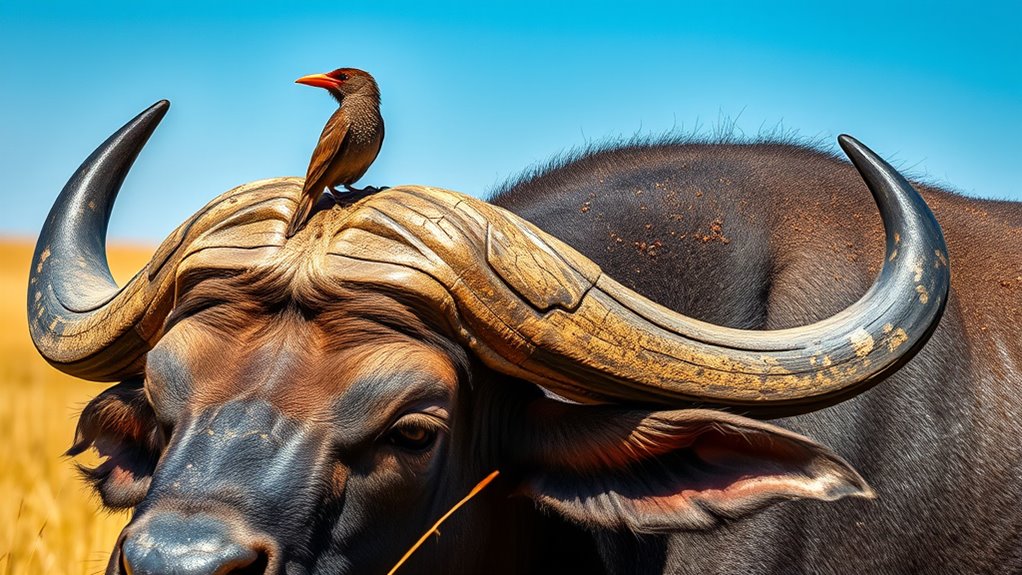
You notice how oxpeckers feed on ticks and parasites on African herbivores, gaining nourishment while helping their hosts stay healthier. This mutual benefit keeps both species in balance, with herbivores less burdened by pests. Such relationships demonstrate how each side advantages, creating a stable, symbiotic partnership. Inspirational quotes about fatherhood also emphasize the importance of support and guidance in nurturing balanced relationships in nature and life.
Mutual Benefits for Both
Oxpeckers and African herbivores engage in a well-balanced mutualistic relationship that benefits both species. You see, the oxpeckers feed on ticks and parasites, reducing disease risks for the herbivores. In return, they gain a reliable food source and a safe perch on the animals’ bodies. This partnership exemplifies mutual benefit, where each species enhances the other’s survival chances. The table below highlights key aspects of this relationship:
| Aspect | Benefit |
|---|---|
| Food source | Oxpeckers get nutrition from parasites |
| Pest control | Herbivores experience fewer diseases |
| Stability | Both species maintain a balanced ecosystem |
| Dependency | Both rely on this interaction for health and survival |
| Evolution | Adaptations favoring mutual benefit have developed over time |
This symbiosis showcases how cooperation can create a sustainable balance in nature. Understanding these mutualistic relationships helps us appreciate the intricate web of interdependence that sustains ecosystems worldwide. Additionally, studies have shown that such partnerships can influence evolutionary processes, promoting adaptations that benefit both parties over generations.
Parasite Removal Advantage
The parasite removal advantage in the relationship between oxpeckers and African herbivores demonstrates a clear symbiotic balance. As you observe, oxpeckers feed on ticks, fleas, and other parasites, reducing their hosts’ discomfort and health risks. This mutual benefit enhances the herbivores’ well-being while providing a reliable food source for the birds. Additionally, ecological balance is often maintained through such mutualistic interactions, which can be especially important during special occasions like migrations or breeding seasons. These interactions also contribute to power output regulation within the ecosystem, ensuring that both species maintain optimal health and activity levels. Maintaining biodiversity through these relationships supports overall ecosystem resilience and health.

Omitgoter 200 Cells Seed Starter Tray, 20 Pcs Biodegradable Plant Starter Peat Pots(Including T-Type Labels & Starter Tools)– Eco-Friendly Gardening Supplies, No Transplant Needed
🌱 Eco-Friendly & Fully Biodegradable Made from natural pulp, our biodegradable plant pots break down safely in soil,…
As an affiliate, we earn on qualifying purchases.
As an affiliate, we earn on qualifying purchases.
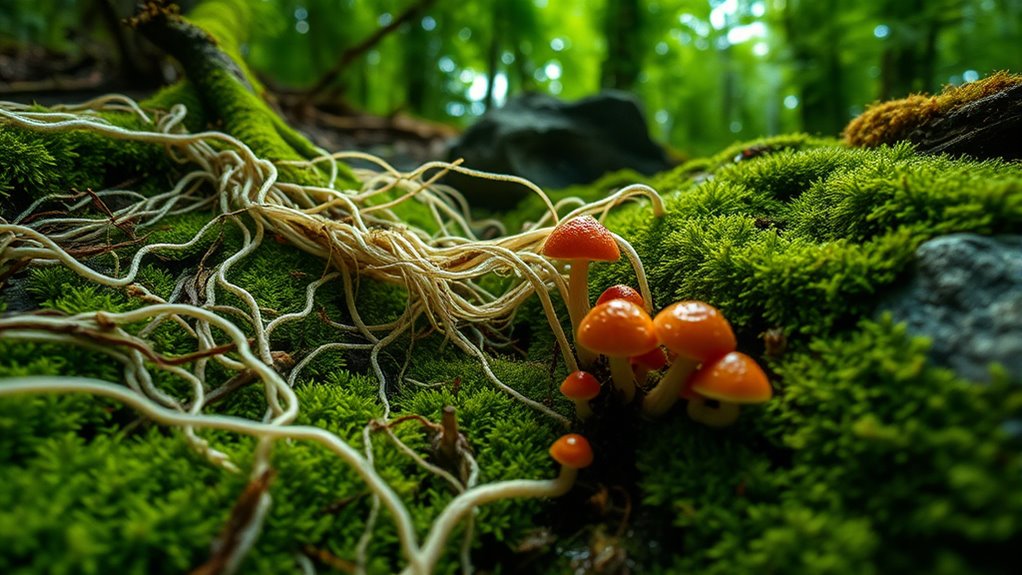
Beneath the soil surface lies a vast and intricate network where fungi and plants form essential alliances known as mycorrhizal associations. You might not see this underground partnership, but it’s indispensable for plant health and growth. The fungi extend their hyphae into plant roots, creating a symbiotic exchange: plants supply sugars produced through photosynthesis, while fungi provide access to water and nutrients like phosphorus and nitrogen. This relationship boosts plant resilience against drought, pests, and diseases. Nearly 80% of vascular plants worldwide depend on mycorrhizal fungi to thrive. These alliances are a prime example of mutualistic symbiosis, highlighting how different organisms cooperate for mutual benefit. You’ll find these alliances across ecosystems, from forests to grasslands. By working together, fungi and plants create a hidden network that sustains plant communities and enhances soil fertility, making this partnership one of nature’s most critical and underestimated collaborations. This interconnected system also plays a vital role in soil health by improving nutrient cycling and structure.
Cattle and Cattle Egrets: A One-Sided Advantage
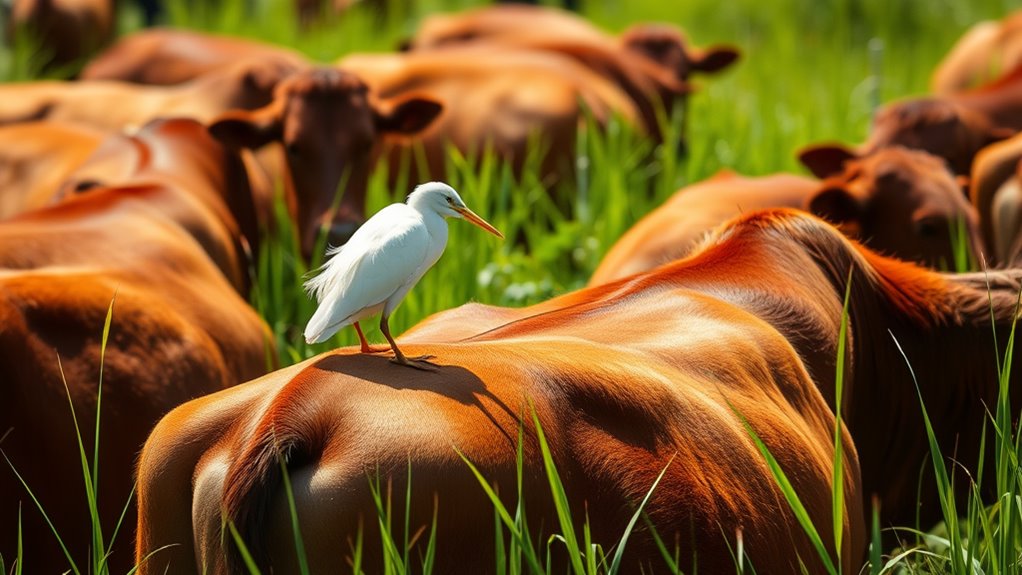
You notice how cattle grazing in fields attract cattle egrets, which follow closely behind. The egrets feed on insects disturbed by the cattle’s movement, gaining an easy meal without affecting the animals. This relationship offers ecological benefits, but it’s mainly one-sided, with the egrets reaping the advantages while the cattle remain unaffected. Interestingly, this form of symbiotic partnership demonstrates how different species can coexist with mutually beneficial or neutral interactions. These interactions often involve active communication to maintain harmony within the ecosystem. The presence of such ecological relationships can influence biodiversity and ecosystem stability, highlighting the importance of understanding these interactions in conservation efforts.
Insect Dispersal Assistance
Cattle egrets benefit from following grazing cattle by feeding on insects disturbed by their movement, gaining easy access to a plentiful food source. As cattle walk through fields, they stir up grasshoppers, flies, and beetles, which the egrets quickly seize. This relationship requires no direct contact with the cattle, making it a one-sided advantage for the egrets. The egrets minimize energy spent on hunting by exploiting cattle’s movements, which enhances their foraging efficiency. Their presence can reduce insect populations that bother livestock, contributing to healthier grazing environments. The egrets’ feeding behavior may help control pest outbreaks, demonstrating a form of natural pest management. Additionally, this interaction exemplifies how animal behavior can create mutually beneficial relationships in nature. Such interactions also illustrate the importance of ecological balance in maintaining healthy ecosystems. Cattle remain unaffected, unaware of the benefits the egrets provide in insect management. Understanding this symbiotic relationship highlights how animals adapt to their environments to optimize survival strategies.
Cattle Unaffected Behavior
In their relationship with cattle, cattle egrets go about their feeding without affecting the animals’ behavior or well-being. As the cattle graze, the egrets patiently follow, picking off insects stirred up by the movement. You won’t notice any change in the cattle’s actions—they continue grazing normally, unaffected by the egrets’ presence. This one-sided relationship benefits the egrets by providing a steady food source while leaving the cattle unharmed. The cattle don’t respond aggressively or show signs of discomfort; they simply carry on as usual. Their calm behavior ensures the egrets can feed efficiently without disturbance. This seamless interaction highlights how some species can coexist in mutual proximity without impacting each other’s daily routines, emphasizing an effective, non-intrusive partnership in nature.
Ecological Benefits Overview
The relationship between cattle and cattle egrets exemplifies how mutual benefits can occur without direct interference. You benefit from their interaction by observing a natural cleaning process that reduces pest populations around cattle. Cattle egrets enthusiastically follow grazing cattle, feeding on insects disturbed by their movement. This dynamic offers ecological advantages, such as pest control that benefits cattle health and reduces the need for chemical treatments. Additionally, it supports biodiversity by maintaining insect population balance. You can see this partnership as an efficient, low-impact form of natural pest management. Its simplicity demonstrates how species can coexist and thrive through one-sided interactions, improving ecosystem stability. This relationship exemplifies how minimal intervention can create a positive ripple effect across multiple species.
Remora Fish and Sharks: A Relationship of Convenience
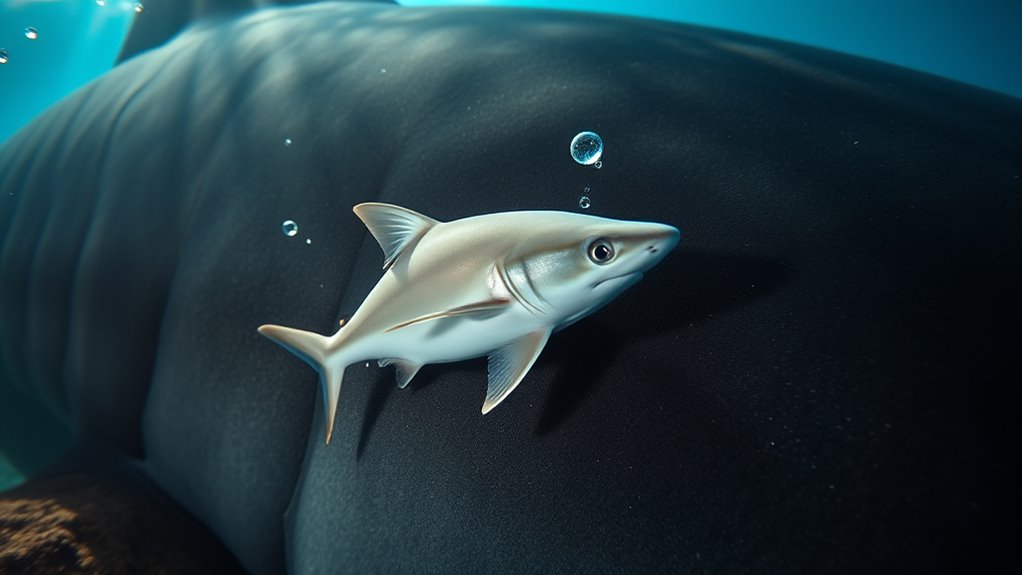
Remora fish often attach themselves to sharks, forming a classic example of mutualism that benefits both species. The remora gains free transportation and leftover food scraps, while the shark remains largely unaffected. This relationship is a prime example of convenience, where neither species suffers harm. The remora uses a sucker disc on its head to cling to the shark’s body, especially around the fins. The table below highlights key aspects:
| Aspect | Benefit to Remora | Effect on Shark |
|---|---|---|
| Transportation | Free movement across ocean | No impact or harm |
| Food scavenging | Access to leftover prey | No significant effect |
| Protection | Avoids predators by hitchhiking | No direct benefit, no harm |
This partnership showcases how species adapt for mutual convenience in marine ecosystems.
Rafflesia and Host Plants: Nature’s Largest Flower
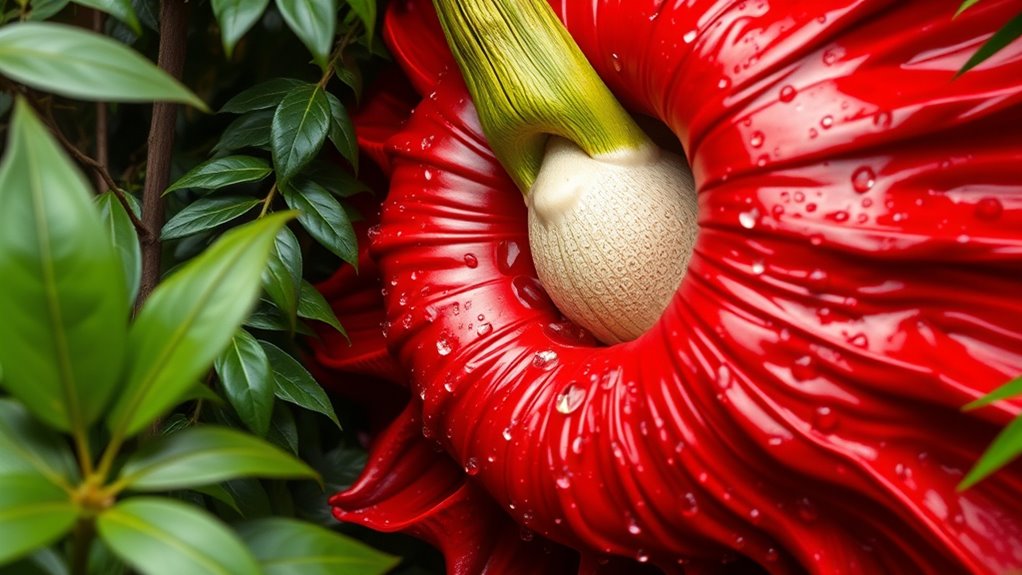
You observe that Rafflesia relies entirely on its host plants to survive, extracting water and nutrients without offering anything in return. This parasitic relationship makes the flower deeply dependent on its host, often weakening it over time. As you consider this, you see how such nutrient extraction highlights the delicate balance between parasitism and host survival.
Parasitic Nutrient Extraction
Rafflesia, known as the world’s largest flower, exemplifies a parasitic relationship by extracting water and nutrients directly from its host plants. You’ll find it embedded within the host’s tissue, relying entirely on it for sustenance without providing any benefit in return. Its specialized structures, called haustoria, penetrate the host’s vascular system to siphon off essential resources. This parasitism weakens the host, often reducing its growth and reproductive capacity. Rafflesia’s reliance on its host is so complete that it lacks roots, stems, or leaves of its own. The relationship showcases how parasitic plants adapt unique mechanisms to exploit their hosts for survival, often leading to dramatic changes in the host’s health and energy.
- Haustoria enable nutrient transfer from host to parasite
- No chlorophyll means Rafflesia cannot photosynthesize
- The parasite’s growth can considerably impair host plant health
- Rafflesia’s life cycle depends entirely on its host’s presence
Host Plant Dependency
Rafflesia’s survival hinges entirely on its host plants, making it one of the most extreme examples of parasitic dependency in nature. You can’t find Rafflesia growing independently; it relies completely on specific vine hosts like Tetrastigma. You won’t see it producing leaves, stems, or roots—only its massive, striking flower emerges from the host’s tissue. The flower’s development consumes water, nutrients, and organic compounds directly from the host, which it absorbs through specialized structures called haustoria. Without its host, Rafflesia cannot survive or reproduce. This close dependency means the flower’s life cycle is intricately tied to the health and presence of its host plant. Its existence exemplifies how some species become wholly reliant on others, blurring the line between parasitism and mutualism.
Ticks and Hosts: Parasitic Interactions in Action
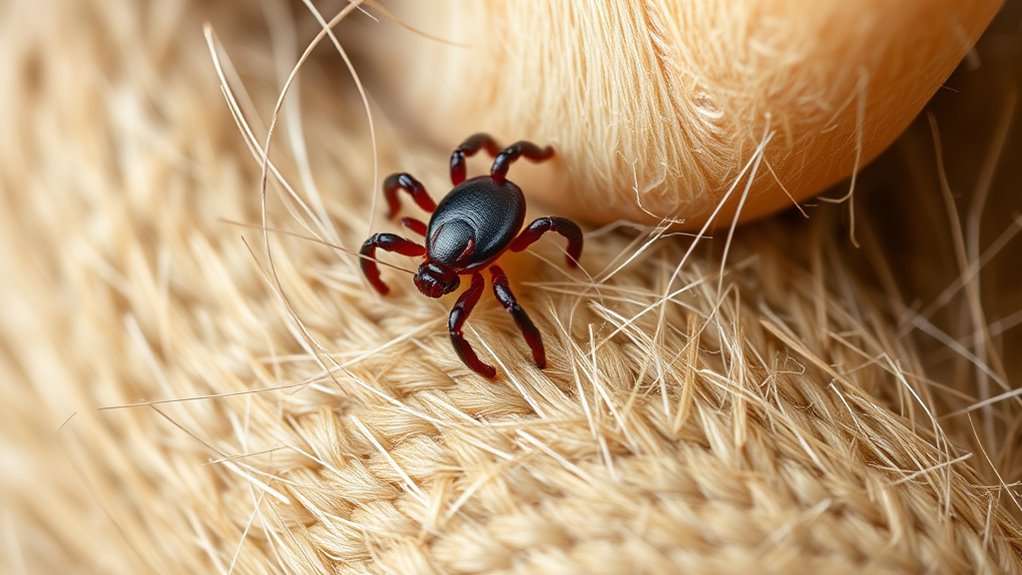
Ticks are parasitic arachnids that latch onto hosts such as mammals, birds, and humans to feed on their blood. This interaction often causes discomfort and health risks, including disease transmission like Lyme disease. You might not notice a tick’s bite right away, but their presence can lead to serious infections if left untreated. Ticks have specialized mouthparts that cut into the skin and anchor themselves securely, feeding for days. They’re highly adaptable, thriving in grassy and wooded areas where hosts pass through. Their parasitic nature benefits them by providing a steady food source, but it can harm hosts by causing blood loss, skin irritation, and disease. Recognizing and removing ticks promptly is essential to prevent health complications.
Ticks are blood-feeding parasites that can transmit diseases like Lyme disease.
- Ticks use sensory organs to detect hosts from distances
- They have a life cycle including larva, nymph, and adult stages
- Ticks can survive long periods without feeding
- They sometimes carry multiple pathogens, posing health risks
Co-evolution of Pollinators and Plants

The co-evolution of pollinators and plants illustrates how species develop specialized traits to benefit each other over time. You’ll notice flowers evolve structures like long tubes or vibrant colors to attract specific pollinators, while those pollinators develop compatible features like elongated proboscises or unique scent receptors. This mutual adaptation increases pollination efficiency and reproductive success for plants, while providing food resources to pollinators. For example, certain orchids depend solely on one bee species, and some butterflies have mouthparts tailored to specific flower shapes. These relationships lead to morphological and behavioral changes, reinforcing the partnership. Over generations, this tight co-evolution creates intricate dependencies, making both species more specialized and interdependent, ensuring their survival through mutually beneficial adaptations.
Marine Symbiosis: Oceanic Partnerships and Their Roles
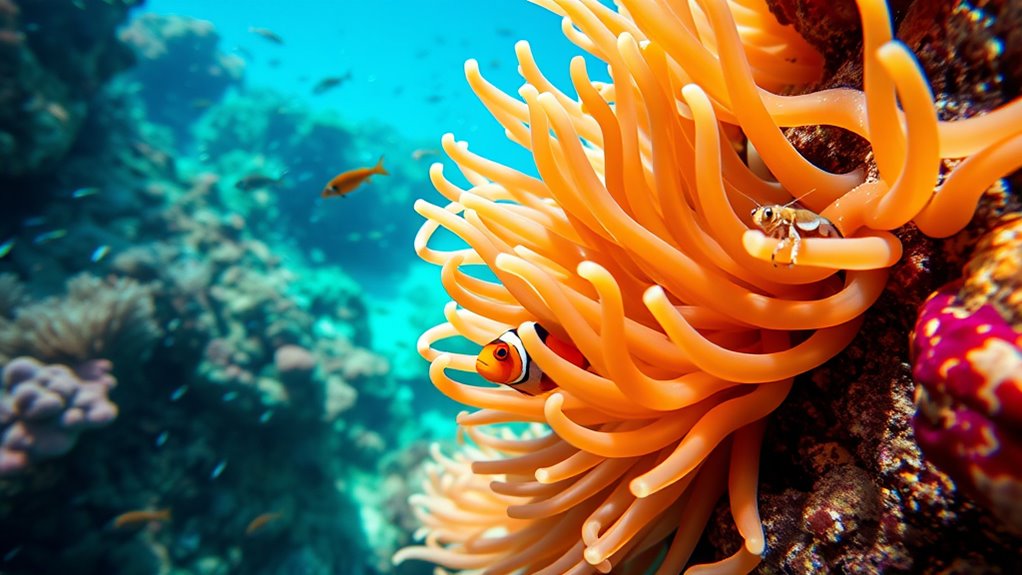
Marine environments teem with diverse symbiotic relationships that shape the survival and stability of countless species. These oceanic partnerships range from mutualism to parasitism, fostering complex interactions. For example, remora fish hitch rides on larger animals, cleaning parasites and gaining transportation. Pistol shrimp and gobies share burrows, with shrimp providing shelter and gobies offering protection. Manta rays host remoras that help keep their skin free of pests while traveling long distances. Such relationships enable species to thrive despite harsh conditions and resource competition. These partnerships often involve specialized adaptations, like the remora’s suction cup or the shrimp’s burrow. They demonstrate how cooperation or exploitation sustains biodiversity and balances ecosystems in ways that benefit multiple species simultaneously.
Frequently Asked Questions
How Do Mutualistic Relationships Evolve Over Time?
Mutualistic relationships evolve over time through co-evolution, where both species adapt traits that benefit their partnership. You might notice that plants develop specialized flowers to attract specific pollinators, while insects evolve structures to access nectar efficiently. These adaptations become more refined, strengthening the bond. Over generations, this mutual influence leads to highly specialized interactions, ensuring both species improve their chances of survival and reproduction within their shared environment.
Can Parasitism Turn Into Mutualism in Nature?
Imagine you’re watching a parasitic relationship evolve—parasitism can indeed turn into mutualism over time. If both species find a way to benefit without harming each other, natural selection favors this change. For example, a parasite might start offering a service in exchange for resources, gradually becoming a mutualist. This shift often involves changes in behavior, adaptation, and mutual dependence, transforming a harmful relationship into a cooperative one.
What Are the Risks of Disrupted Symbiotic Partnerships?
When symbiotic partnerships get disrupted, you risk losing essential benefits, which can harm both species involved. For mutualism, the relationship’s breakdown might lead to decreased reproduction or survival chances. In parasitism or commensalism, the imbalance can cause overpopulation or decline of one species. Disruption may also upset ecosystem stability, affecting food chains and biodiversity, ultimately harming the environment you depend on.
How Do Species Recognize Suitable Partners for Symbiosis?
You recognize suitable partners for symbiosis through specific cues like chemical signals, visual identification, or behavioral patterns. These cues help you identify compatible species that can provide mutual benefits or necessary resources. Evolution has fine-tuned these recognition mechanisms, ensuring that you form successful partnerships. By responding to these signals, you minimize risks and enhance the chances of a beneficial relationship, optimizing your chances of survival and reproduction.
Are There Human Applications Inspired by These Symbiotic Relationships?
Like Da Vinci observing nature’s harmony, you can draw inspiration from symbiotic relationships for human applications. Think of bio-inspired innovations such as biomimicry in medicine, renewable energy, and sustainable agriculture. You might develop new materials mimicking coral reefs’ resilience or design systems that promote mutual benefit, like shared resources. These partnerships in nature serve as models for creating eco-friendly solutions that foster cooperation, efficiency, and resilience in human technology and society.
Conclusion
So, next time you marvel at nature’s harmony, remember it’s often a delicate balance of give and take—or sometimes just take. These partnerships highlight that even in survival, some relationships are more about mutual benefit, while others lean heavily on one side. Ironically, it’s these complex, sometimes unequal bonds that keep ecosystems thriving, reminding you that in nature, cooperation often masks a hidden struggle for dominance—and survival.