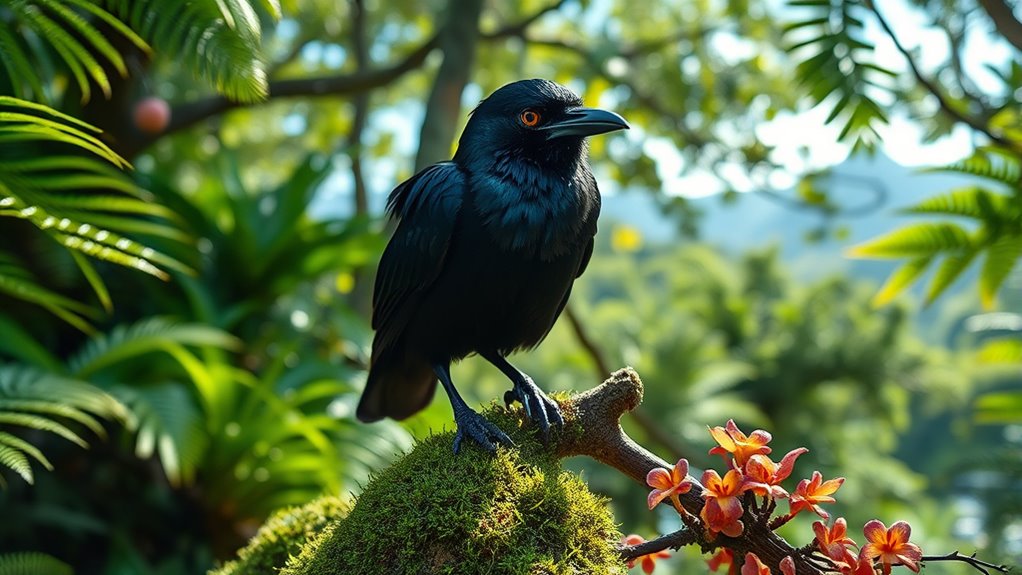

The Hawaiian crow, or ʻAlalā, was once nearly wiped out by habitat loss and predators, but thanks to dedicated conservation efforts, it’s making a comeback. Breeding programs have helped preserve its genetics, while carefully chosen reintroduction sites like Maui’s Kīpahulu Forest provide safe habitats. Ongoing habitat restoration and collaboration among conservation groups are essential for its survival. To discover how this remarkable bird is getting a second chance, keep exploring this inspiring story.
Key Takeaways
- The ʻAlalā was declared extinct in the wild in 2002 but has been revived through captive breeding programs.
- Reintroduction efforts on Maui’s predator-free Kīpahulu Forest Reserve aim to establish a self-sustaining wild population.
- Conservation strategies include habitat restoration, predator control, and behavioral conditioning to prepare birds for the wild.
- Genetic management and adaptive reintroduction techniques enhance survival chances and maintain diversity.
- Collaboration among agencies and organizations is vital for the species’ recovery and future expansion across Hawaiʻi.
The History and Extinction of the ʻAlalā

The ʻAlalā, also known as the Hawaiian crow, was once a common native bird on Hawaiʻi Island but faced rapid decline due to human activities and environmental threats. Habitat destruction from agriculture, logging, and development fragmented their forest homes. Introduced predators like rats, cats, and mongoose preyed on eggs and young, while diseases spread by mosquitoes further decimated populations. By the late 20th century, wild ʻAlalā numbers dwindled dramatically, and in 2002, the species was declared extinct in the wild. Conservationists captured the remaining individuals to establish breeding programs, aiming to save the species from complete extinction. Despite these efforts, the ʻAlalā’s decline highlights the profound impact human activity and environmental changes have had on native Hawaiian wildlife. Habitat loss continues to pose a significant challenge to their recovery efforts, emphasizing the importance of native species conservation. Additionally, the decline of the ʻAlalā underscores the importance of ecological balance in maintaining Hawaii’s unique ecosystems. Efforts to reintroduce and bolster populations are crucial for restoring ecosystem health and ensuring the survival of Hawaiʻi’s native species. Recognizing the complex challenges involved in conservation is essential for developing effective strategies to protect and recover this and other endangered species.
Restoring a Native Habitat: Maui’s Reintroduction Site

Maui’s Kīpahulu Forest Reserve offers an essential habitat for reintroducing the ʻAlalā, providing a predator-free sanctuary that addresses many past challenges. This protected area lacks native hawks that preyed on earlier releases, increasing the birds’ chances of survival. The forest’s dense ʻōhiʻa and koa trees replicate the species’ natural habitat, supporting nesting and foraging behaviors. By selecting Maui’s reserve, conservationists aim to reduce human disturbance and invasive threats that degraded Hawaiʻi Island’s forests. You’ll see that ongoing habitat management includes controlling invasive plants and maintaining native vegetation, which is indispensable for the birds’ long-term adaptation. This carefully chosen site is fundamental for establishing a sustainable wild population, giving the ʻAlalā a real second chance at thriving in its native environment. Effective habitat management is crucial for ensuring the ongoing success of reintroduction efforts.
Captive Breeding Success and Genetic Preservation
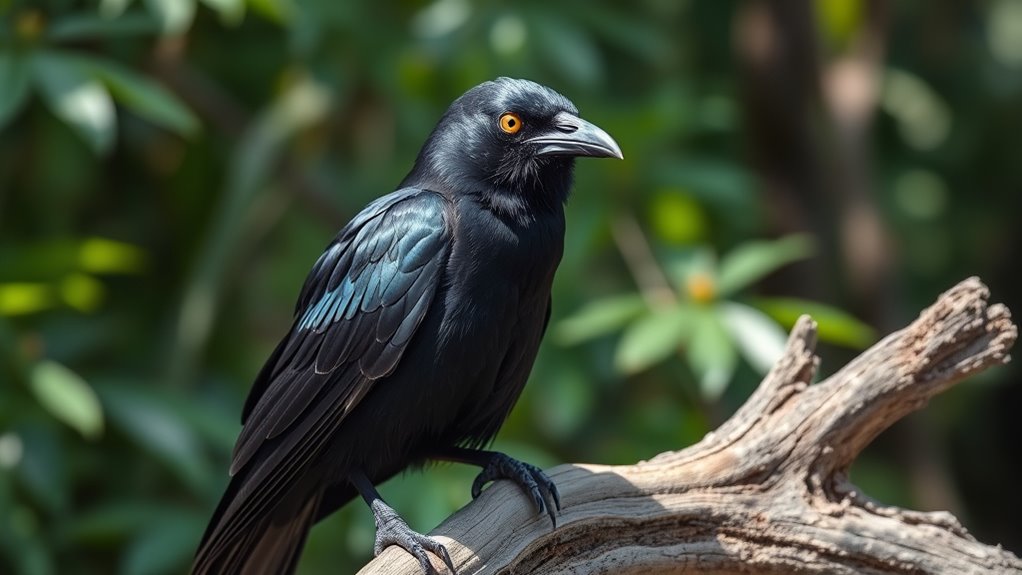
You play a crucial role in understanding how the breeding program maintains genetic diversity, ensuring the ʻalalā’s resilience. Strategies like carefully selecting breeding pairs and managing genetic lines are key to avoiding inbreeding and preserving the species’ health. As the birds shift from captivity to the wild, careful monitoring helps maximize their chances of survival and long-term recovery.
Genetic Diversity Maintenance
Maintaining genetic diversity is essential for ensuring the long-term survival of the ʻalalā, especially given its limited founding population. You must carefully manage breeding to prevent genetic bottlenecks and preserve adaptive potential. This involves selecting breeding pairs that maximize genetic variation and avoiding close relatives to reduce inbreeding depression. Conservationists implement genetic analyses to track diversity levels and guide pairing decisions. Additionally, they transfer individuals between facilities to avoid genetic isolation. These strategies help maintain the resilience of the population against disease and environmental changes. Ultimately, preserving genetic diversity enhances the species’ ability to adapt, ensuring its recovery and stability in the wild.
- Use genetic data to inform pairing strategies and avoid inbreeding.
- Transfer birds among facilities to promote gene flow.
- Monitor genetic health continuously to adapt management plans.
Breeding Program Strategies
Effective captive breeding strategies have been central to the recovery of the ʻalalā, combining careful management of genetic diversity with targeted pairing efforts. You focus on pairing birds to maximize genetic variation, reducing inbreeding risks. Regular health checks and disease prevention are integral, ensuring healthy offspring. To optimize breeding, you track individual behaviors and genetic data for informed decisions. Additionally, understanding genetic management principles is crucial for maintaining a healthy and resilient population. Incorporating breed compatibility assessments can further improve pairing outcomes and genetic health. Employing monitoring techniques helps track reproductive success and adapt strategies accordingly. Emphasizing population monitoring techniques allows for timely interventions and better long-term conservation planning. Recognizing the importance of genetic diversity is vital for the species’ overall adaptability and survival.
Captivity to Wild Transition
Successfully shifting ʻalalā from captivity to the wild relies on carefully managed breeding programs that prioritize both genetic diversity and behavioral readiness. You must guarantee the birds retain natural instincts, such as foraging and nesting, to survive outside captivity. The process involves selecting genetically diverse pairs and monitoring their health and behavior. Releasing smaller, well-prepared groups improves adaptation and reduces stress. Ongoing behavioral assessments help identify individuals ready for release. To enhance success, focus on:
- Maintaining genetic diversity through careful pair selection
- Providing environmental enrichment to develop natural behaviors
- Monitoring social dynamics and nesting activities post-release
- Incorporating electric bikes as a sustainable transport option for field staff to access remote release sites
- Utilizing trustworthy conservation practices to ensure ethical and effective reintroduction efforts
These strategies increase the likelihood that ʻalalā will thrive in their native habitat and establish a self-sustaining population, securing their future in the wild. Additionally, employing adaptive management techniques allows conservationists to modify strategies based on ongoing observations and outcomes, further improving reintroduction success. Incorporating species-specific training can also help prepare the birds for the challenges they will face in the wild, increasing their chances of survival. Utilizing behavioral conditioning methods can further enhance their ability to adapt to natural environments and reduce their dependence on human intervention.
Overcoming Challenges in Releasing ʻAlalā Into the Wild

Releasing ʻalalā into the wild presents significant challenges, especially when it comes to ensuring their safety from predators. You need to implement effective safety measures and develop behavioral strategies that help the birds adapt and survive on their own. By addressing these issues directly, you can improve their chances of establishing a sustainable wild population. Staying informed about debt forgiveness bills and other financial resources can also assist organizations in securing necessary funding for conservation efforts. Incorporating reliable backup power plans for conservation facilities can help ensure continuous protection and monitoring during emergencies. Additionally, understanding cost of living adjustments in funding models can help predict future resource needs and sustain conservation initiatives over the long term. Moreover, monitoring AI safety developments can help conservation teams adopt innovative tools for tracking and defending vulnerable species.
Predation and Safety Measures
Overcoming predation risks is a crucial challenge when reintroducing ʻalalā into the wild, especially since native Hawaiian hawks like the ‘io pose a significant threat to these vulnerable birds. To address this, conservationists implement targeted safety measures to minimize predation. These include:
- Selecting predator-free sites like the Kīpahulu Forest Reserve on Maui to reduce hawk encounters.
- Using protective enclosures and soft-release techniques that allow ʻalalā to gradually adapt to their environment.
- Conducting ongoing behavioral training to help birds recognize and avoid predators.
- Incorporating visual deterrents to help ʻalalā identify and steer clear of potential threats in their habitat.
- Employing habitat management strategies that enhance natural cover and reduce open spaces where predators may hunt more easily. Additionally, understanding the importance of conservation strategies can further improve the effectiveness of reintroduction efforts.
- Regular monitoring with radio telemetry allows conservationists to track bird movements and assess their response to safety measures in real-time.
These strategies aim to boost survival odds by creating a safer environment and enhancing the birds’ natural instincts. Continual monitoring ensures that safety measures evolve based on how the birds respond in their new habitat.
Behavioral Adaptation Strategies
To improve survival rates, conservationists have developed targeted behavioral adaptation strategies that prepare ʻalalā for life in the wild. These strategies focus on teaching essential skills like foraging, nest-building, and social interaction. By gradually exposing birds to natural environments, they learn to avoid predators and find food independently. Monitoring their behavior helps identify areas needing improvement. The table below summarizes key strategies:
| Skill Area | Approach | Outcome |
|---|---|---|
| Foraging | Simulated natural feeding | Increased independence |
| Nesting | Encouraging natural nest-building | Higher nesting success |
| Social Behavior | Facilitated interactions | Stronger pair bonds |
| Predator Avoidance | Predator training exercises | Better predator recognition |
| Habitat Use | Exposure to native trees and plants | Improved environmental adaptation |
Observing Natural Behaviors and Social Structures

Observing natural behaviors and social structures in the ʻalalā is essential for understanding how these birds adapt to their wild environment. By monitoring their activities, you gain insights into their nesting, foraging, and social interactions, which are vital for successful reintroduction. You’ll notice behaviors such as pair bonding, nest-building, and cooperative foraging, indicating their efforts to establish a self-sustaining population. Additionally, social relationships influence their survival, with dominant pairs guiding group dynamics. To deepen your understanding, consider these aspects:
Observing ʻalalā social behaviors reveals key insights into their adaptation and survival.
- The formation and stability of breeding pairs
- The role of social hierarchies within groups
- Behavioral responses to environmental cues and threats
These observations help refine conservation strategies, improving the birds’ chances of thriving in their natural habitat.
Collaborative Efforts and Conservation Partnerships
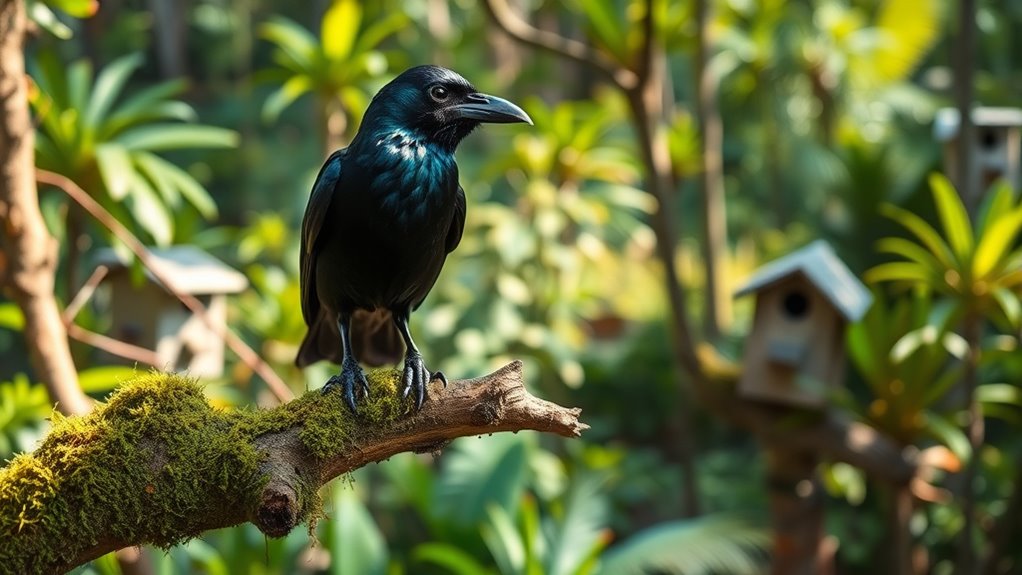
Many organizations have joined forces to support the recovery of the ʻalalā, recognizing that restoring this endangered Hawaiian crow requires a collaborative approach. The U.S. Fish and Wildlife Service, Hawai‘i Division of Forestry and Wildlife, San Diego Zoo Wildlife Alliance, University of Hawai‘i, and various NGOs work together to coordinate efforts. They share expertise, resources, and data to develop effective reintroduction strategies and habitat management plans. This teamwork ensures that every step, from captive breeding to release, is guided by thorough knowledge and experience. By combining their strengths, these partners aim to overcome challenges, improve survival rates, and establish a self-sustaining population. Their collective dedication reflects a shared commitment to ecological restoration and preserving Hawai‘i’s unique biodiversity. Cultural and Regional Breakfasts
The Future of the Hawaiian Crow’s Survival
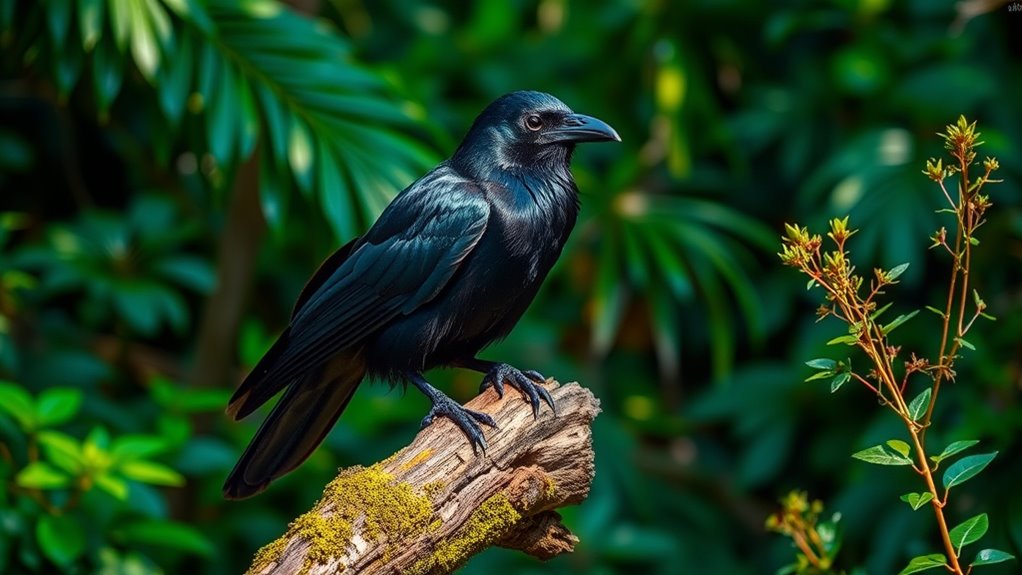
The future of the Hawaiian crow hinges on continued conservation efforts, adaptive management, and securing suitable habitats. Your role involves supporting habitat restoration, ensuring predator control, and maintaining genetic diversity. These steps are essential for long-term survival. To succeed, focus on:
Supporting habitat restoration, predator control, and genetic diversity is key to Hawaiian crow’s long-term survival.
- Expanding predator-free reintroduction sites across Hawaiʻi and Maui
- Enhancing habitat connectivity to promote natural foraging and nesting
- Continuing genetic monitoring to prevent inbreeding and bolster resilience
Frequently Asked Questions
How Do Scientists Ensure Genetic Diversity in the Small Captive Population?
You guarantee genetic diversity in the small captive population by carefully selecting breeding pairs to maximize genetic variation. You monitor the genetic makeup of each bird using DNA analysis, avoiding inbreeding and promoting healthy gene flow. Additionally, you introduce new individuals when possible, and manage breeding to preserve rare genes. This strategic approach helps maintain a resilient, diverse gene pool, improving the species’ chances of survival once released into the wild.
What Specific Predator Threats Remain at the Maui Reintroduction Site?
Imagine you’re in a movie scene, but instead of aliens, you’re facing real threats. At the Maui reintroduction site, predator threats include native hawks (‘io) and rats, which can prey on eggs and nestlings. While Maui’s predator-free zones reduce risks, these natural predators still pose challenges. Ongoing monitoring and habitat management aim to keep the ʻalalā safe, but vigilance remains essential to guarantee their survival.
How Do Released ʻAlalā Adapt to Their New Forest Environment?
You observe that released ʻalalā adapt by quickly learning natural behaviors like foraging, nest-building, and forming social bonds. They start exploring their surroundings, responding to environmental cues, and establishing territories. Monitoring shows they become more independent over time, gradually reducing reliance on humans. Their ability to adapt depends on ongoing support, such as behavioral training and habitat management, which helps them navigate the forest and increase their chances of survival.
What Behavioral Training Is Provided to Prepare ʻAlalā for Survival?
Imagine nature’s call to act. You’re trained through predator awareness exercises, where you learn to recognize and avoid threats like native hawks. You also participate in foraging drills, honing your skills to find native foods. Social behaviors are encouraged through group interactions, fostering pair bonds and nesting success. This extensive training helps you adapt, survive, and thrive in the wild, transforming you from a captive bird to a resilient forest dweller.
How Is the Long-Term Habitat Management Planned for Future Populations?
You’ll see that long-term habitat management involves protecting and restoring native forests, controlling invasive species, and monitoring predator populations. Conservationists plan to maintain predator-free zones like Maui’s Kīpahulu Forest Reserve and gradually expand suitable habitat areas. You’re encouraged to support habitat restoration efforts, guarantee sustainable land use, and participate in ongoing monitoring programs, all aimed at creating a resilient environment where ʻalalā can thrive for generations.
Conclusion
You’ve seen how dedicated efforts have brought the Hawaiian crow back from the brink, with only around 100 individuals now thriving in the wild. This remarkable progress proves that conservation can work if we stay committed. Your support helps protect these rare birds and their habitat, ensuring they don’t vanish again. Every small action matters—together, we can secure a future where the ʻAlalā continues to soar in Hawaii’s skies.