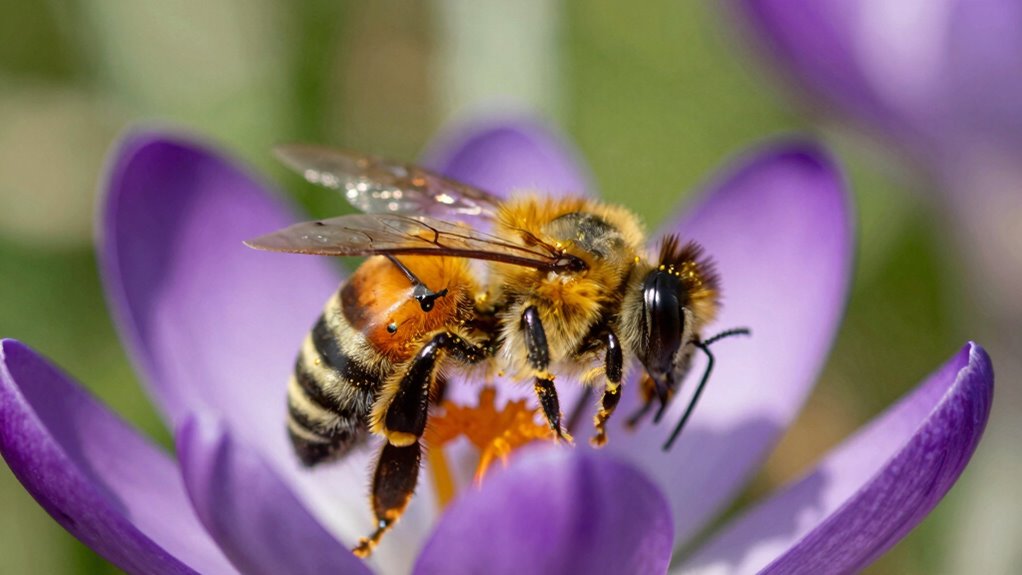

Mason bees are incredible pollinators you can easily attract to boost your garden’s productivity. Unlike social bees, they’re solitary and prefer nesting in hollow stems or wood. By planting diverse native flowers and providing bee houses, you create a welcoming environment. They’re quick and efficient, visiting up to 2,000 flowers daily, helping your fruits and vegetables thrive. If you want to know more about how to attract and support these valuable pollinators, keep exploring their fascinating world.

Prime made for students and young adults
- Fast, free delivery for dorm and study essentials
- Prime Video and Amazon Music included
- Member-only deals
Key Takeaways
- Mason bees are solitary pollinators that significantly enhance garden productivity by visiting up to 2,000 flowers daily.
- They thrive in diverse habitats with native flowering plants and prefer nesting in natural cavities or bee houses.
- Early spring emergence allows mason bees to pollinate early bloomers, boosting yield for fruits and vegetables.
- Implementing organic gardening practices and avoiding pesticides creates a safe environment for mason bees and other wildlife.
- Observing mason bees in action fosters a deeper appreciation for nature and promotes biodiversity in garden ecosystems.
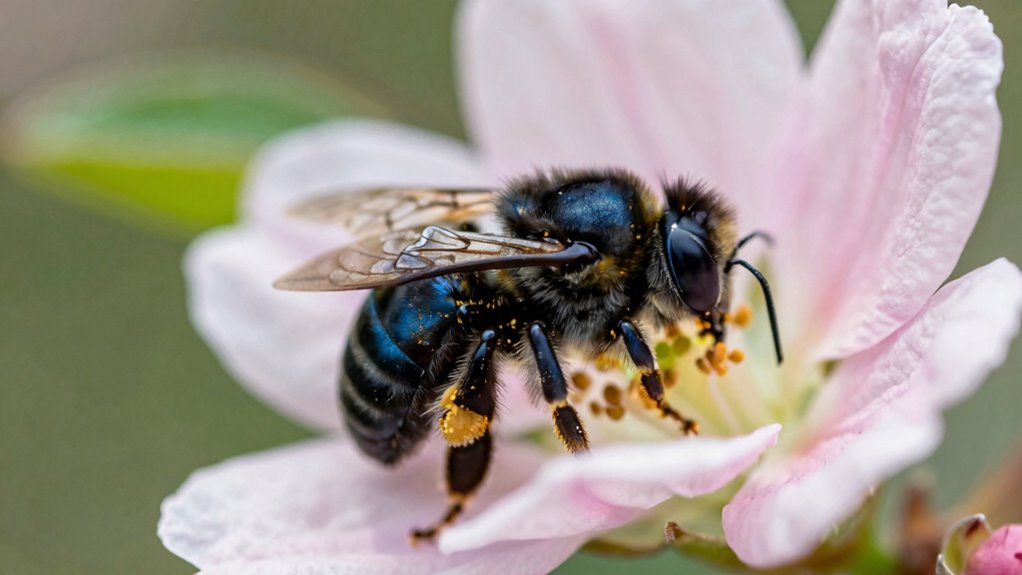
If you’ve ever wondered how to attract pollinators to your garden, mason bees might just be the answer. These incredible little creatures are among the most effective pollinators out there, and they can greatly boost your garden’s productivity. Unlike honeybees, mason bees are solitary and don’t live in hives, making them easier to manage in a home garden. Their unique nesting habits and behaviors provide a fascinating way to enhance your gardening experience.
To attract mason bees, it’s important to understand their preferred habitats. They thrive in areas with plenty of flowering plants, so planting a diverse range of native flowers is a great start. Mason bees love to nest in cavities, like hollow stems or small holes in wood. You can create ideal mason bee habitats by providing bee houses filled with tubes or blocks of wood that have pre-drilled holes. These simple structures will encourage mason bees to make your garden their home, and you’ll be rewarded with their pollination services.
Attract mason bees by planting diverse native flowers and providing nesting habitats with pre-drilled bee houses.
One of the major mason bee benefits is their efficiency. They can visit up to 2,000 flowers in a single day, which means your plants will be pollinated quickly and effectively. This not only helps your flowers bloom but also increases the yield of fruits and vegetables. Imagine biting into a juicy tomato or enjoying a bountiful harvest of berries, all thanks to these tiny powerhouses. Plus, since they emerge early in the spring, they can pollinate plants that other bees miss, further enhancing your garden’s productivity.
Creating a welcoming environment for mason bees also means avoiding harmful pesticides. Instead, consider using organic gardening methods that won’t disrupt these beneficial pollinators. By being mindful of your gardening practices, you’ll create a thriving ecosystem that supports mason bees and other wildlife.
Once you’ve set up your garden for mason bees, you’ll likely notice an array of activity. Watching them busily collect pollen and nectar is a joy that will deepen your appreciation for nature. Their presence not only benefits your plants but also contributes to the overall health of the environment.
As an affiliate, we earn on qualifying purchases.
Frequently Asked Questions
How Do Mason Bees Differ From Honeybees?
Mason bees differ from honeybees primarily in their behavior and nesting preferences. While honeybees live in large colonies, mason bees are solitary. You’ll find them nesting in small cavities, like hollow stems or wood holes, whereas honeybees build intricate hives. Mason bees also have a shorter lifespan and don’t produce honey. Instead, they focus on pollinating flowers, making them effective garden helpers during their brief activity period in spring.
Where Can I Buy Mason Bee Houses?
You can find mason bee houses at garden centers, online retailers, and specialty bee supply stores. Remember, “good things come to those who wait,” so take your time choosing the best materials. Look for houses made of untreated wood or bamboo, which create ideal mason bee habitats. Check reviews to guarantee quality and effectiveness, guaranteeing your little pollinators have a safe place to thrive while helping your garden flourish.
What Flowers Are Best for Attracting Mason Bees?
To attract mason bees, focus on flower varieties like crocuses, willows, and fruit trees. These blooms provide essential nectar and pollen. Make sure to plant flowers that bloom at different times throughout the season, ensuring a continuous food source for the bees. Early spring flowers are particularly important, as they give mason bees a much-needed boost after winter. By diversifying your garden with these blooms, you’ll create a welcoming habitat for them.
Do Mason Bees Sting Humans?
Mason bees don’t typically sting humans. Their behavior focuses on pollination rather than aggression. You’ll find them in habitats like garden beds and orchards, where they collect pollen. Since they’re gentle and not defensive, you can observe them closely without worry. If you leave them alone, they’ll do their important work without bothering you. Just enjoy their presence, knowing they’re beneficial allies for your plants!
How Long Do Mason Bees Live?
Mason bees typically live for about 6 to 8 weeks. Their lifespan can vary depending on environmental factors and their habitats. You’ll often find them in natural areas like gardens or woodlands, where they nest in hollow stems or small cavities. During their short life, they focus on pollinating flowers and laying eggs, ensuring their species continues. By providing suitable mason bee habitats, you can help them thrive even longer!
Conclusion
In the garden of life, mason bees are the quiet artists, painting blooms with the vibrant colors of pollination. By welcoming these gentle creatures into your space, you’re not just nurturing plants; you’re cultivating a thriving ecosystem. With every tiny buzz, they weave a tapestry of growth and beauty. So, let’s open our gardens to these unsung heroes and watch nature’s magic unfold, one flower at a time. Together, we can create a symphony of life!
Fall Picks
fall essentials
As an affiliate, we earn on qualifying purchases.