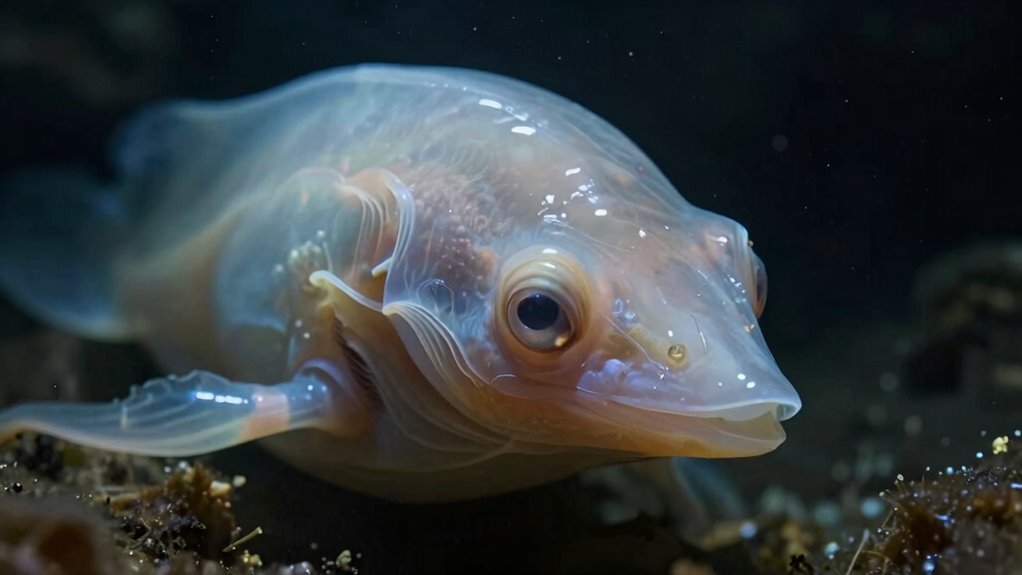

You’ll be amazed by the olm, a surreal, translucent cave creature living deep underground in Central Europe. Its ghostly appearance makes it look like something from another world, with nearly invisible eyes and highly sensitive skin that detects vibrations in total darkness. Adapted to survive in oxygen-poor, isolated waters, it demonstrates incredible resilience and evolved traits for extreme environments. If you’re curious about how such a unique creature thrived, keep exploring—there’s even more fascinating details await you.

Get school and study supplies delivered free — and shop member deals
- Fast, free delivery on millions of items
- Access to Prime Big Deal Days deals on October 6–7
- Prime Video, Amazon Music and more included
Key Takeaways
- The olm is a translucent, cave-dwelling amphibian with an alien-like appearance, adapted to survive in dark underground waters.
- It has minimal eyesight, relying on sensitive skin to detect vibrations and water changes for navigation.
- Living in isolated underground lakes, it exhibits remarkable physiological adaptations for low-oxygen, resource-scarce environments.
- Its glass-like skin provides camouflage, helping it avoid predators in its fragile subterranean ecosystem.
- The olm exemplifies extraordinary natural evolution, thriving in extreme, inhospitable underground habitats.
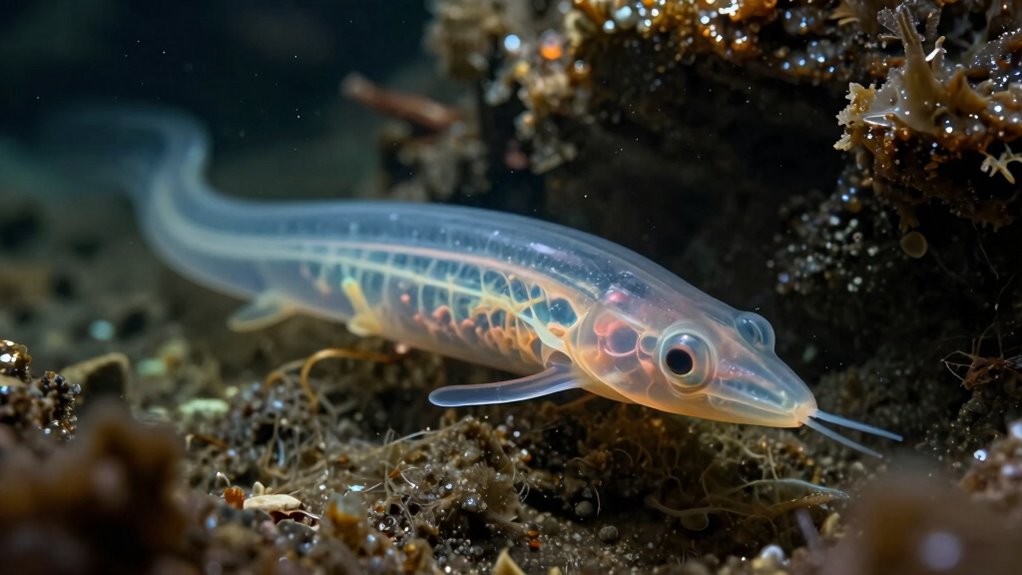
Have you ever seen a creature so bizarre and otherworldly that it almost seems like a fantasy? If not, let me introduce you to the olm, a subterranean marvel that inhabits the dark, isolated caves of Central Europe. This elusive creature exemplifies aquatic adaptation in the most extraordinary ways, having evolved over millions of years to thrive entirely in a cave ecosystem that’s cut off from the outside world. Its translucent skin and ghostly appearance make it look like a creature from another planet, but it’s very much a real animal perfectly adapted to its unique environment.
Discover the olm, a surreal, translucent creature perfectly adapted to life in Europe’s dark, isolated cave ecosystems.
In the darkness of the caves, where light never reaches, the olm relies on its specialized adaptations to survive. Its eyesight is virtually nonexistent, as it has lost most of its visual capabilities through evolutionary processes. Instead, it depends heavily on its other senses, particularly its sensitive skin that detects vibrations and changes in the water. This heightened sensory ability allows it to navigate the pitch-black depths of its aquatic habitat, hunting for tiny invertebrates and other small aquatic creatures that make up its diet. Its aquatic adaptation is so profound that it has become a master of living in an environment devoid of light and traditional land-based resources. Interestingly, recent studies have shown that its sensory adaptations are among the most advanced among cave-dwelling species. Additionally, its ability to survive in a low-oxygen environment underscores the extent of its evolutionary specialization. In fact, its physiological features are uniquely suited for the extreme conditions of its habitat, allowing it to endure where many others cannot.
The cave ecosystem in which the olm resides is incredibly fragile and highly specialized. These underground lakes and pools are isolated, with little to no connection to surface water sources, making the olm’s survival a delicate balance. Its ability to endure in such a harsh environment highlights the remarkable power of evolution and adaptation. Its translucent, almost glass-like skin offers it a form of camouflage, helping it blend into the water and avoid predators. Its internal organs are also uniquely suited for life in a low-oxygen environment, with a slow metabolism that conserves energy in the resource-scarce cave ecosystem. Interestingly, the olm’s evolutionary adaptations have allowed it to survive in an environment where most other species would struggle to endure.
Despite its eerie appearance and the mysterious environment it calls home, the olm is a testament to nature’s resilience and ingenuity. Its evolution demonstrates how life can adapt in the most extreme conditions, turning an otherwise inhospitable underground world into a thriving habitat. So, when you think about creatures that seem almost unreal, remember the olm—an extraordinary example of aquatic adaptation that has mastered survival in the darkness of the cave ecosystem. Its existence challenges your perception of what’s possible in the natural world and reminds you of the incredible diversity of life beneath the surface.
As an affiliate, we earn on qualifying purchases.
Frequently Asked Questions
How Long Can Olm Live Without Food?
You might wonder how long an olm can survive without food. In its cave habitat, the olm’s diet mainly consists of small aquatic invertebrates, but it’s incredibly resilient. It can live up to 10 years without eating, thanks to its slow metabolism and ability to store nutrients. This adaptation helps it endure long periods of scarcity in its dark, isolated environment, making it a fascinating example of cave-dwelling endurance.
What Is the Olms’ Lifespan in the Wild?
In the wild, the olm’s lifespan can reach up to 100 years. Its sensory adaptation to dark caves helps it navigate and find food efficiently, even with limited light. Additionally, its reproductive habits, including long development periods and low reproductive rates, contribute to its longevity. You’ll find that these unique traits allow the olm to survive in challenging underground environments for many decades.
Are Olms Endangered or Protected?
Olms are considered vulnerable but aren’t officially endangered. You can support olm conservation by protecting their fragile cave ecosystems, which face threats like pollution and habitat disturbance. By reducing pollution and advocating for cave preservation, you help guarantee their survival. Conservation efforts are vital because Olms depend on specific cave environments, and safeguarding these ecosystems benefits many other unique cave-dwelling species as well.
How Do Olms Navigate in Complete Darkness?
You might wonder how olms navigate in complete darkness. Their sensory adaptation is incredible—they rely on their highly developed lateral line system and sensitive skin to detect movements and vibrations in the water. This helps them find food and avoid obstacles. In the cave ecosystem, olms play a vital role by controlling prey populations and maintaining ecological balance, even without sight. Their unique adaptations make them true underground marvels.
Can Olms Survive Outside Their Cave Environment?
Olms can’t survive outside their cave habitat because they are specially adapted to underground environments, relying on their unique sensory systems. Their diet consists mainly of small invertebrates found in the dark waters of their caves. If you remove an olm from its habitat, it struggles to find food and adapt to surface conditions, making survival outside their natural cave environment virtually impossible.
Conclusion
Once you glimpse the olm, you’ll realize you’re staring at a creature so extraordinary, it defies belief. Its alien-like appearance and ancient origins make it seem more like a myth than real life. This subterranean marvel, with its almost supernatural resilience, challenges everything you thought you knew about nature’s ingenuity. Truly, encountering the olm is like stepping into a surreal world where reality bends, leaving you awestruck by the wonder of Earth’s hidden treasures.
Halloween Picks
halloween
As an affiliate, we earn on qualifying purchases.