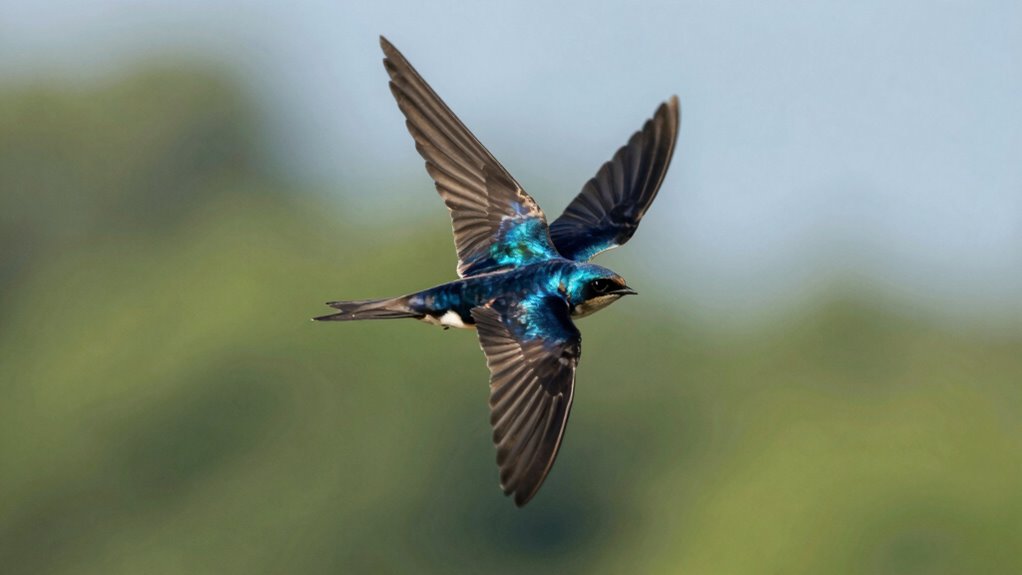

You might be surprised to learn that swifts are among the few birds that almost never land. They spend their lives soaring through the sky, only touching down briefly for nesting or roosting in high, sheltered spots. Their bodies are built for endurance, allowing them to fly nonstop for months while hunting insects. This incredible aerial lifestyle symbolizes freedom and resilience. If you’re curious, there’s much more to uncover about how these remarkable birds thrive in the sky.
Key Takeaways
- Swifts spend most of their lives airborne, rarely landing except for nesting or brief resting periods.
- They build nests in high, sheltered locations, minimizing contact with the ground.
- Swifts undertake long migration journeys of thousands of miles between Europe and Africa.
- Their physical adaptations enable sustained flight, allowing them to stay airborne for up to 10 months.
- Symbolizing freedom and endurance, swifts exemplify extreme aerial lifestyle and environmental adaptation.

Many believe that some birds never truly settle on the ground, endlessly soaring through the sky as if they’re chasing an eternal horizon. One such bird is the swift, whose remarkable lifestyle challenges your perceptions of flight and survival. These tiny, agile creatures spend most of their lives in the air, rarely touching down except for brief nesting periods. Their migration patterns are extraordinary, spanning thousands of miles between breeding sites in Europe or North Africa and wintering grounds in sub-Saharan Africa. You might imagine them as simply traveling through the seasons, but their journey is a continuous motion, a relentless quest fueled by instinct and necessity.
Swifts live nearly all their lives in the sky, endlessly migrating between continents driven by instinct and survival.
Swifts take off from their nests, which are often built in high, sheltered spots like cliffs, eaves, or building corners. Their nesting behaviors are optimized for their aerial lifestyle; they rarely land on the ground, preferring to cling onto vertical surfaces. Once their eggs hatch, the young birds learn to fly almost immediately, and the parents push them to master the skies in a matter of days. During this period, the chicks are fed in mid-air, a testament to how adapted these birds are to a life on the wing. You can’t help but marvel at how their nesting habits revolve around minimizing land contact, guaranteeing they stay airborne as much as possible.
Throughout the year, swift migration becomes a seamless part of their existence. They leave their breeding grounds in late summer, commencing on long, nonstop journeys across continents. Swifts are built for endurance, with powerful wings that enable continuous flight for months, sometimes up to 10 months at a stretch. During this time, they hunt insects—crucial for their survival—while soaring through the skies. Their migration is not just a movement from one place to another; it’s a complex, instinct-driven cycle that affirms their survival amid changing seasons. Their ability to stay airborne for such extended periods is a remarkable example of adaptation to aerial living.
Their lifestyle raises questions about what it truly means to land or rest. While they spend most of their lives airborne, they do come to ground briefly for nesting and roosting. Still, their preference is for a life in the sky. They’re a perfect example of a bird that defies your expectations, living a life that’s almost entirely flight. Their migration patterns and nesting behaviors highlight a profound adaptation: to spend nearly every waking moment in the air, constantly moving, yet perfectly suited to their environment. In fact, their extraordinary endurance allows them to undertake these extensive journeys with minimal rest. The swift embodies a relentless pursuit of freedom, forever chasing an horizon that’s just beyond reach.
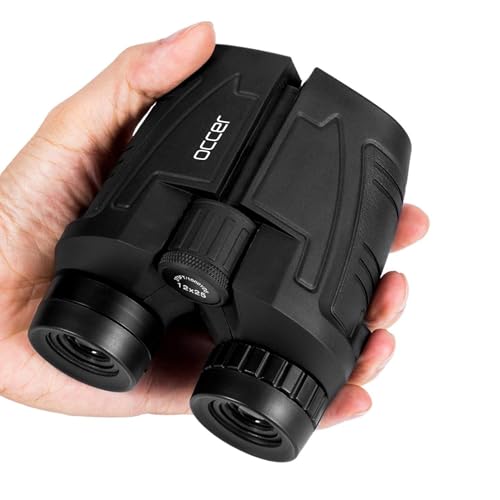
Occer 12×25 Compact Binoculars for Adults and Kids, Large Eyepiece Waterproof Binocular with Low Light Vision,High Powered Easy Focus Binoculars for Bird Watching,Outdoor Hunting,Travel,Sightseeing
【HIGH-POWERED LARGE EYEPIECE BINOCULARS】 This binoculars for adults has 12x magnification, 25mm objective lens and wide field of…
As an affiliate, we earn on qualifying purchases.
As an affiliate, we earn on qualifying purchases.
Frequently Asked Questions
How Long Can Swifts Stay Airborne Continuously?
You might be surprised to learn that swifts can stay airborne for up to 10 months continuously, thanks to their exceptional bird flight mechanics. During this time, they rely on a combination of their swift nesting habits and their ability to feed on airborne insects. This remarkable adaptation allows them to conserve energy and avoid landing, making them one of the most tireless birds in the sky.
Do Swifts Ever Rest or Land During Their Flight?
You might think swifts are eternal dancers in the sky, never pausing, but they do land, especially during their nesting. Their incredible aerial agility is part of their swift nesting habits, where they cling to cliffs or buildings for rest and breeding. During their social behavior, they gather in large groups, sharing moments on surfaces, but their primary focus remains relentless flight, making every landing a rare, purposeful pause in their skyward ballet.
What Do Swifts Eat While Flying for Months?
While flying for months, swifts primarily rely on their feeding strategies to catch insects mid-air. You’ll find they prefer certain insect types, like flies, moths, and small beetles, which they expertly seize during flight. Swifts have adapted to efficiently hunt these prey items on the wing, using their swift flying skills and keen eyesight to sustain themselves without landing, ensuring continuous nourishment during their long migrations.
How Do Swifts Navigate During Long Migrations?
You watch swifts slicing through the sky, their tiny bodies guided by an innate sense of navigation. During long migrations, they rely on the stars, the sun, and Earth’s magnetic field to find their way. As they build nests on cliffs or buildings, they avoid predators by flying high and fast, blending into the sky’s vast tapestry. Their instinctual navigation keeps them safe, allowing them to journey thousands of miles with precision.
Are Swifts Endangered or Protected Species?
Swifts are currently protected species in many regions due to concerns over their declining populations. Their nesting habits, which often involve building nests on man-made structures, make them vulnerable to habitat loss. Conservation efforts focus on preserving traditional nesting sites and raising awareness about their importance. By supporting these efforts, you help guarantee swifts continue their incredible migratory journeys and maintain their essential role in ecosystems.

4PCS Plastic Bird Nest Box Bird Nest Breeding Boxes Outdoor Indoor Mounted Parrot Nest Boxes for Birds Finch, Squirrel, Parrot, Budgie
High Quality Material: our bird nest box is made of plastic to ensure long time use without easy…
As an affiliate, we earn on qualifying purchases.
As an affiliate, we earn on qualifying purchases.
Conclusion
Imagine watching the sky and realizing that swifts stay airborne for up to 10 months straight each year. That’s nearly 95% of their lives spent in flight, never touching the ground! Their incredible endurance and aerial agility make them true sky nomads. So next time you see a swift darting through the air, remember, you’re witnessing one of the most remarkable feats in the animal kingdom—continually flying, forever chasing the sky.

Pawfly Reptile Feeder Bowl – Escape-Proof Corner Hunting Dish, Wall-Mounted Insect Feeder for Bearded Dragons, Chameleons, Geckos, Frogs & Lizards with Suction Cups
Reliable Material: Thickness: 2.6 mm. Made of safe, sturdy plastic, the bearded dragon feeder withstands daily bumps and…
As an affiliate, we earn on qualifying purchases.
As an affiliate, we earn on qualifying purchases.

Konohan 8 Pack Key Finder Locator Anti Lost GPS Tracker Wireless Anti Lost Alarm Sensor Device Finder Mini Pet GPS Tracker for Locating Phone Keys Wallets Luggage Item, 5 Colors
Anti Lost Keys Tracker: you will get 8 pieces of GPS pet trackers in 5 colors, which are…
As an affiliate, we earn on qualifying purchases.
As an affiliate, we earn on qualifying purchases.