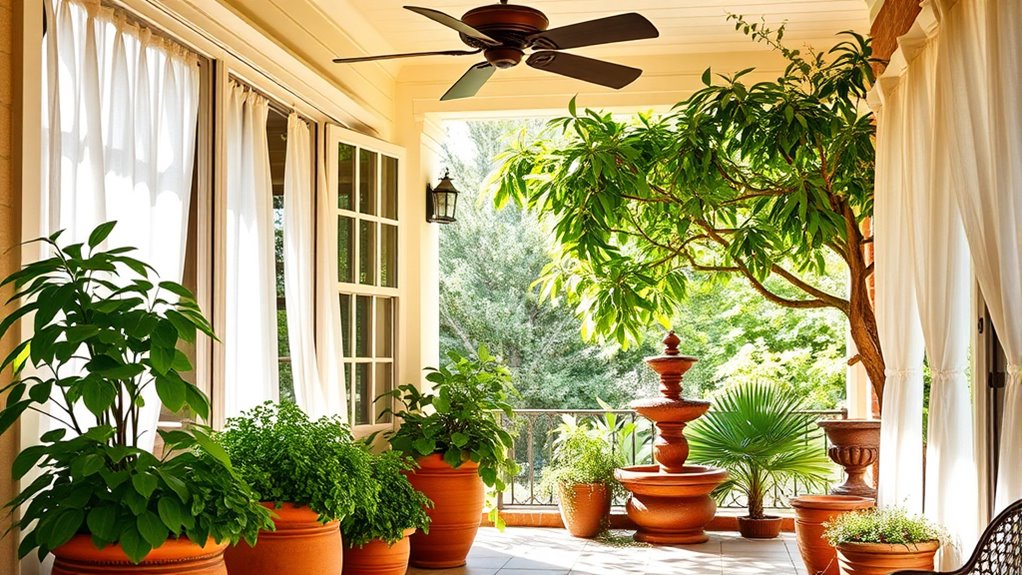

To cool your home naturally without AC, focus on passive shading by planting deciduous trees and using reflective roofs or curtains. Enhance ventilation by opening windows during cooler nights and creating cross-breezes. Incorporate evaporative cooling with damp curtains or fans to boost moisture loss and lower temperatures. Improve insulation and sealing leaks, and add strategic landscaping to block summer sun and promote airflow. Keep exploring for more simple, effective tips to keep your home comfortably cool.

Prime made for students and young adults
- Fast, free delivery for dorm and study essentials
- Prime Video and Amazon Music included
- Member-only deals
Key Takeaways
- Maximize passive shading with reflective blinds, planting deciduous trees, vines, and light-colored roofing to reduce solar heat gain.
- Enhance natural ventilation by opening windows on opposite sides at night and using cross-ventilation techniques.
- Use evaporative cooling methods like damp curtains and maintain ideal humidity levels for efficient cooling.
- Incorporate landscaping with shrubs and vines to block sunlight, improve airflow, and create natural shade buffers.
- Seal gaps, improve insulation, and use energy-efficient windows to prevent hot air infiltration and maintain cooler indoor temperatures.
As an affiliate, we earn on qualifying purchases.
Maximize Passive Shading Techniques

Maximizing passive shading techniques is a highly effective way to keep your home cooler without relying on air conditioning. During the hottest parts of the day, close thick curtains or reflective blinds to block up to 40% of solar heat gain. Plant deciduous trees on the south and west sides of your home to create natural shade, saving you $100–$250 annually on cooling costs. Grow vines on trellises at least 6 inches from walls for quick shading and a cool air buffer. Additionally, plant shrubs near lower walls to block sunlight and act as windbreaks in winter, reducing heat gain and energy loss. Integrating native, fast-growing plants maximizes shading while minimizing maintenance, ensuring your home stays cooler naturally.
Harness Natural Ventilation for a Cooler Home
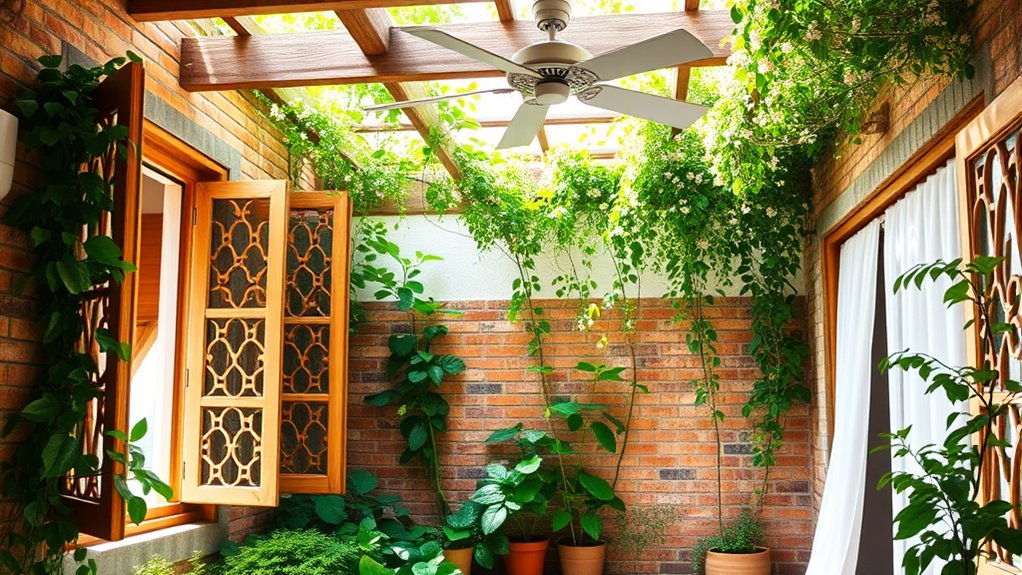
Harnessing natural ventilation is a straightforward way to lower indoor temperatures without turning on the air conditioner. You can do this by creating airflow that replaces hot indoor air with cooler outdoor air. To maximize effectiveness, consider these steps:
Use natural ventilation by opening windows strategically to cool your home effectively.
- Open windows on opposite sides of your home at night to facilitate cross-ventilation, then close them during the day to trap cooler air inside.
- Use the thermal chimney effect by opening lower windows on the breeze side and upper windows on the opposite side, helping warm air escape.
- Keep interior doors open to allow unrestricted airflow, ensuring cool breezes circulate throughout your home.
- Incorporating proper window placement can further enhance natural ventilation and cooling efficiency.
- Understanding sound wave principles can help optimize airflow and improve overall cooling effectiveness.
Implementing these strategies helps reduce indoor heat naturally, making your living space more comfortable.
Use Evaporative Cooling Methods Effectively
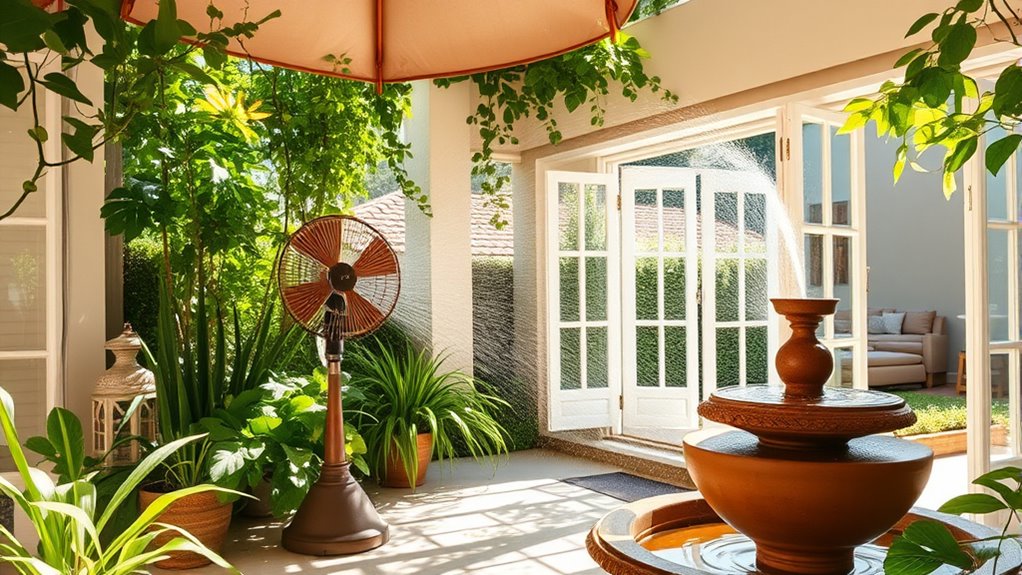
To get the most out of evaporative cooling, you need to keep indoor humidity levels below 70%, as higher humidity reduces evaporation’s effectiveness. Increasing air circulation with fans helps evaporate moisture faster, making the air feel cooler. Combining proper humidity control with good airflow guarantees you maximize the cooling power of evaporative methods. Additionally, understanding content discoverability can help you stay updated on the latest trends and tips for natural cooling techniques. Using the right portable camping fans can also improve your multimedia experience while enjoying a cooler, more comfortable home environment. Being aware of narcissistic behaviors can help you recognize and protect yourself from manipulation while maintaining a peaceful living space.
Optimal Humidity Levels
Have you ever noticed that evaporative cooling works best in certain humidity conditions? When the air’s dry, evaporation happens faster, making your cooling methods more effective. To optimize this, aim for indoor humidity levels between 30% and 50%. Here’s how to maintain ideal humidity for cooling:
- Use a dehumidifier or moisture absorbers if humidity rises above 50%.
- Increase ventilation by opening windows during dry parts of the day.
- Dampen curtains or sheets during low-humidity periods to boost evaporation.
- Maintaining proper humidity levels can also enhance the efficiency of humidification techniques used in smart home systems to monitor environmental conditions.
- Regularly check and calibrate your humidity sensors to ensure accurate readings and optimal comfort.
- Incorporating humidity control strategies can help sustain the ideal environment for evaporative cooling and improve overall energy efficiency.
Keeping humidity in this range enhances evaporative cooling, making your home cooler without extra effort. Staying within these levels prevents the air from feeling damp or clammy, maximizing comfort and cooling efficiency naturally.
Enhancing Air Circulation
Effective air circulation is key to maximizing evaporative cooling in your home. To do this, open windows on opposite sides of your house to create cross-ventilation, allowing cooler outside air to flow in and push out warm indoor air. Use fans strategically—placing a box fan in a window facing outward helps expel hot air, while a fan facing inward draws in cooler air. Hanging damp sheets or curtains in front of open windows enhances cooling through evaporation. Keep interior doors open to promote unrestricted airflow. If possible, position fans near water sources like bowls of ice or damp cloths to boost cooling. Remember, evaporative cooling works best in low humidity environments, so monitor the moisture levels for ideal comfort. Ensuring your Ring Security Cameras are functioning properly can also help monitor temperature and airflow around your home for better cooling management. Additionally, maintaining good airflow can prevent stagnant air and improve overall comfort during hot days. Proper ventilation strategies help sustain a comfortable indoor climate and enhance the effectiveness of evaporative cooling. Regularly inspecting and sealing leaks around windows and doors can also improve airflow efficiency and cooling performance. Incorporating humidistat controls can further optimize indoor humidity levels for maximum cooling efficiency.
Enhance Insulation and Design for Temperature Control
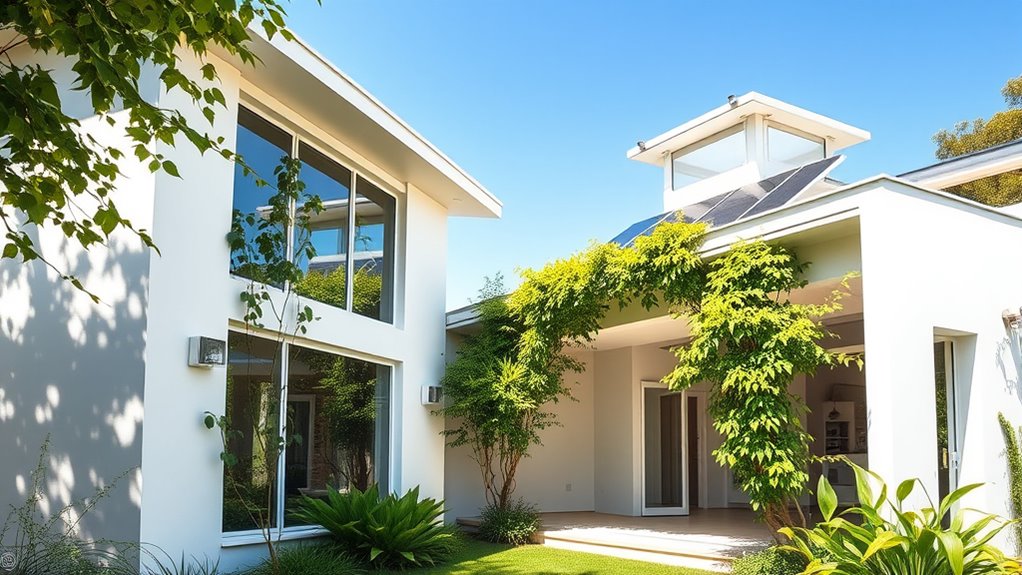
Enhancing insulation and thoughtful building design play a crucial role in maintaining comfortable indoor temperatures without relying on air conditioning. Proper insulation keeps heat out during summer and retains warmth in winter, reducing the need for cooling. To maximize efficiency, consider:
- Installing energy-efficient windows with low-emissivity coatings to minimize radiant heat transfer.
- Using light-colored roofing materials that reflect sunlight instead of absorbing it.
- Incorporating green roofs or walls, which provide natural insulation and shading.
- Understanding the benefits of alternative investments, such as gold IRAs, can also help secure your financial stability during economic fluctuations.
- Exploring the horsepower of your home’s cooling potential through passive design strategies can further enhance comfort and energy savings.
- Sealing gaps in ceilings, walls, and around doors prevents hot air infiltration and cools the interior naturally. Additionally, building envelope improvements can significantly boost overall home energy efficiency. Combining these strategies helps create a more energy-efficient home that stays cooler in the heat without extra power.
Incorporate Low-Power Cooling Devices
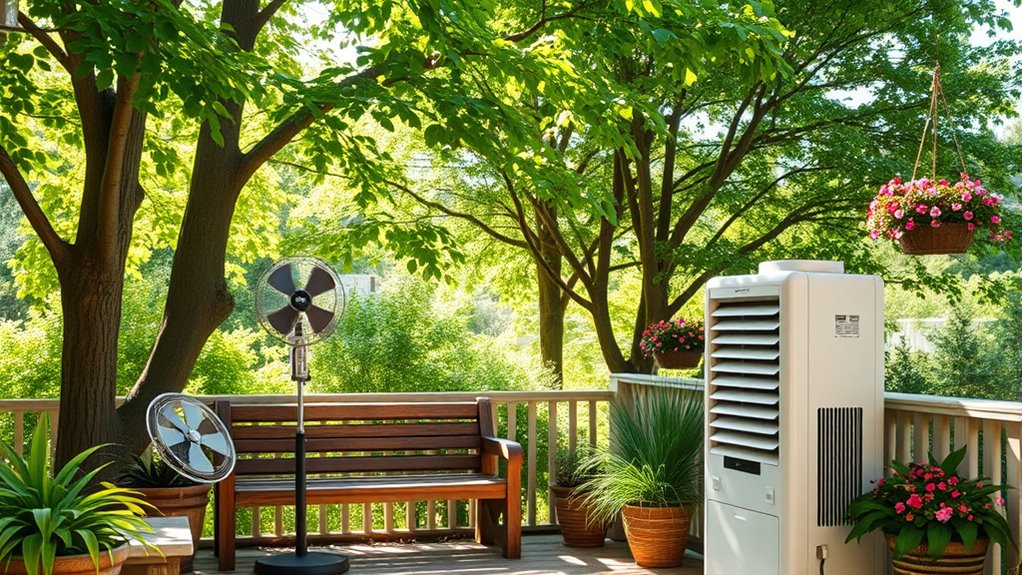
Low-power cooling devices offer practical ways to reduce indoor temperatures without increasing energy consumption. Portable units powered by batteries or solar energy can cool a room by 8–10°F in just 15–20 minutes. Box fans placed in windows facing outward push hot air outside, while fans facing inward draw in cooler air, improving airflow. PVC pipe air conditioners, made with ice or frozen bottles and a small fan, deliver localized relief, especially in dry climates. Compact swamp coolers are energy-efficient options that work well in arid environments, providing noticeable comfort. Ceiling fans are also valuable; they circulate cooler air and enhance the effectiveness of other cooling methods. Additionally, performance benefits of quality fans and coolers can significantly improve your comfort level. Using energy-efficient appliances not only reduces electricity bills but also minimizes environmental impact, making these low-power devices a smart choice for budget-conscious households. Incorporating proper insulation and shading can further boost the efficiency of these devices, as well as ventilation strategies to optimize airflow and temperature control, helping you stay comfortable without the high energy costs associated with traditional air conditioning. For optimal results, consider regular maintenance to ensure all cooling devices operate at peak efficiency.
Adopt Personal Cooling and Comfort Strategies

To stay comfortable during hot days, try placing cold washcloths or ice packs on your neck or wrists for quick relief. Sleeping in cooler areas like basements or lower levels can also help you stay refreshed through the night. These simple personal strategies can make a big difference in maintaining comfort without relying on air conditioning. Additionally, using local tips and understanding city dynamics can help you find the best ways to adapt your environment for maximum comfort. Incorporating celebrity lifestyle insights such as designing private paradises or utilizing outdoor spaces can further enhance your comfort strategies during heat waves.
Cool Neck and Wrists
Cooling your neck and wrists is a quick and effective way to reduce your body temperature during hot days. These areas have blood vessels close to the skin, so cooling them helps lower your overall heat. Here’s how you can do it:
- Apply Cold Compresses or Ice Packs: Place them on your neck or wrists for immediate relief. The cold constricts blood vessels, reducing heat flow.
- Use Damp Cloths or Washcloths: Chill a damp cloth in the fridge, then drape it over your neck or wrists for a revitalizing cool-down.
- Wear Cooling Accessories: Use cooling collars or wristbands designed to stay cold longer. These can be worn throughout the day for continuous relief.
These simple steps help you stay comfortable without extra effort or equipment.
Sleep in Cooler Areas
Sleeping in cooler areas of your home can substantially improve comfort during hot nights. Choose lower levels or basements, where temperatures naturally stay cooler. These areas benefit from less exposure to direct sunlight and often have better airflow. If your home has a basement, it can be an ideal spot for restful sleep, especially during peak heat. Close curtains or blinds to block any remaining sunlight, and open windows at night to allow cool breezes to flow through. Use a fan to enhance ventilation and create a cross-breeze. Keep bedding lightweight and breathable, like cotton sheets, to prevent overheating. By sleeping in cooler zones, you reduce heat stress and wake up feeling more refreshed, all without relying on air conditioning.
Leverage Landscaping for Optimal Shading and Airflow

Strategic landscaping plays a crucial role in reducing indoor temperatures by providing effective shading and promoting airflow around your home. You can achieve this by planting trees and shrubs that block direct sunlight, especially on the south and west sides, which helps keep your home cooler. Additionally, proper placement of vegetation encourages natural airflow, drawing hot air away from your house. To maximize these benefits, consider:
- Plant deciduous trees on the south and west sides to block summer sun while allowing winter warmth.
- Grow vines on trellises at least 6 inches from walls to create shade and a cool buffer zone.
- Use shrubs near lower walls to block sunlight and act as windbreaks, reducing heat gain and energy loss.
These landscaping tactics can considerably lower your indoor temperatures naturally.
Create a Cooling-Centric Home Environment

Creating a cooling-centric home environment involves designing your living space to naturally reduce heat buildup and promote airflow. Start by arranging furniture to encourage cross-ventilation—place seating near open windows or vents. Use lightweight, light-colored curtains or reflective blinds during the day to block solar heat. Keep interior doors open to allow air to circulate freely across rooms. Incorporate ceiling fans or portable fans to boost airflow and enhance cooling efficiency. Seal gaps around windows and doors to prevent hot air from entering. Consider shading windows with awnings or reflective films. Optimize your home’s layout to maximize natural ventilation, ensuring warm air escapes and cooler breezes flow through. These strategies create a comfortable, cool environment without relying on air conditioning.
Frequently Asked Questions
How Can I Prevent Heat Gain Through Windows During Peak Sunlight Hours?
To prevent heat gain through windows during peak sunlight hours, you should close thick curtains or reflective blinds to block up to 40% of solar heat. Plant deciduous trees on the south and west sides for natural shade, and grow vines on trellises at least 6 inches from walls for quick shading. These strategies help keep your home cooler and reduce reliance on air conditioning.
What Are the Best Types of Plants for Natural Shading and Cooling?
Did you know that strategic planting can cut cooling costs by up to $250 annually? For natural shading and cooling, opt for deciduous trees on the south and west sides—these provide shade in summer and let sunlight in winter. Fast-growing native shrubs and vines on trellises also block heat and create cool buffers. These plants maximize shading, reduce heat gain, and need minimal maintenance, making your home more comfortable naturally.
How Do I Optimize Airflow for Maximum Natural Ventilation in My Home?
You can optimize airflow by opening windows on opposite sides of your home to create cross-ventilation, allowing fresh air to flow through. Keep interior doors open to promote unrestricted airflow and enhance circulation. Use strategically placed vents or vents with adjustable louvers to control airflow direction. Installing ceiling fans or portable fans can boost air movement, while creating a stack effect by opening higher windows on the breeze side and lower ones on the opposite side helps draw warm air out naturally.
Can Green Roofs Significantly Lower Indoor Temperatures, and How Are They Installed?
Green roofs can markedly lower indoor temperatures, reducing heat gain by up to 30%. To install one, you first prepare a waterproof membrane on your roof, then add a drainage layer, followed by soil and a variety of plants. You may need professional help for structural support. Once in place, the greenery acts as insulation and shading, keeping your home cooler naturally and improving energy efficiency.
What Safety Precautions Should I Consider When Using Evaporative Cooling Methods?
When using evaporative cooling methods, you should guarantee proper maintenance to prevent mold and bacteria buildup. Keep water sources clean, and avoid using these methods in high humidity environments, as they’re less effective and may cause discomfort. Also, monitor for leaks or spills that could cause slips. Always position fans safely, away from children and pets, and ensure electrical devices are protected from water to prevent hazards.
Conclusion
Just like a cool breeze whispers through ancient trees, you can keep your home refreshingly cool without AC. By combining natural shading, airflow, and thoughtful design, you create a sanctuary that echoes the serenity of a shaded forest glade. Embrace these simple strategies, and you’ll enjoy a breezy refuge that’s both eco-friendly and budget-conscious. With a little effort, your home can become a cool oasis, a modern oasis reminiscent of nature’s timeless, cooling embrace.
Halloween Picks
halloween
As an affiliate, we earn on qualifying purchases.