
Rain barrels are back in a big way because they help you conserve water and cut down on bills. They support sustainable gardening by providing chemical-free rainwater, making your plants thrive. By capturing rain runoff, you reduce reliance on municipal supplies and create a positive environmental impact. Plus, installation can be easy and stylish, adding charm to your garden. If you’re curious about how to maximize their benefits, there’s more to explore.
Key Takeaways
- Rain barrels conserve water, reducing bills and promoting sustainable practices in gardening.
- Collecting rainwater provides chemical-free irrigation, benefiting plant health and growth.
- Increased awareness of climate change drives community efforts towards efficient water usage.
- DIY installation and aesthetic designs make rain barrels accessible and appealing for homeowners.
- Rainwater harvesting reduces runoff, supporting local ecosystems and environmental conservation.
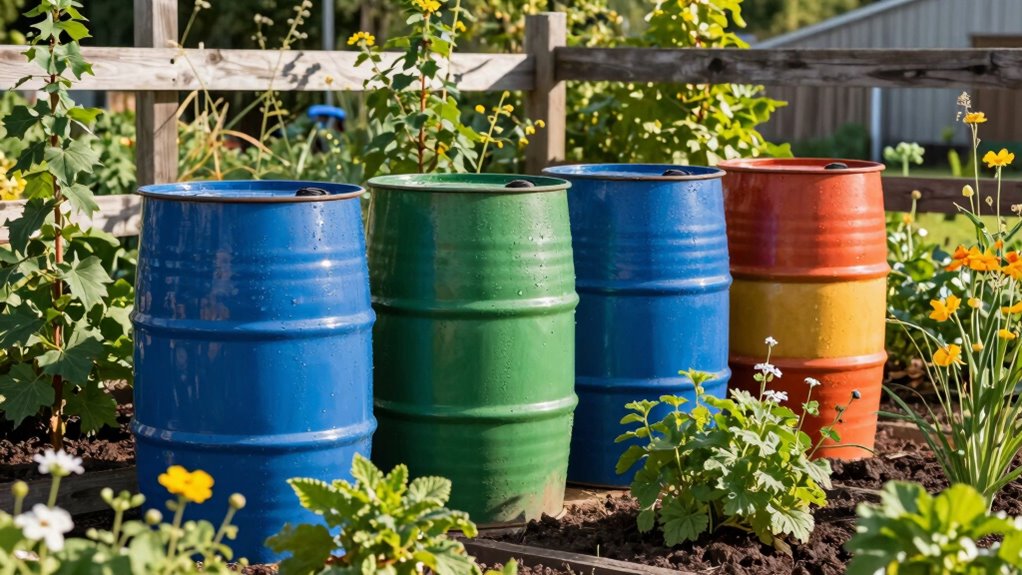
Rain barrels are a simple yet effective way to conserve water and support your garden’s needs. With increasing awareness of water scarcity and the importance of sustainable gardening, many people are turning back to this age-old practice. By collecting rainwater, you’re not only reducing your water bills but also making a positive impact on the environment. Plus, you’ll find that your plants thrive when you use naturally collected rainwater, which is free from chemicals often found in tap water.
When you set up a rain barrel, you’re engaging in rainwater harvesting, a practice that’s both practical and eco-friendly. It’s a straightforward process: water flows from your roof into gutters and downspouts, directing it straight into your barrel. Most barrels have a spigot at the bottom, making it easy to fill watering cans or connect a hose. This method allows you to gather water during rainstorms, ensuring you’ve got a reliable source for watering your garden during dry spells. Incorporating rainwater collection into your gardening routine can significantly reduce reliance on municipal water supplies.
Setting up a rain barrel is an eco-friendly way to harness rainwater, ensuring a reliable source for your garden.
You might be surprised at how much water you can collect. A single inch of rain on a 1,000-square-foot roof can yield around 600 gallons of water! Imagine having that much rainwater available for your plants, especially during the hot summer months. Using a rain barrel not only provides you with a sustainable gardening resource but also helps reduce runoff and erosion, protecting the local ecosystem. Incorporating recycled materials in gardening can further enhance your eco-friendly efforts and reduce waste. Additionally, understanding the impact of location on your water collection potential can help optimize your setup for maximum efficiency.
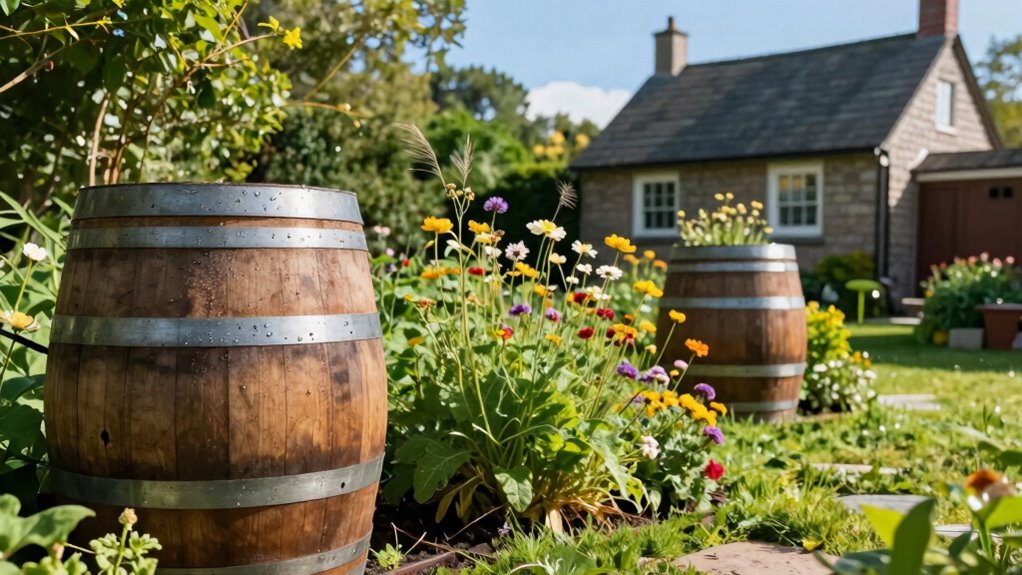
Installing a rain barrel is relatively easy and can be done as a DIY project or purchased ready-made. You can find various styles and sizes to fit your garden aesthetic. Many come with features like screens to keep out debris and mosquitoes, ensuring that your collected water stays clean. You’ll also find that the sight of a rain barrel adds a rustic charm to your garden space. Additionally, choosing rainwater harvesting systems that are designed for efficiency can maximize your water collection and usage. Embracing this practice not only benefits your garden but also encourages a community-wide effort toward sustainable resource use.

RTS Home Accents 50-Gallon ECO Rain Barrel Made with 100% Recycled Plastic, Flat Back Rain Water Collection Barrel, Black
50-Gallon Capacity: Provides ample storage for harvested rainwater, ideal for watering gardens, lawns, and plants.
As an affiliate, we earn on qualifying purchases.
As an affiliate, we earn on qualifying purchases.
Frequently Asked Questions
How Much Water Can a Typical Rain Barrel Hold?
A typical rain barrel can hold about 50 to 80 gallons of water. By using it for rainwater collection, you can greatly reduce your water bill while supporting sustainable gardening practices. When you capture rainwater, you’re not just conserving resources; you’re also nourishing your plants with free, natural water. So, set up a rain barrel, and watch your garden thrive while making a positive impact on the environment!
Are Rain Barrels Safe for Drinking Water?
Rain barrels aren’t typically safe for drinking water due to potential health concerns. While rainwater can be collected, its quality may vary based on factors like roof materials and contaminants. If you’re considering using rainwater for drinking, you’ll need proper filtration and treatment to guarantee safety. It’s best to stick to treated municipal water for your drinking needs to avoid any health risks associated with untreated rainwater.
Can I Install a Rain Barrel Myself?
Yes, you can install a rain barrel yourself! With a bit of DIY installation know-how, you’ll be able to set up your rainwater harvesting system in no time. Start by choosing a suitable location, then position the barrel under your downspout. Make sure to connect it securely to divert rainwater effectively. It’s a rewarding project that not only conserves water but also enhances your garden’s sustainability. Enjoy your new eco-friendly setup!
What Maintenance Do Rain Barrels Require?
When it rains, it pours, so keeping your rain barrel in top shape is vital. Regular rain barrel cleaning is necessary—empty it at least once a year, scrubbing the interior to prevent algae buildup. Don’t forget overflow management; make sure your overflow outlet directs water away from your foundation. Check for leaks and verify the lid’s secure to keep debris and pests out. With a little effort, your barrel will serve you well!
Do Rain Barrels Attract Mosquitoes or Pests?
Yes, rain barrels can attract mosquitoes and pests if not maintained properly. To prevent this, you should guarantee your barrel has a tight-fitting lid, which helps with mosquito prevention. Regularly check for debris and clean the barrel to discourage pests. Using screens or filters can also enhance pest control by keeping unwanted insects out. By taking these simple steps, you can enjoy the benefits of rainwater without the nuisance of mosquitoes.

Harvesting Rainwater for Your Home: Design, Install, and Maintain a Self-Sufficient Water Collection and Storage System in 5 Simple Steps for DIY … environmentalists (Simple Sustainable Living)
As an affiliate, we earn on qualifying purchases.
As an affiliate, we earn on qualifying purchases.
Conclusion
In a world where droughts threaten our gardens and water bills soar, rain barrels offer a revitalizing solution. They’re not just eco-friendly; they’re a savvy way to save money while nurturing your plants. As you watch the clouds gather, you’re not just hoping for rain—you’re embracing the chance to harvest nature’s gift. So, why not join the movement? Rain barrels are back, blending sustainability with practicality, proving that sometimes the old ways are the smartest.

RTS Home Accents 50-Gallon Rain Barrel with Brass Spigot, Flat Back Rain Water Collection Barrel, Walnut Color
50-Gallon Capacity: Provides ample storage for harvested rainwater, ideal for watering gardens, lawns, and plants.
As an affiliate, we earn on qualifying purchases.
As an affiliate, we earn on qualifying purchases.

Rain Barrel Diverter Kit, Rainwater Collection System with Adjustable Valve and Hose, Rain Water Diverter for Downspout, Downspout Diverter Fits for Standard Downspouts
Package Included: Our rainwater collector can be easily installed in just 5 minutes. The rainwater collector kit includes…
As an affiliate, we earn on qualifying purchases.
As an affiliate, we earn on qualifying purchases.