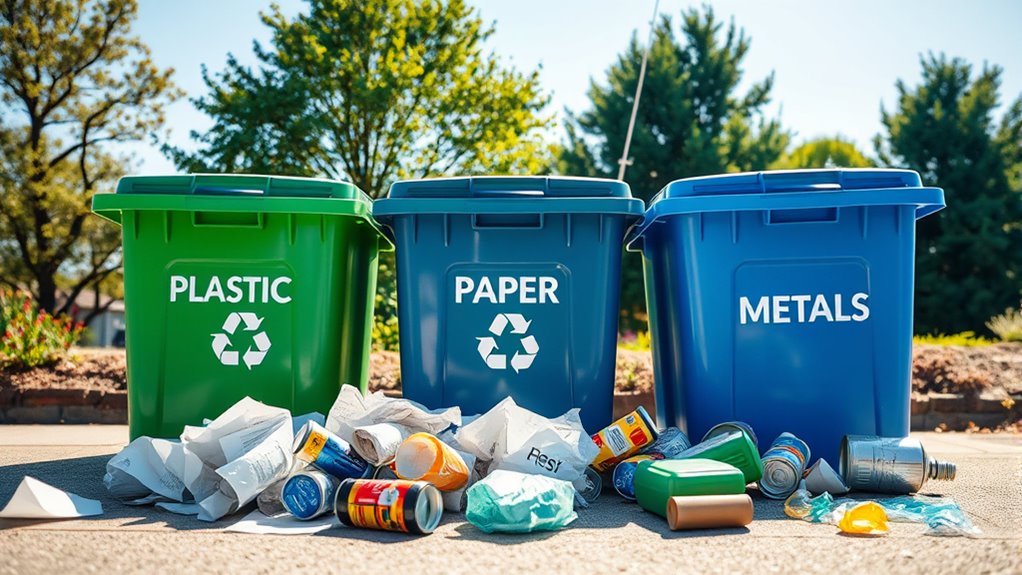

Responsible recycling isn’t just about tossing items into a bin; it’s about sorting carefully to avoid contamination. Many people make mistakes like leaving food residue, tossing plastic bags, or misinterpreting recycling symbols. These errors can cause recyclable materials to end up in landfills, waste resources, and harm the environment. Whether you realize it or not, proper sorting can make a big difference. Keep going to discover practical tips that will improve your recycling habits and protect the planet.

Prime made for students and young adults
- Fast, free delivery for dorm and study essentials
- Prime Video and Amazon Music included
- Member-only deals
Key Takeaways
- Properly rinse containers to prevent contamination and ensure they are classified correctly.
- Learn local recycling guidelines to identify accepted materials and avoid disposing of non-recyclables.
- Pay attention to recycling symbols and labels indicating whether items are widely recyclable or need special handling.
- Avoid tossing plastic bags, films, or food waste into recycling bins, as they clog machinery and reduce efficiency.
- Educate yourself and others on sorting best practices to reduce contamination and improve recycling system effectiveness.
Top picks for "responsible recycl sort"
As an affiliate, we earn on qualifying purchases.
The Common Mistakes in Household Recycling
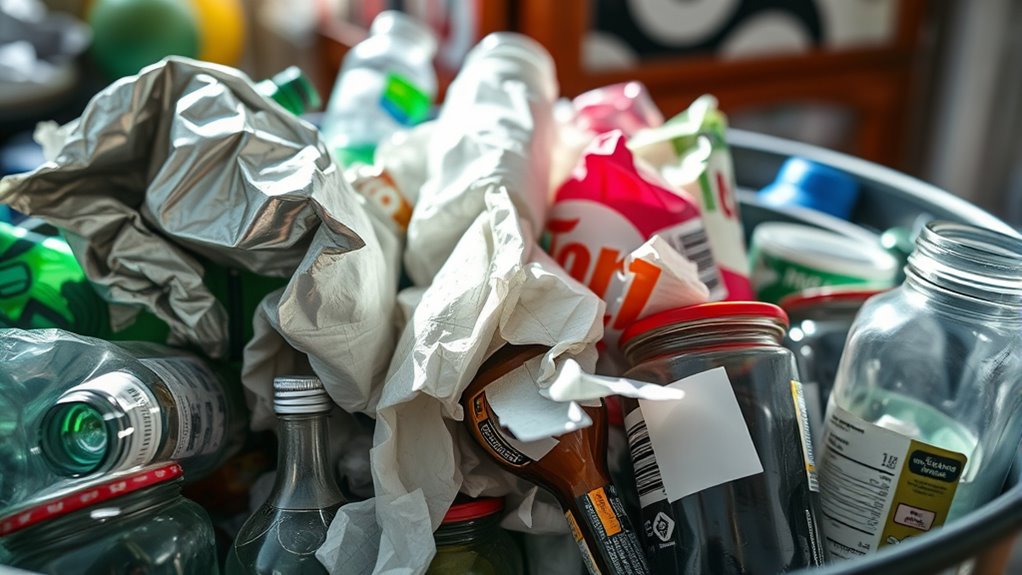
Many households make basic recycling mistakes that can considerably contaminate materials and reduce the effectiveness of recycling programs. You might accidentally toss items that aren’t accepted, like plastic straws or food-contaminated containers, into your recycling bin. Misidentifying symbols or sorting items incorrectly often leads to contamination, which forces recycling facilities to discard otherwise recyclable materials. For example, leaving food residue in jars or cups can turn what could be recycled into waste. Plastic bags and film are particularly problematic; they clog machinery and cause delays. Many people don’t realize that sorting errors increase costs and environmental impact, as contaminated recyclables often end up in landfills. Additionally, improper sorting can undermine recycling technology and its ability to process materials efficiently. Being aware of these common mistakes helps ensure your recycling efforts actually make a difference.
Why Food Waste Contaminates Recycling Streams
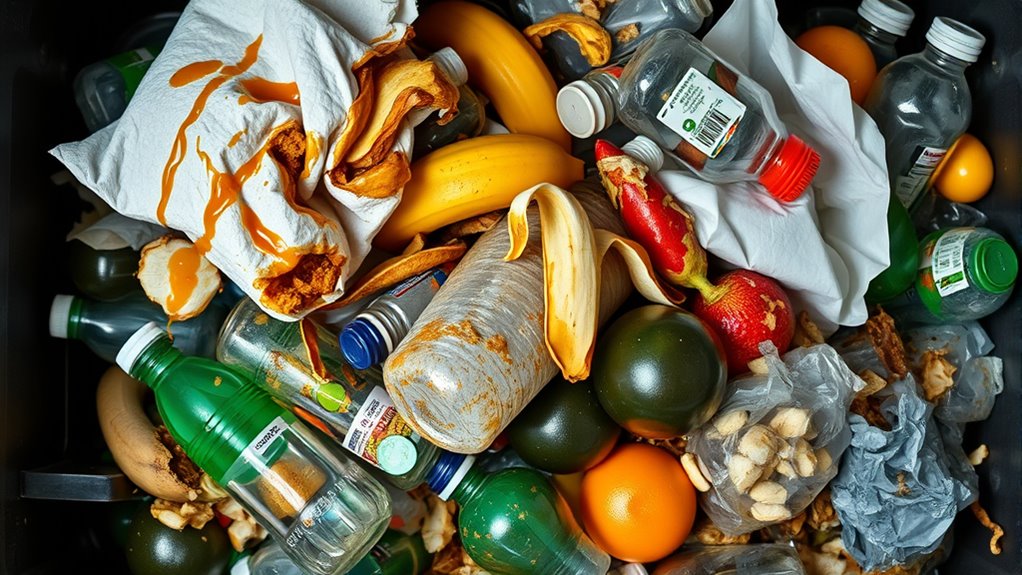
Food waste contaminates recycling streams because leftover food and liquids make recyclable materials unsuitable for processing. When food remains on containers, it attracts bacteria and creates odors, which can halt recycling operations. Food residues also cause contamination that forces entire batches of recyclables to be discarded as garbage. For example, a jar or can with leftover sauce or crumbs can spoil the entire load, increasing waste and costs. Additionally, paperboard containers with food leftovers are often rejected because they can’t be properly cleaned and processed. This contamination not only wastes resources but also hampers the efficiency of recycling facilities. Properly sorting your trash is essential for maintaining a sustainable waste management recycling system that benefits the environment and community. Properly rinsing containers thoroughly removes residues and prevents contamination that could compromise the recyclability of materials. Rinsing helps ensure that materials are clean enough for recycling processing, reducing the likelihood of contamination. To avoid this, you should rinse containers thoroughly and dispose of food waste in the appropriate trash bin, ensuring recyclables stay clean and processing remains efficient. Properly sorting your trash is essential for maintaining a narcissistic man recycling system that benefits the environment and community.
The Impact of Plastic Bag and Film Contamination
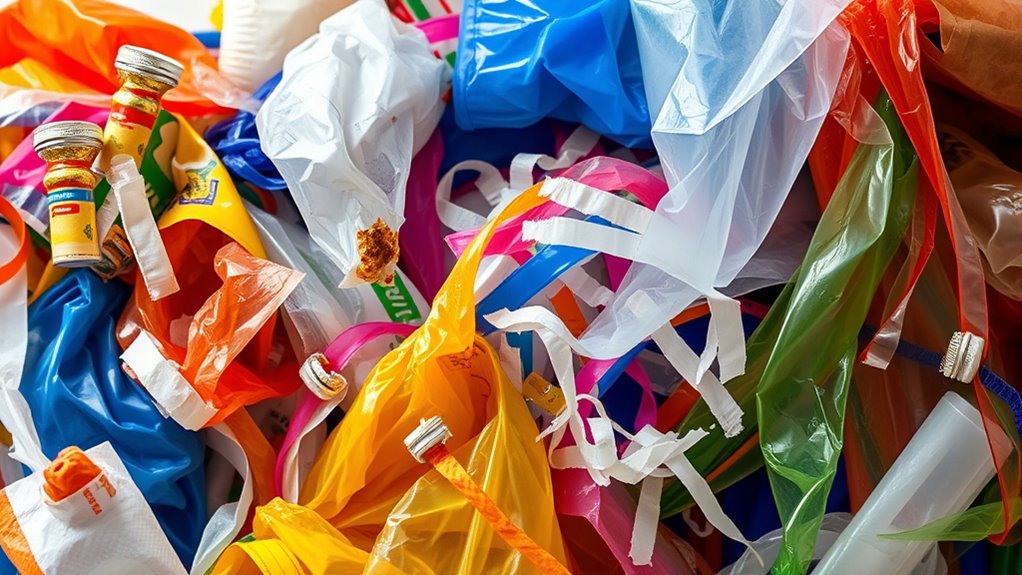
Have you ever wondered why your recycling might be rejected even when you think you’ve sorted correctly? Plastic bags and film are major culprits in recycling contamination. They often cause machinery jams at sorting facilities, slowing down operations and increasing costs. Many people mistakenly toss soft plastics like shrink wrap, bubble wrap, or newspaper bags into recycling bins, not realizing these materials can damage equipment. When plastic films blend with other recyclables, they create blockages that prevent proper processing, leading to entire batches being discarded. Removing these contaminants requires extra labor, raising expenses and reducing overall efficiency. Additionally, the complexity of recycling algorithms makes it difficult to effectively separate contaminated materials, further complicating processing. Because of this, recyclable materials can become unusable, ending up in landfills instead. Proper disposal of recyclable materials and awareness of contamination risks play a vital role in maintaining an effective recycling system. Proper sorting practices are essential to address these issues and improve recycling outcomes, especially as AI-driven sorting systems become more prevalent in waste management.
How Sorting Errors Affect Environmental Goals
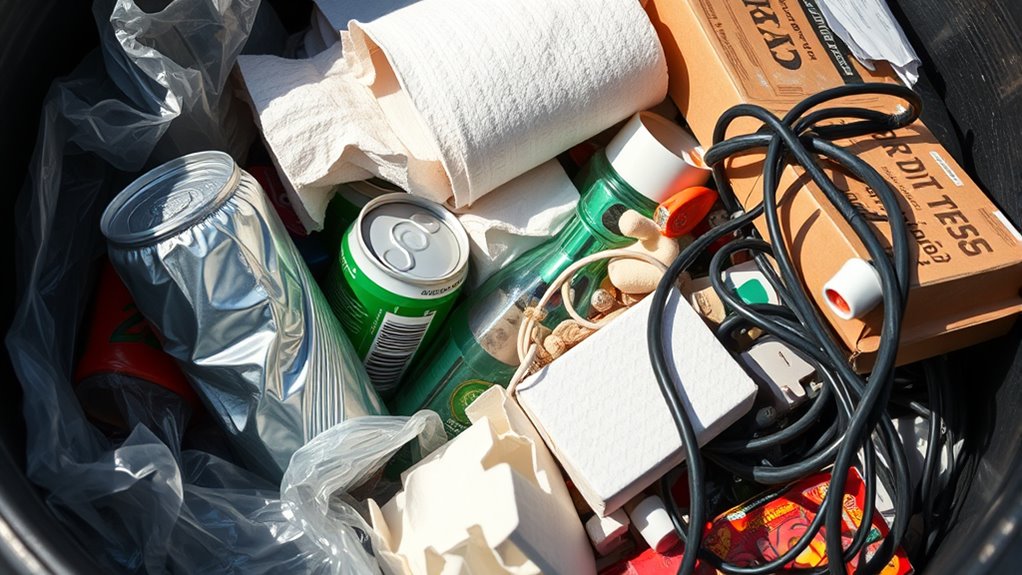
Ever wonder how sorting errors directly undermine environmental progress? When you mix non-recyclables with recyclables, contamination rises, forcing facilities to discard entire batches. This wastes valuable resources and increases landfill volume. Contaminated recyclables often end up in landfills, releasing harmful gases like methane and carbon dioxide, which contribute to climate change. Sorting mistakes also inflate operational costs, as facilities spend extra time removing non-recyclables and repairing damaged equipment. When recyclable materials are improperly sorted, their quality diminishes, limiting options for reuse and high-quality recycling. Additionally, color accuracy impacts the ability to properly identify and sort materials, further complicating recycling efforts. Improving sorting technology can significantly reduce these errors, leading to more efficient recycling processes. Incorporating advanced sensors and automation can help detect and separate materials more accurately. These errors, combined across millions of households, markedly hinder efforts to reduce waste and lower emissions. Better public education on proper sorting practices can also help decrease contamination and improve overall recycling quality. Enhancing sorting protocols can lead to more consistent and reliable recycling outcomes. Ultimately, your sorting mistakes can slow down progress toward a cleaner, healthier environment for everyone.
Recognizing Recycling Symbols and Labels Correctly

Misunderstanding recycling symbols and labels is a common reason for sorting errors that contaminate recyclable waste. If you don’t recognize what each symbol means, you might accidentally put non-recyclables in your bin or toss recyclable items into the wrong stream. Look for the familiar chasing arrows symbol, which indicates a recyclable material, but note that not all items with this symbol are accepted locally. Some labels specify whether an item is “widely recyclable,” “check locally,” or “not recyclable.” Always read the accompanying text on packaging for guidance. Familiarize yourself with symbols for plastics, paper, and metals. Properly comprehending these labels helps prevent contamination, ensures your recyclables are processed correctly, and reduces waste going to landfills. Taking a moment to decode labels makes your recycling more effective. Being aware of recycling symbols and labels can significantly improve your sorting accuracy, especially when considering local recycling guidelines that may vary by region. Additionally, understanding recycling regulations can help you stay compliant with waste management policies and contribute to environmental sustainability efforts. Recognizing these environmental standards ensures your efforts align with best practices for waste reduction and resource conservation. Gaining knowledge about flat iron bike components can also help you understand how different recyclable parts of various items fit into proper disposal practices.
Behavioral Factors Influencing Recycling Habits
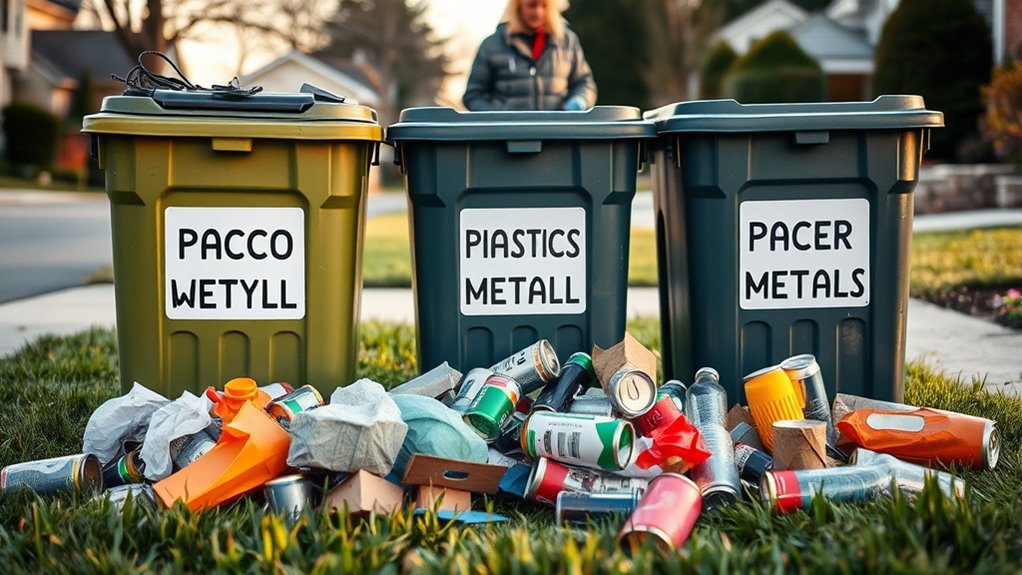
Many people prioritize saving money over environmental concerns when it comes to recycling, which influences their habits more than they realize. If labels and instructions aren’t clear, you might accidentally contaminate recyclables or toss items in the wrong bin. Understanding what motivates your recycling choices can help you improve your habits intentionally. Additionally, being aware of proper recycling techniques can further enhance your contribution to sustainability efforts. Using behavioral insights can also help establish more consistent and eco-friendly recycling routines.
Cost Over Environmental Concerns
Cost considerations often outweigh environmental concerns when it comes to recycling habits, influencing how you sort your waste. Many people prioritize saving money over proper recycling, leading to mistakes like contaminating recyclables or using inappropriate bins. For example, some avoid paying for proper disposal or skip sorting altogether to cut costs. This behavior impacts the entire system, increasing processing expenses and reducing the quality of recycled materials. Additionally, misunderstandings about best recycling practices can lead to inefficient waste management and further contribute to environmental issues. Incorporating proper waste segregation strategies can help address these challenges and promote more sustainable habits, especially as cost-driven decisions continue to shape recycling behaviors. Furthermore, a lack of awareness about the importance of certifications and authenticity in recycling programs may lead individuals to participate in less effective or even harmful waste disposal methods.
Clarity of Recycling Labels
Unclear or inconsistent recycling labels can considerably influence how you sort your waste. When labels are confusing or vary between regions, you might mistakenly put items in the wrong bin, leading to contamination and recycling failures. Poor labeling creates uncertainty, making it harder for you to identify what’s recyclable. For example, vague symbols or inconsistent color codes increase the chances of errors. Without clear instructions, you may discard items that could be recycled or throw away non-recyclables, contaminating entire batches. Simplified, standardized labels with straightforward symbols help you quickly understand what belongs where. Clear labels empower you to make better choices, reducing contamination and improving recycling quality. When labels are confusing, your good intentions can inadvertently cause more harm than good to the recycling process.
Costly Consequences of Improper Sorting
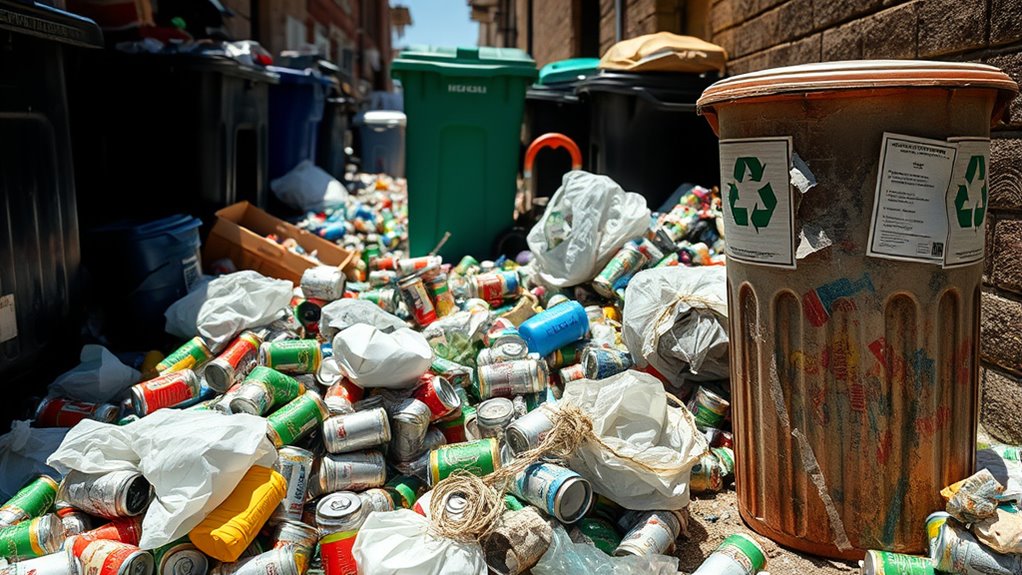
When you missort your trash, it drives up recycling costs and causes more waste to end up in landfills. This not only strains waste management systems but also harms the environment through increased pollution and greenhouse gases. Your sorting mistakes directly contribute to these costly and damaging consequences.
Increased Recycling Costs
Have you ever wondered how improper recycling sorting drives up costs for communities and businesses? When you mix non-recyclables with recyclables or place incorrect items in bins, it causes contamination. This contamination forces recycling facilities to spend more time and resources sorting through materials, increasing labor costs. Contaminated loads are often rejected or sent to landfills, wasting valuable recycling efforts. Additionally, machinery gets clogged or damaged by items like plastic bags, leading to costly repairs and downtime. These inefficiencies raise overall processing expenses, which are passed on to taxpayers and consumers through higher waste management fees. Poor sorting not only increases operational costs but also reduces the quality of recyclable materials, making them less valuable and more expensive to process. Your sorting habits directly impact the financial sustainability of recycling programs.
Landfill Overflows and Waste
Improper recycling sorting directly contributes to overflowing landfills, costing communities billions annually. When you toss non-recyclables into your recycling bin, they often end up in landfills instead of being processed properly. Contaminated recyclables require additional sorting, which delays recycling operations and increases costs. Items like food-contaminated containers and plastic bags clog machinery, causing shutdowns and labor-intensive cleanups. As a result, more waste is diverted to landfills, accelerating their overflow. This not only wastes valuable resources but also leads to higher waste management expenses for municipalities. Landfill overflows threaten ecosystems, increase methane emissions, and reduce available space for future waste. Your sorting habits directly impact how much waste ends up in these overflowing sites, emphasizing the importance of proper recycling practices.
Environmental Harm Accumulation
Misclassified recyclables don’t just end up in landfills—they also cause significant environmental damage. When non-recyclables contaminate proper streams, valuable materials are lost, forcing manufacturers to produce new resources. This process releases greenhouse gases like CO₂, methane, and volatile organic compounds, accelerating climate change. Contaminated recyclables often get discarded, contributing to ocean pollution and harming wildlife. Here’s a visual to imagine:
| Proper Recycling | Contaminated Recycling |
|---|---|
| Clean bottles and cans | Food-stained containers |
| Sorted plastics and paper | Plastic bags clog machinery |
| Metal scraps and foil | Non-recyclable plastics |
| Cardboard without food | Food residue in packaging |
Your mistakes ripple outward, worsening environmental harm and depleting natural resources.
Strategies to Improve Recycling Accuracy at Home
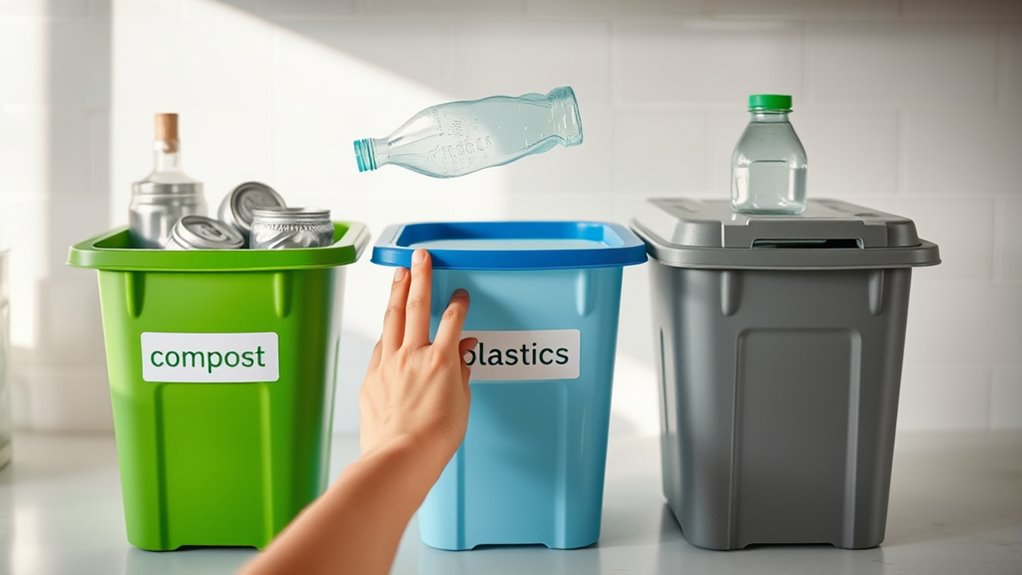
To improve recycling accuracy at home, you need clear guidance and simple habits. Begin by familiarizing yourself with your local recycling rules, checking official lists or apps. Rinse containers to remove food residue, reducing contamination and making recyclables more valuable. Separate plastics, paper, and metals into their designated bins, avoiding the temptation to toss everything together. Use clear labels or color-coded bins to differentiate materials easily. When in doubt about an item’s recyclability, consult your local guidelines rather than guessing. Keep a small bin in your kitchen for recyclables, making sorting convenient. Educate everyone in your household about proper recycling practices to ensure consistency. These straightforward steps can markedly boost your recycling accuracy and minimize contamination.
The Role of Education and Nudges in Better Sorting
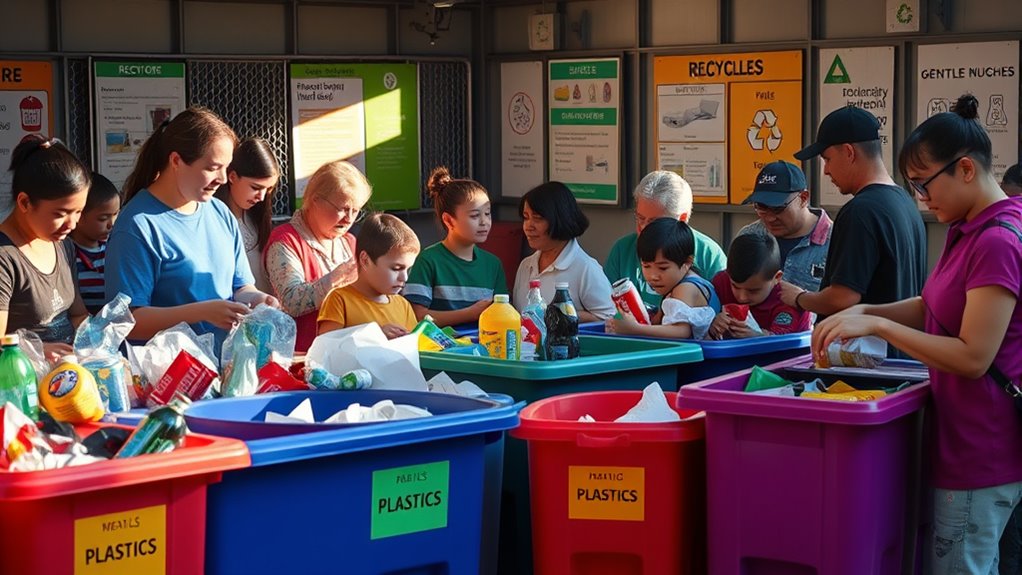
Education and nudges play a essential role in helping households improve their recycling habits by making correct sorting easier and more intuitive. Clear, visual cues like color-coded bins, labels, and symbols guide you toward proper disposal, reducing confusion. Informative campaigns and simple instructions increase awareness of what belongs in each bin, addressing common mistakes like misplacing food-contaminated items or plastics. Nudges such as prompts, reminders, and default options encourage you to choose the right container without extra effort. When information is straightforward and accessible, you’re more likely to follow correct sorting practices consistently. These strategies not only boost individual compliance but also create a culture of responsible recycling, ultimately reducing contamination and supporting environmental sustainability.
Practical Tips for Effective Recycling Practices
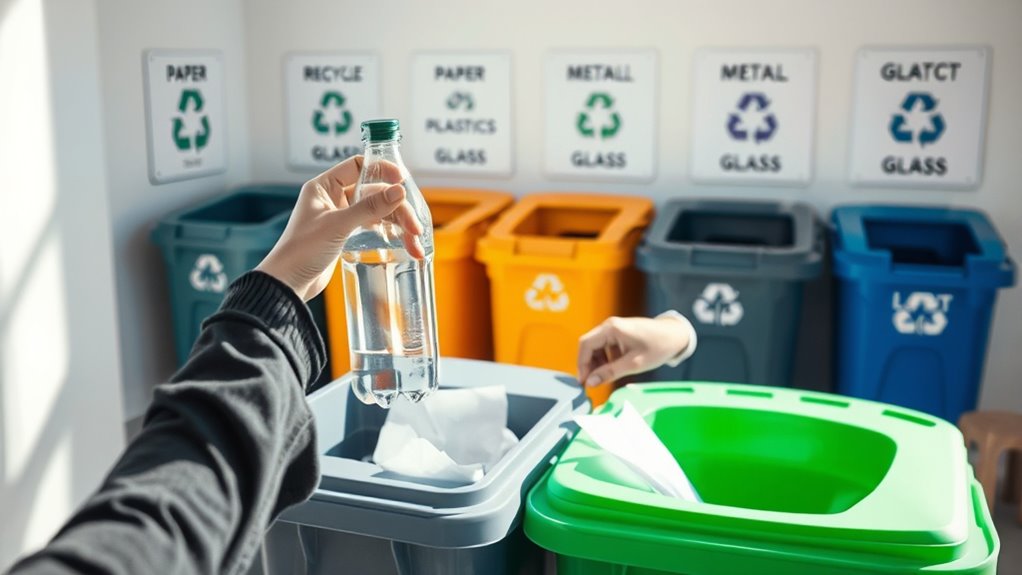
Implementing simple, practical recycling habits can considerably reduce contamination and improve the quality of your recyclables. First, always rinse containers to remove food residue, especially jars, cans, and paperboard boxes. Check local guidelines to know which plastics, papers, and metals are accepted, and avoid tossing items that aren’t on the list. Use designated bins for different materials to prevent mixing, and flatten cardboard to save space. Keep plastic bags and films out of your recycling bin—they cause machinery jams. If you’re unsure about an item, look for clear recycling symbols or consult your local waste authority. Educate yourself regularly, and stay updated on recycling rules. Small changes in your routine can lead to more efficient recycling and help protect the environment.
Frequently Asked Questions
How Can I Identify the Most Confusing Recycling Symbols Accurately?
You can identify confusing recycling symbols by familiarizing yourself with common ones like the Mobius loop, Resin Identification Codes, and material-specific icons. Always check for clear, standardized symbols and labels on packaging, and consult local recycling guidelines to understand what each symbol means. When in doubt, visit your waste management’s website or contact them directly for clarification. Staying informed helps you sort correctly and reduces contamination.
What Are the Best Ways to Prevent Food Contamination in Recyclables?
Imagine your recyclables as precious treasures needing pristine conditions. To prevent food contamination, rinse containers thoroughly before recycling, removing leftover food and liquids. Avoid stacking food-stained items with clean recyclables, and empty jars and cans completely. Keep food debris out of the recycling stream, ensuring your efforts don’t turn into waste. Clear, simple instructions on proper cleaning can turn your trash into a valuable resource rather than landfill clutter.
How Do Plastic Bags Specifically Damage Recycling Machinery?
Plastic bags damage recycling machinery by causing clogs and jams in sorting equipment. When you place soft plastics like bags, shrink wrap, or bubble wrap into recycling bins, they often get tangled in machinery, slowing down or stopping the process. This contamination requires workers to spend extra time removing these materials, increasing costs and reducing the efficiency of recycling facilities. To prevent this, always dispose of plastic bags in the trash unless specified otherwise.
Why Do Sorting Errors Increase Overall Recycling Costs Significantly?
Sorting errors increase recycling costs because contaminated or misclassified materials require extra labor, time, and equipment maintenance. When non-recyclables like plastic bags or food-contaminated items enter the process, they clog machinery and slow operations. This leads to higher processing expenses and more waste sent to landfills. Additionally, contamination reduces the quality of recyclables, making them less valuable and increasing the need for sorting and cleaning, which drives up overall costs.
What Simple Labels or Signs Can Improve Household Recycling Behavior?
You can improve household recycling behavior by using simple, clear labels with bold text and universal symbols. Place signs on bins that specify what goes where, like “Food Waste,” “Plastic Bags,” or “Recyclables Only.” Use color coding to match bin colors, and include quick tips or images to guide sorting. These straightforward signs help you quickly identify proper disposal, reduce contamination, and make recycling easier and more effective.
Conclusion
By avoiding common mistakes and paying close attention, you can make recycling as easy as pie. Remember, your efforts are like a drop in the ocean—small but powerful in creating change. Sorting correctly not only saves resources but also helps protect our planet for future generations. So, stay informed, be mindful, and turn recycling into a habit you’re proud of. Together, we can make a difference that’s as bright as a shining star.
Fall Picks
fall essentials
As an affiliate, we earn on qualifying purchases.