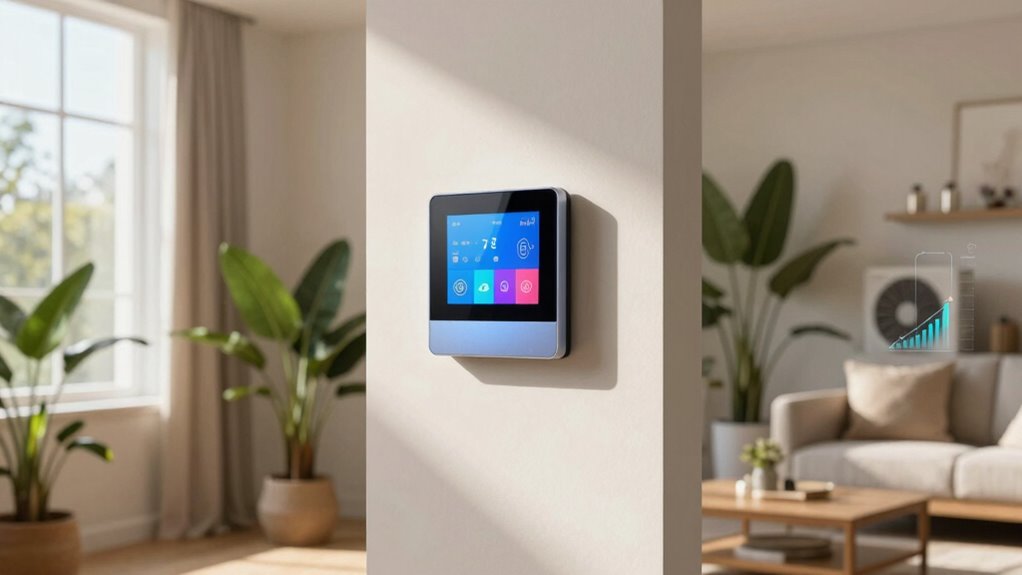

Smart thermostats save energy by optimizing your heating and cooling systems based on your habits and preferences. They adjust temperatures automatically, preventing energy waste when you’re away. With mobile apps, you can control your home environment from anywhere, making real-time adjustments easy. You’ll get insights into your energy consumption, helping you make smarter decisions. Plus, their integration with other smart home devices enhances efficiency further. Discover how they can transform your energy use even more effectively.
Key Takeaways
- Smart thermostats adjust heating and cooling based on user habits, minimizing energy waste when homes are unoccupied.
- They utilize advanced algorithms to optimize system performance, leading to significant long-term energy bill savings.
- Mobile apps allow users to monitor and adjust settings remotely, ensuring efficient energy use at all times.
- Detailed energy consumption reports help users identify patterns and make informed adjustments for further savings.
- Integration with other smart devices enhances overall energy management, promoting a more efficient and sustainable home environment.
As you look for ways to cut down on energy costs, smart thermostats can be a game changer. These devices offer advanced temperature control that adjusts based on your habits and preferences, helping you utilize energy more efficiently. By learning your schedule, a smart thermostat can optimize your home’s heating and cooling systems, reducing energy consumption while keeping you comfortable.
Imagine coming home after a long day, only to find your house at the perfect temperature. Smart thermostats achieve this by using sensors and algorithms that capture your routines. When you’re away, the thermostat can automatically dial down the heating or cooling, preventing energy waste. This means you’re not heating or cooling an empty house, which can save you a significant amount on your energy bills.
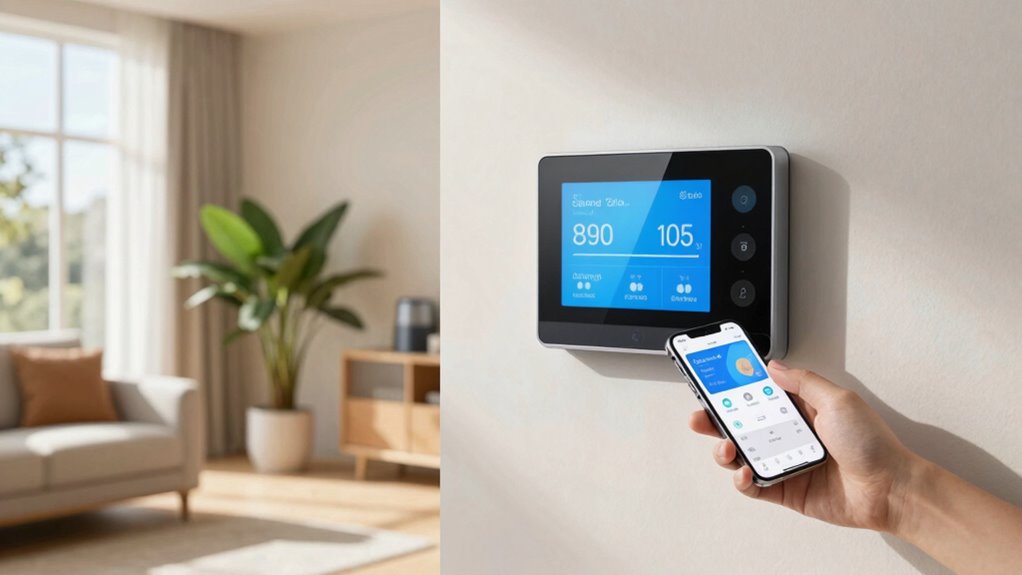
Moreover, many smart thermostats come with an app that lets you monitor and adjust your system from anywhere. If you forget to lower the temperature before leaving for work, you can easily do it from your phone. This level of control is invaluable. Instead of relying solely on a manual thermostat, you’re empowered to make real-time adjustments based on your daily life.
Another feature that contributes to energy savings is the ability to track your energy consumption. Most smart thermostats provide detailed reports, allowing you to see how much energy you’re using and when. This insight can help you identify patterns in your energy use, enabling you to make informed decisions about when to adjust your heating and cooling. Over time, this can lead to even greater savings, as you learn to optimize your energy consumption based on your habits.
Some models even integrate with other smart home devices, such as lights and appliances, creating a more thorough energy management system. For instance, if your smart thermostat detects that you’re home, it might signal that home automation systems are working together to create a seamless and efficient environment. Additionally, understanding the role of home automation systems can help you further enhance your energy efficiency by coordinating multiple devices for optimal performance. Implementing indoor air quality monitoring and control can also contribute to a healthier and more energy-efficient home environment. Furthermore, integrating energy monitoring technology can provide you with real-time feedback, helping you make smarter decisions to reduce your overall energy footprint. Incorporating energy-efficient devices into your home can amplify these savings by reducing overall power consumption, making your home more sustainable. This synergy not only enhances your comfort but also further minimizes energy waste.

Sensi Smart Thermostat, Wi-Fi, DIY, Alexa, Energy Star Certified, ST55
- Privacy Protection: No selling of personal information
- Easy DIY Installation: Quick setup with app instructions
- Energy Savings: Save 23% on HVAC energy bills
As an affiliate, we earn on qualifying purchases.
As an affiliate, we earn on qualifying purchases.
Frequently Asked Questions
Can Smart Thermostats Work With Any Heating or Cooling System?
Yes, smart thermostats can work with many heating and cooling systems, but compatibility factors matter. You’ll need to check your system type—like central heating, heat pumps, or baseboard heaters—to guarantee proper function. Some smart thermostats are designed specifically for certain systems, while others offer broad compatibility. Always review compatibility before making a purchase, so you can enjoy the benefits of smart technology without any issues.
How Do Smart Thermostats Learn My Schedule?
Smart thermostats learn your schedule through a process that feels almost coincidental. As you adjust the temperature, they track your habits and preferences, gradually optimizing your home’s climate. By analyzing when you’re home or away, they adapt to your routine, ensuring comfort while saving energy. Over time, they become attuned to your user preferences, automatically adjusting settings to fit your lifestyle, making your life easier without you even realizing it.
Are Smart Thermostats Compatible With Voice Assistants?
Yes, smart thermostats are compatible with most voice assistants, like Amazon Alexa or Google Assistant. You can use voice control to adjust temperatures, set schedules, or check energy usage, making your home more energy-efficient. With just a simple command, you can optimize your heating and cooling without lifting a finger. This convenience not only saves energy but also enhances your overall comfort, allowing you to focus on what matters most.
Do Smart Thermostats Require Professional Installation?
Installing a smart thermostat can feel like orchestrating a delicate dance, but it’s often simpler than it seems. You don’t always need professional help; many models offer user-friendly installation options. However, pay attention to the wiring requirements—some systems might need a C-wire for power. If you’re comfortable with basic wiring, you can tackle it yourself, but don’t hesitate to call an expert if you’re unsure. Your comfort’s worth it!
What Is the Average Lifespan of a Smart Thermostat?
A smart thermostat typically lasts around 5 to 10 years, depending on usage and features. With smart features like learning algorithms and remote access, you can maximize energy savings during its lifespan. Regular updates and maintenance can also extend its life. So, if you take care of it, you’ll enjoy both comfort and efficiency for years. Just keep an eye on any performance issues that might arise as time goes on.
Conclusion
So, by embracing smart thermostats, you’re not just tweaking your home’s temperature; you’re stepping into a modern-day version of Aesop’s fable, where the clever tortoise wins the race against the overzealous hare. With these devices, you can effortlessly save energy and money while enjoying the cozy warmth or invigorating coolness you desire. In a world where every degree counts, you’re not just a homeowner; you’re a savvy steward of both comfort and the planet.